
153 countries
(and areas)
 - Andorra
- Antigua and Barbuda
- Argentina
- Armenia
- Aruba
- Australia
- Austria
- Azerbaijan
- Bahrain
- Barbados
- Belgium
- Belize
- Benin
- Bhutan
- Bolivia
- Bonaire
- Bosnia and Herzegovina
- Botswana
- Brazil
- British Virgin Islands
- Brunei
- Bulgaria
- Cambodia
- Canada
- Cape Verde
- Chile
- China
- Costa Rica
- Croatia
- Cuba
- Curacao
- Cyprus
- Czech Republic
- Denmark
- Dominica
- Dominican Republic
- Egypt
- El Salvador
- England
- Estonia
- Eswatini (Swaziland)
- Ethiopia
- Fiji
- Finland
- France
- French Guiana
- Georgia
- Germany
- Gibraltar
- Greece
- Grenada
- Guadeloupe
- Guatemala
- Honduras
- Hong Kong
- Hungary
- Iceland
- India
- Indonesia
- Iran
- Ireland
- Israel
- Italy
- Jamaica
- Japan
- Jordan
- Kazakhstan
- Kenya
- Kosovo
- Kuwait
- Kyrgyzstan
- Laos
- Latvia
- Lebanon
- Lesotho
- Liechtenstein
- Lithuania
- Luxembourg
- Macau
- Madagascar
- Malawi
- Malaysia
- Maldives
- Malta
- Martinique
- Mexico
- Moldova
- Monaco
- Mongolia
- Montenegro
- Morocco
- Mozambique
- Namibia
- Nepal
- Netherlands
- New Zealand
- Nicaragua
- North Macedonia
- Northern Ireland
- Norway
- Oman
- Pakistan
- Palestine
- Peru
- Philippines
- Poland
- Portugal
- Qatar
- Republic of Korea
- Romania
- Russia
- Saint Kitts and Nevis
- Saint Lucia
- Saint Martin
- Saint Vincent and the Grenadines
- San Marino
- Saudi Arabia
- Scotland
- Senegal
- Serbia
- Singapore
- Sint Maarten
- Slovakia
- Slovenia
- South Africa
- Spain
- Sri Lanka
- Suriname
- Sweden
- Switzerland
- Tajikistan
- Tanzania
- Thailand
- The Gambia
- Tibet
- Togo
- Transnistria
- Trinidad and Tobago
- Tunisia
- Turkey
- Turkmenistan
- Uganda
- United Arab Emirates
- United States
- Uruguay
- Uzbekistan
- Vatican City
- Vietnam
- Wales
- Zambia
- Zanzibar
- Andorra
- Antigua and Barbuda
- Argentina
- Armenia
- Aruba
- Australia
- Austria
- Azerbaijan
- Bahrain
- Barbados
- Belgium
- Belize
- Benin
- Bhutan
- Bolivia
- Bonaire
- Bosnia and Herzegovina
- Botswana
- Brazil
- British Virgin Islands
- Brunei
- Bulgaria
- Cambodia
- Canada
- Cape Verde
- Chile
- China
- Costa Rica
- Croatia
- Cuba
- Curacao
- Cyprus
- Czech Republic
- Denmark
- Dominica
- Dominican Republic
- Egypt
- El Salvador
- England
- Estonia
- Eswatini (Swaziland)
- Ethiopia
- Fiji
- Finland
- France
- French Guiana
- Georgia
- Germany
- Gibraltar
- Greece
- Grenada
- Guadeloupe
- Guatemala
- Honduras
- Hong Kong
- Hungary
- Iceland
- India
- Indonesia
- Iran
- Ireland
- Israel
- Italy
- Jamaica
- Japan
- Jordan
- Kazakhstan
- Kenya
- Kosovo
- Kuwait
- Kyrgyzstan
- Laos
- Latvia
- Lebanon
- Lesotho
- Liechtenstein
- Lithuania
- Luxembourg
- Macau
- Madagascar
- Malawi
- Malaysia
- Maldives
- Malta
- Martinique
- Mexico
- Moldova
- Monaco
- Mongolia
- Montenegro
- Morocco
- Mozambique
- Namibia
- Nepal
- Netherlands
- New Zealand
- Nicaragua
- North Macedonia
- Northern Ireland
- Norway
- Oman
- Pakistan
- Palestine
- Peru
- Philippines
- Poland
- Portugal
- Qatar
- Republic of Korea
- Romania
- Russia
- Saint Kitts and Nevis
- Saint Lucia
- Saint Martin
- Saint Vincent and the Grenadines
- San Marino
- Saudi Arabia
- Scotland
- Senegal
- Serbia
- Singapore
- Sint Maarten
- Slovakia
- Slovenia
- South Africa
- Spain
- Sri Lanka
- Suriname
- Sweden
- Switzerland
- Tajikistan
- Tanzania
- Thailand
- The Gambia
- Tibet
- Togo
- Transnistria
- Trinidad and Tobago
- Tunisia
- Turkey
- Turkmenistan
- Uganda
- United Arab Emirates
- United States
- Uruguay
- Uzbekistan
- Vatican City
- Vietnam
- Wales
- Zambia
- Zanzibar


Copyright 2004 - 2026
Veeronline.nl Travel Adventures

Home > Kyrgyzstan > In the Footsteps of Marco Polo > Travelogue day 44
Travelogue In the Footsteps of Marco Polo
April 28 July 1 2012 (65 days)
Kyrgyzstan > Overnight in a yurt
Dag 44 - Sunday, June 10, 2012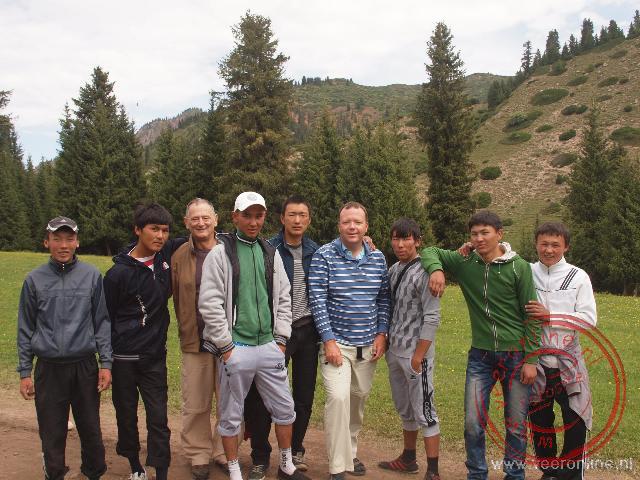
As we leave Karakol, I immediately notice that we’re not in a hurry today. I’ll be spending the night in a yurt, and I don’t think we’ll arrive there too early. About twenty-five kilometers outside Karakol, we turn off toward Jeti Oguz. Along the road lies a red sandstone rock formation. The tall rock is split exactly in the middle, giving it the shape of a broken heart. On the other side are the Seven Bulls rocks—seven oddly shaped red sandstone formations. Because of their shapes, locals call them the Seven Bulls. It’s cloudy today. I wouldn’t be surprised if a few drops of rain fall

. The cloudy weather makes photos of the rocks quite dark. We continue further into the valley by bus. The road follows a fast-flowing stream. Occasionally, the road switches to the other side, and the bus crosses a wooden bridge. On both sides, high mountains rise. I see several nomad families along the roadside, gathered around their yurts. At the end of the valley, I get out. I set off on my own, following a cart track further into the mountains. It’s wonderful to walk in such silence through the valley. From a yurt, people wave at me. As I get closer, I see it’s a group of young people from Bishkek. They ask if they can take a photo with me and show me the yurt they rented for the weekend. Further along, three little boys sit by the roadside playing some kind of card game on a large stone. I watch for a moment but don’t understand much of the game. They laugh. It starts to drizzle slightly.
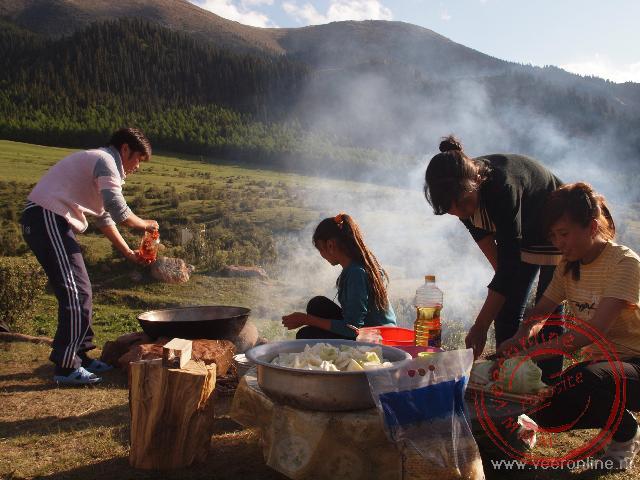
I turn back and walk to the bus. From there, I follow the stream on foot until I return to the Seven Bulls rocks. People I meet wave enthusiastically, cars honk, and a man on horseback approaches to shake my hand. On a patch of grass by the mountain stream, I unpack my lunch. In the afternoon, I pass a village to buy supplies for the coming days. In a local café, I order a beer. The bottle is first purchased from the nearby supermarket before being served. Then I head toward the yurt camp. I drive along the south side of Lake Issyk Kul. The blue water looks beautiful. Along the shores, there are many resorts from the Russian period, many of which now look dilapidated. On the west side of the lake, the road turns off. In the village, we are expected. A car drives ahead of us down from the mountains. Just outside the village, we pass a garbage dump and a cemetery. Then the dirt road leads deeper into the valley. On the green fields, I see several clusters of yurts. I get out at a group of tents against the mountainside. I’m warmly welcomed by the family. There are four yurts available for sleeping. I had imagined the tents would be a bit less primitive. These yurts are truly authentic. I chat with the family, show my photo album from the Netherlands, and take photos of several of them.

In the evening, a chilly wind picks up. It becomes cold. The tent camp sits at 2,600 meters, and the temperature clearly reflects that. I quickly put on my sweater and jacket. As dusk falls, a vehicle arrives with a yurt package in the back. Everyone helps to set up the yurt—including me! I hold one of the sides while ropes are used to secure everything together. Now I really notice how cold it is. The edge is in place but not to everyone’s satisfaction. A discussion follows, and the rope is loosened again. I decide I’m done for the evening. I go to my own yurt, crawl into my sleeping bag with several blankets over it. Outside, it begins to rain. I hear the drops hitting the yurt roof. Although it’s only nine o’clock, I quickly fall asleep.
 China
China  The Buddha statue in the Lama Temple in Beijing
 The large hall of the Terracotta Army in Xian
 Just outside the centre of Kashgar the livestock market is held
Travelogue In the Footsteps of Marco Polo
Dag 2 | Turkey > The mausoleum of Atatürk
Dag 3 | Turkey > On the way to Cappadocia
Dag 4 | Turkey > Balloon flight over the rock formations
Dag 5 | Turkey > Rain in Kahta
Dag 6 | Turkey > In dense fog on Nemrut Dagi mountain
Dag 7 | Turkey > Friday prayers in Sanliurfa
Dag 8 | Turkey > The Kurdish capital Diyarbakir
Dag 9 | Turkey > The consequences of the earthquake in Van
Dag 10 | Turkey > The island Akdamar in Lake Van
Dag 11 | Turkey > The Ishak Pasha Palace in Dogubayazit
Dag 12 | Iran > Crossing the border to Iran
Dag 13 | Iran > Visiting a cave dwelling
Dag 14 | Iran > The Throne of Solomon
Dag 15 | Iran > Kurdish food in the park
Dag 16 | Iran > An afternoon tour through Hamadan
Dag 17 | Iran > The mausoleum of Fatima in Qom
Dag 18 | Iran > On the roof of the bazaar of Kashan
Dag 19 | Iran > The red mountain village Abyaneh
Dag 20 | Iran > Wandering through Esfahan
Dag 21 | Iran > A whirlwind on the square
Dag 22 | Iran > The shrine of Sayyed Ahmad
Dag 23 | Iran > Local encounters in Shiraz
Dag 24 | Iran > The tomb of Cyrus in Pasargadae
Dag 25 | Iran > The desert city Yazd
Dag 26 | Iran > Helicopters in the desert
Dag 27 | Iran > The golden tomb of Imam Reza
Dag 28 | Iran > Back to the Holy Shrine
Dag 29 | Turkmenistan > Across the border to Turkmenistan
Dag 30 | Turkmenistan > Ashgabat: Unique and bizarre
Dag 31 | Turkmenistan > Long bus ride to Mary
Dag 32 | Turkmenistan > The UNESCO city of Merv
Dag 33 | Uzbekistan > Mosques and madrasas in Bukhara
Dag 34 | Uzbekistan > On the roof of the madrasa
Dag 35 | Uzbekistan > The old palace of Timur Lenk
Dag 36 | Uzbekistan > Registan Square in Samarkand
Dag 37 | Uzbekistan > Football match Uzbekistan - Iran
Dag 38 | Kazakhstan > Computer malfunction at the border
Dag 39 | Kazakhstan > Hiking in Aksu Djabagly Nature Park
Dag 40 | Kyrgyzstan > Ala-Too Square in Bishkek
Dag 41 | Kyrgyzstan > The waterfall in Ala Archa Nature Park
Dag 42 | Kyrgyzstan > Tamchi on Lake Issyk Kul
Dag 43 | Kyrgyzstan > The old wooden cathedral of Karakol
Dag 44 | Kyrgyzstan > Overnight in a yurt
Dag 45 | Kyrgyzstan > On horseback through the valley
Dag 46 | Kyrgyzstan > Through the mountains to Lake Sol Kul
Dag 47 | Kyrgyzstan > Rain and snow around Sol Kul
Dag 48 | Kyrgyzstan > Caravanserai of Tash Rabat
Dag 49 | China > The Torugart Pass into China
Dag 50 | China > Kashgar, the city of the Uyghurs
Dag 51 | China > Cows and goats for sale
Dag 52 | China > By train through the Taklamakan desert
Dag 53 | China > Death Valley of China
Dag 54 | China > Ruins of Jiaohe and Gaochang
Dag 55 | China > The sand dunes of Dunhuang
Dag 56 | China > The Buddhist Mogao Caves
Dag 57 | China > The fort of Jiayuguan
Dag 58 | China > Temple of the Eight Immortals
Dag 59 | China > The Terracotta Army of Xian
Dag 60 | China > Cycling on the Xian city wall
Dag 61 | China > The Forbidden City
Dag 62 | China > Rainy Temple of Heaven
Dag 63 | China > On the Great Wall of China
Dag 64 | China > Meeting the giant panda
Dag 65 | China > There is no bus