
154 countries
(and areas)
 - Belize
- Benin
- Bhutan
- Bolivia
- Bonaire
- Bosnia and Herzegovina
- Botswana
- Brazil
- British Virgin Islands
- Brunei
- Bulgaria
- Cambodia
- Canada
- Cape Verde
- Chile
- China
- Costa Rica
- Croatia
- Cuba
- Curacao
- Cyprus
- Czech Republic
- Denmark
- Dominica
- Dominican Republic
- Egypt
- El Salvador
- England
- Estonia
- Eswatini (Swaziland)
- Ethiopia
- Fiji
- Finland
- France
- French Guiana
- Georgia
- Germany
- Gibraltar
- Greece
- Grenada
- Guadeloupe
- Guatemala
- Honduras
- Hong Kong
- Hungary
- Iceland
- India
- Indonesia
- Iran
- Ireland
- Israel
- Italy
- Jamaica
- Japan
- Jordan
- Kazakhstan
- Kenya
- Kosovo
- Kuwait
- Kyrgyzstan
- Laos
- Latvia
- Lebanon
- Lesotho
- Liechtenstein
- Lithuania
- Luxembourg
- Macau
- Madagascar
- Malawi
- Malaysia
- Maldives
- Malta
- Martinique
- Mexico
- Moldova
- Monaco
- Mongolia
- Montenegro
- Morocco
- Mozambique
- Namibia
- Nepal
- Netherlands
- New Zealand
- Nicaragua
- North Macedonia
- Northern Ireland
- Norway
- Oman
- Pakistan
- Palestine
- Peru
- Philippines
- Poland
- Portugal
- Qatar
- Republic of Korea
- Romania
- Russia
- Saint Kitts and Nevis
- Saint Lucia
- Saint Martin
- Saint Vincent and the Grenadines
- San Marino
- São Tomé and Principe
- Saudi Arabia
- Scotland
- Senegal
- Serbia
- Singapore
- Sint Maarten
- Slovakia
- Slovenia
- South Africa
- Spain
- Sri Lanka
- Suriname
- Sweden
- Switzerland
- Tajikistan
- Tanzania
- Thailand
- The Gambia
- Tibet
- Togo
- Transnistria
- Trinidad and Tobago
- Tunisia
- Turkey
- Turkmenistan
- Uganda
- United Arab Emirates
- United States
- Uruguay
- Uzbekistan
- Vatican City
- Vietnam
- Wales
- Zambia
- Zanzibar
- Belize
- Benin
- Bhutan
- Bolivia
- Bonaire
- Bosnia and Herzegovina
- Botswana
- Brazil
- British Virgin Islands
- Brunei
- Bulgaria
- Cambodia
- Canada
- Cape Verde
- Chile
- China
- Costa Rica
- Croatia
- Cuba
- Curacao
- Cyprus
- Czech Republic
- Denmark
- Dominica
- Dominican Republic
- Egypt
- El Salvador
- England
- Estonia
- Eswatini (Swaziland)
- Ethiopia
- Fiji
- Finland
- France
- French Guiana
- Georgia
- Germany
- Gibraltar
- Greece
- Grenada
- Guadeloupe
- Guatemala
- Honduras
- Hong Kong
- Hungary
- Iceland
- India
- Indonesia
- Iran
- Ireland
- Israel
- Italy
- Jamaica
- Japan
- Jordan
- Kazakhstan
- Kenya
- Kosovo
- Kuwait
- Kyrgyzstan
- Laos
- Latvia
- Lebanon
- Lesotho
- Liechtenstein
- Lithuania
- Luxembourg
- Macau
- Madagascar
- Malawi
- Malaysia
- Maldives
- Malta
- Martinique
- Mexico
- Moldova
- Monaco
- Mongolia
- Montenegro
- Morocco
- Mozambique
- Namibia
- Nepal
- Netherlands
- New Zealand
- Nicaragua
- North Macedonia
- Northern Ireland
- Norway
- Oman
- Pakistan
- Palestine
- Peru
- Philippines
- Poland
- Portugal
- Qatar
- Republic of Korea
- Romania
- Russia
- Saint Kitts and Nevis
- Saint Lucia
- Saint Martin
- Saint Vincent and the Grenadines
- San Marino
- São Tomé and Principe
- Saudi Arabia
- Scotland
- Senegal
- Serbia
- Singapore
- Sint Maarten
- Slovakia
- Slovenia
- South Africa
- Spain
- Sri Lanka
- Suriname
- Sweden
- Switzerland
- Tajikistan
- Tanzania
- Thailand
- The Gambia
- Tibet
- Togo
- Transnistria
- Trinidad and Tobago
- Tunisia
- Turkey
- Turkmenistan
- Uganda
- United Arab Emirates
- United States
- Uruguay
- Uzbekistan
- Vatican City
- Vietnam
- Wales
- Zambia
- Zanzibar


Copyright 2004 - 2026
Veeronline.nl Travel Adventures
links
Home > Austria 
10 Travel adventures Austria

Wintersport Kössen 2026
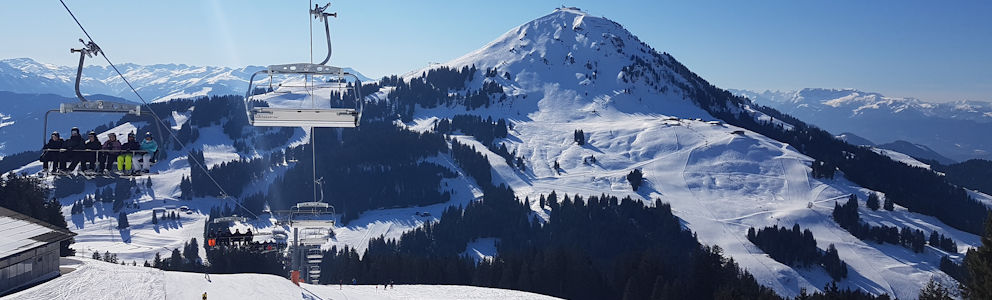
13 - 21 februari 2026 (9 days)A week of skiing in the Austrian town of Kossen. Skiing in the Hochkossen ski area. This area is located in Tyrol, close to the German border, and is also known as part of the Unterberghorn winter sports region. It is a small-scale and well-organized ski area with slopes for both beginners and advanced skiers, and it is also known as a popular starting point for paragliders. From Walchsee we take a beautiful walk through the snow, and at Steinplatte the après-ski comes alive after a day of skiing.
 Austria
 .jpg) Wietse on an ungroomed slope
Wietse on an ungroomed slope Warming up with mulled wine
 The Hofburg palace at night
 From the viewpoint at 2500 meters on the Grossglockner pass
Winter Sports in Kssen
25 februari - 5 maart 2022 (9 days)The ski area in Kössen is not very large. At the bottom, there are some drag lifts. With the gondola lift, you reach the higher area. Here are three chair lifts and some drag lifts. There was a long queue for the gondola all morning. When the line gets shorter, we also join. A face mask must be worn in the lift due to corona risks. I keep the mask under my helmet and push it under my chin as soon as I leave the lift. When we exit the gondola at Hoch-Kössen, we immediately take the chairlift to the Unterbergalm, the highest point of the ski area at about 1700 meters. Due to the clear weather, I have a view of the surrounding mountains. We ski back down quickly via the black pistes.

Christmas in Vienna
24-28 december 2019 (5 days)At St. Stephen’s Cathedral, it’s significantly busier. Tourists crowd around the Christmas stalls near the church. There’s also a line to enter the church. The splendor of the baroque interior is lost in the chaos. Only the rear section is accessible to visitors; the rest is cordoned off. The Christmas service is about to begin. At the barrier, staff must separate tourists from churchgoers. Outside the cathedral is the entrance to the church tower. We climb the 343 steps. On the narrow spiral staircase, we often stop to let descending visitors pass. From the top, there's a view over the city. Unfortunately, the panorama can only be seen through glass—there’s no open-air viewing platform. From above, we spot the many palaces, stately mansions, and churches. The roof of St. Stephen’s Cathedral is decorated with colorful tiles that form a double-headed eagle, the symbol of the city of Vienna.

A Road Trip Through Europe
8 juni - 7 juli 2018 (30 days)It’s already past seven when we arrive in Zell am See. From here, the mountain pass begins. We wonder if the pass stays open in the evening since it’s a toll road. Luckily, one toll booth is still open. Although all signs indicate €36, we only have to pay €26—we don’t know why. Maybe because it’s evening? We quickly drive on. We’re at 845 meters elevation. The highest point of the pass is 2,505 meters. We climb quickly via hairpin bends. In second gear, we calmly ascend the 12% grade. There’s barely any other traffic, just the occasional group of motorcyclists. As we climb higher, the view gets more stunning. Dark clouds hang over the pass. We pass remnants of last winter’s snow. Snow still covers the surrounding mountain peaks. One of these giants must be the Grossglockner at 3,750 meters.

Skiing in Wagrain
14 - 18 maart 2018 (5 days)I spend a weekend skiing with friends in Wagrain, Austria. After an overnight stay in southern Germany, we arrive early, but our apartment is not yet ready. Wanting to get onto the slopes as soon as possible, I change into my ski gear in the car park. Wagrain is part of the Salzburger Sportwelt ski area, which has 238 kilometres of slopes and a highest point of 2,188 metres. After a day on the slopes, we happily enjoy the après-ski in one of Wagrain’s many cosy bars. After all, we came to enjoy both!

From Amsterdam to Tokyo
1 mei 2016 - 8 augustus 2016 (100 days)Unfortunately, it’s cloudy again this morning. There are still traces of snow on the mountaintops. We quickly gain altitude. Normally, a bus runs from the visitor center to the Kehlsteinhaus. This former tea house was gifted to Hitler in 1945, just before the end of the war. Today, it houses a restaurant, but it’s closed. When we turn onto the road toward Berchtesgaden, we descend at a 24% gradient — but unfortunately, this is the wrong direction. Turning around, Brutus struggles to get back up the slope. In the Netherlands, we’ve never had the chance to practice driving in the mountains. Even in Berchtesgaden National Park, the road climbs quickly with hairpin bends. We slowly make our way up — we just can’t go any faster. At the top, we’re rewarded with a stunning view of the rolling landscape straddling the German-Austrian border. The roadside is still lined with remnants of winter snow.

Winter Sports Ischgl
7 - 14 februari 2004 (8 days)While the snow gently drifts down, we race down the mountain on our sled in Ischgl. The toboggan run offers an exciting and adventurous experience for anyone looking for a different way to descend the mountain. The route is surrounded by beautiful mountain scenery and offers a unique perspective on the surroundings. We speed downhill on the sled, with the wind in our hair and snowflakes on our faces. It’s an unforgettable experience and a great way to discover the natural beauty of Ischgl.

Winter Sports Weekend Oberperfuss 1999
Februari 1999 (5 days)A weekend trip to the small ski area of Oberperfuss, west of Innsbruck. The bus takes us there. In Germany, we stop for a break so we can use the restroom and buy something to drink. Meanwhile, the drivers convert the bus into a sleeper bus. The seats and backrests form bunk beds. I lie on the top bunk over the aisle. Carefully, I try to sleep without moving too much. The bed is no wider than a regular seat. Safe and well-rested, I arrive in Austria.

Interrail vacation Europe
13 juli -7 aug 1992 (28 days)The sun is shining early on the tent. This time we have the opening facing west. I take it easy. Around eleven o’clock, I have breakfast with coffee and tea. Fred arrives with a repaired car. Raymond, Carina, and Herman also stop by to say goodbye—they’re heading back to the Netherlands today. Just as I’m about to do some laundry, it turns out the gas for heating water has run out. I decide to go swimming first. Meanwhile, Ron and Fred go to town to get gas and do some shopping. In the afternoon, we tackle a massive load of laundry. Almost everything we have with us needs washing. I’ve given up hope that some shirts will ever be clean again. During the train journeys, dust often blows in through the open window and gets into everything. Around six o’clock, I head back into town for dinner. At the pizzeria, there’s still room for our group. After dinner, I go into Villach, where a big party is taking place.

Interrail Europe 1991
juli - augustus 1991 (22 days)With only a few hours to explore the city, we’ve just arrived at Vienna’s train station and have six hours before our train to Budapest departs. As we stroll through the streets, we’re surrounded by grand 17th- and 18th-century buildings. We visit Vienna’s summer palace, a stunning display of the city’s wealth. Despite being fascinated by the city, we need to make sure we’re back at the station in time to catch our train. We leave with some regret that we didn’t have more time to explore this beautiful city.
Travel videos
Video: Bucket List Tip: Schönbrunn Palace
The summer palace of the Habsburgs