
154 countries
(and areas)
 - Belize
- Benin
- Bhutan
- Bolivia
- Bonaire
- Bosnia and Herzegovina
- Botswana
- Brazil
- British Virgin Islands
- Brunei
- Bulgaria
- Cambodia
- Canada
- Cape Verde
- Chile
- China
- Costa Rica
- Croatia
- Cuba
- Curacao
- Cyprus
- Czech Republic
- Denmark
- Dominica
- Dominican Republic
- Egypt
- El Salvador
- England
- Estonia
- Eswatini (Swaziland)
- Ethiopia
- Fiji
- Finland
- France
- French Guiana
- Georgia
- Germany
- Gibraltar
- Greece
- Grenada
- Guadeloupe
- Guatemala
- Honduras
- Hong Kong
- Hungary
- Iceland
- India
- Indonesia
- Iran
- Ireland
- Israel
- Italy
- Jamaica
- Japan
- Jordan
- Kazakhstan
- Kenya
- Kosovo
- Kuwait
- Kyrgyzstan
- Laos
- Latvia
- Lebanon
- Lesotho
- Liechtenstein
- Lithuania
- Luxembourg
- Macau
- Madagascar
- Malawi
- Malaysia
- Maldives
- Malta
- Martinique
- Mexico
- Moldova
- Monaco
- Mongolia
- Montenegro
- Morocco
- Mozambique
- Namibia
- Nepal
- Netherlands
- New Zealand
- Nicaragua
- North Macedonia
- Northern Ireland
- Norway
- Oman
- Pakistan
- Palestine
- Peru
- Philippines
- Poland
- Portugal
- Qatar
- Republic of Korea
- Romania
- Russia
- Saint Kitts and Nevis
- Saint Lucia
- Saint Martin
- Saint Vincent and the Grenadines
- San Marino
- São Tomé and Principe
- Saudi Arabia
- Scotland
- Senegal
- Serbia
- Singapore
- Sint Maarten
- Slovakia
- Slovenia
- South Africa
- Spain
- Sri Lanka
- Suriname
- Sweden
- Switzerland
- Tajikistan
- Tanzania
- Thailand
- The Gambia
- Tibet
- Togo
- Transnistria
- Trinidad and Tobago
- Tunisia
- Turkey
- Turkmenistan
- Uganda
- United Arab Emirates
- United States
- Uruguay
- Uzbekistan
- Vatican City
- Vietnam
- Wales
- Zambia
- Zanzibar
- Belize
- Benin
- Bhutan
- Bolivia
- Bonaire
- Bosnia and Herzegovina
- Botswana
- Brazil
- British Virgin Islands
- Brunei
- Bulgaria
- Cambodia
- Canada
- Cape Verde
- Chile
- China
- Costa Rica
- Croatia
- Cuba
- Curacao
- Cyprus
- Czech Republic
- Denmark
- Dominica
- Dominican Republic
- Egypt
- El Salvador
- England
- Estonia
- Eswatini (Swaziland)
- Ethiopia
- Fiji
- Finland
- France
- French Guiana
- Georgia
- Germany
- Gibraltar
- Greece
- Grenada
- Guadeloupe
- Guatemala
- Honduras
- Hong Kong
- Hungary
- Iceland
- India
- Indonesia
- Iran
- Ireland
- Israel
- Italy
- Jamaica
- Japan
- Jordan
- Kazakhstan
- Kenya
- Kosovo
- Kuwait
- Kyrgyzstan
- Laos
- Latvia
- Lebanon
- Lesotho
- Liechtenstein
- Lithuania
- Luxembourg
- Macau
- Madagascar
- Malawi
- Malaysia
- Maldives
- Malta
- Martinique
- Mexico
- Moldova
- Monaco
- Mongolia
- Montenegro
- Morocco
- Mozambique
- Namibia
- Nepal
- Netherlands
- New Zealand
- Nicaragua
- North Macedonia
- Northern Ireland
- Norway
- Oman
- Pakistan
- Palestine
- Peru
- Philippines
- Poland
- Portugal
- Qatar
- Republic of Korea
- Romania
- Russia
- Saint Kitts and Nevis
- Saint Lucia
- Saint Martin
- Saint Vincent and the Grenadines
- San Marino
- São Tomé and Principe
- Saudi Arabia
- Scotland
- Senegal
- Serbia
- Singapore
- Sint Maarten
- Slovakia
- Slovenia
- South Africa
- Spain
- Sri Lanka
- Suriname
- Sweden
- Switzerland
- Tajikistan
- Tanzania
- Thailand
- The Gambia
- Tibet
- Togo
- Transnistria
- Trinidad and Tobago
- Tunisia
- Turkey
- Turkmenistan
- Uganda
- United Arab Emirates
- United States
- Uruguay
- Uzbekistan
- Vatican City
- Vietnam
- Wales
- Zambia
- Zanzibar


Copyright 2004 - 2026
Veeronline.nl Travel Adventures

Home > Iran > In the Footsteps of Marco Polo > Travelogue day 26
Travelogue In the Footsteps of Marco Polo
April 28 July 1 2012 (65 days)
Iran > Helicopters in the desert
Dag 26 - Wednesday, May 23, 2012Two travel days through the desert on the way to Mashhad—a total journey of about a thousand kilometers. Along the way, we will stay overnight in Tabas, a desert town that was almost completely destroyed by a severe earthquake in 1978. Before starting the desert journey, we first visit two historical Zoroastrian sites. On the outskirts of the city stands the fire temple of the Zoroastrians. The fire has been burning since the fourth century AD.

As I approach the temple, I immediately see the symbol of the Faravahar above it. This sacred symbol depicts a man with two large wings. The oval water reservoir in front of the temple is empty, as it is being renovated, the caretaker explains. A pity, because otherwise the temple would reflect beautifully in the water. I climb the stairs and enter the temple. I see the eternal flame, burning behind a glass plate to prevent unholy air from reaching it. I press my camera against the tinted glass to avoid reflections. Outside the city lies the Silence Mountain. In the past, deceased people were placed on this mountain. Vultures would then consume the bodies, preventing contamination of the earth by the deceased. Today, this form of burial is no longer allowed. Funerals now take place in carefully sealed concrete boxes on a nearby cemetery to avoid contamination. I climb Silence Mountain. From the roughly one-hundred-meter-high hill, I overlook the suburbs. In the past, this site was far outside Yazd. Now the city is steadily expanding. I am surprised by the difference in buildings compared to my visit two years ago; many more houses have been built around the Silence Mountain.

At the top, I enter a kind of fortress. Inside is the round pit of the old sky burials. I descend via the other side and examine the remains of buildings at the base of the hill, which served as ceremonial sites, a washing area, and a qanat (water reservoir). Back on the bus, we join the highway and leave Yazd. About seventy kilometers outside Yazd lies the ancient city of Kharanaq, consisting of mud-brick houses built against the mountainside. Nowadays, most houses are abandoned. I walk under the gate into the old city. It is a maze of alleys and old houses. Care is needed, as many structures are so dilapidated that I frequently check whether the surfaces I step on are sturdy enough. The Lonely Planet rightly warns that previous travelers have fallen. I wander through covered passageways, climb small staircases, and inspect a few old houses. Eventually, I reach the restored mosque, which is closed.

When I return to the bus, the driver and Ali have prepared lunch. After lunch, we need to refuel. The bus drives into the gas station against the flow of traffic, ignoring the line of waiting trucks. This quickly leads to arguments. Several drivers come to confront us, but when they see us watching as tourists, the tone moderates. We drive into the desert. I see endless barren plains. It is hazy. The wind blows a lot of sand into the air, creating a cloudy appearance even though the sun is shining. Just past the halfway point of the route, two military helicopters stand in the desert. These American helicopters crashed in 1978 during the failed rescue mission of the kidnapped embassy staff. The hostage situation lasted more than a year. The helicopters look remarkably well-maintained, likely preserved as a triumphant monument. Around 4:30 p.m., we enter Tabas. The town was heavily affected by the 1978 earthquake. Many people subsequently left the town. The mausoleum of the brother of Imam Reza has been rebuilt and occupies a prominent place in the center of Tabas.

In the middle of a large roundabout stands the large complex, surrounded by some shops and small restaurants. I walk to the mausoleum complex. In the center, under the tall dome, stands the shrine. I follow some local men inside. The interior is entirely covered with small mirrored mosaics, as I have seen before in Qom and Shiraz. The shrine is golden with green lighting; green is the color of Islam. Beautiful! Men pray on the mats facing Mecca. I try to pass as inconspicuously as possible on my way out. Next, it is time for the hotel—or rather, bungalows. I was prepared in advance for the most basic overnight stay. The small houses are joined together. The room is almost square, with three simple beds each against one wall. I estimate my mattress is only a few centimeters thick. One towel is provided for every two people. From a small vent, I feel a stream of air; behind it, a kind of fan draws outside air in—a variant of air conditioning. In the kitchenette, there is an old stove and a small counter. It looks run-down. I resolve not to touch anything in the kitchen and would certainly not want to cook here. I take my sleeping bag out of my suitcase and lay it on the bed for the night. In the evening, I eat at a small restaurant near the mausoleum. There aren’t many options, but the kebab tastes excellent. When we leave, it turns out Jan is still in the restroom. We quickly drive back to pick him up.
 Iran
Iran  The Chehel Sotoun the palace of the forty pillars
 Turkey
  The Rizvaniye Mosque in Sanliurfa beautifully reflects in the holy fish pond
 Uzbekistan
 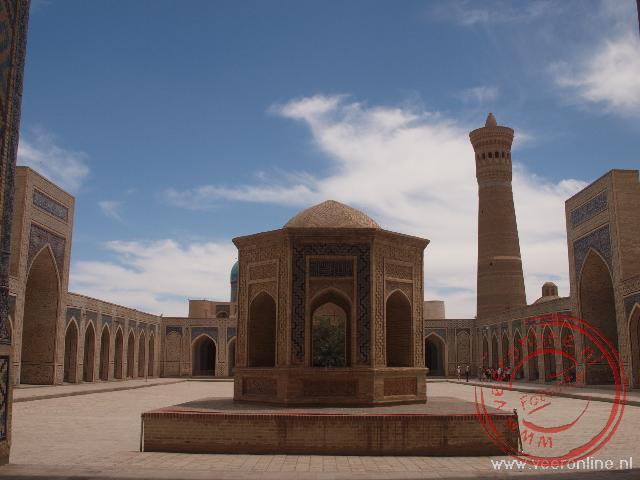 The central square of Bukhara
 The dome of the madrassa at Lyabi Hauz Square
Travelogue In the Footsteps of Marco Polo
Dag 2 | Turkey > The mausoleum of Atatürk
Dag 3 | Turkey > On the way to Cappadocia
Dag 4 | Turkey > Balloon flight over the rock formations
Dag 5 | Turkey > Rain in Kahta
Dag 6 | Turkey > In dense fog on Nemrut Dagi mountain
Dag 7 | Turkey > Friday prayers in Sanliurfa
Dag 8 | Turkey > The Kurdish capital Diyarbakir
Dag 9 | Turkey > The consequences of the earthquake in Van
Dag 10 | Turkey > The island Akdamar in Lake Van
Dag 11 | Turkey > The Ishak Pasha Palace in Dogubayazit
Dag 12 | Iran > Crossing the border to Iran
Dag 13 | Iran > Visiting a cave dwelling
Dag 14 | Iran > The Throne of Solomon
Dag 15 | Iran > Kurdish food in the park
Dag 16 | Iran > An afternoon tour through Hamadan
Dag 17 | Iran > The mausoleum of Fatima in Qom
Dag 18 | Iran > On the roof of the bazaar of Kashan
Dag 19 | Iran > The red mountain village Abyaneh
Dag 20 | Iran > Wandering through Esfahan
Dag 21 | Iran > A whirlwind on the square
Dag 22 | Iran > The shrine of Sayyed Ahmad
Dag 23 | Iran > Local encounters in Shiraz
Dag 24 | Iran > The tomb of Cyrus in Pasargadae
Dag 25 | Iran > The desert city Yazd
Dag 26 | Iran > Helicopters in the desert
Dag 27 | Iran > The golden tomb of Imam Reza
Dag 28 | Iran > Back to the Holy Shrine
Dag 29 | Turkmenistan > Across the border to Turkmenistan
Dag 30 | Turkmenistan > Ashgabat: Unique and bizarre
Dag 31 | Turkmenistan > Long bus ride to Mary
Dag 32 | Turkmenistan > The UNESCO city of Merv
Dag 33 | Uzbekistan > Mosques and madrasas in Bukhara
Dag 34 | Uzbekistan > On the roof of the madrasa
Dag 35 | Uzbekistan > The old palace of Timur Lenk
Dag 36 | Uzbekistan > Registan Square in Samarkand
Dag 37 | Uzbekistan > Football match Uzbekistan - Iran
Dag 38 | Kazakhstan > Computer malfunction at the border
Dag 39 | Kazakhstan > Hiking in Aksu Djabagly Nature Park
Dag 40 | Kyrgyzstan > Ala-Too Square in Bishkek
Dag 41 | Kyrgyzstan > The waterfall in Ala Archa Nature Park
Dag 42 | Kyrgyzstan > Tamchi on Lake Issyk Kul
Dag 43 | Kyrgyzstan > The old wooden cathedral of Karakol
Dag 44 | Kyrgyzstan > Overnight in a yurt
Dag 45 | Kyrgyzstan > On horseback through the valley
Dag 46 | Kyrgyzstan > Through the mountains to Lake Sol Kul
Dag 47 | Kyrgyzstan > Rain and snow around Sol Kul
Dag 48 | Kyrgyzstan > Caravanserai of Tash Rabat
Dag 49 | China > The Torugart Pass into China
Dag 50 | China > Kashgar, the city of the Uyghurs
Dag 51 | China > Cows and goats for sale
Dag 52 | China > By train through the Taklamakan desert
Dag 53 | China > Death Valley of China
Dag 54 | China > Ruins of Jiaohe and Gaochang
Dag 55 | China > The sand dunes of Dunhuang
Dag 56 | China > The Buddhist Mogao Caves
Dag 57 | China > The fort of Jiayuguan
Dag 58 | China > Temple of the Eight Immortals
Dag 59 | China > The Terracotta Army of Xian
Dag 60 | China > Cycling on the Xian city wall
Dag 61 | China > The Forbidden City
Dag 62 | China > Rainy Temple of Heaven
Dag 63 | China > On the Great Wall of China
Dag 64 | China > Meeting the giant panda
Dag 65 | China > There is no bus