
154 countries
(and areas)
 - Belize
- Benin
- Bhutan
- Bolivia
- Bonaire
- Bosnia and Herzegovina
- Botswana
- Brazil
- British Virgin Islands
- Brunei
- Bulgaria
- Cambodia
- Canada
- Cape Verde
- Chile
- China
- Costa Rica
- Croatia
- Cuba
- Curacao
- Cyprus
- Czech Republic
- Denmark
- Dominica
- Dominican Republic
- Egypt
- El Salvador
- England
- Estonia
- Eswatini (Swaziland)
- Ethiopia
- Fiji
- Finland
- France
- French Guiana
- Georgia
- Germany
- Gibraltar
- Greece
- Grenada
- Guadeloupe
- Guatemala
- Honduras
- Hong Kong
- Hungary
- Iceland
- India
- Indonesia
- Iran
- Ireland
- Israel
- Italy
- Jamaica
- Japan
- Jordan
- Kazakhstan
- Kenya
- Kosovo
- Kuwait
- Kyrgyzstan
- Laos
- Latvia
- Lebanon
- Lesotho
- Liechtenstein
- Lithuania
- Luxembourg
- Macau
- Madagascar
- Malawi
- Malaysia
- Maldives
- Malta
- Martinique
- Mexico
- Moldova
- Monaco
- Mongolia
- Montenegro
- Morocco
- Mozambique
- Namibia
- Nepal
- Netherlands
- New Zealand
- Nicaragua
- North Macedonia
- Northern Ireland
- Norway
- Oman
- Pakistan
- Palestine
- Peru
- Philippines
- Poland
- Portugal
- Qatar
- Republic of Korea
- Romania
- Russia
- Saint Kitts and Nevis
- Saint Lucia
- Saint Martin
- Saint Vincent and the Grenadines
- San Marino
- São Tomé and Principe
- Saudi Arabia
- Scotland
- Senegal
- Serbia
- Singapore
- Sint Maarten
- Slovakia
- Slovenia
- South Africa
- Spain
- Sri Lanka
- Suriname
- Sweden
- Switzerland
- Tajikistan
- Tanzania
- Thailand
- The Gambia
- Tibet
- Togo
- Transnistria
- Trinidad and Tobago
- Tunisia
- Turkey
- Turkmenistan
- Uganda
- United Arab Emirates
- United States
- Uruguay
- Uzbekistan
- Vatican City
- Vietnam
- Wales
- Zambia
- Zanzibar
- Belize
- Benin
- Bhutan
- Bolivia
- Bonaire
- Bosnia and Herzegovina
- Botswana
- Brazil
- British Virgin Islands
- Brunei
- Bulgaria
- Cambodia
- Canada
- Cape Verde
- Chile
- China
- Costa Rica
- Croatia
- Cuba
- Curacao
- Cyprus
- Czech Republic
- Denmark
- Dominica
- Dominican Republic
- Egypt
- El Salvador
- England
- Estonia
- Eswatini (Swaziland)
- Ethiopia
- Fiji
- Finland
- France
- French Guiana
- Georgia
- Germany
- Gibraltar
- Greece
- Grenada
- Guadeloupe
- Guatemala
- Honduras
- Hong Kong
- Hungary
- Iceland
- India
- Indonesia
- Iran
- Ireland
- Israel
- Italy
- Jamaica
- Japan
- Jordan
- Kazakhstan
- Kenya
- Kosovo
- Kuwait
- Kyrgyzstan
- Laos
- Latvia
- Lebanon
- Lesotho
- Liechtenstein
- Lithuania
- Luxembourg
- Macau
- Madagascar
- Malawi
- Malaysia
- Maldives
- Malta
- Martinique
- Mexico
- Moldova
- Monaco
- Mongolia
- Montenegro
- Morocco
- Mozambique
- Namibia
- Nepal
- Netherlands
- New Zealand
- Nicaragua
- North Macedonia
- Northern Ireland
- Norway
- Oman
- Pakistan
- Palestine
- Peru
- Philippines
- Poland
- Portugal
- Qatar
- Republic of Korea
- Romania
- Russia
- Saint Kitts and Nevis
- Saint Lucia
- Saint Martin
- Saint Vincent and the Grenadines
- San Marino
- São Tomé and Principe
- Saudi Arabia
- Scotland
- Senegal
- Serbia
- Singapore
- Sint Maarten
- Slovakia
- Slovenia
- South Africa
- Spain
- Sri Lanka
- Suriname
- Sweden
- Switzerland
- Tajikistan
- Tanzania
- Thailand
- The Gambia
- Tibet
- Togo
- Transnistria
- Trinidad and Tobago
- Tunisia
- Turkey
- Turkmenistan
- Uganda
- United Arab Emirates
- United States
- Uruguay
- Uzbekistan
- Vatican City
- Vietnam
- Wales
- Zambia
- Zanzibar


Copyright 2004 - 2026
Veeronline.nl Travel Adventures
Home > Kazakhstan > In the Footsteps of Marco Polo > Travelogue day 38
Travelogue In the Footsteps of Marco Polo
April 28 July 1 2012 (65 days)
Kazakhstan > Computer malfunction at the border
Dag 38 - Monday, June 4, 2012I leave Tashkent during the morning rush hour. For the last time, I see Amir Timur on his horse standing in the central square. The opera and the theater. I leave Tashkent along the wide Russian-style boulevards. In about an hour, I reach the border with Kazakhstan. I say goodbye to the driver and walk to the customs building. Leaving Uzbekistan goes smoothly. I have the exit stamp in my passport. I walk the few hundred meters to the border with Kazakhstan. At the border, they check whether I have a valid visa. A little further along, a second officer checks exactly the same thing. I enter the customs hall and join the line. Suddenly, the counter is closed. All counters are closed. It’s unclear to me what is happening. Nobody is being allowed into Kazakhstan. Outside, the entry gate is also closed. The new stream of people coming from Uzbekistan must wait in the blazing sun. Various things are being shouted in Russian. From bystanders, I gather that the computer system has crashed.

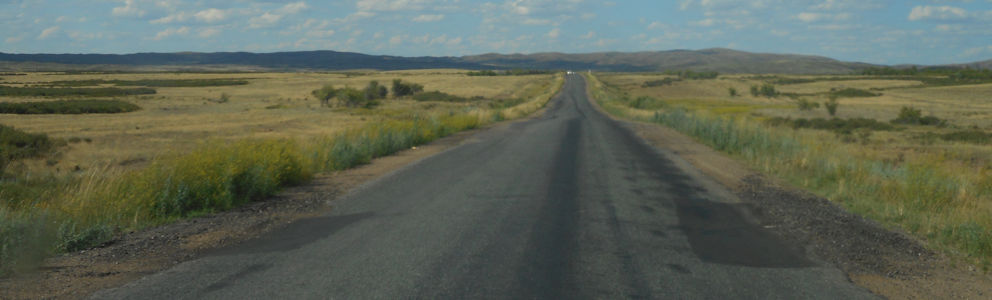
The wait is long, especially since there’s no indication of when anything will happen. Every time it seems something might happen, everyone pushes forward. Elderly women shove their way to the front. Women with small children squeeze ahead in the line. Nothing happens at the counters. Uzbeks are apparently being asked to return and travel via another border post. I can’t go back because my visa is already stamped. After an hour and a half, an officer gestures that I can come to the back with other tourists, much to the annoyance of the waiting people. Once behind the customs booth, I find I can only leave my travel luggage there. I have to go back and join the end of the line again. After three hours of waiting, the systems restart. Immediately, a rush forms at the counters. I am allowed to bypass the waiting line. At a separate counter, my passport is stamped. I am finally officially in Kazakhstan. I’m only staying in Kazakhstan for two days, so I exchange just a few dollars into tenges, the local currency. Then I take the bus toward Aksu-Djabagly, a nature reserve in southern Kazakhstan. Looking outside, I notice that everything has a Russian appearance—large monuments, tidy towns—but with an incredible amount of litter on the streets. I also see a yellow pipe running along the houses. This turns out to be the gas line. At every house, the pipe arches meters into the air, forming a gate. Ugly, but practical against earthquakes. The landscape of southern Kazakhstan is much greener than I expected. Trees are abundant in the rolling green terrain. In the distance, the peaks of the mountain ranges can be seen. At the beginning of the evening, I arrive at the guesthouse of Lammert and Elmira. Lammert is from the Netherlands, Elmira from Kazakhstan. After dinner, Lammert talks about the country. Kazakhstan is the ninth largest country in the world, but only fifteen million people live there. The desert area in the center is practically uninhabitable. Tourist locations are so far apart that combining them into a single trip is difficult, which limits the development of tourism. Due to the location of two mountain ranges, the south of Kazakhstan has unique nature. Special migratory birds also winter here. The high mountains bring relatively high rainfall, keeping the landscape green all year round.
 Kyrgyzstan
  Everything is used for transportation into the mountains
 China
China  A spice seller at the bazaar of Kashgar
 The old city of Kashgar
 The Id Kah Mosque is the oldest and largest mosque in China
Travelogue In the Footsteps of Marco Polo
Dag 2 | Turkey > The mausoleum of Atatürk
Dag 3 | Turkey > On the way to Cappadocia
Dag 4 | Turkey > Balloon flight over the rock formations
Dag 5 | Turkey > Rain in Kahta
Dag 6 | Turkey > In dense fog on Nemrut Dagi mountain
Dag 7 | Turkey > Friday prayers in Sanliurfa
Dag 8 | Turkey > The Kurdish capital Diyarbakir
Dag 9 | Turkey > The consequences of the earthquake in Van
Dag 10 | Turkey > The island Akdamar in Lake Van
Dag 11 | Turkey > The Ishak Pasha Palace in Dogubayazit
Dag 12 | Iran > Crossing the border to Iran
Dag 13 | Iran > Visiting a cave dwelling
Dag 14 | Iran > The Throne of Solomon
Dag 15 | Iran > Kurdish food in the park
Dag 16 | Iran > An afternoon tour through Hamadan
Dag 17 | Iran > The mausoleum of Fatima in Qom
Dag 18 | Iran > On the roof of the bazaar of Kashan
Dag 19 | Iran > The red mountain village Abyaneh
Dag 20 | Iran > Wandering through Esfahan
Dag 21 | Iran > A whirlwind on the square
Dag 22 | Iran > The shrine of Sayyed Ahmad
Dag 23 | Iran > Local encounters in Shiraz
Dag 24 | Iran > The tomb of Cyrus in Pasargadae
Dag 25 | Iran > The desert city Yazd
Dag 26 | Iran > Helicopters in the desert
Dag 27 | Iran > The golden tomb of Imam Reza
Dag 28 | Iran > Back to the Holy Shrine
Dag 29 | Turkmenistan > Across the border to Turkmenistan
Dag 30 | Turkmenistan > Ashgabat: Unique and bizarre
Dag 31 | Turkmenistan > Long bus ride to Mary
Dag 32 | Turkmenistan > The UNESCO city of Merv
Dag 33 | Uzbekistan > Mosques and madrasas in Bukhara
Dag 34 | Uzbekistan > On the roof of the madrasa
Dag 35 | Uzbekistan > The old palace of Timur Lenk
Dag 36 | Uzbekistan > Registan Square in Samarkand
Dag 37 | Uzbekistan > Football match Uzbekistan - Iran
Dag 38 | Kazakhstan > Computer malfunction at the border
Dag 39 | Kazakhstan > Hiking in Aksu Djabagly Nature Park
Dag 40 | Kyrgyzstan > Ala-Too Square in Bishkek
Dag 41 | Kyrgyzstan > The waterfall in Ala Archa Nature Park
Dag 42 | Kyrgyzstan > Tamchi on Lake Issyk Kul
Dag 43 | Kyrgyzstan > The old wooden cathedral of Karakol
Dag 44 | Kyrgyzstan > Overnight in a yurt
Dag 45 | Kyrgyzstan > On horseback through the valley
Dag 46 | Kyrgyzstan > Through the mountains to Lake Sol Kul
Dag 47 | Kyrgyzstan > Rain and snow around Sol Kul
Dag 48 | Kyrgyzstan > Caravanserai of Tash Rabat
Dag 49 | China > The Torugart Pass into China
Dag 50 | China > Kashgar, the city of the Uyghurs
Dag 51 | China > Cows and goats for sale
Dag 52 | China > By train through the Taklamakan desert
Dag 53 | China > Death Valley of China
Dag 54 | China > Ruins of Jiaohe and Gaochang
Dag 55 | China > The sand dunes of Dunhuang
Dag 56 | China > The Buddhist Mogao Caves
Dag 57 | China > The fort of Jiayuguan
Dag 58 | China > Temple of the Eight Immortals
Dag 59 | China > The Terracotta Army of Xian
Dag 60 | China > Cycling on the Xian city wall
Dag 61 | China > The Forbidden City
Dag 62 | China > Rainy Temple of Heaven
Dag 63 | China > On the Great Wall of China
Dag 64 | China > Meeting the giant panda
Dag 65 | China > There is no bus