
154 countries
(and areas)
 - Belize
- Benin
- Bhutan
- Bolivia
- Bonaire
- Bosnia and Herzegovina
- Botswana
- Brazil
- British Virgin Islands
- Brunei
- Bulgaria
- Cambodia
- Canada
- Cape Verde
- Chile
- China
- Costa Rica
- Croatia
- Cuba
- Curacao
- Cyprus
- Czech Republic
- Denmark
- Dominica
- Dominican Republic
- Egypt
- El Salvador
- England
- Estonia
- Eswatini (Swaziland)
- Ethiopia
- Fiji
- Finland
- France
- French Guiana
- Georgia
- Germany
- Gibraltar
- Greece
- Grenada
- Guadeloupe
- Guatemala
- Honduras
- Hong Kong
- Hungary
- Iceland
- India
- Indonesia
- Iran
- Ireland
- Israel
- Italy
- Jamaica
- Japan
- Jordan
- Kazakhstan
- Kenya
- Kosovo
- Kuwait
- Kyrgyzstan
- Laos
- Latvia
- Lebanon
- Lesotho
- Liechtenstein
- Lithuania
- Luxembourg
- Macau
- Madagascar
- Malawi
- Malaysia
- Maldives
- Malta
- Martinique
- Mexico
- Moldova
- Monaco
- Mongolia
- Montenegro
- Morocco
- Mozambique
- Namibia
- Nepal
- Netherlands
- New Zealand
- Nicaragua
- North Macedonia
- Northern Ireland
- Norway
- Oman
- Pakistan
- Palestine
- Peru
- Philippines
- Poland
- Portugal
- Qatar
- Republic of Korea
- Romania
- Russia
- Saint Kitts and Nevis
- Saint Lucia
- Saint Martin
- Saint Vincent and the Grenadines
- San Marino
- São Tomé and Principe
- Saudi Arabia
- Scotland
- Senegal
- Serbia
- Singapore
- Sint Maarten
- Slovakia
- Slovenia
- South Africa
- Spain
- Sri Lanka
- Suriname
- Sweden
- Switzerland
- Tajikistan
- Tanzania
- Thailand
- The Gambia
- Tibet
- Togo
- Transnistria
- Trinidad and Tobago
- Tunisia
- Turkey
- Turkmenistan
- Uganda
- United Arab Emirates
- United States
- Uruguay
- Uzbekistan
- Vatican City
- Vietnam
- Wales
- Zambia
- Zanzibar
- Belize
- Benin
- Bhutan
- Bolivia
- Bonaire
- Bosnia and Herzegovina
- Botswana
- Brazil
- British Virgin Islands
- Brunei
- Bulgaria
- Cambodia
- Canada
- Cape Verde
- Chile
- China
- Costa Rica
- Croatia
- Cuba
- Curacao
- Cyprus
- Czech Republic
- Denmark
- Dominica
- Dominican Republic
- Egypt
- El Salvador
- England
- Estonia
- Eswatini (Swaziland)
- Ethiopia
- Fiji
- Finland
- France
- French Guiana
- Georgia
- Germany
- Gibraltar
- Greece
- Grenada
- Guadeloupe
- Guatemala
- Honduras
- Hong Kong
- Hungary
- Iceland
- India
- Indonesia
- Iran
- Ireland
- Israel
- Italy
- Jamaica
- Japan
- Jordan
- Kazakhstan
- Kenya
- Kosovo
- Kuwait
- Kyrgyzstan
- Laos
- Latvia
- Lebanon
- Lesotho
- Liechtenstein
- Lithuania
- Luxembourg
- Macau
- Madagascar
- Malawi
- Malaysia
- Maldives
- Malta
- Martinique
- Mexico
- Moldova
- Monaco
- Mongolia
- Montenegro
- Morocco
- Mozambique
- Namibia
- Nepal
- Netherlands
- New Zealand
- Nicaragua
- North Macedonia
- Northern Ireland
- Norway
- Oman
- Pakistan
- Palestine
- Peru
- Philippines
- Poland
- Portugal
- Qatar
- Republic of Korea
- Romania
- Russia
- Saint Kitts and Nevis
- Saint Lucia
- Saint Martin
- Saint Vincent and the Grenadines
- San Marino
- São Tomé and Principe
- Saudi Arabia
- Scotland
- Senegal
- Serbia
- Singapore
- Sint Maarten
- Slovakia
- Slovenia
- South Africa
- Spain
- Sri Lanka
- Suriname
- Sweden
- Switzerland
- Tajikistan
- Tanzania
- Thailand
- The Gambia
- Tibet
- Togo
- Transnistria
- Trinidad and Tobago
- Tunisia
- Turkey
- Turkmenistan
- Uganda
- United Arab Emirates
- United States
- Uruguay
- Uzbekistan
- Vatican City
- Vietnam
- Wales
- Zambia
- Zanzibar


Copyright 2004 - 2026
Veeronline.nl Travel Adventures
links

Home > Turkey 
5 Travel adventures Turkey

City Trip Istanbul
10-13 oktober 2024 (4 days)After the conquest of Constantinople, Sultan Mehmet II had the Topkapi Palace built. The palace was completed in 1465 and became the seat of the Sultan of the Ottoman Empire. Sultan Murat III added the Harem in the sixteenth century. We pass several rooms that belonged to the sultans. The Sultan’s chamber is the largest and perhaps the most beautiful room in the Harem. From the throne, the sultan could watch the entertainment in this room. How beautiful this is. Besides the Harem, the palace contains many other beautiful rooms. We visit the Pavilion of the Holy Mantle, a display of Islamic holy relics. For Muslims, this is a pilgrimage site.
 Turkey
  The remains of the gateway of Perge
 A strong storm is brewing near the top
 The Hagia Sophia became a mosque in 1453
 The impressive prayer hall of the Sultan Ahmed Mosque Blue Mosque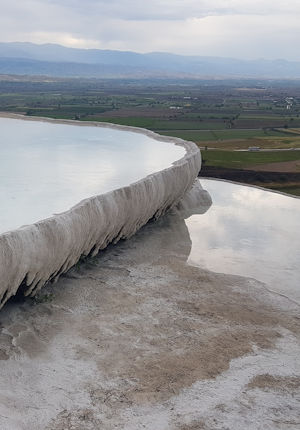
Pamukkale and Ephesus
8 - 15 mei 2022 (8 days)The spectacular white terraces in Pamukkale are formed because carbon dioxide rises from the warm spring water and deposits calcium carbonate. This creates the special limestone formation. I take off my shoes and continue walking barefoot. The stone structure sometimes hurts under my feet. I am also not used to walking barefoot. The warm spring water flows over the limestone. In basins along the path, the light blue water remains standing. A beautiful sight in combination with the white lime deposits. However, behind us, dark clouds are forming. Pitch-black clouds. Thunder sounds in the distance as well. Will we stay dry? We have few options halfway up the mountain slope. There is nothing left but to keep walking.

From Amsterdam to Tokyo
1 mei 2016 - 8 augustus 2016 (100 days)Because we couldn't drive through the mountains yesterday afternoon, we have to backtrack a little to visit the Sumela Monastery. We can only view the monastery from the outside, as it is closed for renovations until September. We set off early because we also want to cross the border into Georgia today. First, we drive back to Trabzon and turn into the valley toward the Sumela Monastery. As soon as we take the exit to the monastery, the road narrows and the cliffs become steeper. The surroundings are stunning. When we enter Altindere National Park, the man at the gate tells us the monastery is kapali. We’ve come to know that word by now — it means closed. We can only take a photo from outside, he indicates with his hands. We continue all the way to the viewpoint. The Sumela Monastery appears to cling to the mountainside. The entrance is closed, so we can’t get a closer look. Unfortunately.
In the Footsteps of Marco Polo
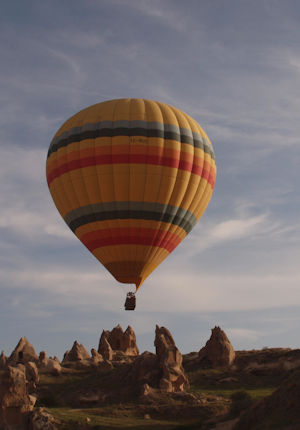
28 april - 1 juli 2012 (65 days)Soon after, I take off in the hot air balloon. The ground quickly shrinks beneath me. What a wonderful experience. The weather is beautifully sunny. The view over the valley is fantastic. Jim, the balloon pilot, flies the balloon just over the rock formations. By adjusting altitude, he can steer the balloon. At higher altitudes, the air currents move in a different direction. I can see the cave dwellings I hiked past yesterday. I spot Uçhisar Castle and the famous mushroom-shaped formations. Beautiful! Eventually, Jim lowers the balloon into a valley. We fly just above the ground. Right before some rocky points, he pulls the balloon up again slightly. I see the shadow of the balloon cast onto the rocks.
Interrail vacation Europe
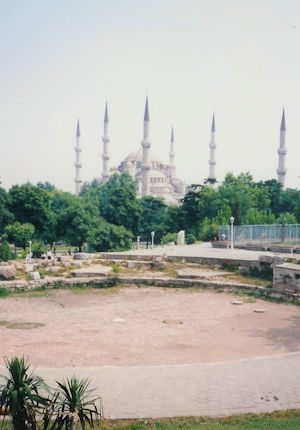
13 juli -7 aug 1992 (28 days)The bazaar hall is not open on Sundays, but outside in the street it is extremely busy. Everywhere I am approached with the best bargains and offers. I look for a reliable place to eat. Street food is ruled out. I step into a fast-food restaurant. Here, the four of us eat together for about 60,000 Turkish lira (ƒ12,-). The walk through the city continues to the Blue Mosque. I am only allowed in with covered legs. A cloth for this can be borrowed free of charge. I do, however, have to take off my shoes. The mosque is covered with carpets. The enormous space and beautiful ceiling are marred by the low-hanging lighting. The second large mosque can only be visited in combination with a museum. I do not go inside and instead walk on to the palace. Time is too short for a proper visit, so I decide to return to the palace tomorrow.
Travel videos
Video: Bucket List Tip: Turkey – The Ancient Greek City of Ephesus
A short video about Greek and Roman antiquity in Turkey