
154 countries
(and areas)
 - Belize
- Benin
- Bhutan
- Bolivia
- Bonaire
- Bosnia and Herzegovina
- Botswana
- Brazil
- British Virgin Islands
- Brunei
- Bulgaria
- Cambodia
- Canada
- Cape Verde
- Chile
- China
- Costa Rica
- Croatia
- Cuba
- Curacao
- Cyprus
- Czech Republic
- Denmark
- Dominica
- Dominican Republic
- Egypt
- El Salvador
- England
- Estonia
- Eswatini (Swaziland)
- Ethiopia
- Fiji
- Finland
- France
- French Guiana
- Georgia
- Germany
- Gibraltar
- Greece
- Grenada
- Guadeloupe
- Guatemala
- Honduras
- Hong Kong
- Hungary
- Iceland
- India
- Indonesia
- Iran
- Ireland
- Israel
- Italy
- Jamaica
- Japan
- Jordan
- Kazakhstan
- Kenya
- Kosovo
- Kuwait
- Kyrgyzstan
- Laos
- Latvia
- Lebanon
- Lesotho
- Liechtenstein
- Lithuania
- Luxembourg
- Macau
- Madagascar
- Malawi
- Malaysia
- Maldives
- Malta
- Martinique
- Mexico
- Moldova
- Monaco
- Mongolia
- Montenegro
- Morocco
- Mozambique
- Namibia
- Nepal
- Netherlands
- New Zealand
- Nicaragua
- North Macedonia
- Northern Ireland
- Norway
- Oman
- Pakistan
- Palestine
- Peru
- Philippines
- Poland
- Portugal
- Qatar
- Republic of Korea
- Romania
- Russia
- Saint Kitts and Nevis
- Saint Lucia
- Saint Martin
- Saint Vincent and the Grenadines
- San Marino
- São Tomé and Principe
- Saudi Arabia
- Scotland
- Senegal
- Serbia
- Singapore
- Sint Maarten
- Slovakia
- Slovenia
- South Africa
- Spain
- Sri Lanka
- Suriname
- Sweden
- Switzerland
- Tajikistan
- Tanzania
- Thailand
- The Gambia
- Tibet
- Togo
- Transnistria
- Trinidad and Tobago
- Tunisia
- Turkey
- Turkmenistan
- Uganda
- United Arab Emirates
- United States
- Uruguay
- Uzbekistan
- Vatican City
- Vietnam
- Wales
- Zambia
- Zanzibar
- Belize
- Benin
- Bhutan
- Bolivia
- Bonaire
- Bosnia and Herzegovina
- Botswana
- Brazil
- British Virgin Islands
- Brunei
- Bulgaria
- Cambodia
- Canada
- Cape Verde
- Chile
- China
- Costa Rica
- Croatia
- Cuba
- Curacao
- Cyprus
- Czech Republic
- Denmark
- Dominica
- Dominican Republic
- Egypt
- El Salvador
- England
- Estonia
- Eswatini (Swaziland)
- Ethiopia
- Fiji
- Finland
- France
- French Guiana
- Georgia
- Germany
- Gibraltar
- Greece
- Grenada
- Guadeloupe
- Guatemala
- Honduras
- Hong Kong
- Hungary
- Iceland
- India
- Indonesia
- Iran
- Ireland
- Israel
- Italy
- Jamaica
- Japan
- Jordan
- Kazakhstan
- Kenya
- Kosovo
- Kuwait
- Kyrgyzstan
- Laos
- Latvia
- Lebanon
- Lesotho
- Liechtenstein
- Lithuania
- Luxembourg
- Macau
- Madagascar
- Malawi
- Malaysia
- Maldives
- Malta
- Martinique
- Mexico
- Moldova
- Monaco
- Mongolia
- Montenegro
- Morocco
- Mozambique
- Namibia
- Nepal
- Netherlands
- New Zealand
- Nicaragua
- North Macedonia
- Northern Ireland
- Norway
- Oman
- Pakistan
- Palestine
- Peru
- Philippines
- Poland
- Portugal
- Qatar
- Republic of Korea
- Romania
- Russia
- Saint Kitts and Nevis
- Saint Lucia
- Saint Martin
- Saint Vincent and the Grenadines
- San Marino
- São Tomé and Principe
- Saudi Arabia
- Scotland
- Senegal
- Serbia
- Singapore
- Sint Maarten
- Slovakia
- Slovenia
- South Africa
- Spain
- Sri Lanka
- Suriname
- Sweden
- Switzerland
- Tajikistan
- Tanzania
- Thailand
- The Gambia
- Tibet
- Togo
- Transnistria
- Trinidad and Tobago
- Tunisia
- Turkey
- Turkmenistan
- Uganda
- United Arab Emirates
- United States
- Uruguay
- Uzbekistan
- Vatican City
- Vietnam
- Wales
- Zambia
- Zanzibar


Copyright 2004 - 2026
Veeronline.nl Travel Adventures
links
Home > Germany 
14 Travel adventures Germany

Wintersport Kössen 2026
13 - 21 februari 2026 (9 days)Schloss Augustusburg in Brühl, near Cologne, is one of the most important Rococo castles in Germany and is listed as a UNESCO World Heritage Site. It was built in the 18th century as the residence of the Prince-Electors of Cologne. The interior is richly decorated with stucco work, frescoes, and an impressive staircase designed by Balthasar Neumann. Schloss Wilhelmshöhe is located in the extensive Bergpark Wilhelmshöhe in Kassel. This neoclassical palace from the late 18th century served as a summer residence for landgraves and later emperors. Today it houses an art museum with works by artists such as Rembrandt. The park, with its monumental water features and the gigantic Hercules statue, makes the whole area an impressive cultural and natural landscape.
 Germany
  The charming narrow streets of Rothenburg
 The Commerzbank building in Dusseldorf
 The Burgplatz in Dusseldorf
 Historic old town hall with a stately facade built in the 16th century
Cruise 2025 Caribbean
21 januari - 7 februari 2025 (18 days)When we want to buy a ticket for the metro, it is unclear whether Neuss falls within the same zone or if we need a different ticket. We can’t figure it out at the ticket machine. We choose a regular single ticket. We pass our hotel and get off shortly after at Neuss Hauptbahnhof. Here indeed a different zone applies. We probably traveled the last three stops without a valid ticket. From the station, we walk into Neuss’s shopping area. On the left, we see a simple Russian Orthodox church. In one of the side streets, we see a terrace that probably belongs to a café. We go inside and order drinks. Further into the center lies the Münster of Neuss. Construction of this unusual church began in 1204. The church supposedly houses relics, making it a pilgrimage site. In the nineteenth century, a lightning strike caused the hundred-meter-high church tower to collapse. The tower was never rebuilt.

Beer Tasting in Berlin
20 - 22 oktober 2023 (3 days)Berlin, the vibrant capital of Germany. The city breathes history, with iconic landmarks such as the Berlin Wall, the Brandenburg Gate, and Checkpoint Charlie. Culture lovers will enjoy world-class museums like the Pergamon Museum and the Alte Nationalgalerie. Berlin is known for its diverse and lively art and music scene — from street art in Kreuzberg to electronic music in clubs like Berghain. The city is a melting pot of cultures, offering a varied cuisine and bustling markets such as Hackescher Markt.

Northern Italy and San Marino
24 juni - 13 juli 2022 (20 days)In the market square, St. Martin's Cathedral dominates the streetscape. From the square, the massive size of the church is clearly visible. Inside, the basilica is a bit disappointing. The Romanesque architecture of the church, built in 975, makes it dark and gloomy. In the 11th century, the church was destroyed by fire twice and subsequently restored. We walk through the adjacent cloister. We skip the museum inside the monastery—it’s only open for another fifteen minutes.

Winter Sports in Kssen
25 februari - 5 maart 2022 (9 days)Dinkelsbühl is a historic town on the Romantic Road. The town, like the better-known Rothenburg ob der Tauber, is completely walled. It is not yet nine o’clock when I drive into the almost empty parking lot. I enter the city through the old gateway. I follow the city walk through town. I walk around the Münster St. Georg church and follow the city wall to the Rothenburger Tor. Via the Musikpavillon, I come back inside the city walls. I pass the Kornhaus Youth Hostel and the Segringer Tor. On the south side, I climb a staircase on the city wall. Unlike Rothenburg, you cannot walk very far on the walls here. I descend the same stairs again. After an hour and a half, I am back at the parking lot.

Road Trip Germany and Switzerland
15 - 30 augustus 2020 (16 days)The bed and breakfast is located right in the center of Monschau. Everywhere are the typical half-timbered houses. It feels as if time has stood still here. We wander through the streets. The old town of Monschau isn’t very large, but every street is charming. Through narrow alleyways and stairs, we reach the Haller ruins—remnants of old fortifications. The view from here is especially beautiful. On the opposite hill stands the castle where the Counts of Jülich built a fortress in the 13th century. Since the early 20th century, the castle has housed a youth hostel. On a terrace by the water, we soak in the atmosphere of Monschau while enjoying a drink. In the afternoon, we visit the Red House. In this characteristic red building prominently located in the center, the Scheibler family once lived. They started the production and trade of linen in Monschau. Following their lead, more producers settled in the town.

City Trip Berlin
31 juli - 5 augustus 2020 (6 days)Along the banks of the River Spree, right next to the Oberbaum Bridge, a section of the original Berlin Wall still stands. Once, a 46-kilometre-long wall divided the two parts of the city. Here, at the East Side Gallery, 1,300 metres of this concrete barrier remain. A total of 128 artists have adorned the wall with artwork. The most famous painting is the ‘kiss between Honecker and Brezhnev.’ We walk along the Berlin Wall. Where the wall ends — but once curved away — we also turn. At the St. Thomas Church, the wall once ran directly alongside the building. A photo exhibition inside the church shows how the wall, the guard towers, and the no-man’s-land once divided the city. More than a hundred people died right here attempting to flee from east to west.

A Road Trip Through Europe
8 juni - 7 juli 2018 (30 days)We turn off towards the village of Hohenschwangau. This is where Neuschwanstein Castle is located. Built in 1869 at the request of King Ludwig II of Bavaria, the castle, perched on a rocky outcrop, is a striking sight. Six weeks before its completion in 1886, Ludwig died. Since then, the castle has always served as a museum and has been visited by more than 60 million people. We park the car in the village, and as we step out, we can already see the castle in the mountains. From the ticket office, it is still quite a climb uphill. Our tour doesn’t start until noon, and we are early, so we decide not to go to the castle right away. Instead, we follow the signs to Marienbrücke. The steep path takes us higher and higher, and after a 30-minute walk, we reach the bridge. From here, we have a stunning view of Neuschwanstein Castle and the surrounding landscape.

To the Far North of Europe
1 juli 2017 -26 juli 2017 (26 days)Because it rained last night, we didn’t visit the Holländisches Viertel (Dutch Quarter). We drive there by car, which proves to be a challenge. A main road is closed for construction. When we turn left, the navigation keeps redirecting us back to the blocked street. This isn’t getting us anywhere. Only when we try the other direction does the GPS quickly find a new route. The Dutch Quarter consists of 134 red-brick houses. It’s the largest collection of houses built in Dutch style outside the Netherlands. After this visit, we leave Potsdam and return to the highway. We pass Berlin to the south and continue eastward. Just before the border, we stop to refuel. The cafeteria doesn’t look appealing for breakfast. We use the navigation to find a bakery and end up in the village of Müllrose. We order two rolls and coffee in a small shop. Meanwhile, our car parked in the village square attracts some attention.
From Amsterdam to Tokyo
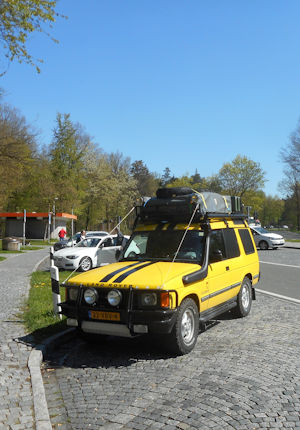
1 mei 2016 - 8 augustus 2016 (100 days)After about two hours of driving, we cross the first border of this trip. We continue toward the Ruhr area. Things go wrong near Oberhausen — we take an exit too early. The GPS quickly recalculates, but this puts us on a different route to Cologne than planned — and different from the motorcyclists' route. After a short lunch at a roadside diner, we drive on to Würzburg, our first overnight stop. We’re the first to arrive at the hotel. It’s 4:30 PM. We’ve logged 531 kilometers today. With a 5% correction due to oversized tires, that’s about 560 km. In front of the hotel, we meet another motorcyclist. “Are you friends of Wilco?” he asks. It’s Mike. He lives just south of Frankfurt and recognized our vehicle from the website. We have a beer together on the terrace.
Sauerland 2006
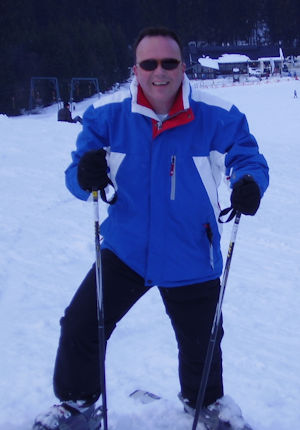
10 en 11 maart 2006 (2 days)A staff outing with AEGON to the snow in Winterberg. Early in the morning we board the bus in The Hague. In about four hours we drive to Winterberg. We quickly pick up our skis from the rental shop and head to the slopes. The snow isn’t optimal. It’s thawing and the snow is soft. Still, skiing works out just fine. Each participant has received a blue-and-white AEGON jacket. Sometimes it’s hard to tell who is who. Especially in the evening after après-ski and dinner, it’s important to make sure you take the right jacket back with you. After breakfast the next morning, we head back to the Netherlands.
Vacation Westernbodefeld
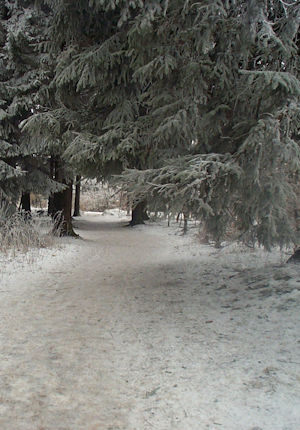
30 dec 2003 - 3 jan 2004 (5 days)Just a few hours’ drive away lies the Winterberg ski area in Germany, an ideal destination to celebrate the turn of the year from 2003 to 2004 with family. Although the slopes around Winterberg aren’t very long and the mountains aren’t high, it still offers a fantastic skiing experience. The surroundings are perfect for beautiful walks, and in Winterberg you can even go ice skating in the indoor ice rink. Whether you’re looking for action on the slopes or want to enjoy a relaxed winter atmosphere, Winterberg has something for everyone. It’s a perfect destination for a winter holiday with the family.
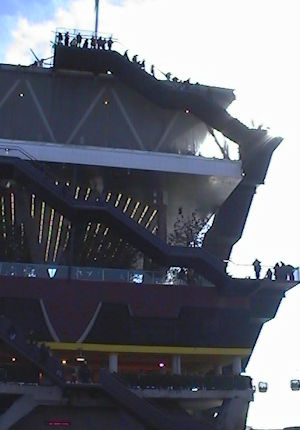
Expo 2000 Hanover
Oktober 2000 (2 days)The World Exposition of 2000, under the name Expo 2000, was held in the German city of Hanover and partly in the adjacent town of Laatzen, south of Hanover. It was the 32nd universal world exhibition and the first in Germany. The Expo took place from June 1 to October 31 on the exhibition grounds in the south of the city, which were significantly expanded for the occasion. Various countries showcased their vision on sustainability and technological developments through architecture and construction. The Netherlands presented itself in a six-storey pavilion, each with unique landscapes. The floors were filled with trees, tulips, dunes, and on the roof, there was a large pond.

Interrail vacation Europe
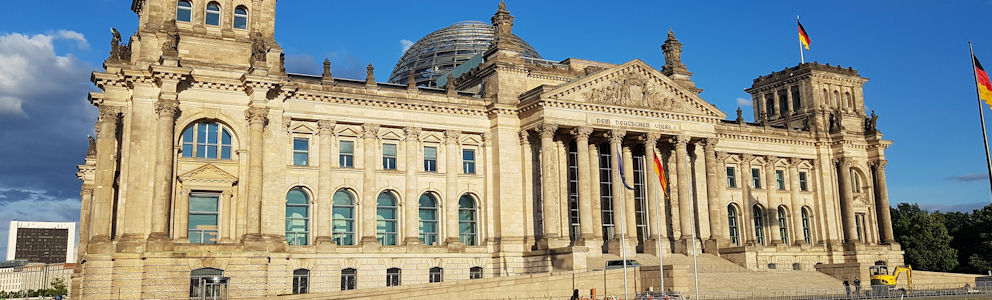
13 juli -7 aug 1992 (28 days)I get off at Alexanderplatz. Judging by the style of the buildings, I think I’m in former West Berlin. Wrong! From the 200-meter-high television tower, it turns out this is actually the center of East Berlin. From the tower, using a guidebook, we plan our route through the city, trying to make as much use of the metro as possible to see everything in one day. With the S-Bahn, I go to the Brandenburg Gate. Here, I can no longer tell exactly where the former wall once stood. It seems everything has been done to erase this history. At the Reichstag, the outlines are still visible on the ground. Inside, I visit an exhibition about the history of Germany and the Reichstag. From the Brandenburg Gate, I walk to Potsdamer Platz, where a small section of the wall has been preserved. A few streets further is Checkpoint Charlie, the former border with the American sector of Berlin. Here, a guardhouse remains as a reminder of reunification.
Travel videos
Video: Bucket List Tip: Germany – The Monastery of Ottobeuren
A short video about the beautiful basilica and monastery of Ottobeuren