
154 countries
(and areas)
 - Belize
- Benin
- Bhutan
- Bolivia
- Bonaire
- Bosnia and Herzegovina
- Botswana
- Brazil
- British Virgin Islands
- Brunei
- Bulgaria
- Cambodia
- Canada
- Cape Verde
- Chile
- China
- Costa Rica
- Croatia
- Cuba
- Curacao
- Cyprus
- Czech Republic
- Denmark
- Dominica
- Dominican Republic
- Egypt
- El Salvador
- England
- Estonia
- Eswatini (Swaziland)
- Ethiopia
- Fiji
- Finland
- France
- French Guiana
- Georgia
- Germany
- Gibraltar
- Greece
- Grenada
- Guadeloupe
- Guatemala
- Honduras
- Hong Kong
- Hungary
- Iceland
- India
- Indonesia
- Iran
- Ireland
- Israel
- Italy
- Jamaica
- Japan
- Jordan
- Kazakhstan
- Kenya
- Kosovo
- Kuwait
- Kyrgyzstan
- Laos
- Latvia
- Lebanon
- Lesotho
- Liechtenstein
- Lithuania
- Luxembourg
- Macau
- Madagascar
- Malawi
- Malaysia
- Maldives
- Malta
- Martinique
- Mexico
- Moldova
- Monaco
- Mongolia
- Montenegro
- Morocco
- Mozambique
- Namibia
- Nepal
- Netherlands
- New Zealand
- Nicaragua
- North Macedonia
- Northern Ireland
- Norway
- Oman
- Pakistan
- Palestine
- Peru
- Philippines
- Poland
- Portugal
- Qatar
- Republic of Korea
- Romania
- Russia
- Saint Kitts and Nevis
- Saint Lucia
- Saint Martin
- Saint Vincent and the Grenadines
- San Marino
- São Tomé and Principe
- Saudi Arabia
- Scotland
- Senegal
- Serbia
- Singapore
- Sint Maarten
- Slovakia
- Slovenia
- South Africa
- Spain
- Sri Lanka
- Suriname
- Sweden
- Switzerland
- Tajikistan
- Tanzania
- Thailand
- The Gambia
- Tibet
- Togo
- Transnistria
- Trinidad and Tobago
- Tunisia
- Turkey
- Turkmenistan
- Uganda
- United Arab Emirates
- United States
- Uruguay
- Uzbekistan
- Vatican City
- Vietnam
- Wales
- Zambia
- Zanzibar
- Belize
- Benin
- Bhutan
- Bolivia
- Bonaire
- Bosnia and Herzegovina
- Botswana
- Brazil
- British Virgin Islands
- Brunei
- Bulgaria
- Cambodia
- Canada
- Cape Verde
- Chile
- China
- Costa Rica
- Croatia
- Cuba
- Curacao
- Cyprus
- Czech Republic
- Denmark
- Dominica
- Dominican Republic
- Egypt
- El Salvador
- England
- Estonia
- Eswatini (Swaziland)
- Ethiopia
- Fiji
- Finland
- France
- French Guiana
- Georgia
- Germany
- Gibraltar
- Greece
- Grenada
- Guadeloupe
- Guatemala
- Honduras
- Hong Kong
- Hungary
- Iceland
- India
- Indonesia
- Iran
- Ireland
- Israel
- Italy
- Jamaica
- Japan
- Jordan
- Kazakhstan
- Kenya
- Kosovo
- Kuwait
- Kyrgyzstan
- Laos
- Latvia
- Lebanon
- Lesotho
- Liechtenstein
- Lithuania
- Luxembourg
- Macau
- Madagascar
- Malawi
- Malaysia
- Maldives
- Malta
- Martinique
- Mexico
- Moldova
- Monaco
- Mongolia
- Montenegro
- Morocco
- Mozambique
- Namibia
- Nepal
- Netherlands
- New Zealand
- Nicaragua
- North Macedonia
- Northern Ireland
- Norway
- Oman
- Pakistan
- Palestine
- Peru
- Philippines
- Poland
- Portugal
- Qatar
- Republic of Korea
- Romania
- Russia
- Saint Kitts and Nevis
- Saint Lucia
- Saint Martin
- Saint Vincent and the Grenadines
- San Marino
- São Tomé and Principe
- Saudi Arabia
- Scotland
- Senegal
- Serbia
- Singapore
- Sint Maarten
- Slovakia
- Slovenia
- South Africa
- Spain
- Sri Lanka
- Suriname
- Sweden
- Switzerland
- Tajikistan
- Tanzania
- Thailand
- The Gambia
- Tibet
- Togo
- Transnistria
- Trinidad and Tobago
- Tunisia
- Turkey
- Turkmenistan
- Uganda
- United Arab Emirates
- United States
- Uruguay
- Uzbekistan
- Vatican City
- Vietnam
- Wales
- Zambia
- Zanzibar


Copyright 2004 - 2026
Veeronline.nl Travel Adventures
links

Home > Italy 
6 Travel adventures Italy

Sardinia and Corsica
5 - 21 mei 2024 (17 days)At the end of the Bronze Age, about fifteen hundred years before Christ, the Nuragic civilization arose in this area. They came from southern France and the Iberian Peninsula. Across the entire island, they built Nuraghi, granite stone defensive towers. One of these towers is Nuraghe Albucciu. When we arrive at the remains of the tower, we find several excavations nearby. We can buy a combination ticket for multiple locations, all close together. We decide to buy a ticket for four locations. The first, Nuraghe Albucciu, is across the road. Through a pedestrian tunnel, we reach the complex. We see the remains of what must once have been a fortified dwelling.

 Italy
Italy  The Cattedrale di San Lorenzo in the old city of Genoa
 The Palazzo Vecchio is the town hall of Florence
 One of the corner towers of Nuraghe La Prisgiona
 Ready to fly home again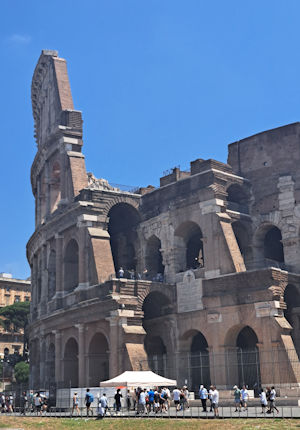
City Trip Rome
13-17 juli 2023 2021 (5 days)The Colosseum was the largest amphitheater of the Romans and was completed in 80 AD. Simone takes care to explain as much as possible in shady spots. It is hardly imaginable that in the past more than 50,000 people could be seated in the arena. In the space beneath the arena, the animals walked. Using a clever hoisting mechanism, the animals were lifted into the arena. The emperor sat at the short end of the amphitheater. From the second tier of the Colosseum, the size of the amphitheater is clearly visible. Very impressive.
Northern Italy and San Marino
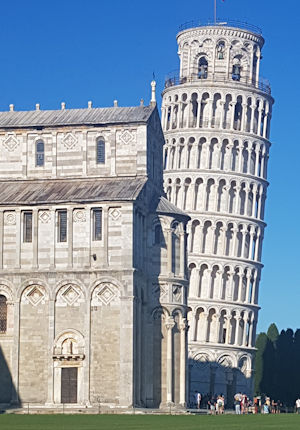
24 juni - 13 juli 2022 (20 days)It has recently become possible again for tourists to enter the Leaning Tower of Pisa. At the entrance, our ticket is scanned and checked for weapons. The security check is minimal. Inside the tower, a marble staircase winds its way up. The steps are worn down. Because the tower leans four meters out of line, walking up the circular staircase is tricky. At times, you lean forward, left, backward, or right. It feels a bit like being at an amusement park—or slightly drunk. We climb the 251 steps without much trouble. From the top, we have a view of all of Pisa. A small staircase leads to the highest platform, where the bells hang.

City Trip Naples
14 - 17 februari 2019 (4 days)From the entrance to the National Park, a trail climbs the side of the volcano. It’s a steep hike. On the right, there’s a view of Naples, more than a thousand meters below. On the left, the crater of Mount Vesuvius gets closer and closer. Occasionally, a stone tumbles down the slope. I stay alert. After half an hour, I reach the crater. Only a small plume of smoke hints at the volcanic activity. It’s special to stand atop the famous Vesuvius. I take in the crater and the magnificent view. Going downhill is much easier.

Interrail vacation Europe
13 juli -7 aug 1992 (28 days)Of course, I also climb the steps to the roof of the cathedral. It’s no fewer than 267 steps to reach the roof of the Duomo. From there, I have a magnificent view over the city of Milan. In the distance lies my next goal: the San Siro Stadium of AC Milan. On the way to the stadium, I eat an outrageously expensive hamburger sandwich. I meet some Italians who drop their jaws in surprise when I tell them we plan to walk to the stadium. “It’s two kilometers, that’s at least two hours walking.” After quite a trek, passing through the castle gardens and past the arena, the stadium finally appears before me. The immense building is far too large to capture in a photo. Even after crossing the parking lot, I still can’t fit it all in the frame. Unfortunately, the stadium is not open for tours.

Interrail Europe 1991
juli - augustus 1991 (22 days)From the station, we walk straight into Venice. We find ourselves right at the canal. We look for a ferry to the campsite, which is on an island just off the coast. From the water, we see the famous Venetian houses. Luckily, there’s still space at the campsite. Just after we set up our tents, some fellow campers tell us a small whirlwind passed over the campsite earlier in the week. Tents were blown over the wall of the adjacent barracks. As a result, some travelers left early, which is why there’s now space available.
Travel videos
Video: Bucket List Tip: Italy – The Colosseum
A short video about the Colosseum in Rome