
154 countries
(and areas)
 - Belize
- Benin
- Bhutan
- Bolivia
- Bonaire
- Bosnia and Herzegovina
- Botswana
- Brazil
- British Virgin Islands
- Brunei
- Bulgaria
- Cambodia
- Canada
- Cape Verde
- Chile
- China
- Costa Rica
- Croatia
- Cuba
- Curacao
- Cyprus
- Czech Republic
- Denmark
- Dominica
- Dominican Republic
- Egypt
- El Salvador
- England
- Estonia
- Eswatini (Swaziland)
- Ethiopia
- Fiji
- Finland
- France
- French Guiana
- Georgia
- Germany
- Gibraltar
- Greece
- Grenada
- Guadeloupe
- Guatemala
- Honduras
- Hong Kong
- Hungary
- Iceland
- India
- Indonesia
- Iran
- Ireland
- Israel
- Italy
- Jamaica
- Japan
- Jordan
- Kazakhstan
- Kenya
- Kosovo
- Kuwait
- Kyrgyzstan
- Laos
- Latvia
- Lebanon
- Lesotho
- Liechtenstein
- Lithuania
- Luxembourg
- Macau
- Madagascar
- Malawi
- Malaysia
- Maldives
- Malta
- Martinique
- Mexico
- Moldova
- Monaco
- Mongolia
- Montenegro
- Morocco
- Mozambique
- Namibia
- Nepal
- Netherlands
- New Zealand
- Nicaragua
- North Macedonia
- Northern Ireland
- Norway
- Oman
- Pakistan
- Palestine
- Peru
- Philippines
- Poland
- Portugal
- Qatar
- Republic of Korea
- Romania
- Russia
- Saint Kitts and Nevis
- Saint Lucia
- Saint Martin
- Saint Vincent and the Grenadines
- San Marino
- São Tomé and Principe
- Saudi Arabia
- Scotland
- Senegal
- Serbia
- Singapore
- Sint Maarten
- Slovakia
- Slovenia
- South Africa
- Spain
- Sri Lanka
- Suriname
- Sweden
- Switzerland
- Tajikistan
- Tanzania
- Thailand
- The Gambia
- Tibet
- Togo
- Transnistria
- Trinidad and Tobago
- Tunisia
- Turkey
- Turkmenistan
- Uganda
- United Arab Emirates
- United States
- Uruguay
- Uzbekistan
- Vatican City
- Vietnam
- Wales
- Zambia
- Zanzibar
- Belize
- Benin
- Bhutan
- Bolivia
- Bonaire
- Bosnia and Herzegovina
- Botswana
- Brazil
- British Virgin Islands
- Brunei
- Bulgaria
- Cambodia
- Canada
- Cape Verde
- Chile
- China
- Costa Rica
- Croatia
- Cuba
- Curacao
- Cyprus
- Czech Republic
- Denmark
- Dominica
- Dominican Republic
- Egypt
- El Salvador
- England
- Estonia
- Eswatini (Swaziland)
- Ethiopia
- Fiji
- Finland
- France
- French Guiana
- Georgia
- Germany
- Gibraltar
- Greece
- Grenada
- Guadeloupe
- Guatemala
- Honduras
- Hong Kong
- Hungary
- Iceland
- India
- Indonesia
- Iran
- Ireland
- Israel
- Italy
- Jamaica
- Japan
- Jordan
- Kazakhstan
- Kenya
- Kosovo
- Kuwait
- Kyrgyzstan
- Laos
- Latvia
- Lebanon
- Lesotho
- Liechtenstein
- Lithuania
- Luxembourg
- Macau
- Madagascar
- Malawi
- Malaysia
- Maldives
- Malta
- Martinique
- Mexico
- Moldova
- Monaco
- Mongolia
- Montenegro
- Morocco
- Mozambique
- Namibia
- Nepal
- Netherlands
- New Zealand
- Nicaragua
- North Macedonia
- Northern Ireland
- Norway
- Oman
- Pakistan
- Palestine
- Peru
- Philippines
- Poland
- Portugal
- Qatar
- Republic of Korea
- Romania
- Russia
- Saint Kitts and Nevis
- Saint Lucia
- Saint Martin
- Saint Vincent and the Grenadines
- San Marino
- São Tomé and Principe
- Saudi Arabia
- Scotland
- Senegal
- Serbia
- Singapore
- Sint Maarten
- Slovakia
- Slovenia
- South Africa
- Spain
- Sri Lanka
- Suriname
- Sweden
- Switzerland
- Tajikistan
- Tanzania
- Thailand
- The Gambia
- Tibet
- Togo
- Transnistria
- Trinidad and Tobago
- Tunisia
- Turkey
- Turkmenistan
- Uganda
- United Arab Emirates
- United States
- Uruguay
- Uzbekistan
- Vatican City
- Vietnam
- Wales
- Zambia
- Zanzibar


Copyright 2004 - 2026
Veeronline.nl Travel Adventures
links

Home > Montenegro 
3 Travel adventures Montenegro
A Road Trip Through Europe
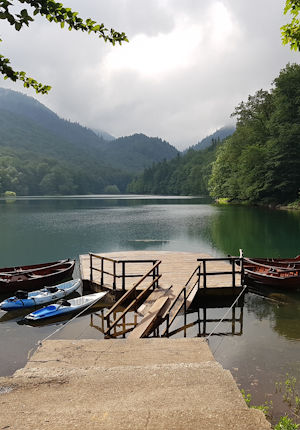
8 juni - 7 juli 2018 (30 days)The main E65 road to Kolasin also winds through the mountains. Trucks crawl slowly uphill. In one of the villages, the police are checking speed with a laser gun. We were speeding and get pulled over. The officer kindly asks us to slow down and lets us go—no ticket, thankfully. Soon after, we turn into Biogradska Gora National Park. We buy two entrance tickets and drive on to the lake. Camping is allowed around the lake. At the reception, we pay three euros for the night. We find a flat spot in the rocky terrain. Even though the car isn’t completely level, we still set up the rooftop tent. We enjoy a drink at the tent. Before starting dinner, we hike around Biogradska Lake. We walked this trail four years ago—it’s nice to return. The trail is 3.5 kilometers long. As the sun sets behind the mountains, it gets cooler. We prepare macaroni by the tent. With a glass of wine, we enjoy our meal in the forest.
 Montenegro
 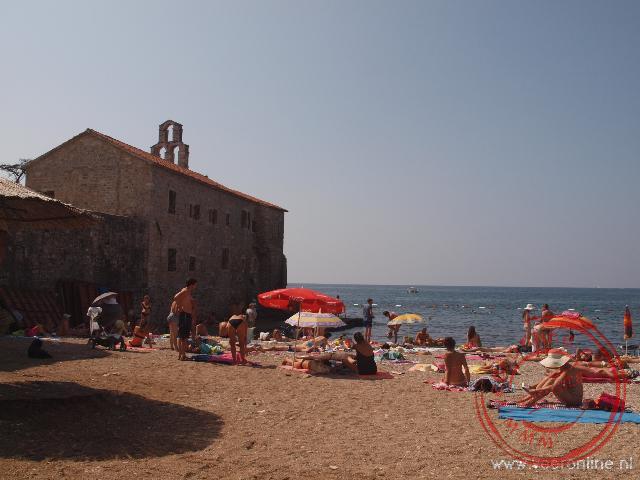 A small beach just outside Budva
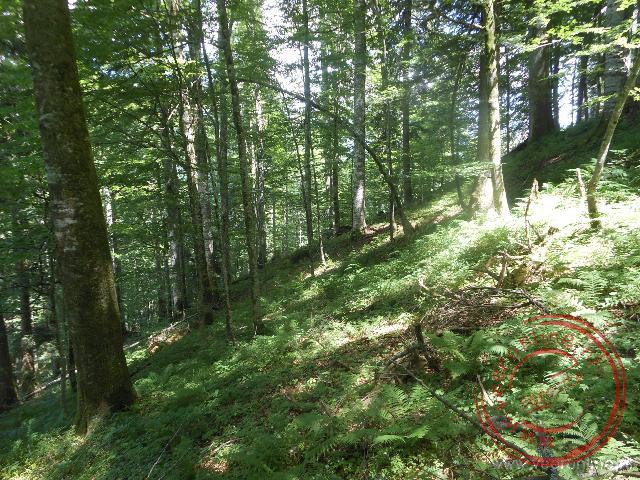 The path zigzags up the mountainside
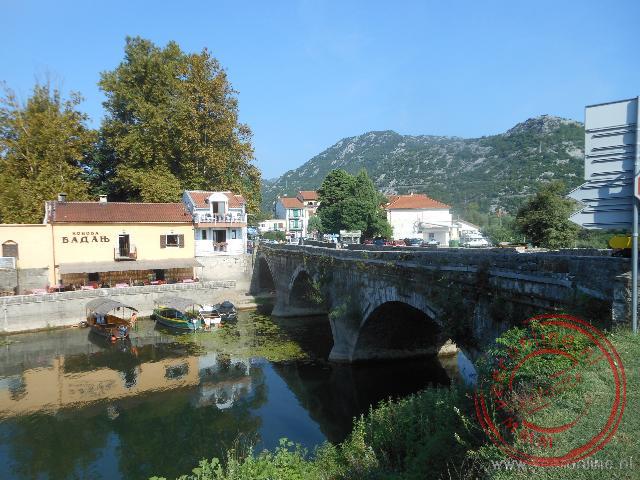 The old bridge of Virpazar
 The Upper Ostrog Monastery clings to the mountainside
From Amsterdam to Tokyo
1 mei 2016 - 8 augustus 2016 (100 days)After breakfast, we leave the Bay of Kotor. We drive up to the Cetinje plateau via hairpin bends. Along the way, I have a beautiful view over the bay. We gain altitude quickly. At the top, we enjoy a cappuccino with a view. We've now climbed to about 1,000 meters. From here, we drive into Lovcen National Park. A narrow asphalt road takes us to the second-highest mountain in Montenegro. Through more hairpin bends, we climb higher and higher. At the summit lies the mausoleum of Njegos. Inside rests poet and prince-bishop Petar II Petrovic Njegos. His book about the centuries-long struggle of the Montenegrin people against Turkish domination was translated into many languages. To reach the mausoleum, we must take a final staircase — 461 steps that lead through the mountain. It’s not so much the mausoleum that’s special, but the view over the vast surroundings. I can see the route we drove yesterday. I can even see the Bay of Kotor.
Hospitable Montenegro
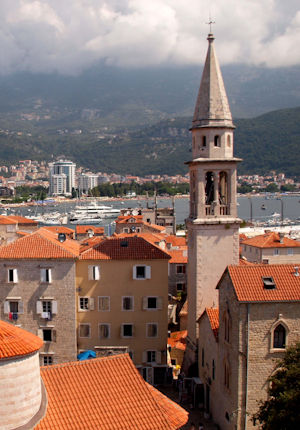
1 - 11 augustus 2014 (11 days)I wander into the narrow old streets. Old Budva closely resembles Kotor, but Budva is located more on a promontory. The peninsula is surrounded by a tall medieval city wall, built by the Venetians in the 15th century. At the very tip of Budva lies the citadel. On the central square, the Catholic Church of St. Mary of Punta and the Holy Trinity Orthodox Church stand side by side. I find the Orthodox church the most impressive, with all its colorful frescoes. Directly behind it are two small chapels built against the city wall. These old chapels from the 8th century look somewhat dilapidated and are unfortunately closed. As an alternative, I visit the Citadel of Budva. From the fortress, I have a beautiful view over the old town and the bay. I don't find the citadel particularly special. It’s been a bit too heavily restored. In 1979, Old Budva was severely hit by an earthquake. The town has been restored as best as possible — sometimes, in my opinion, a little too well. I end my visit to Budva with a walk along the city walls.