
154 countries
(and areas)
 - Belize
- Benin
- Bhutan
- Bolivia
- Bonaire
- Bosnia and Herzegovina
- Botswana
- Brazil
- British Virgin Islands
- Brunei
- Bulgaria
- Cambodia
- Canada
- Cape Verde
- Chile
- China
- Costa Rica
- Croatia
- Cuba
- Curacao
- Cyprus
- Czech Republic
- Denmark
- Dominica
- Dominican Republic
- Egypt
- El Salvador
- England
- Estonia
- Eswatini (Swaziland)
- Ethiopia
- Fiji
- Finland
- France
- French Guiana
- Georgia
- Germany
- Gibraltar
- Greece
- Grenada
- Guadeloupe
- Guatemala
- Honduras
- Hong Kong
- Hungary
- Iceland
- India
- Indonesia
- Iran
- Ireland
- Israel
- Italy
- Jamaica
- Japan
- Jordan
- Kazakhstan
- Kenya
- Kosovo
- Kuwait
- Kyrgyzstan
- Laos
- Latvia
- Lebanon
- Lesotho
- Liechtenstein
- Lithuania
- Luxembourg
- Macau
- Madagascar
- Malawi
- Malaysia
- Maldives
- Malta
- Martinique
- Mexico
- Moldova
- Monaco
- Mongolia
- Montenegro
- Morocco
- Mozambique
- Namibia
- Nepal
- Netherlands
- New Zealand
- Nicaragua
- North Macedonia
- Northern Ireland
- Norway
- Oman
- Pakistan
- Palestine
- Peru
- Philippines
- Poland
- Portugal
- Qatar
- Republic of Korea
- Romania
- Russia
- Saint Kitts and Nevis
- Saint Lucia
- Saint Martin
- Saint Vincent and the Grenadines
- San Marino
- São Tomé and Principe
- Saudi Arabia
- Scotland
- Senegal
- Serbia
- Singapore
- Sint Maarten
- Slovakia
- Slovenia
- South Africa
- Spain
- Sri Lanka
- Suriname
- Sweden
- Switzerland
- Tajikistan
- Tanzania
- Thailand
- The Gambia
- Tibet
- Togo
- Transnistria
- Trinidad and Tobago
- Tunisia
- Turkey
- Turkmenistan
- Uganda
- United Arab Emirates
- United States
- Uruguay
- Uzbekistan
- Vatican City
- Vietnam
- Wales
- Zambia
- Zanzibar
- Belize
- Benin
- Bhutan
- Bolivia
- Bonaire
- Bosnia and Herzegovina
- Botswana
- Brazil
- British Virgin Islands
- Brunei
- Bulgaria
- Cambodia
- Canada
- Cape Verde
- Chile
- China
- Costa Rica
- Croatia
- Cuba
- Curacao
- Cyprus
- Czech Republic
- Denmark
- Dominica
- Dominican Republic
- Egypt
- El Salvador
- England
- Estonia
- Eswatini (Swaziland)
- Ethiopia
- Fiji
- Finland
- France
- French Guiana
- Georgia
- Germany
- Gibraltar
- Greece
- Grenada
- Guadeloupe
- Guatemala
- Honduras
- Hong Kong
- Hungary
- Iceland
- India
- Indonesia
- Iran
- Ireland
- Israel
- Italy
- Jamaica
- Japan
- Jordan
- Kazakhstan
- Kenya
- Kosovo
- Kuwait
- Kyrgyzstan
- Laos
- Latvia
- Lebanon
- Lesotho
- Liechtenstein
- Lithuania
- Luxembourg
- Macau
- Madagascar
- Malawi
- Malaysia
- Maldives
- Malta
- Martinique
- Mexico
- Moldova
- Monaco
- Mongolia
- Montenegro
- Morocco
- Mozambique
- Namibia
- Nepal
- Netherlands
- New Zealand
- Nicaragua
- North Macedonia
- Northern Ireland
- Norway
- Oman
- Pakistan
- Palestine
- Peru
- Philippines
- Poland
- Portugal
- Qatar
- Republic of Korea
- Romania
- Russia
- Saint Kitts and Nevis
- Saint Lucia
- Saint Martin
- Saint Vincent and the Grenadines
- San Marino
- São Tomé and Principe
- Saudi Arabia
- Scotland
- Senegal
- Serbia
- Singapore
- Sint Maarten
- Slovakia
- Slovenia
- South Africa
- Spain
- Sri Lanka
- Suriname
- Sweden
- Switzerland
- Tajikistan
- Tanzania
- Thailand
- The Gambia
- Tibet
- Togo
- Transnistria
- Trinidad and Tobago
- Tunisia
- Turkey
- Turkmenistan
- Uganda
- United Arab Emirates
- United States
- Uruguay
- Uzbekistan
- Vatican City
- Vietnam
- Wales
- Zambia
- Zanzibar


Copyright 2004 - 2026
Veeronline.nl Travel Adventures
Home > Madagascar > Madagascar the Island of Lemurs > Travelogue day 20
Travelogue Madagascar the Island of Lemurs
October 14 November 7 2014 (25 days)
Madagascar > By boat to Nosy Be
Dag 20 - Sunday, November 2, 2014I leave Ankarana today and head for the island of Nosy Be. By seven o’clock, I’m ready with my luggage at the minibuses. I’ve left my hiking boots and zip-off pants with someone in the village—I’m ready for new ones. The first few kilometers along the road are bumpy again. The road here is also full of potholes. Today I’m sitting at the back and get jolted around quite a bit. Luckily, after about an hour, the road improves significantly. The driver immediately accelerates, so the bumps and holes still come through at the back. Still, I manage to close my eyes for a bit. I didn’t sleep very well last night, so I catch up now. In the town of Ambilobe, the RN6 splits. I walk a bit through the center. It’s Sunday, and the streets are busy. At the church, I see many people in their Sunday best on the church square. I wonder whether the service has just ended or is about to begin. As I step onto the square, I see that the mass is already underway inside, but there isn’t enough space in the church, so some people are sitting outside. The shops in Ambilobe are closed today, but market stalls line the streets. This trade continues seven days a week. On the other side of town, the minibus is waiting again for the final stretch to the port town of Ankify. Just before Ankify, we stop at a plantation garden. Here, cacao, bananas, vanilla, pepper, pineapples, and many other fruits are grown. It’s fun to see all of this growing. The owner pulls a jackfruit from a tree.

This large fruit, about twenty-five centimeters long, weighs several kilograms. He cuts it open and lets me taste it. I find the flavor so-so. Meanwhile, sandwiches with salad and minced meat are prepared. After lunch, we drive quickly to the harbor. The crew is clearly in a hurry today. The sea to Nosy Be is usually calm in the morning, but strong winds can pick up in the afternoon. The earlier we make the crossing, the better. Unfortunately, the police also know that tourists pass through here. Three times in quick succession, we’re stopped. There are many checkpoints in Madagascar, but normally tourists can pass directly. Not here. I clearly see an officer checking papers while slipping a folded banknote into his hand. At the next stop, papers are checked behind the bus, and at the third stop, they are held back. This undoubtedly costs the driver money on the way back. Zoe explains that today’s vehicle is technically a taxi, and the office that allows taxis to carry tourists with extra taxes in Diego was closed. I think even without this reason, a police officer in Madagascar can live well. When I arrive at the harbor, it’s chaotic. Men hang around everywhere, and there’s heavy police presence. I watch my luggage carefully and board a small speedboat, less than ten meters long. We have two boats for our group. In about half an hour, I cross the eight kilometers to Nosy Be. Midway, baggage is transferred in the middle of the sea.

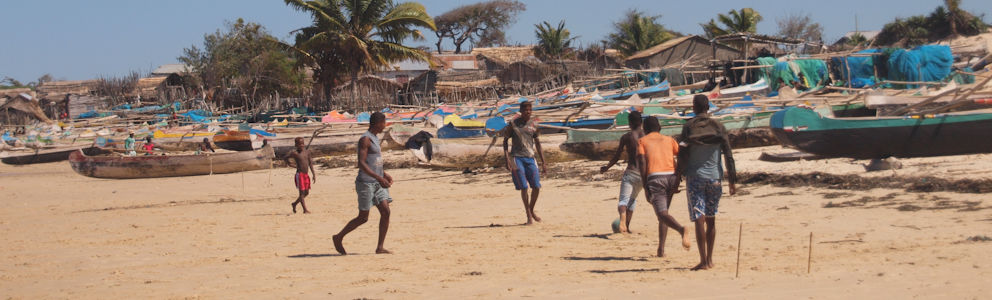
It turns out my boat sits lower in the water, so it can’t go as fast. I arrive safely on Nosy Be. The port town is Hell-Ville. The joke that it must be “hell” to stay here is easy to make. A police officer at the harbor checks my passport right on the quay. No idea why. I’m allowed to pass. As I turn around, the same officer asks for my passport again. He is convinced he hasn’t checked me yet. Once again, I’m allowed through. I load my luggage onto a minibus and drive about twenty kilometers to Madirokely on the other side of the island. The villages I pass look poor. I had expected more resorts. Only when I enter Madirokely do I reach a street full of restaurants and bars. My hotel is at the back, against the hillside. I have a short walk to reach the center. I have a nice and tidy bungalow. It’s a comfortable place to stay for the next few days. In the afternoon, I walk to the beach. It’s Sunday, and the beach is busy—but not with tourists. Mostly locals are enjoying the beach. Boys play soccer in the sand, and children play in the water. I actually see very few tourists here, certainly not enough to support the many restaurants along the water. I sit at one of the terraces and have a beer with a view of the sea. Slowly, the sun sinks. Looking around the terrace, I see only older white men walking with young local girls. Many of these men come from France specifically for this purpose. It’s a sad sight. I hope the girls with them are at least eighteen, but with some, I strongly doubt it.
 Madagascar
  Traveling back and forth to Lokobe rainforest by pirogue
 Two lizards on a tree trunk
 Children looking out over the capital of Madagascar
 Everyone crowds when a cart with goods enters the village
Travelogue Madagascar the Island of Lemurs
Dag 2 | Madagascar > Chameleons in all shapes and sizes
Dag 3 | Madagascar > The haunting call of the indri-indri
Dag 4 | Madagascar > Playing football with local youth
Dag 5 | Madagascar > In the Pousse-pousse
Dag 6 | Madagascar > Travel day to Ranomafana
Dag 7 | Madagascar > Lemurs in the National Park
Dag 8 | Madagascar > To Ambalavao
Dag 9 | Madagascar > Ring-tailed lemurs everywhere
Dag 10 | Madagascar > Climbing the Chameleon
Dag 11 | Madagascar > Resting by the pool
Dag 12 | Madagascar > Isalo National Park
Dag 13 | Madagascar > To Tulear and Ifaty
Dag 14 | Madagascar > Fishing boats on the beach
Dag 15 | Madagascar > Flight to Antananarivo
Dag 16 | Madagascar > Tsingy Rouge rock formations
Dag 17 | Madagascar > Les Trois Baies
Dag 18 | Madagascar > The Tsingy Tsingy rocks
Dag 19 | Madagascar > Ankarana National Park
Dag 20 | Madagascar > By boat to Nosy Be
Dag 21 | Madagascar > Swimming with turtles
Dag 22 | Madagascar > Canoeing to the black lemur
Dag 23 | Madagascar > Farewell to Nosy Be
Dag 24 | Madagascar > Wandering through Antananarivo
Dag 25 | Madagascar > On the way to Paris