
154 countries
(and areas)
 - Azerbaijan
- Bahrain
- Barbados
- Belgium
- Belize
- Benin
- Bhutan
- Bolivia
- Bonaire
- Bosnia and Herzegovina
- Botswana
- Brazil
- British Virgin Islands
- Brunei
- Bulgaria
- Cambodia
- Canada
- Cape Verde
- Chile
- China
- Costa Rica
- Croatia
- Cuba
- Curacao
- Cyprus
- Czech Republic
- Denmark
- Dominica
- Dominican Republic
- Egypt
- El Salvador
- England
- Estonia
- Eswatini (Swaziland)
- Ethiopia
- Fiji
- Finland
- France
- French Guiana
- Georgia
- Germany
- Gibraltar
- Greece
- Grenada
- Guadeloupe
- Guatemala
- Honduras
- Hong Kong
- Hungary
- Iceland
- India
- Indonesia
- Iran
- Ireland
- Israel
- Italy
- Jamaica
- Japan
- Jordan
- Kazakhstan
- Kenya
- Kosovo
- Kuwait
- Kyrgyzstan
- Laos
- Latvia
- Lebanon
- Lesotho
- Liechtenstein
- Lithuania
- Luxembourg
- Macau
- Madagascar
- Malawi
- Malaysia
- Maldives
- Malta
- Martinique
- Mexico
- Moldova
- Monaco
- Mongolia
- Montenegro
- Morocco
- Mozambique
- Namibia
- Nepal
- Netherlands
- New Zealand
- Nicaragua
- North Macedonia
- Northern Ireland
- Norway
- Oman
- Pakistan
- Palestine
- Peru
- Philippines
- Poland
- Portugal
- Qatar
- Republic of Korea
- Romania
- Russia
- Saint Kitts and Nevis
- Saint Lucia
- Saint Martin
- Saint Vincent and the Grenadines
- San Marino
- São Tomé and Principe
- Saudi Arabia
- Scotland
- Senegal
- Serbia
- Singapore
- Sint Maarten
- Slovakia
- Slovenia
- South Africa
- Spain
- Sri Lanka
- Suriname
- Sweden
- Switzerland
- Tajikistan
- Tanzania
- Thailand
- The Gambia
- Tibet
- Togo
- Transnistria
- Trinidad and Tobago
- Tunisia
- Turkey
- Turkmenistan
- Uganda
- United Arab Emirates
- United States
- Uruguay
- Uzbekistan
- Vatican City
- Vietnam
- Wales
- Zambia
- Zanzibar
- Azerbaijan
- Bahrain
- Barbados
- Belgium
- Belize
- Benin
- Bhutan
- Bolivia
- Bonaire
- Bosnia and Herzegovina
- Botswana
- Brazil
- British Virgin Islands
- Brunei
- Bulgaria
- Cambodia
- Canada
- Cape Verde
- Chile
- China
- Costa Rica
- Croatia
- Cuba
- Curacao
- Cyprus
- Czech Republic
- Denmark
- Dominica
- Dominican Republic
- Egypt
- El Salvador
- England
- Estonia
- Eswatini (Swaziland)
- Ethiopia
- Fiji
- Finland
- France
- French Guiana
- Georgia
- Germany
- Gibraltar
- Greece
- Grenada
- Guadeloupe
- Guatemala
- Honduras
- Hong Kong
- Hungary
- Iceland
- India
- Indonesia
- Iran
- Ireland
- Israel
- Italy
- Jamaica
- Japan
- Jordan
- Kazakhstan
- Kenya
- Kosovo
- Kuwait
- Kyrgyzstan
- Laos
- Latvia
- Lebanon
- Lesotho
- Liechtenstein
- Lithuania
- Luxembourg
- Macau
- Madagascar
- Malawi
- Malaysia
- Maldives
- Malta
- Martinique
- Mexico
- Moldova
- Monaco
- Mongolia
- Montenegro
- Morocco
- Mozambique
- Namibia
- Nepal
- Netherlands
- New Zealand
- Nicaragua
- North Macedonia
- Northern Ireland
- Norway
- Oman
- Pakistan
- Palestine
- Peru
- Philippines
- Poland
- Portugal
- Qatar
- Republic of Korea
- Romania
- Russia
- Saint Kitts and Nevis
- Saint Lucia
- Saint Martin
- Saint Vincent and the Grenadines
- San Marino
- São Tomé and Principe
- Saudi Arabia
- Scotland
- Senegal
- Serbia
- Singapore
- Sint Maarten
- Slovakia
- Slovenia
- South Africa
- Spain
- Sri Lanka
- Suriname
- Sweden
- Switzerland
- Tajikistan
- Tanzania
- Thailand
- The Gambia
- Tibet
- Togo
- Transnistria
- Trinidad and Tobago
- Tunisia
- Turkey
- Turkmenistan
- Uganda
- United Arab Emirates
- United States
- Uruguay
- Uzbekistan
- Vatican City
- Vietnam
- Wales
- Zambia
- Zanzibar


Copyright 2004 - 2026
Veeronline.nl Travel Adventures
Home > Madagascar > Madagascar the Island of Lemurs > Travelogue day 8
Travelogue Madagascar the Island of Lemurs
October 14 November 7 2014 (25 days)
Madagascar > To Ambalavao
Dag 8 - Tuesday, October 21, 2014I wake up on time. The sound of the babbling stream in front of my bungalow prompts a quick trip to the toilet. I step into the shower. Although the flow of water is limited, once again I have warm water. So far, I’ve been able to have a warm shower every day—something I hadn’t expected beforehand. I pack my luggage again. Today, I continue traveling south. In the small town of Ambatovaky, I get out. This town has many blacksmiths. Men are trying to shape the steel correctly. A woman beckons me to look inside her house. She shows me her bedroom and points upstairs to the kitchen. Carefully, I climb the narrow stairs. On the upper floor, the family is cooking over a wood fire. The entire room is blackened with soot. Cooking upstairs keeps the other rooms free of smoke. As I continue walking through the village, all the children wave at me. The adults stand in front of their houses. It’s quite an attraction. I continue my journey toward Fianarantsoa, the country’s second-largest city.

The contrast in wealth here is striking compared to the primitive villages along the route. Unfortunately, I also see people lying on the street, while everyone walks around them. In a small restaurant, I have a cola. Then I drive past the first Catholic church in Madagascar, located in the higher part of Fianarantsoa. From here, it’s still a two- to two-and-a-half-hour drive to Ambalavao.

I’m heading further south. Outside, the landscape is becoming drier and drier. Along the road, people are busy making bricks. I see women carrying stacks of bricks on their heads, yet they still have time to wave. Around three o’clock, I enter Ambalavao. Immediately, the cathedral, situated slightly higher at the end of the Main Street, catches the eye. On both sides, there are charming wooden houses with decorated balconies, giving Ambalavao the feel of a French mountain village. Numerous children are in the streets; their school has just ended. Shyly, they walk behind me along the main street.

By the church, a man beckons me onto the grounds so I can take a photo. Unfortunately, the church itself is closed. Behind the church, there are more schools. Parents lean against the walls in the shade while waiting to pick up their children. I greet them politely. Through the market, I return to the Main Street. On a corner, I order a beer and sit outside at a small table. I immediately become a local attraction. “Bonsoir” and “Salut” are constantly directed my way. In the evening, I try a Malagasy meal of pork and beans, recommended by the driver. It’s a tasty choice, but soon after the meal, I get cramps in my intestines. Although I don’t think it’s the meal’s fault, I rush to the toilet. Will I get diarrhea like some other travelers? For me, the problem is that nothing comes, but the cramps persist. It’s an unpleasant situation. I clearly feel unwell. To be safe, I stay on the toilet. Using a flashlight, I write my travel journal. The power has been out for several hours. Feeling miserable and nauseous, I go to bed, getting up regularly for another trip to the toilet.
 Madagascar
  A snake at Pereyras Nature Farm
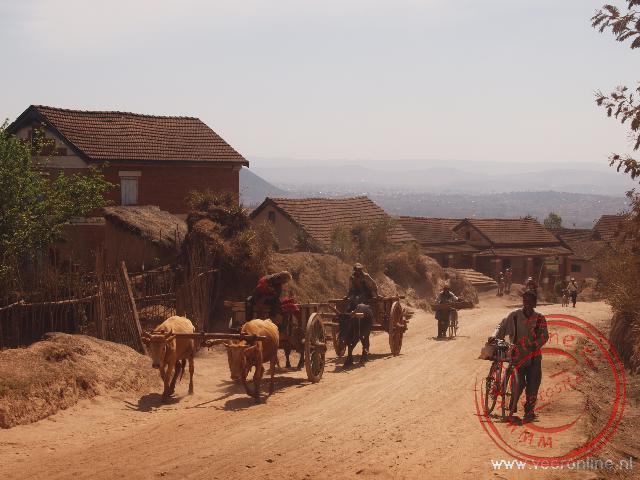 Ox carts traveling along the dusty sandy road
 The cicadas create a constant loud whistle
 A chameleon can look in two different directions at once
Travelogue Madagascar the Island of Lemurs
Dag 2 | Madagascar > Chameleons in all shapes and sizes
Dag 3 | Madagascar > The haunting call of the indri-indri
Dag 4 | Madagascar > Playing football with local youth
Dag 5 | Madagascar > In the Pousse-pousse
Dag 6 | Madagascar > Travel day to Ranomafana
Dag 7 | Madagascar > Lemurs in the National Park
Dag 8 | Madagascar > To Ambalavao
Dag 9 | Madagascar > Ring-tailed lemurs everywhere
Dag 10 | Madagascar > Climbing the Chameleon
Dag 11 | Madagascar > Resting by the pool
Dag 12 | Madagascar > Isalo National Park
Dag 13 | Madagascar > To Tulear and Ifaty
Dag 14 | Madagascar > Fishing boats on the beach
Dag 15 | Madagascar > Flight to Antananarivo
Dag 16 | Madagascar > Tsingy Rouge rock formations
Dag 17 | Madagascar > Les Trois Baies
Dag 18 | Madagascar > The Tsingy Tsingy rocks
Dag 19 | Madagascar > Ankarana National Park
Dag 20 | Madagascar > By boat to Nosy Be
Dag 21 | Madagascar > Swimming with turtles
Dag 22 | Madagascar > Canoeing to the black lemur
Dag 23 | Madagascar > Farewell to Nosy Be
Dag 24 | Madagascar > Wandering through Antananarivo
Dag 25 | Madagascar > On the way to Paris