
154 countries
(and areas)
 - Belize
- Benin
- Bhutan
- Bolivia
- Bonaire
- Bosnia and Herzegovina
- Botswana
- Brazil
- British Virgin Islands
- Brunei
- Bulgaria
- Cambodia
- Canada
- Cape Verde
- Chile
- China
- Costa Rica
- Croatia
- Cuba
- Curacao
- Cyprus
- Czech Republic
- Denmark
- Dominica
- Dominican Republic
- Egypt
- El Salvador
- England
- Estonia
- Eswatini (Swaziland)
- Ethiopia
- Fiji
- Finland
- France
- French Guiana
- Georgia
- Germany
- Gibraltar
- Greece
- Grenada
- Guadeloupe
- Guatemala
- Honduras
- Hong Kong
- Hungary
- Iceland
- India
- Indonesia
- Iran
- Ireland
- Israel
- Italy
- Jamaica
- Japan
- Jordan
- Kazakhstan
- Kenya
- Kosovo
- Kuwait
- Kyrgyzstan
- Laos
- Latvia
- Lebanon
- Lesotho
- Liechtenstein
- Lithuania
- Luxembourg
- Macau
- Madagascar
- Malawi
- Malaysia
- Maldives
- Malta
- Martinique
- Mexico
- Moldova
- Monaco
- Mongolia
- Montenegro
- Morocco
- Mozambique
- Namibia
- Nepal
- Netherlands
- New Zealand
- Nicaragua
- North Macedonia
- Northern Ireland
- Norway
- Oman
- Pakistan
- Palestine
- Peru
- Philippines
- Poland
- Portugal
- Qatar
- Republic of Korea
- Romania
- Russia
- Saint Kitts and Nevis
- Saint Lucia
- Saint Martin
- Saint Vincent and the Grenadines
- San Marino
- São Tomé and Principe
- Saudi Arabia
- Scotland
- Senegal
- Serbia
- Singapore
- Sint Maarten
- Slovakia
- Slovenia
- South Africa
- Spain
- Sri Lanka
- Suriname
- Sweden
- Switzerland
- Tajikistan
- Tanzania
- Thailand
- The Gambia
- Tibet
- Togo
- Transnistria
- Trinidad and Tobago
- Tunisia
- Turkey
- Turkmenistan
- Uganda
- United Arab Emirates
- United States
- Uruguay
- Uzbekistan
- Vatican City
- Vietnam
- Wales
- Zambia
- Zanzibar
- Belize
- Benin
- Bhutan
- Bolivia
- Bonaire
- Bosnia and Herzegovina
- Botswana
- Brazil
- British Virgin Islands
- Brunei
- Bulgaria
- Cambodia
- Canada
- Cape Verde
- Chile
- China
- Costa Rica
- Croatia
- Cuba
- Curacao
- Cyprus
- Czech Republic
- Denmark
- Dominica
- Dominican Republic
- Egypt
- El Salvador
- England
- Estonia
- Eswatini (Swaziland)
- Ethiopia
- Fiji
- Finland
- France
- French Guiana
- Georgia
- Germany
- Gibraltar
- Greece
- Grenada
- Guadeloupe
- Guatemala
- Honduras
- Hong Kong
- Hungary
- Iceland
- India
- Indonesia
- Iran
- Ireland
- Israel
- Italy
- Jamaica
- Japan
- Jordan
- Kazakhstan
- Kenya
- Kosovo
- Kuwait
- Kyrgyzstan
- Laos
- Latvia
- Lebanon
- Lesotho
- Liechtenstein
- Lithuania
- Luxembourg
- Macau
- Madagascar
- Malawi
- Malaysia
- Maldives
- Malta
- Martinique
- Mexico
- Moldova
- Monaco
- Mongolia
- Montenegro
- Morocco
- Mozambique
- Namibia
- Nepal
- Netherlands
- New Zealand
- Nicaragua
- North Macedonia
- Northern Ireland
- Norway
- Oman
- Pakistan
- Palestine
- Peru
- Philippines
- Poland
- Portugal
- Qatar
- Republic of Korea
- Romania
- Russia
- Saint Kitts and Nevis
- Saint Lucia
- Saint Martin
- Saint Vincent and the Grenadines
- San Marino
- São Tomé and Principe
- Saudi Arabia
- Scotland
- Senegal
- Serbia
- Singapore
- Sint Maarten
- Slovakia
- Slovenia
- South Africa
- Spain
- Sri Lanka
- Suriname
- Sweden
- Switzerland
- Tajikistan
- Tanzania
- Thailand
- The Gambia
- Tibet
- Togo
- Transnistria
- Trinidad and Tobago
- Tunisia
- Turkey
- Turkmenistan
- Uganda
- United Arab Emirates
- United States
- Uruguay
- Uzbekistan
- Vatican City
- Vietnam
- Wales
- Zambia
- Zanzibar


Copyright 2004 - 2026
Veeronline.nl Travel Adventures
Home > Argentina > Uruguay Argentina and Brazil > Travelogue day 5
Travelogue Uruguay Argentina and Brazil
September 26 October 20 2019 (25 days)
Argentina > Back to Buenos Aires
Dag 5 - Monday 30 September 2019For the last time, I walk across Plaza Independencia. I’m on my way to the port to take the boat back to Buenos Aires. It’s half past eight, and everyone on the street seems to be on their way to work. At the bus stops, lines of commuters are waiting. The sun is shining, but there’s a strong wind. Hopefully, the ferry won’t be affected by it during the crossing. A little under half an hour later, I arrive at the port. From the Spanish signs, I understand that pedestrians must go to the left. However, I end up at turnstiles. The man in front of me presses his pass against the gate and enters the port area. Am I in the right place? I show my ticket to the security guard. He lets me through with his pass and explains that I need to walk straight ahead. I expect to see signs for “Buquebus.” On the way over it had been clearly marked, but now it’s very unclear. The next guard points me toward the terminal building. Here I can check in. Still no mention of the company. Probably everything here is government-run, whereas in Argentina the departure terminal belongs to Buquebus. I arrive at customs. Foreigners to the left, Uruguayans to the right. Once again, I’m the only one in line, so I’m helped quickly. I get stamps for Uruguay and Argentina—my passport is filling up nicely. I take a seat in the departure hall and wait for boarding. When we board, shoe covers are handed out. Everyone puts them on, so I do too. With the protectors over my shoes, I step onto the ship. The carpet still looks new—probably they want to keep it that way. I choose a seat in tourist class. Along the way, the weather changes. The sunny departure turns into heavy rain, accompanied by a clap of thunder. The rain drums on the glass roof. Hopefully, it’s not raining in Buenos Aires. After two hours and fifteen minutes, the boat docks again in Argentina. It feels a bit like coming home. In the parking garage, I pick up my luggage. I only have to pay for one day, so I leave it at that. Just as I’m about to walk away, I get called back. I assume it’s to pay for the other three days, but that’s not the case—they just want to give me the payment receipt. Outside, it seems dry. I take the gamble and walk to my hotel. First, I have to pass through a forest of taxi drivers who would rather take me there. I ignore them and walk along Avenida Leandro Alem. It’s clear that it has rained heavily earlier today in Buenos Aires. I try to avoid puddles with my rolling suitcase and also watch out for loose tiles. I had read online that many sidewalk tiles are wobbly. Rainwater collects underneath, and when you step on one, the water splashes up. Carefully, I pick out the stable tiles.

Without any trouble, I arrive at Plaza de Mayo, the city’s most important square. Police are everywhere, and fences have been placed so the square can be completely closed off. In a bus, a riot squad sits ready. I suspect they fear riots after last month’s elections. I cross the square diagonally and head for my hotel. The sun has come out again. Since rain is forecast for tomorrow, I decide to go explore the city now. Diagonally opposite the hotel lies the Manzana de las Luces. This four-hundred-year-old mansion played an important role during historical periods. The 3 p.m. tour is canceled due to restoration work, but I can still visit the house and patio for free. From Plaza de Mayo, I walk to the Centro Cultural Kirchner. This immense building from the early 20th century used to serve as a post office. It stood empty since the beginning of this century, but has been restored and now serves as a cultural center. However, I only see fences around it and, again, a lot of police presence. I ask one of the officers how I can visit the building. From his Spanish and hand gestures, I gather that it’s closed today but will be open again tomorrow. I continue wandering through the city, occasionally turning down a side street. Apart from the hotel security guards, shop shutters (even when open), and the presence of many police officers, there’s a pleasant atmosphere.

I end up at Parque San Martín. San Martín was the founder of modern Argentina. In the park of the same name stands the Falklands monument for soldiers who fell during the war with Britain. I have to ask several times where the statue of San Martín is, but I manage to find it. The Army Museum and the Palacio Paz are near the park—good to keep in mind if the weather is bad tomorrow. The palace tours in English are only on Thursdays; otherwise, I’ll have to accept Spanish. Back at Plaza de Mayo, I visit the Catedral Metropolitana, an impressively beautiful Baroque cathedral. In one of the side aisles lies the tomb of General San Martín. I’ve seen enough of the city for today. At a terrace, I order a Patagonia beer, which reminds me of my previous visit to Argentina and Patagonia. My travel companions are now also on the plane. Tomorrow morning at 7:30, I’ll meet the group at the hotel.
 Brazil
  A bird of prey just takes off
 Driving into the Pantanal on a dirt road
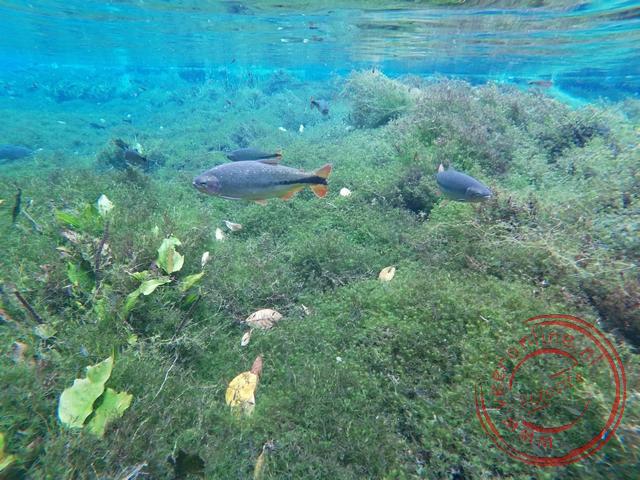 Swimming as if in an aquarium
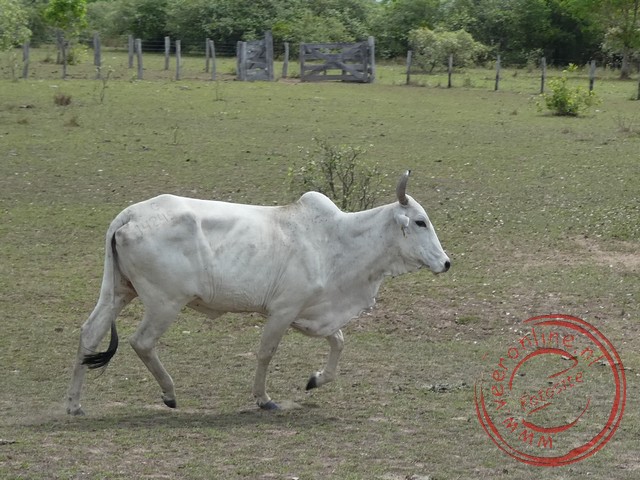 The cows can survive the changing climate
Travelogue Uruguay Argentina and Brazil
Dag 2 | Uruguay > Wandering through Colonia
Dag 3 | Uruguay > By Bus to Montevideo
Dag 4 | Uruguay > To the Theatre in Montevideo
Dag 5 | Argentina > Back to Buenos Aires
Dag 6 | Argentina > Walking to La Boca
Dag 7 | Argentina > Cycling Tour through Buenos Aires
Dag 8 | Brazil > To the Iguazú Falls
Dag 9 | Brazil > Under the Iguazú Falls
Dag 10 | Brazil > Spotting Toucans and Macaws
Dag 11 | Brazil > The Blue Grotto
Dag 12 | Brazil > Snorkeling among the Fish
Dag 13 | Brazil > Safari in the Pantanal
Dag 14 | Brazil > By Canoe through the Pantanal
Dag 15 | Brazil > Fishing for Piranhas
Dag 16 | Brazil > Via São Paulo to Paraty
Dag 17 | Brazil > Hiking Along the Beaches
Dag 18 | Brazil > The Saco Bravo Waterfall
Dag 19 | Brazil > Ilha Grande
Dag 20 | Brazil > To Praia de Lopes Mendes
Dag 21 | Brazil > Dois Rios by Mountain Bike
Dag 22 | Brazil > Rio de Janeiro
Dag 23 | Brazil > Rio de Janeiro
Dag 24 | Brazil > Delta Flight or Not?
Dag 25 | Brazil > Back via Voorhout