
154 countries
(and areas)
 - Belize
- Benin
- Bhutan
- Bolivia
- Bonaire
- Bosnia and Herzegovina
- Botswana
- Brazil
- British Virgin Islands
- Brunei
- Bulgaria
- Cambodia
- Canada
- Cape Verde
- Chile
- China
- Costa Rica
- Croatia
- Cuba
- Curacao
- Cyprus
- Czech Republic
- Denmark
- Dominica
- Dominican Republic
- Egypt
- El Salvador
- England
- Estonia
- Eswatini (Swaziland)
- Ethiopia
- Fiji
- Finland
- France
- French Guiana
- Georgia
- Germany
- Gibraltar
- Greece
- Grenada
- Guadeloupe
- Guatemala
- Honduras
- Hong Kong
- Hungary
- Iceland
- India
- Indonesia
- Iran
- Ireland
- Israel
- Italy
- Jamaica
- Japan
- Jordan
- Kazakhstan
- Kenya
- Kosovo
- Kuwait
- Kyrgyzstan
- Laos
- Latvia
- Lebanon
- Lesotho
- Liechtenstein
- Lithuania
- Luxembourg
- Macau
- Madagascar
- Malawi
- Malaysia
- Maldives
- Malta
- Martinique
- Mexico
- Moldova
- Monaco
- Mongolia
- Montenegro
- Morocco
- Mozambique
- Namibia
- Nepal
- Netherlands
- New Zealand
- Nicaragua
- North Macedonia
- Northern Ireland
- Norway
- Oman
- Pakistan
- Palestine
- Peru
- Philippines
- Poland
- Portugal
- Qatar
- Republic of Korea
- Romania
- Russia
- Saint Kitts and Nevis
- Saint Lucia
- Saint Martin
- Saint Vincent and the Grenadines
- San Marino
- São Tomé and Principe
- Saudi Arabia
- Scotland
- Senegal
- Serbia
- Singapore
- Sint Maarten
- Slovakia
- Slovenia
- South Africa
- Spain
- Sri Lanka
- Suriname
- Sweden
- Switzerland
- Tajikistan
- Tanzania
- Thailand
- The Gambia
- Tibet
- Togo
- Transnistria
- Trinidad and Tobago
- Tunisia
- Turkey
- Turkmenistan
- Uganda
- United Arab Emirates
- United States
- Uruguay
- Uzbekistan
- Vatican City
- Vietnam
- Wales
- Zambia
- Zanzibar
- Belize
- Benin
- Bhutan
- Bolivia
- Bonaire
- Bosnia and Herzegovina
- Botswana
- Brazil
- British Virgin Islands
- Brunei
- Bulgaria
- Cambodia
- Canada
- Cape Verde
- Chile
- China
- Costa Rica
- Croatia
- Cuba
- Curacao
- Cyprus
- Czech Republic
- Denmark
- Dominica
- Dominican Republic
- Egypt
- El Salvador
- England
- Estonia
- Eswatini (Swaziland)
- Ethiopia
- Fiji
- Finland
- France
- French Guiana
- Georgia
- Germany
- Gibraltar
- Greece
- Grenada
- Guadeloupe
- Guatemala
- Honduras
- Hong Kong
- Hungary
- Iceland
- India
- Indonesia
- Iran
- Ireland
- Israel
- Italy
- Jamaica
- Japan
- Jordan
- Kazakhstan
- Kenya
- Kosovo
- Kuwait
- Kyrgyzstan
- Laos
- Latvia
- Lebanon
- Lesotho
- Liechtenstein
- Lithuania
- Luxembourg
- Macau
- Madagascar
- Malawi
- Malaysia
- Maldives
- Malta
- Martinique
- Mexico
- Moldova
- Monaco
- Mongolia
- Montenegro
- Morocco
- Mozambique
- Namibia
- Nepal
- Netherlands
- New Zealand
- Nicaragua
- North Macedonia
- Northern Ireland
- Norway
- Oman
- Pakistan
- Palestine
- Peru
- Philippines
- Poland
- Portugal
- Qatar
- Republic of Korea
- Romania
- Russia
- Saint Kitts and Nevis
- Saint Lucia
- Saint Martin
- Saint Vincent and the Grenadines
- San Marino
- São Tomé and Principe
- Saudi Arabia
- Scotland
- Senegal
- Serbia
- Singapore
- Sint Maarten
- Slovakia
- Slovenia
- South Africa
- Spain
- Sri Lanka
- Suriname
- Sweden
- Switzerland
- Tajikistan
- Tanzania
- Thailand
- The Gambia
- Tibet
- Togo
- Transnistria
- Trinidad and Tobago
- Tunisia
- Turkey
- Turkmenistan
- Uganda
- United Arab Emirates
- United States
- Uruguay
- Uzbekistan
- Vatican City
- Vietnam
- Wales
- Zambia
- Zanzibar


Copyright 2004 - 2026
Veeronline.nl Travel Adventures

Home > India > Ladakh Little Tibet > Travelogue day 9
Travelogue Ladakh Little Tibet
July 20 August 15 2012 (27 days)
India > Through the mountain stream to Rizong
Dag 9 - Saturday, July 28, 2012
At half past five, I am woken with tea in the tent. Today, the five of us will take the long route. The other travelers are still sleeping and will be woken later. With an extra bottle of water with me, I start the nine-hour trek. The route first leads to the Rizong Monastery in about three and a half hours—a path through a valley along a fast-flowing stream. In the valley, I enjoy walking in the shade of the mountains. The path along the water is easy to follow, though I must cross the stream several times when the route continues on the other side. At the first crossing, a log lies over the river. Carefully, I climb over the slippery log using hands and feet. Halfway across the swiftly flowing water, I realize that my camera and passport are in my pocket. Suddenly, it becomes quite tense. I reach the other side safely and dry. A little further, I must cross again, but here there is no log. I take off my hiking boots and put on my Teva sandals. I wade through the fast-flowing water, standing up to my knees in the icy meltwater.

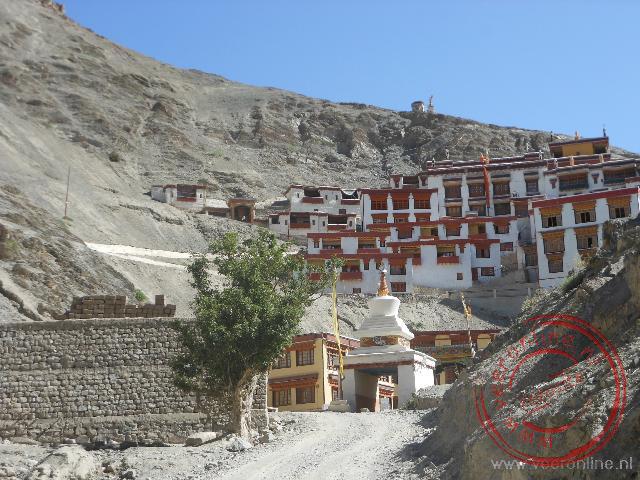
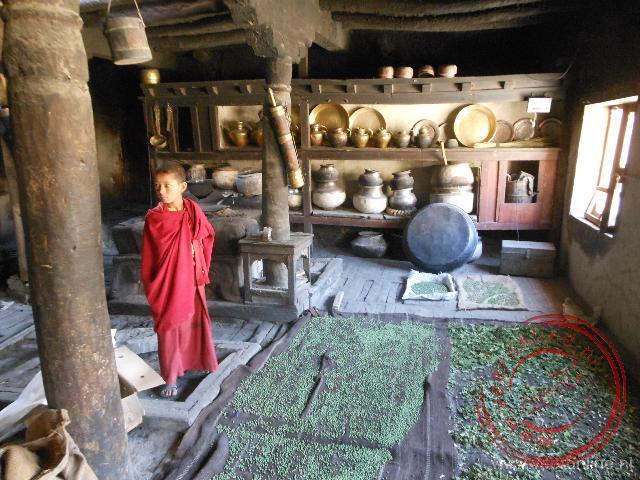
On the other side, I decide to keep my Tevas on, as I will need to cross the water a few more times later. After three hours of walking, I reach the access road to Rizong Monastery. I leave the stream behind and put my hiking boots back on. I continue along the narrow paved road toward the monastery. After a few bends, I see the hidden monastery nestled against the mountains. At the monastery, I am warmly welcomed. A monk immediately offers me tea, and I can taste a little of the butter tea—the kind the monks drink themselves. The butter tea has a somewhat greasy flavor of melted butter and tea water. It tastes less unpleasant than I expected, though I still prefer regular tea. I explore the monastery’s beautiful old kitchen, where crops are now drying. As I continue up the steps into the complex, I reach the main hall. In the main hall are magnificent Buddha statues representing the present and the future. Eventually, I climb all the way to the top of the monastery. From here, I take a mountain path and don’t have to return the same way. Dadul indicates that the path now gradually rises for about half an hour, followed by a steep climb to 3,950 meters. The monastery itself is at 3,300 meters. I walk through a fairly barren valley.
There is no shade, and I feel the sun’s strength on my head. The view in the valley is stunning. I take some drinks and eat a little before starting the steep slope. Dadul points all the way up to the mountain pass. I begin the climb at a steady pace, trying to find a rhythm: left foot on the inhale, right foot on the exhale. It’s a slow rhythm, but one I can maintain for a long time. I watch the valley below shrink quickly. I estimate the slope of the mountain path at about thirty degrees. With every step, I get closer to the top. My fellow travelers climb faster and gradually pull ahead. Fortunately, they pause regularly so the distance doesn’t grow too large. After an hour of continuous climbing, I see colorful prayer flags fluttering at the top. Skipping the final rest stop, I maintain my steady rhythm and reach the summit. The view on the other side of the mountain is fantastic. After a short break, I start the descent on the other side. The first part is steep, and the loose sand and gravel make it difficult. I follow the zigzag path downward. Descending comes easier to me than climbing. In a sheltered spot on the slope, I stop for lunch.
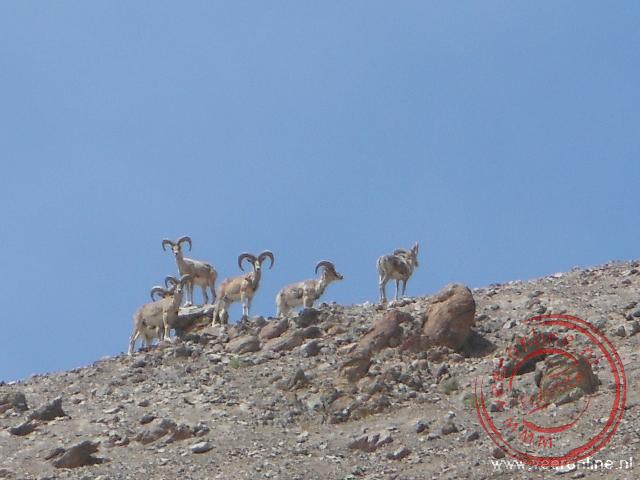
A few ibex watch my movements from a nearby mountaintop. After lunch, the route continues as a long descent to the village of Hemis Shukpachan. When I reach the village, it’s still a half-hour slight ascent to the campsite. I notice that this last effort of the day is challenging. I’ve been walking in the mountains for eight hours. Tired but very satisfied, I arrive at the campsite. Stories from the short and long routes are quickly exchanged over a cup of tea. In the afternoon, I visit a traditional local house, where I get to see the family’s kitchen and their festive traditional clothing. In the evening, after a beautiful but exhausting day of hiking, I lie down in my tent early once again.
 India
India  The square at the mausoleum of Fatehpur Sikri Fort
 By tuktuk through Manali
 A small group of ibex observing from the mountain slope
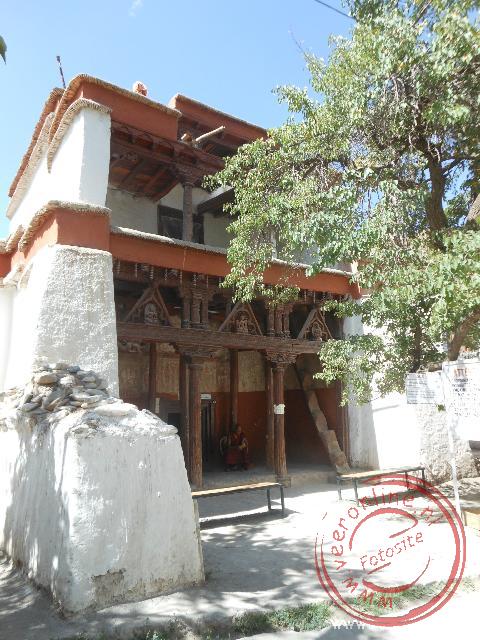 The Alchi Monastery is the oldest monastery in Ladakh
Travelogue Ladakh Little Tibet
Dag 2 | India > Salaam Baalak walk Old Delhi
Dag 3 | India > A restart at Leh Airport
Dag 4 | India > Along the monasteries in the Indus valley
Dag 5 | India > Sunset at the Shanti Stupa
Dag 6 | India > Walking tour Leh
Dag 7 | India > Start Sham trekking
Dag 8 | India > Hiking over the mountain passes
Dag 9 | India > Through the mountain stream to Rizong
Dag 10 | India > From Hemis Shukpachan to Themisgang
Dag 11 | India > The monastery of Lamayuru
Dag 12 | India > Alchi, the oldest monastery of Ladakh
Dag 13 | India > Mountain biking from the Khardung La pass
Dag 14 | India > Across the Himalayan mountain passes
Dag 15 | India > From Sarchu to Keylong
Dag 16 | India > Landslides at the Rothang Pass
Dag 17 | India > Wandering through Manali
Dag 18 | India > Mountain hike to the waterfall
Dag 19 | India > On the way to Dharamsala
Dag 20 | India > Tsuglagkhang, the home of the Dalai Lama
Dag 21 | India > The Golden Sikh Temple
Dag 22 | India > Closure of the Wagah border
Dag 23 | India > By tuk-tuk through Delhi
Dag 24 | India > Cycling through Old Delhi
Dag 25 | India > Taj Mahal!!!
Dag 26 | India > The Fatehpur Sikri fort
Dag 27 | India > Good flight home