
154 countries
(and areas)
 - Belize
- Benin
- Bhutan
- Bolivia
- Bonaire
- Bosnia and Herzegovina
- Botswana
- Brazil
- British Virgin Islands
- Brunei
- Bulgaria
- Cambodia
- Canada
- Cape Verde
- Chile
- China
- Costa Rica
- Croatia
- Cuba
- Curacao
- Cyprus
- Czech Republic
- Denmark
- Dominica
- Dominican Republic
- Egypt
- El Salvador
- England
- Estonia
- Eswatini (Swaziland)
- Ethiopia
- Fiji
- Finland
- France
- French Guiana
- Georgia
- Germany
- Gibraltar
- Greece
- Grenada
- Guadeloupe
- Guatemala
- Honduras
- Hong Kong
- Hungary
- Iceland
- India
- Indonesia
- Iran
- Ireland
- Israel
- Italy
- Jamaica
- Japan
- Jordan
- Kazakhstan
- Kenya
- Kosovo
- Kuwait
- Kyrgyzstan
- Laos
- Latvia
- Lebanon
- Lesotho
- Liechtenstein
- Lithuania
- Luxembourg
- Macau
- Madagascar
- Malawi
- Malaysia
- Maldives
- Malta
- Martinique
- Mexico
- Moldova
- Monaco
- Mongolia
- Montenegro
- Morocco
- Mozambique
- Namibia
- Nepal
- Netherlands
- New Zealand
- Nicaragua
- North Macedonia
- Northern Ireland
- Norway
- Oman
- Pakistan
- Palestine
- Peru
- Philippines
- Poland
- Portugal
- Qatar
- Republic of Korea
- Romania
- Russia
- Saint Kitts and Nevis
- Saint Lucia
- Saint Martin
- Saint Vincent and the Grenadines
- San Marino
- São Tomé and Principe
- Saudi Arabia
- Scotland
- Senegal
- Serbia
- Singapore
- Sint Maarten
- Slovakia
- Slovenia
- South Africa
- Spain
- Sri Lanka
- Suriname
- Sweden
- Switzerland
- Tajikistan
- Tanzania
- Thailand
- The Gambia
- Tibet
- Togo
- Transnistria
- Trinidad and Tobago
- Tunisia
- Turkey
- Turkmenistan
- Uganda
- United Arab Emirates
- United States
- Uruguay
- Uzbekistan
- Vatican City
- Vietnam
- Wales
- Zambia
- Zanzibar
- Belize
- Benin
- Bhutan
- Bolivia
- Bonaire
- Bosnia and Herzegovina
- Botswana
- Brazil
- British Virgin Islands
- Brunei
- Bulgaria
- Cambodia
- Canada
- Cape Verde
- Chile
- China
- Costa Rica
- Croatia
- Cuba
- Curacao
- Cyprus
- Czech Republic
- Denmark
- Dominica
- Dominican Republic
- Egypt
- El Salvador
- England
- Estonia
- Eswatini (Swaziland)
- Ethiopia
- Fiji
- Finland
- France
- French Guiana
- Georgia
- Germany
- Gibraltar
- Greece
- Grenada
- Guadeloupe
- Guatemala
- Honduras
- Hong Kong
- Hungary
- Iceland
- India
- Indonesia
- Iran
- Ireland
- Israel
- Italy
- Jamaica
- Japan
- Jordan
- Kazakhstan
- Kenya
- Kosovo
- Kuwait
- Kyrgyzstan
- Laos
- Latvia
- Lebanon
- Lesotho
- Liechtenstein
- Lithuania
- Luxembourg
- Macau
- Madagascar
- Malawi
- Malaysia
- Maldives
- Malta
- Martinique
- Mexico
- Moldova
- Monaco
- Mongolia
- Montenegro
- Morocco
- Mozambique
- Namibia
- Nepal
- Netherlands
- New Zealand
- Nicaragua
- North Macedonia
- Northern Ireland
- Norway
- Oman
- Pakistan
- Palestine
- Peru
- Philippines
- Poland
- Portugal
- Qatar
- Republic of Korea
- Romania
- Russia
- Saint Kitts and Nevis
- Saint Lucia
- Saint Martin
- Saint Vincent and the Grenadines
- San Marino
- São Tomé and Principe
- Saudi Arabia
- Scotland
- Senegal
- Serbia
- Singapore
- Sint Maarten
- Slovakia
- Slovenia
- South Africa
- Spain
- Sri Lanka
- Suriname
- Sweden
- Switzerland
- Tajikistan
- Tanzania
- Thailand
- The Gambia
- Tibet
- Togo
- Transnistria
- Trinidad and Tobago
- Tunisia
- Turkey
- Turkmenistan
- Uganda
- United Arab Emirates
- United States
- Uruguay
- Uzbekistan
- Vatican City
- Vietnam
- Wales
- Zambia
- Zanzibar


Copyright 2004 - 2026
Veeronline.nl Travel Adventures

Home > India > Ladakh Little Tibet > Travelogue day 23
Travelogue Ladakh Little Tibet
July 20 August 15 2012 (27 days)
India > By tuk-tuk through Delhi
Dag 23 - Saturday, August 11, 2012Yawn! Already at four o’clock, I head to the Amritsar train station. I take the five o’clock train to Delhi. The streets are still quiet. Here and there, people are sleeping on the streets. I am still unsettled by this sight. On the station square, however, it is busy. People are lying around here too, but they are waiting for their train. When I reach the platform, the train is already ready. A nice, wide compartment with five comfortable seats next to each other.
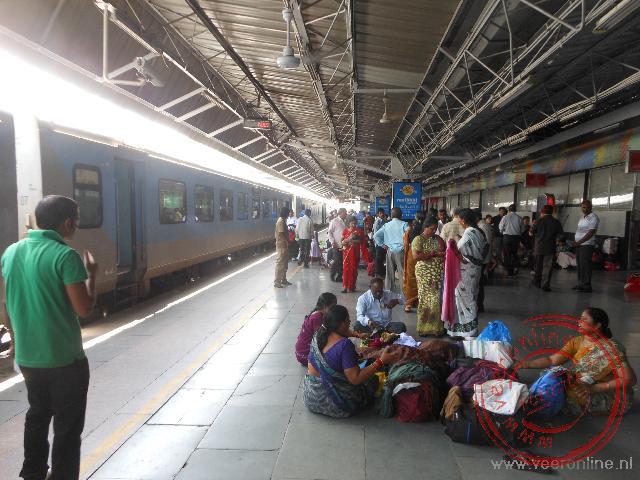
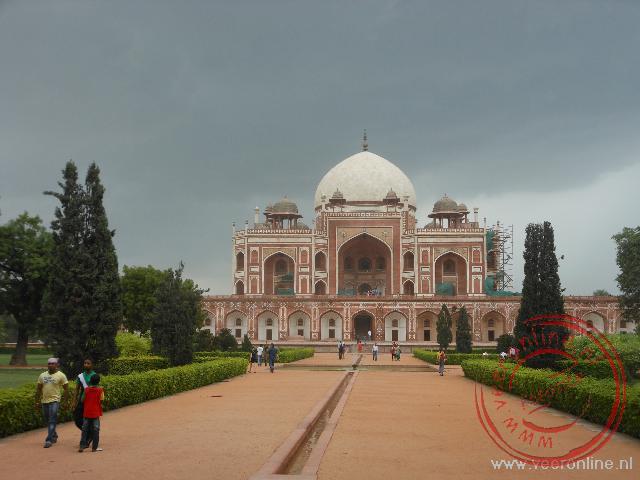
As the train departs, I close my eyes again for a bit. Around eleven o’clock, the train approaches Delhi. The main station is very crowded. It takes a moment to find the contact person, who guides me to the bus. The bus is farther away than I expected. I walk about five hundred meters to the bus parking area. Only then do I fully notice how oppressively hot it is on the streets. In the afternoon, I want to visit the Humayun Tomb. On the way to the metro, a tuk-tuk driver approaches me. He can take me to the Tomb. We negotiate the price. We agree that he will drive me past several buildings, wait while I go inside, and finally take me back to the hotel. It’s undoubtedly not the cheapest option, but it’s the easiest. I only have a few hours to see Delhi. I hop in with Amin, the tuk-tuk driver. On the way to the Humayun Tomb, Amin shows me various buildings and tells me about their history. We pass a beautiful Hindu temple and the India Gate. The Humayun Tomb was built in 1562 by order of Hamida Banu Begum for her deceased husband, the Mughal Emperor Humayun. At the complex, sandstone was used on such a large scale for the first time, as also seen in the Red Fort and Jama Masjid. As I walk through the entrance gate and look at the tomb, I am momentarily speechless. I enjoy the view before taking a photo. I don’t have much time, as a heavy downpour begins within moments. The grounds flood. I take shelter at the gate and check out the small museum. After about fifteen minutes, when the worst of the rain has passed, I walk toward the tomb. From a distance, I actually find the monument more impressive than up close. Of course, the tomb has beautiful design, color usage, and intricate windows. A remarkable structure. I walk back through the gardens, where several other tombs from the same period are located.
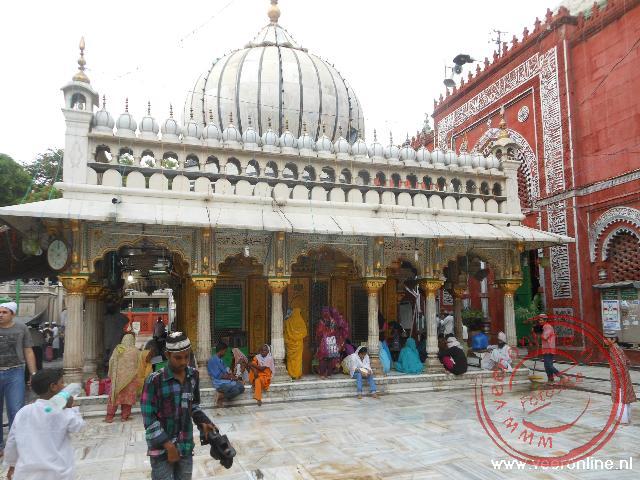
Amin has kept the tuk-tuk completely dry for my return. Large puddles cover the streets everywhere. I want to visit the Nizamuddin Dargah mausoleum. Amin warns me that I might not be allowed inside because I am wearing three-quarter pants. I decide to take the risk. He drives the tuk-tuk into the narrow streets. Shops line both sides. At a corner is the entrance to the mausoleum and mosque. Immediately, a struggle begins over who will watch my shoes. I point to one person. His neighbor presses two flower garlands into my hands. “To offer,” he says. I find fifty rupees far too much and return them, ignoring his offended expression. Further along, someone calls out that head covering is mandatory. Hard to tell if it’s truly out of respect or if they are just trying to sell me something. Before I know it, I already have a cap on my head. I give ten rupees. He wants twenty-five. I wave this off, then leave five extra and walk on. The narrow alley I pass through is filled with beggars. Strange that they all lie so close together. After a few turns, I reach the mausoleum. I cross the small courtyard. Here too, people approach me for everything imaginable. I politely decline. Still, I feel uncomfortable around the mausoleum. I decide to just peek through the entrance at the tomb of one of the most famous Sufi saints, Nizamuddin Auliya, who lived in the 11th century. I leave the mausoleum itself to the devotees but do view the simple mosque next door. Then I walk back through the narrow alley. The boy who gave me the head covering does not appreciate my joke when I hand the cap back and ask for my rupees. Amin drives me back to the hotel.
Near the hotel, I ask him if he knows a good barber. There happens to be one very close. Amin helps negotiate, and soon I am seated in the barber’s chair. Afterward, there is some discussion about the price. The barber has used a face ointment. According to him, it costs three times as much as the haircut. This cannot be true. I pay the amount I consider fair and walk out. At the hotel, I am met with disappointment. The special Indian Tikka evening is canceled at the last moment. The family hosting us cannot accommodate a group of fourteen. Strange, as Sawadee includes this in the program and always travels with groups of this size. The evening is canceled. A pity. After the Tikka ceremony, we would have been dropped off at a restaurant to eat. With the ceremony canceled, there is also no transport. Everyone makes their own way to Connaught Place. Around the central square, several restaurants are located. In one, I have a final meal with the whole group. During dinner, we thank Maria for her guidance throughout the trip.
 India
India  The sunset gives the Taj Mahal special colors
 The fivestory palace in the Fatehpur Sikri Fort
 Everyone watches as a military convoy passes under the Rothang Pass
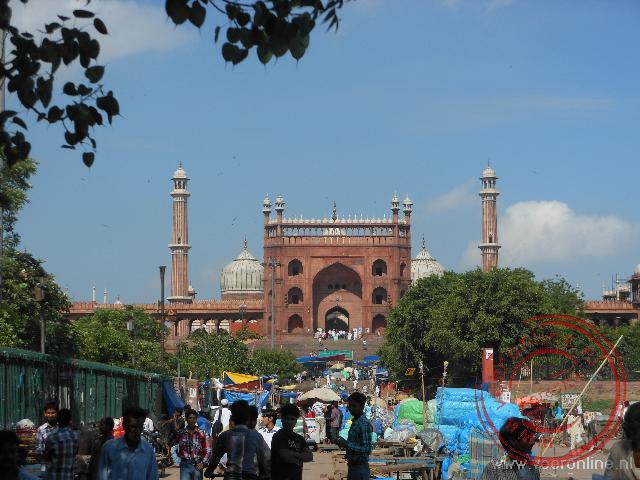 The Jama Masjid the Friday Mosque in Delhi
Travelogue Ladakh Little Tibet
Dag 2 | India > Salaam Baalak walk Old Delhi
Dag 3 | India > A restart at Leh Airport
Dag 4 | India > Along the monasteries in the Indus valley
Dag 5 | India > Sunset at the Shanti Stupa
Dag 6 | India > Walking tour Leh
Dag 7 | India > Start Sham trekking
Dag 8 | India > Hiking over the mountain passes
Dag 9 | India > Through the mountain stream to Rizong
Dag 10 | India > From Hemis Shukpachan to Themisgang
Dag 11 | India > The monastery of Lamayuru
Dag 12 | India > Alchi, the oldest monastery of Ladakh
Dag 13 | India > Mountain biking from the Khardung La pass
Dag 14 | India > Across the Himalayan mountain passes
Dag 15 | India > From Sarchu to Keylong
Dag 16 | India > Landslides at the Rothang Pass
Dag 17 | India > Wandering through Manali
Dag 18 | India > Mountain hike to the waterfall
Dag 19 | India > On the way to Dharamsala
Dag 20 | India > Tsuglagkhang, the home of the Dalai Lama
Dag 21 | India > The Golden Sikh Temple
Dag 22 | India > Closure of the Wagah border
Dag 23 | India > By tuk-tuk through Delhi
Dag 24 | India > Cycling through Old Delhi
Dag 25 | India > Taj Mahal!!!
Dag 26 | India > The Fatehpur Sikri fort
Dag 27 | India > Good flight home