
154 countries
(and areas)
 - Belize
- Benin
- Bhutan
- Bolivia
- Bonaire
- Bosnia and Herzegovina
- Botswana
- Brazil
- British Virgin Islands
- Brunei
- Bulgaria
- Cambodia
- Canada
- Cape Verde
- Chile
- China
- Costa Rica
- Croatia
- Cuba
- Curacao
- Cyprus
- Czech Republic
- Denmark
- Dominica
- Dominican Republic
- Egypt
- El Salvador
- England
- Estonia
- Eswatini (Swaziland)
- Ethiopia
- Fiji
- Finland
- France
- French Guiana
- Georgia
- Germany
- Gibraltar
- Greece
- Grenada
- Guadeloupe
- Guatemala
- Honduras
- Hong Kong
- Hungary
- Iceland
- India
- Indonesia
- Iran
- Ireland
- Israel
- Italy
- Jamaica
- Japan
- Jordan
- Kazakhstan
- Kenya
- Kosovo
- Kuwait
- Kyrgyzstan
- Laos
- Latvia
- Lebanon
- Lesotho
- Liechtenstein
- Lithuania
- Luxembourg
- Macau
- Madagascar
- Malawi
- Malaysia
- Maldives
- Malta
- Martinique
- Mexico
- Moldova
- Monaco
- Mongolia
- Montenegro
- Morocco
- Mozambique
- Namibia
- Nepal
- Netherlands
- New Zealand
- Nicaragua
- North Macedonia
- Northern Ireland
- Norway
- Oman
- Pakistan
- Palestine
- Peru
- Philippines
- Poland
- Portugal
- Qatar
- Republic of Korea
- Romania
- Russia
- Saint Kitts and Nevis
- Saint Lucia
- Saint Martin
- Saint Vincent and the Grenadines
- San Marino
- São Tomé and Principe
- Saudi Arabia
- Scotland
- Senegal
- Serbia
- Singapore
- Sint Maarten
- Slovakia
- Slovenia
- South Africa
- Spain
- Sri Lanka
- Suriname
- Sweden
- Switzerland
- Tajikistan
- Tanzania
- Thailand
- The Gambia
- Tibet
- Togo
- Transnistria
- Trinidad and Tobago
- Tunisia
- Turkey
- Turkmenistan
- Uganda
- United Arab Emirates
- United States
- Uruguay
- Uzbekistan
- Vatican City
- Vietnam
- Wales
- Zambia
- Zanzibar
- Belize
- Benin
- Bhutan
- Bolivia
- Bonaire
- Bosnia and Herzegovina
- Botswana
- Brazil
- British Virgin Islands
- Brunei
- Bulgaria
- Cambodia
- Canada
- Cape Verde
- Chile
- China
- Costa Rica
- Croatia
- Cuba
- Curacao
- Cyprus
- Czech Republic
- Denmark
- Dominica
- Dominican Republic
- Egypt
- El Salvador
- England
- Estonia
- Eswatini (Swaziland)
- Ethiopia
- Fiji
- Finland
- France
- French Guiana
- Georgia
- Germany
- Gibraltar
- Greece
- Grenada
- Guadeloupe
- Guatemala
- Honduras
- Hong Kong
- Hungary
- Iceland
- India
- Indonesia
- Iran
- Ireland
- Israel
- Italy
- Jamaica
- Japan
- Jordan
- Kazakhstan
- Kenya
- Kosovo
- Kuwait
- Kyrgyzstan
- Laos
- Latvia
- Lebanon
- Lesotho
- Liechtenstein
- Lithuania
- Luxembourg
- Macau
- Madagascar
- Malawi
- Malaysia
- Maldives
- Malta
- Martinique
- Mexico
- Moldova
- Monaco
- Mongolia
- Montenegro
- Morocco
- Mozambique
- Namibia
- Nepal
- Netherlands
- New Zealand
- Nicaragua
- North Macedonia
- Northern Ireland
- Norway
- Oman
- Pakistan
- Palestine
- Peru
- Philippines
- Poland
- Portugal
- Qatar
- Republic of Korea
- Romania
- Russia
- Saint Kitts and Nevis
- Saint Lucia
- Saint Martin
- Saint Vincent and the Grenadines
- San Marino
- São Tomé and Principe
- Saudi Arabia
- Scotland
- Senegal
- Serbia
- Singapore
- Sint Maarten
- Slovakia
- Slovenia
- South Africa
- Spain
- Sri Lanka
- Suriname
- Sweden
- Switzerland
- Tajikistan
- Tanzania
- Thailand
- The Gambia
- Tibet
- Togo
- Transnistria
- Trinidad and Tobago
- Tunisia
- Turkey
- Turkmenistan
- Uganda
- United Arab Emirates
- United States
- Uruguay
- Uzbekistan
- Vatican City
- Vietnam
- Wales
- Zambia
- Zanzibar


Copyright 2004 - 2026
Veeronline.nl Travel Adventures
Home > Uganda > Encounter with the Gorilla > Travelogue day 17
Travelogue Encounter with the Gorilla
July 24 August 15 2011 (23 days)
Uganda > Dusty road to Bwindi
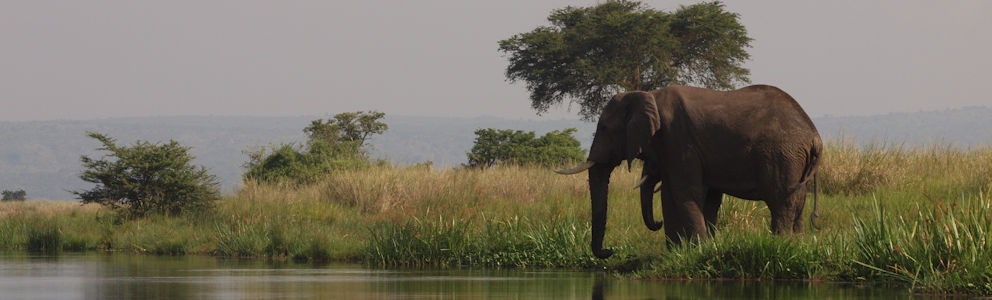
Dag 17 - Tuesday, August 9, 2011Apparently, there was quite a party at the camp last night. A herd of elephants passed by the campsite, moving through the bushes just behind my tent. Two elephants even walked across the camp itself. Their trumpeting echoed through the night. Hippos were grazing on land, and in the distance, hyenas could be heard. I didn’t notice any of this during the night—I clearly sleep well in the wild. I quickly pack my luggage, ready for a long travel day toward Bwindi, the home of the gorillas. On the way out of Queen Elizabeth Park, I follow a section of the southern circuit. With a bit of hope, I scan the fig trees—wouldn’t it be amazing to spot a tree-climbing lion? But, as this morning shows, the lions remain unseen.

Soon, the minibus heads down the dusty road southward. The landscape changes as the rolling hills transition into mountains. The road winds through the terrain with sharp hairpin bends, kicking up huge clouds of dust behind the vehicles. Sometimes the dust is so thick that the second bus has to stop until visibility improves. I feel sympathy for the people living in the villages along these dusty roads. Some still try to sell goods along the way under these conditions. Halfway to Kabale, we encounter a car with engine trouble coming from the opposite direction. It turns out to be an American family with two kids stranded by smoke coming from the dashboard. Jampa and Edwin immediately get to work with tools, while their driver watches uncertainly. Soon it’s clear the car is beyond repair. We rearrange a bit, and the American family joins us to Kabale, where they can arrange alternate transport. Their own driver stays with the car and their luggage. Around one o’clock, I arrive in Kabale for lunch and say goodbye to our guests. Frank has already arranged transport for them through Matoke Tours.

Hopefully, they’ll reach their destination without too much trouble. They, too, are heading to the gorillas tomorrow, but to a different family. After lunch, I continue toward Bwindi. The wide asphalt road allows good progress, though I must brake occasionally for the sizeable speed bumps in the villages. The series of ridges on the asphalt puts the bus into a steady rhythm. In the back, I’m jostled quite a bit. On the last fifteen kilometers to Kisoro, roadwork slows us down. The road is being widened and paved, with heavy machinery cutting through rock. The bus weaves between construction traffic until reaching Kisoro. Here, we turn toward Lake Mutanda. A narrow mountain road leads to Nkuringo Safari Lodge on the lakeshore. The final hundred meters are too steep to drive, so I walk while porters carry my luggage down. Nkuringo Safari Lodge is beautifully situated on the lakeshore. I’ll be staying in cottages with canvas sides, serving as the base for my gorilla tracking. I will spend three nights here. In the evening, Frank briefs me on the gorilla tracking. There are only 700 mountain gorillas left in the wild, living in the Bwindi area along the borders of southern Uganda, Rwanda, and Congo. Eight gorilla families can receive visitors. Most of the families are in Uganda. Each family allows a maximum of eight visitors per day for up to one hour. Worldwide, this means only 64 tourists can see the gorillas each day, explaining the high permit cost. Our permits are split over two days. One group visits the Nkuringo gorilla group tomorrow, while the other group visits the Shongi family the day after. I am in the latter group, which means I have a rest day tomorrow at Lake Mutanda. The other group will have their rest day the following day.
 Uganda
  Two young flying cranes take off
 A fisherman on Lake Albert in Uganda
 An old chimpanzee at Ngamba Island Chimpanzee Sanctuary
 A monkey waits in the tree for what comes next
Travelogue Encounter with the Gorilla
Dag 2 | Uganda > Visit to the chimpanzees
Dag 3 | Uganda > On the way to Sipi Falls
Dag 4 | Uganda > Climbing along the waterfalls
Dag 5 | Uganda > 'Jambo, Jambo!'
Dag 6 | Uganda > The origin of the Nile
Dag 7 | Uganda > Rafting: 'Heavy 5' or 'Light 5'
Dag 8 | Uganda > Colossal rhinos
Dag 9 | Uganda > Lost in Murchison Falls NP
Dag 10 | Uganda > A leopard!
Dag 11 | Uganda > Digestive problems...
Dag 12 | Uganda > To Chimps Nest
Dag 13 | Uganda > Visiting the chimpanzees
Dag 14 | Uganda > Queen Elizabeth National Park
Dag 15 | Uganda > Boating on the Kazinga Channel
Dag 16 | Uganda > Tree-climbing lions
Dag 17 | Uganda > Dusty road to Bwindi
Dag 18 | Uganda > Rest day at Lake Matanda
Dag 19 | Uganda > Eye to eye with the gorillas
Dag 20 | Uganda > Lake Bunyonyi
Dag 21 | Uganda > The Disco in Masaka
Dag 22 | Uganda > Rare Shoebill