
154 countries
(and areas)
 - Belize
- Benin
- Bhutan
- Bolivia
- Bonaire
- Bosnia and Herzegovina
- Botswana
- Brazil
- British Virgin Islands
- Brunei
- Bulgaria
- Cambodia
- Canada
- Cape Verde
- Chile
- China
- Costa Rica
- Croatia
- Cuba
- Curacao
- Cyprus
- Czech Republic
- Denmark
- Dominica
- Dominican Republic
- Egypt
- El Salvador
- England
- Estonia
- Eswatini (Swaziland)
- Ethiopia
- Fiji
- Finland
- France
- French Guiana
- Georgia
- Germany
- Gibraltar
- Greece
- Grenada
- Guadeloupe
- Guatemala
- Honduras
- Hong Kong
- Hungary
- Iceland
- India
- Indonesia
- Iran
- Ireland
- Israel
- Italy
- Jamaica
- Japan
- Jordan
- Kazakhstan
- Kenya
- Kosovo
- Kuwait
- Kyrgyzstan
- Laos
- Latvia
- Lebanon
- Lesotho
- Liechtenstein
- Lithuania
- Luxembourg
- Macau
- Madagascar
- Malawi
- Malaysia
- Maldives
- Malta
- Martinique
- Mexico
- Moldova
- Monaco
- Mongolia
- Montenegro
- Morocco
- Mozambique
- Namibia
- Nepal
- Netherlands
- New Zealand
- Nicaragua
- North Macedonia
- Northern Ireland
- Norway
- Oman
- Pakistan
- Palestine
- Peru
- Philippines
- Poland
- Portugal
- Qatar
- Republic of Korea
- Romania
- Russia
- Saint Kitts and Nevis
- Saint Lucia
- Saint Martin
- Saint Vincent and the Grenadines
- San Marino
- São Tomé and Principe
- Saudi Arabia
- Scotland
- Senegal
- Serbia
- Singapore
- Sint Maarten
- Slovakia
- Slovenia
- South Africa
- Spain
- Sri Lanka
- Suriname
- Sweden
- Switzerland
- Tajikistan
- Tanzania
- Thailand
- The Gambia
- Tibet
- Togo
- Transnistria
- Trinidad and Tobago
- Tunisia
- Turkey
- Turkmenistan
- Uganda
- United Arab Emirates
- United States
- Uruguay
- Uzbekistan
- Vatican City
- Vietnam
- Wales
- Zambia
- Zanzibar
- Belize
- Benin
- Bhutan
- Bolivia
- Bonaire
- Bosnia and Herzegovina
- Botswana
- Brazil
- British Virgin Islands
- Brunei
- Bulgaria
- Cambodia
- Canada
- Cape Verde
- Chile
- China
- Costa Rica
- Croatia
- Cuba
- Curacao
- Cyprus
- Czech Republic
- Denmark
- Dominica
- Dominican Republic
- Egypt
- El Salvador
- England
- Estonia
- Eswatini (Swaziland)
- Ethiopia
- Fiji
- Finland
- France
- French Guiana
- Georgia
- Germany
- Gibraltar
- Greece
- Grenada
- Guadeloupe
- Guatemala
- Honduras
- Hong Kong
- Hungary
- Iceland
- India
- Indonesia
- Iran
- Ireland
- Israel
- Italy
- Jamaica
- Japan
- Jordan
- Kazakhstan
- Kenya
- Kosovo
- Kuwait
- Kyrgyzstan
- Laos
- Latvia
- Lebanon
- Lesotho
- Liechtenstein
- Lithuania
- Luxembourg
- Macau
- Madagascar
- Malawi
- Malaysia
- Maldives
- Malta
- Martinique
- Mexico
- Moldova
- Monaco
- Mongolia
- Montenegro
- Morocco
- Mozambique
- Namibia
- Nepal
- Netherlands
- New Zealand
- Nicaragua
- North Macedonia
- Northern Ireland
- Norway
- Oman
- Pakistan
- Palestine
- Peru
- Philippines
- Poland
- Portugal
- Qatar
- Republic of Korea
- Romania
- Russia
- Saint Kitts and Nevis
- Saint Lucia
- Saint Martin
- Saint Vincent and the Grenadines
- San Marino
- São Tomé and Principe
- Saudi Arabia
- Scotland
- Senegal
- Serbia
- Singapore
- Sint Maarten
- Slovakia
- Slovenia
- South Africa
- Spain
- Sri Lanka
- Suriname
- Sweden
- Switzerland
- Tajikistan
- Tanzania
- Thailand
- The Gambia
- Tibet
- Togo
- Transnistria
- Trinidad and Tobago
- Tunisia
- Turkey
- Turkmenistan
- Uganda
- United Arab Emirates
- United States
- Uruguay
- Uzbekistan
- Vatican City
- Vietnam
- Wales
- Zambia
- Zanzibar


Copyright 2004 - 2026
Veeronline.nl Travel Adventures
Home > Norway > To the Far North of Europe > Travelogue day 17
Travelogue To the Far North of Europe
July 126 2017 (26 days)
Norway > The beautiful Lofoten Peninsula
Dag 17 - Monday, July 17, 2017Due to the delay in Hammerfest, we need to rebook the ferry from Lofoten to Bodø. Over the weekend, it was impossible to get through by phone. The original ferry was scheduled for today. As soon as the ticket office opens at eight o’clock, we call to change the ticket. This turns out to be no problem at all.

Our pre-reserved spot is also maintained. This way, we are guaranteed a ferry ride back to the mainland tomorrow afternoon. When we get back onto the E6, it is drizzling lightly. This is not the weather we had hoped for in Lofoten, and it doesn’t get any better. Just past Narvik, we leave the E6 and drive onto the E10, heading for Lofoten. Lofoten is a rocky peninsula just above the Arctic Circle. The four larger islands are connected by bridges and tunnels. Svolvær is the capital of the archipelago. We look for a parking spot near the shopping center. There are many tourists here. Campers are everywhere in the town center. At the shopping center, we grab a sandwich and visit the restroom. As we continue driving, the route becomes increasingly beautiful. The road winds along high rock formations and offers stunning views of the sea. The sun even breaks through. In Kabelvåg stands Norway’s second-largest wooden cathedral. The yellow building clearly towers above everything else. Through tunnels and bridges, we reach the island of Vestvågøy, where the town of Leknes is also located. This is where we will spend the night. Right on the island, the navigation system directs us left while the signs indicate right.

The GPS is probably still following the old route, and a tunnel has likely been built in the meantime. We decide to follow the old route according to the navigation. It is a beautiful, gently winding road along the edges of the island. Since the road is narrower than the main road, we need to be careful with oncoming traffic. This route eventually brings us into Leknes as well. We check in at the hotel. The sun is shining brightly. We decide to make the most of this weather and drive to the most remote island, Moskenes. The road there is hilly and full of twists and turns. The views are breathtaking. What a stunning area! Just before Reine, the route passes over a few small islands. The islands are connected by one-way bridges. Traffic from different directions crosses the bridges alternately. Even beyond the bridges, the road is sometimes narrow, requiring drivers to wait for each other. We arrive in Reine, an old fishing village on a small peninsula at the foot of the Reinebringen rock formations. The village was historically protected from the sea by the rocks behind it. Now, tourists drive in and out looking for parking spaces. It appears that the Lofoten islands simply cannot handle the number of tourists in the summer months. The fishing villages are not designed for this—it’s almost a victim of their own success. Just outside Reine, the Reinebringen can be climbed. From the top of this over 400-meter-high rock formation, there are beautiful views of Reine and the surrounding islands.

We park the car in a small parking lot just past the tunnel. We follow other hikers to the starting point by the tunnel. At the start, there is a warning that the climb can be dangerous. The route can be slippery, may contain loose stones, and it is emphasized that this is not an official trail. Right from the first meters, it is clear what is meant. The path ascends steep rocks, and occasional scrambling is required. Trees provide some support. From the plateau, the path continues toward the summit—still a steep climb. Going up is challenging enough, but we also have to come down. Halfway, we decide to split. Wouter continues to the top; I turn back. I find the path too steep and slippery. On the slope, there are at least a hundred other tourists climbing. You are never alone. After three-quarters of an hour, Wouter returns. He has reached the summit and enjoyed a stunning view of Reine and the surroundings. Despite the beautiful photos he shows me, I’m glad I stopped. It is now half past six. We drive back along the same road to Leknes. At a restaurant, we order two pizzas—a perfect end to an intensive day.
 Finland
 Norway


Travelogue To the Far North of Europe
Dag 2 | Poland > The old center of Gdansk
Dag 3 | Poland > The castle of Marienburg
Dag 4 | Lithuania > Counting lakes on the way to Vilnius
Dag 5 | Latvia > The Hill of Crosses in Šiauliai
Dag 6 | Estonia > Medieval Tallinn
Dag 7 | Finland > By boat to Helsinki
Dag 8 | Finland > The Karelia lake district
Dag 9 | Finland > A moose on the road
Dag 10 | Finland > Visiting Santa Claus
Dag 11 | Finland > Hiking in Urho Kekkonen
Dag 12 | Norway > Around midnight at the North Cape
Dag 13 | Norway > The Hammerfest Polar Bear Society
Dag 14 | Norway > The car won't start anymore
Dag 15 | Norway > A new starter motor in Hammerfest
Dag 16 | Norway > Driving above the Arctic Circle
Dag 17 | Norway > The beautiful Lofoten Peninsula
Dag 18 | Norway > Back to the mainland
Dag 19 | Norway > Whirlpools at the Saltstraumen
Dag 20 | Norway > The old merchant houses of Trondheim
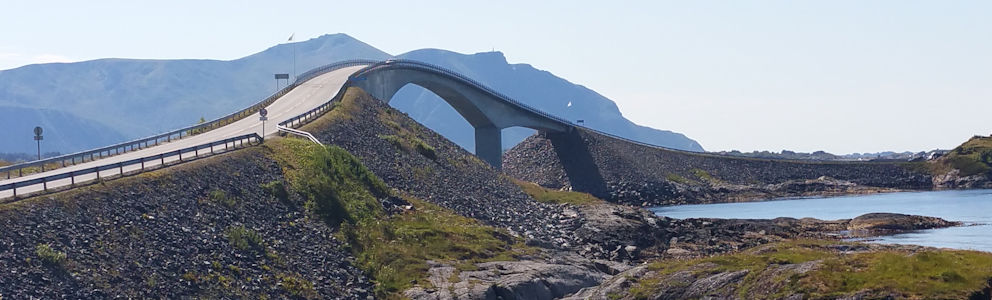
Dag 21 | Norway > The Atlantic Ocean Road
Dag 22 | Norway > Along mountain roads and fjords
Dag 23 | Norway > Along the Hardangerfjord
Dag 24 | Norway > The climb of the Preikestolen
Dag 25 | Denmark > The Danish Sønderborg Castle
Dag 26 | Netherlands > On the way home