
154 countries
(and areas)
 - Belize
- Benin
- Bhutan
- Bolivia
- Bonaire
- Bosnia and Herzegovina
- Botswana
- Brazil
- British Virgin Islands
- Brunei
- Bulgaria
- Cambodia
- Canada
- Cape Verde
- Chile
- China
- Costa Rica
- Croatia
- Cuba
- Curacao
- Cyprus
- Czech Republic
- Denmark
- Dominica
- Dominican Republic
- Egypt
- El Salvador
- England
- Estonia
- Eswatini (Swaziland)
- Ethiopia
- Fiji
- Finland
- France
- French Guiana
- Georgia
- Germany
- Gibraltar
- Greece
- Grenada
- Guadeloupe
- Guatemala
- Honduras
- Hong Kong
- Hungary
- Iceland
- India
- Indonesia
- Iran
- Ireland
- Israel
- Italy
- Jamaica
- Japan
- Jordan
- Kazakhstan
- Kenya
- Kosovo
- Kuwait
- Kyrgyzstan
- Laos
- Latvia
- Lebanon
- Lesotho
- Liechtenstein
- Lithuania
- Luxembourg
- Macau
- Madagascar
- Malawi
- Malaysia
- Maldives
- Malta
- Martinique
- Mexico
- Moldova
- Monaco
- Mongolia
- Montenegro
- Morocco
- Mozambique
- Namibia
- Nepal
- Netherlands
- New Zealand
- Nicaragua
- North Macedonia
- Northern Ireland
- Norway
- Oman
- Pakistan
- Palestine
- Peru
- Philippines
- Poland
- Portugal
- Qatar
- Republic of Korea
- Romania
- Russia
- Saint Kitts and Nevis
- Saint Lucia
- Saint Martin
- Saint Vincent and the Grenadines
- San Marino
- São Tomé and Principe
- Saudi Arabia
- Scotland
- Senegal
- Serbia
- Singapore
- Sint Maarten
- Slovakia
- Slovenia
- South Africa
- Spain
- Sri Lanka
- Suriname
- Sweden
- Switzerland
- Tajikistan
- Tanzania
- Thailand
- The Gambia
- Tibet
- Togo
- Transnistria
- Trinidad and Tobago
- Tunisia
- Turkey
- Turkmenistan
- Uganda
- United Arab Emirates
- United States
- Uruguay
- Uzbekistan
- Vatican City
- Vietnam
- Wales
- Zambia
- Zanzibar
- Belize
- Benin
- Bhutan
- Bolivia
- Bonaire
- Bosnia and Herzegovina
- Botswana
- Brazil
- British Virgin Islands
- Brunei
- Bulgaria
- Cambodia
- Canada
- Cape Verde
- Chile
- China
- Costa Rica
- Croatia
- Cuba
- Curacao
- Cyprus
- Czech Republic
- Denmark
- Dominica
- Dominican Republic
- Egypt
- El Salvador
- England
- Estonia
- Eswatini (Swaziland)
- Ethiopia
- Fiji
- Finland
- France
- French Guiana
- Georgia
- Germany
- Gibraltar
- Greece
- Grenada
- Guadeloupe
- Guatemala
- Honduras
- Hong Kong
- Hungary
- Iceland
- India
- Indonesia
- Iran
- Ireland
- Israel
- Italy
- Jamaica
- Japan
- Jordan
- Kazakhstan
- Kenya
- Kosovo
- Kuwait
- Kyrgyzstan
- Laos
- Latvia
- Lebanon
- Lesotho
- Liechtenstein
- Lithuania
- Luxembourg
- Macau
- Madagascar
- Malawi
- Malaysia
- Maldives
- Malta
- Martinique
- Mexico
- Moldova
- Monaco
- Mongolia
- Montenegro
- Morocco
- Mozambique
- Namibia
- Nepal
- Netherlands
- New Zealand
- Nicaragua
- North Macedonia
- Northern Ireland
- Norway
- Oman
- Pakistan
- Palestine
- Peru
- Philippines
- Poland
- Portugal
- Qatar
- Republic of Korea
- Romania
- Russia
- Saint Kitts and Nevis
- Saint Lucia
- Saint Martin
- Saint Vincent and the Grenadines
- San Marino
- São Tomé and Principe
- Saudi Arabia
- Scotland
- Senegal
- Serbia
- Singapore
- Sint Maarten
- Slovakia
- Slovenia
- South Africa
- Spain
- Sri Lanka
- Suriname
- Sweden
- Switzerland
- Tajikistan
- Tanzania
- Thailand
- The Gambia
- Tibet
- Togo
- Transnistria
- Trinidad and Tobago
- Tunisia
- Turkey
- Turkmenistan
- Uganda
- United Arab Emirates
- United States
- Uruguay
- Uzbekistan
- Vatican City
- Vietnam
- Wales
- Zambia
- Zanzibar


Copyright 2004 - 2026
Veeronline.nl Travel Adventures

Home > Netherlands > Tourist in My Own Country > Travelogue day 4
Travelogue Tourist in My Own Country
July 1826 2020 (9 days)
Netherlands > Camp Westerbork
Dag 4 - Tuesday 21 July 2020The cabin is not spacious, but it looks perfectly fine. It somewhat resembles a mobile home. When you enter, there is a double bed immediately to the right. A table with four stools and, to the left, a bunk bed and kitchen. Between the bed and the kitchen is a small bathroom with a shower and toilet. The advantage of sleeping in the kitchen is that in the morning it’s easy to get coffee in bed. We have breakfast on the terrace in front of the cabin. We finish just in time as the others arrive for a visit to Westerbork. With ten of us, we drive to Westerbork, the former concentration camp from the Second World War. The museum explains that Westerbork was initially a reception camp for Jewish refugees from Germany. When Germany invaded the Netherlands, the camp was used to accommodate more Jews. They tried to keep living conditions as normal as possible, organising sporting events and singing performances. Every week, about a thousand Jews were transported to extermination camps, most of them by train to Auschwitz in Poland. In September 1944, the last transport left Westerbork. After this, it was declared that the Netherlands was “Judenfrei.

” Only a few remained behind to dismantle the camp — a task that never took place. Arrested Jews from hiding places were also sent to Westerbork. At the time of liberation, around 700 Jews were in the camp. They survived the war. Around 100,000 other Westerbork prisoners were less fortunate and perished. After the war, the camp served for three years as an internment camp for captured NSB members. For many years afterwards, Moluccan KNIL soldiers lived at the camp. They had fought alongside the Dutch in the Dutch East Indies. In 1971, the camp ceased to have any active function. Many buildings were demolished, and the Radio Observatory built large telescopes on the site. Today, the grounds are arranged as a memorial site, with various monuments on the former camp grounds. From the museum, we walk about two and a half kilometres to the former commander’s house. The wooden building remained inhabited until the early 2000s.

To protect it from the elements, a glass frame has been built around it. Further on the grounds, a barrack has been reconstructed and there is an impressive memorial. For the victims, stones bearing the Star of David have been placed on the former parade ground, collectively forming the outline of the Netherlands. On the other side of the camp stands the famous railway monument — two rails bending upwards. The National Monument Westerbork was designed in 1970 by former camp inmate Ralph Prins. The monument symbolises the railway that ended at the camp. We take the forest path for the two-and-a-half-kilometre walk back to the car park. In the evening, we cook for ourselves at our cabin. On the adjacent sports field, a bingo game is held. All participating families are spread out across the field so that everyone can keep a safe distance. While the children keep track of the bingo cards, the parents join us on the terrace for a beer — a pleasant combination.
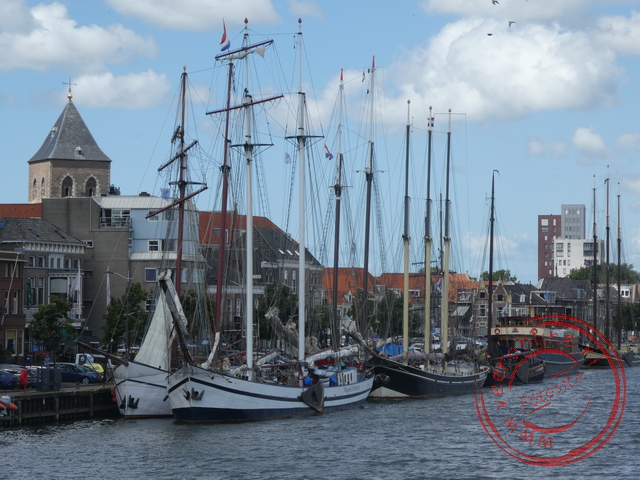 View of the city of Kampen on the IJssel
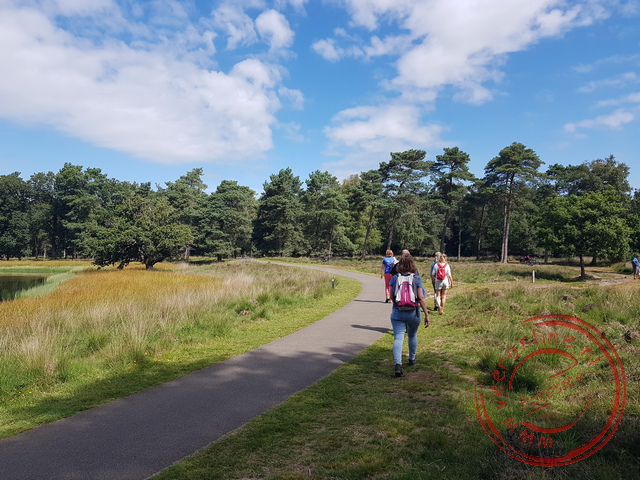 A hike through the Dwingelerveld
 The Jewish synagogue in Bourtange
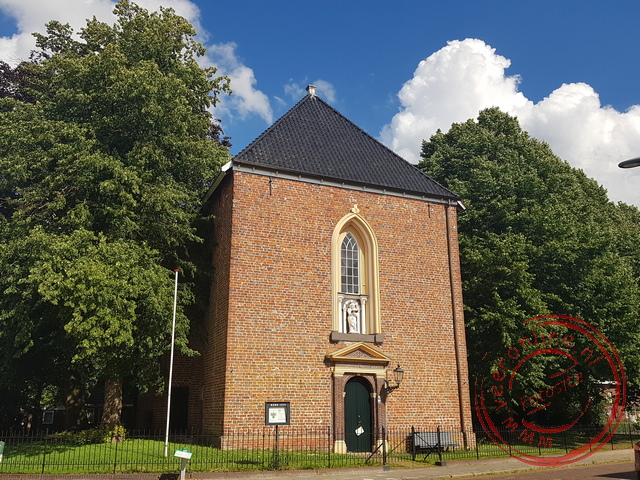 The church of Scheemda
Travelogue Tourist in My Own Country
Dag 2 | Netherlands > The Zuiderzee Islands
Dag 3 | Netherlands > The Bovenkerk of Kampen
Dag 4 | Netherlands > Camp Westerbork
Dag 5 | Netherlands > The Dolmen of Borger
Dag 6 | Netherlands > Walking in Dwingelderveld
Dag 7 | Netherlands > Colonies of Benevolence
Dag 8 | Netherlands > The Fortress of Bourtange
Dag 9 | Netherlands > Via Oudeschans Back Home