
154 countries
(and areas)
 - Belize
- Benin
- Bhutan
- Bolivia
- Bonaire
- Bosnia and Herzegovina
- Botswana
- Brazil
- British Virgin Islands
- Brunei
- Bulgaria
- Cambodia
- Canada
- Cape Verde
- Chile
- China
- Costa Rica
- Croatia
- Cuba
- Curacao
- Cyprus
- Czech Republic
- Denmark
- Dominica
- Dominican Republic
- Egypt
- El Salvador
- England
- Estonia
- Eswatini (Swaziland)
- Ethiopia
- Fiji
- Finland
- France
- French Guiana
- Georgia
- Germany
- Gibraltar
- Greece
- Grenada
- Guadeloupe
- Guatemala
- Honduras
- Hong Kong
- Hungary
- Iceland
- India
- Indonesia
- Iran
- Ireland
- Israel
- Italy
- Jamaica
- Japan
- Jordan
- Kazakhstan
- Kenya
- Kosovo
- Kuwait
- Kyrgyzstan
- Laos
- Latvia
- Lebanon
- Lesotho
- Liechtenstein
- Lithuania
- Luxembourg
- Macau
- Madagascar
- Malawi
- Malaysia
- Maldives
- Malta
- Martinique
- Mexico
- Moldova
- Monaco
- Mongolia
- Montenegro
- Morocco
- Mozambique
- Namibia
- Nepal
- Netherlands
- New Zealand
- Nicaragua
- North Macedonia
- Northern Ireland
- Norway
- Oman
- Pakistan
- Palestine
- Peru
- Philippines
- Poland
- Portugal
- Qatar
- Republic of Korea
- Romania
- Russia
- Saint Kitts and Nevis
- Saint Lucia
- Saint Martin
- Saint Vincent and the Grenadines
- San Marino
- São Tomé and Principe
- Saudi Arabia
- Scotland
- Senegal
- Serbia
- Singapore
- Sint Maarten
- Slovakia
- Slovenia
- South Africa
- Spain
- Sri Lanka
- Suriname
- Sweden
- Switzerland
- Tajikistan
- Tanzania
- Thailand
- The Gambia
- Tibet
- Togo
- Transnistria
- Trinidad and Tobago
- Tunisia
- Turkey
- Turkmenistan
- Uganda
- United Arab Emirates
- United States
- Uruguay
- Uzbekistan
- Vatican City
- Vietnam
- Wales
- Zambia
- Zanzibar
- Belize
- Benin
- Bhutan
- Bolivia
- Bonaire
- Bosnia and Herzegovina
- Botswana
- Brazil
- British Virgin Islands
- Brunei
- Bulgaria
- Cambodia
- Canada
- Cape Verde
- Chile
- China
- Costa Rica
- Croatia
- Cuba
- Curacao
- Cyprus
- Czech Republic
- Denmark
- Dominica
- Dominican Republic
- Egypt
- El Salvador
- England
- Estonia
- Eswatini (Swaziland)
- Ethiopia
- Fiji
- Finland
- France
- French Guiana
- Georgia
- Germany
- Gibraltar
- Greece
- Grenada
- Guadeloupe
- Guatemala
- Honduras
- Hong Kong
- Hungary
- Iceland
- India
- Indonesia
- Iran
- Ireland
- Israel
- Italy
- Jamaica
- Japan
- Jordan
- Kazakhstan
- Kenya
- Kosovo
- Kuwait
- Kyrgyzstan
- Laos
- Latvia
- Lebanon
- Lesotho
- Liechtenstein
- Lithuania
- Luxembourg
- Macau
- Madagascar
- Malawi
- Malaysia
- Maldives
- Malta
- Martinique
- Mexico
- Moldova
- Monaco
- Mongolia
- Montenegro
- Morocco
- Mozambique
- Namibia
- Nepal
- Netherlands
- New Zealand
- Nicaragua
- North Macedonia
- Northern Ireland
- Norway
- Oman
- Pakistan
- Palestine
- Peru
- Philippines
- Poland
- Portugal
- Qatar
- Republic of Korea
- Romania
- Russia
- Saint Kitts and Nevis
- Saint Lucia
- Saint Martin
- Saint Vincent and the Grenadines
- San Marino
- São Tomé and Principe
- Saudi Arabia
- Scotland
- Senegal
- Serbia
- Singapore
- Sint Maarten
- Slovakia
- Slovenia
- South Africa
- Spain
- Sri Lanka
- Suriname
- Sweden
- Switzerland
- Tajikistan
- Tanzania
- Thailand
- The Gambia
- Tibet
- Togo
- Transnistria
- Trinidad and Tobago
- Tunisia
- Turkey
- Turkmenistan
- Uganda
- United Arab Emirates
- United States
- Uruguay
- Uzbekistan
- Vatican City
- Vietnam
- Wales
- Zambia
- Zanzibar


Copyright 2004 - 2026
Veeronline.nl Travel Adventures

Home > Netherlands > Tourist in My Own Country > Travelogue day 3
Travelogue Tourist in My Own Country
July 1826 2020 (9 days)
Netherlands > The Bovenkerk of Kampen
Dag 3 - Monday 20 July 2020At a quarter to eight, I walk into the breakfast room. I am the first guest at the breakfast buffet. The waitress says that the hotel was fully booked yesterday and will be fully booked tomorrow, but that Sunday nights are always a bit quieter. After breakfast, I pack my luggage and check out. I thank them for the hospitality of the past few days. Near Kraggenburg lies Vollenhove, a former fishing village.

Many inhabitants of Schokland once moved to this town. Before driving to Kampen, I decide to make a quick stop here. I park my car at the guest harbour. I can already see the broad tower of the Reformed Church rising above the houses. The houses around the church are typical fishermen’s cottages. I wander through the streets and follow the signs to the ruins of Toutenburgh in Oldruitenborgh Park. Toutenburgh was built in 1532 on the orders of Georg Schenck, who later became stadtholder of the Northern Netherlands. The large castle at that time was surrounded by a wide moat. After two centuries, the castle lost its function, and there were no buyers. In 1787, it was sold to be demolished. The stones were used to renovate Oldruitenborgh, repair the church, and alter Ter Heyl Castle in Roden. Eventually, a portion remained as a ruin in the gardens of Oldruitenborgh. It is still quiet on the streets when I walk back to my car — only a few locals out walking their dogs. After Vollenhove, I head for Kampen. At half past nine, I park behind the station. From the quay of the IJssel River, I can see Kampen’s old centre on the opposite bank. Due to coronavirus restrictions, pedestrians may only walk on one side of the bridge. I can’t understand why it’s the left side — I would have expected the right. Crossing the bridge, I arrive directly in the old town. The tower of the old town hall leans slightly to one side, while the new tower stands proudly behind it. Through the narrow streets, I reach Burgwal, where the market is being held today. This is also where you’ll find the smallest house in Kampen. Less than two metres wide, it once housed a family with three children. It is no longer inhabited. Passing the Buitenkerk, I arrive at the edge of the old town, where the Koggewerf shipyard is located. At the end of the last century, a traditional cog ship was rebuilt here. In the 14th and 15th centuries, such ships were used to sail across the IJsselmeer. Due to coronavirus measures, the shipyard can only be visited with guided tours. My email requests for a tour have never been answered. I take my chances and walk in. I see the 14-metre-long cog lying there. In the hall by the shipyard, men are at work. In the “Taverne,” a small bar, I order coffee. When I mention that I tried to make a reservation, one of the staff members opens the exhibition room for me and offers to play the video about the cog’s construction.
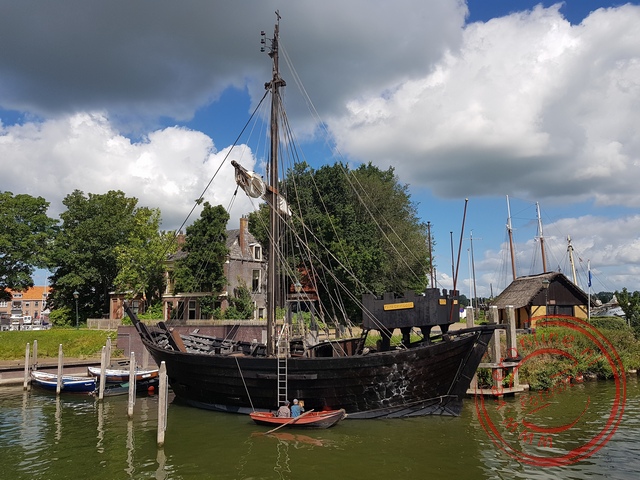
It’s clear the video hasn’t been run in months — plugs need to be reconnected, and the DVD placed in the player. The effort is worth it. The short film shows how the boat was built, with great care taken to preserve original details, including tens of thousands of hand-forged nails. One of the staff invites me to see the cog itself. Thanks to the video, I recognise the various reconstructed parts. Proudly, he shows me the ship. “We sail it regularly on the IJsselmeer,” he says, adding that it has even sailed on the open sea. Because it has only one large sail, the ship cannot sail very well against the wind, reaching a maximum angle of seventy degrees. In the past, sailors simply waited for the wind to change. “Do you want to see below deck as well?” he asks, without waiting for my answer. Together we climb down the steps. It’s wonderful to stand inside this ship. After leaving the shipyard, I continue my walk through Kampen, following a route description through the city. I pass the Hofje van Breda and the Binnentuin van Margaretha. It’s a pleasure to wander the old streets. I come to the Broederpoort, which now provides access to the park. I take a walk around the ponds and leave the park again via the Cellebroederspoort. Just before noon, I arrive at Muntplein, at St. Nicholas or Bovenkerk Church. I have arranged a guided tour here. Normally, the church is open to visitors, but due to coronavirus, there are no volunteers to keep it open — most of them are in the high-risk group. At the entrance, I meet Klaas. He opens the door and shows me around the church. The original church on this site is the oldest building in Kampen. The current church is built on the foundations of the Romanesque church. The present design dates from the late 13th century and is early Gothic, with tall pillars and high windows. The church is no longer used for weekly services, Klaas tells me; it is mainly used for concerts and exhibitions. The future of the church is uncertain, he sighs — it is difficult to generate enough income to maintain the building. I thank Klaas for the tour. In the shopping street, I stop for coffee and a bite to eat.

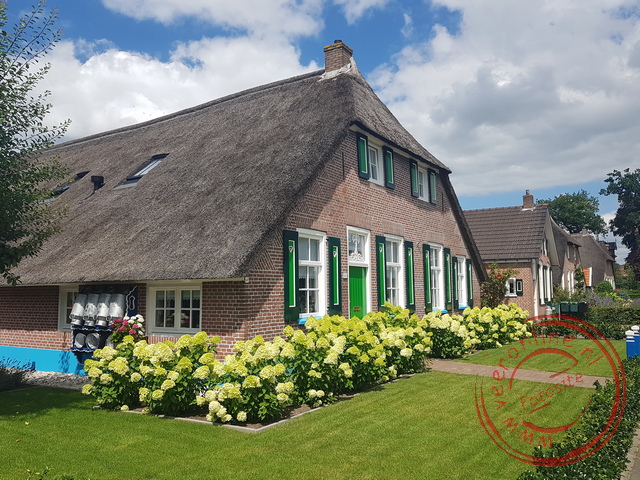
Around the shopping street are narrow alleyways, some barely a metre wide. I wander in and out of them, eventually returning to Vispoortplein, the spot where I began this morning. From Kampen, I take the back roads via Hattem to Rouveen and Staphorst. In these villages stand around a thousand thatched farmhouses, over 600 of which are listed monuments. Along the old Rijksweg, I see the farmhouses, many with shutters painted bright green — the traditional colour of this area. Closer to the centre, the farmhouses are built directly behind one another, sometimes four in a row. At the Tourist Info, I ask about the possibility of walking tours through Staphorst. “I do have a walk through the area,” the girl explains, “but it’s 18 km. There’s no walk just through Staphorst — it’s not that big,” she adds. “If you walk from here to the church, you’ve already seen the most special part of Staphorst.” I follow her advice and walk past the old farmhouses towards the church. The farmhouses are all beautifully maintained. At the church, I turn and walk around the cemetery back to the car. It’s time for today’s final leg. Around four o’clock, I arrive at camping De Noordster in Dwingeloo, where I have booked a cabin for a few nights. Friends with their families are also staying here this week. Before I can even unload my car, I join one of their tents for a drink. In the evening, we sit outside until late.
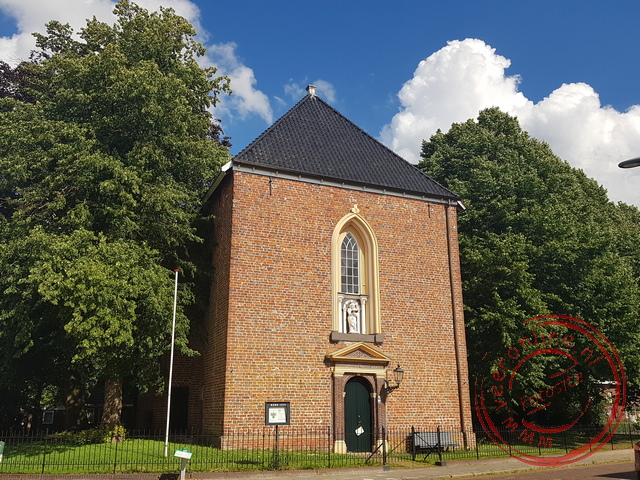 The church of Scheemda
 The Ir Wouda pumping station in Lemmer
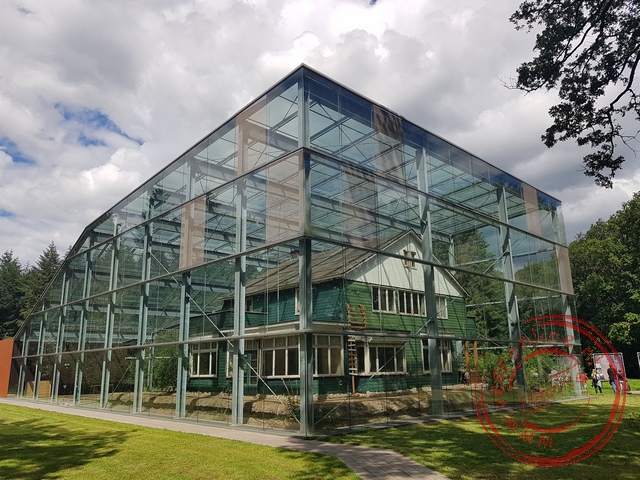 The former commanders house is protected by glass
 The isolation cell in the Veenhuizen prison
Travelogue Tourist in My Own Country
Dag 2 | Netherlands > The Zuiderzee Islands
Dag 3 | Netherlands > The Bovenkerk of Kampen
Dag 4 | Netherlands > Camp Westerbork
Dag 5 | Netherlands > The Dolmen of Borger
Dag 6 | Netherlands > Walking in Dwingelderveld
Dag 7 | Netherlands > Colonies of Benevolence
Dag 8 | Netherlands > The Fortress of Bourtange
Dag 9 | Netherlands > Via Oudeschans Back Home