
154 countries
(and areas)
 - Belize
- Benin
- Bhutan
- Bolivia
- Bonaire
- Bosnia and Herzegovina
- Botswana
- Brazil
- British Virgin Islands
- Brunei
- Bulgaria
- Cambodia
- Canada
- Cape Verde
- Chile
- China
- Costa Rica
- Croatia
- Cuba
- Curacao
- Cyprus
- Czech Republic
- Denmark
- Dominica
- Dominican Republic
- Egypt
- El Salvador
- England
- Estonia
- Eswatini (Swaziland)
- Ethiopia
- Fiji
- Finland
- France
- French Guiana
- Georgia
- Germany
- Gibraltar
- Greece
- Grenada
- Guadeloupe
- Guatemala
- Honduras
- Hong Kong
- Hungary
- Iceland
- India
- Indonesia
- Iran
- Ireland
- Israel
- Italy
- Jamaica
- Japan
- Jordan
- Kazakhstan
- Kenya
- Kosovo
- Kuwait
- Kyrgyzstan
- Laos
- Latvia
- Lebanon
- Lesotho
- Liechtenstein
- Lithuania
- Luxembourg
- Macau
- Madagascar
- Malawi
- Malaysia
- Maldives
- Malta
- Martinique
- Mexico
- Moldova
- Monaco
- Mongolia
- Montenegro
- Morocco
- Mozambique
- Namibia
- Nepal
- Netherlands
- New Zealand
- Nicaragua
- North Macedonia
- Northern Ireland
- Norway
- Oman
- Pakistan
- Palestine
- Peru
- Philippines
- Poland
- Portugal
- Qatar
- Republic of Korea
- Romania
- Russia
- Saint Kitts and Nevis
- Saint Lucia
- Saint Martin
- Saint Vincent and the Grenadines
- San Marino
- São Tomé and Principe
- Saudi Arabia
- Scotland
- Senegal
- Serbia
- Singapore
- Sint Maarten
- Slovakia
- Slovenia
- South Africa
- Spain
- Sri Lanka
- Suriname
- Sweden
- Switzerland
- Tajikistan
- Tanzania
- Thailand
- The Gambia
- Tibet
- Togo
- Transnistria
- Trinidad and Tobago
- Tunisia
- Turkey
- Turkmenistan
- Uganda
- United Arab Emirates
- United States
- Uruguay
- Uzbekistan
- Vatican City
- Vietnam
- Wales
- Zambia
- Zanzibar
- Belize
- Benin
- Bhutan
- Bolivia
- Bonaire
- Bosnia and Herzegovina
- Botswana
- Brazil
- British Virgin Islands
- Brunei
- Bulgaria
- Cambodia
- Canada
- Cape Verde
- Chile
- China
- Costa Rica
- Croatia
- Cuba
- Curacao
- Cyprus
- Czech Republic
- Denmark
- Dominica
- Dominican Republic
- Egypt
- El Salvador
- England
- Estonia
- Eswatini (Swaziland)
- Ethiopia
- Fiji
- Finland
- France
- French Guiana
- Georgia
- Germany
- Gibraltar
- Greece
- Grenada
- Guadeloupe
- Guatemala
- Honduras
- Hong Kong
- Hungary
- Iceland
- India
- Indonesia
- Iran
- Ireland
- Israel
- Italy
- Jamaica
- Japan
- Jordan
- Kazakhstan
- Kenya
- Kosovo
- Kuwait
- Kyrgyzstan
- Laos
- Latvia
- Lebanon
- Lesotho
- Liechtenstein
- Lithuania
- Luxembourg
- Macau
- Madagascar
- Malawi
- Malaysia
- Maldives
- Malta
- Martinique
- Mexico
- Moldova
- Monaco
- Mongolia
- Montenegro
- Morocco
- Mozambique
- Namibia
- Nepal
- Netherlands
- New Zealand
- Nicaragua
- North Macedonia
- Northern Ireland
- Norway
- Oman
- Pakistan
- Palestine
- Peru
- Philippines
- Poland
- Portugal
- Qatar
- Republic of Korea
- Romania
- Russia
- Saint Kitts and Nevis
- Saint Lucia
- Saint Martin
- Saint Vincent and the Grenadines
- San Marino
- São Tomé and Principe
- Saudi Arabia
- Scotland
- Senegal
- Serbia
- Singapore
- Sint Maarten
- Slovakia
- Slovenia
- South Africa
- Spain
- Sri Lanka
- Suriname
- Sweden
- Switzerland
- Tajikistan
- Tanzania
- Thailand
- The Gambia
- Tibet
- Togo
- Transnistria
- Trinidad and Tobago
- Tunisia
- Turkey
- Turkmenistan
- Uganda
- United Arab Emirates
- United States
- Uruguay
- Uzbekistan
- Vatican City
- Vietnam
- Wales
- Zambia
- Zanzibar


Copyright 2004 - 2026
Veeronline.nl Travel Adventures

Home > Netherlands > Tourist in My Own Country > Travelogue day 5
Travelogue Tourist in My Own Country
July 1826 2020 (9 days)
Netherlands > The Dolmen of Borger
Dag 5 - Wednesday 22 July 2020I sleep well in the cozy little apartment. I wake up around eight o’clock to the alarm. After breakfast, I drive with friends to the Hunebed Centre in Borger. Near Borger lies the largest hunebed (megalithic tomb) in the Netherlands. In the information center, it is explained that over five thousand years ago, during an ice age, large stones were carried along with the ice from Scandinavia. When the ice melted, the massive boulders were left behind as reminders. At that time, people used these stones to build burial mounds. Using poles and ropes, the stones were pulled into place—requiring many hands. Later, the sand beneath the stones was dug out, creating burial chambers. In the Netherlands, there are 54 hunebeds, most of which are in the province of Drenthe. Two are just across the border in Groningen. On the museum’s first floor are interactive games where children can learn about prehistoric times and even build their own hunebed through an animation. Outside the museum is the “prehistoric garden,” with explanations about different types of stone, a barefoot path to walk, and several reconstructed ancient houses.
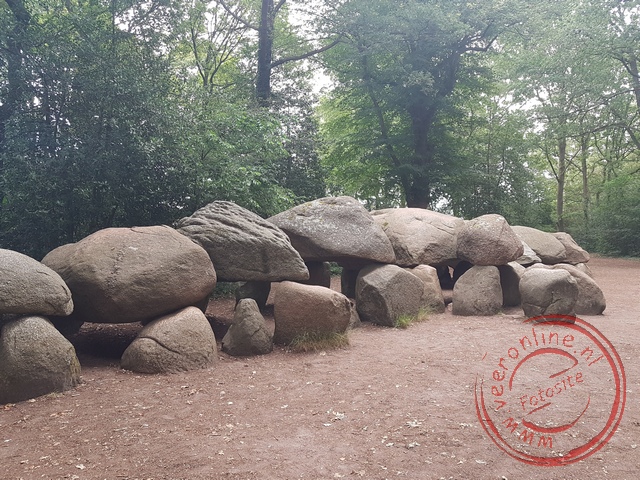
At various stalls, people demonstrate how plants were once used, how fire was made, and how wool was processed. At the end of our visit to the museum, we take a look at the largest hunebed in the Netherlands. Thirty-five stones stand and lie here, forming the ancient burial chamber. The current remains hardly resemble what it once was. For lunch, we drive into the center of Borger. We order a sandwich and drinks on a terrace, then return to Dwingeloo. In the afternoon, I take a bike ride through the area—alone. First, I pass through Dwingeloo. On the village green, a fair is taking place. It’s busy with visitors, but everyone keeps their distance, and the stalls are spaced further apart

. Through Dieverveen, I cycle to Diever. There is also a hunebed here, the one closest to Dwingeloo. I expect there to be signs from the center to the hunebed—but there aren’t. I must have missed them. Using the navigation on my phone, I see that I’m only a few hundred meters away. I quickly cycle there. The hunebed is smaller than the one in Borger, but because of that, the stone construction is easier to see—at least when no children are climbing on it. I wait for them to get off the stones. After a few minutes, I ask if I may take a photo. It turns out they’re Scandinavians. They step aside. Back in the center of Diever, I order a beer on a terrace. I plan a different route back to Dwingeloo, as I don’t want to follow the same path.

Using the bicycle junction network, I map out a route through the Dwingelerveld. Only, I can’t seem to find the first junction. I keep heading the wrong way. After some searching, I find the next point on the route. From there, it’s easier to follow. I enter the Dwingelerveld nature park and reach the heathland. At the sheepfold, the sheep are just returning from a day of grazing—hundreds of them heading back to the barn. It draws quite a crowd. I cross the heath and end up near the campsite again. But how do I get to the entrance? I need my navigation again to find my way to the right spot. I make it back just in time to join for dinner in the center of Dwingeloo. At the Hof van Dwingeloo, I enjoy an excellent dish—a beautiful ending to the day.
 The cannons are positioned to defend the Batavia
 The harbor of the former island of Urk
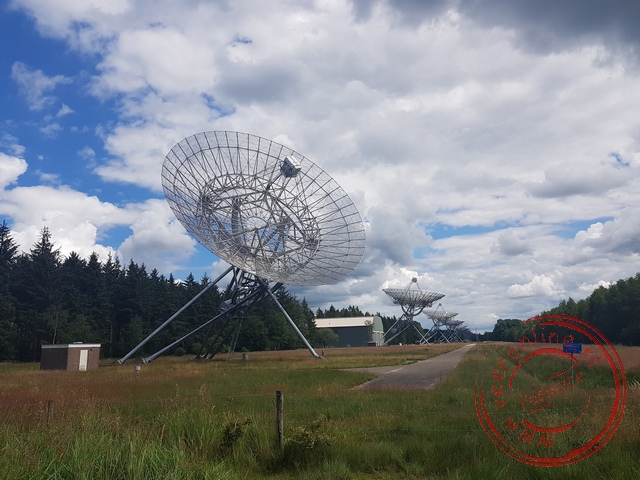 Huge telescopes on the site of the former Westerbork camp
 The church square in Vollenhove
Travelogue Tourist in My Own Country
Dag 2 | Netherlands > The Zuiderzee Islands
Dag 3 | Netherlands > The Bovenkerk of Kampen
Dag 4 | Netherlands > Camp Westerbork
Dag 5 | Netherlands > The Dolmen of Borger
Dag 6 | Netherlands > Walking in Dwingelderveld
Dag 7 | Netherlands > Colonies of Benevolence
Dag 8 | Netherlands > The Fortress of Bourtange
Dag 9 | Netherlands > Via Oudeschans Back Home