
154 countries
(and areas)
 - Belize
- Benin
- Bhutan
- Bolivia
- Bonaire
- Bosnia and Herzegovina
- Botswana
- Brazil
- British Virgin Islands
- Brunei
- Bulgaria
- Cambodia
- Canada
- Cape Verde
- Chile
- China
- Costa Rica
- Croatia
- Cuba
- Curacao
- Cyprus
- Czech Republic
- Denmark
- Dominica
- Dominican Republic
- Egypt
- El Salvador
- England
- Estonia
- Eswatini (Swaziland)
- Ethiopia
- Fiji
- Finland
- France
- French Guiana
- Georgia
- Germany
- Gibraltar
- Greece
- Grenada
- Guadeloupe
- Guatemala
- Honduras
- Hong Kong
- Hungary
- Iceland
- India
- Indonesia
- Iran
- Ireland
- Israel
- Italy
- Jamaica
- Japan
- Jordan
- Kazakhstan
- Kenya
- Kosovo
- Kuwait
- Kyrgyzstan
- Laos
- Latvia
- Lebanon
- Lesotho
- Liechtenstein
- Lithuania
- Luxembourg
- Macau
- Madagascar
- Malawi
- Malaysia
- Maldives
- Malta
- Martinique
- Mexico
- Moldova
- Monaco
- Mongolia
- Montenegro
- Morocco
- Mozambique
- Namibia
- Nepal
- Netherlands
- New Zealand
- Nicaragua
- North Macedonia
- Northern Ireland
- Norway
- Oman
- Pakistan
- Palestine
- Peru
- Philippines
- Poland
- Portugal
- Qatar
- Republic of Korea
- Romania
- Russia
- Saint Kitts and Nevis
- Saint Lucia
- Saint Martin
- Saint Vincent and the Grenadines
- San Marino
- São Tomé and Principe
- Saudi Arabia
- Scotland
- Senegal
- Serbia
- Singapore
- Sint Maarten
- Slovakia
- Slovenia
- South Africa
- Spain
- Sri Lanka
- Suriname
- Sweden
- Switzerland
- Tajikistan
- Tanzania
- Thailand
- The Gambia
- Tibet
- Togo
- Transnistria
- Trinidad and Tobago
- Tunisia
- Turkey
- Turkmenistan
- Uganda
- United Arab Emirates
- United States
- Uruguay
- Uzbekistan
- Vatican City
- Vietnam
- Wales
- Zambia
- Zanzibar
- Belize
- Benin
- Bhutan
- Bolivia
- Bonaire
- Bosnia and Herzegovina
- Botswana
- Brazil
- British Virgin Islands
- Brunei
- Bulgaria
- Cambodia
- Canada
- Cape Verde
- Chile
- China
- Costa Rica
- Croatia
- Cuba
- Curacao
- Cyprus
- Czech Republic
- Denmark
- Dominica
- Dominican Republic
- Egypt
- El Salvador
- England
- Estonia
- Eswatini (Swaziland)
- Ethiopia
- Fiji
- Finland
- France
- French Guiana
- Georgia
- Germany
- Gibraltar
- Greece
- Grenada
- Guadeloupe
- Guatemala
- Honduras
- Hong Kong
- Hungary
- Iceland
- India
- Indonesia
- Iran
- Ireland
- Israel
- Italy
- Jamaica
- Japan
- Jordan
- Kazakhstan
- Kenya
- Kosovo
- Kuwait
- Kyrgyzstan
- Laos
- Latvia
- Lebanon
- Lesotho
- Liechtenstein
- Lithuania
- Luxembourg
- Macau
- Madagascar
- Malawi
- Malaysia
- Maldives
- Malta
- Martinique
- Mexico
- Moldova
- Monaco
- Mongolia
- Montenegro
- Morocco
- Mozambique
- Namibia
- Nepal
- Netherlands
- New Zealand
- Nicaragua
- North Macedonia
- Northern Ireland
- Norway
- Oman
- Pakistan
- Palestine
- Peru
- Philippines
- Poland
- Portugal
- Qatar
- Republic of Korea
- Romania
- Russia
- Saint Kitts and Nevis
- Saint Lucia
- Saint Martin
- Saint Vincent and the Grenadines
- San Marino
- São Tomé and Principe
- Saudi Arabia
- Scotland
- Senegal
- Serbia
- Singapore
- Sint Maarten
- Slovakia
- Slovenia
- South Africa
- Spain
- Sri Lanka
- Suriname
- Sweden
- Switzerland
- Tajikistan
- Tanzania
- Thailand
- The Gambia
- Tibet
- Togo
- Transnistria
- Trinidad and Tobago
- Tunisia
- Turkey
- Turkmenistan
- Uganda
- United Arab Emirates
- United States
- Uruguay
- Uzbekistan
- Vatican City
- Vietnam
- Wales
- Zambia
- Zanzibar


Copyright 2004 - 2026
Veeronline.nl Travel Adventures

Home > Netherlands > Tourist in My Own Country > Travelogue day 7
Travelogue Tourist in My Own Country
July 1826 2020 (9 days)
Netherlands > Colonies of Benevolence
Dag 7 - Friday 24 July 2020The alarm goes off early. Today, I’m going with Marco to visit the “Colonies of Benevolence.” We plan to follow a cycling route from Frederiksoord through the various colonies. Marco rides his electric bike to the starting point of the route, while I drive there by car. In 1818, just after French troops were expelled from the Netherlands, there was widespread poverty in the country. When military officer Johannes van den Bosch returned from the Dutch East Indies, he was shocked by the state of the nation he found. He decided to do something about it. He mobilised benefactors and convinced them to pool their money. With these funds, land in Drenthe was purchased, and houses were built on these estates. Poor families were selected to work the land. They would incur a debt to the benefactors, which they could repay through their labour. The colonies were a precursor to the Dutch social welfare system. The children of the colonies received education, and doctors were available for the sick. At their peak, thousands of people lived in the colonies. Children were born, and people were proud of their community. In the 1930s, the Society of Benevolence fell into financial trouble. The Dutch state took over several colonies. The regime became less strict, and the colonies turned into ordinary communities. Our bike ride starts at the museum in Frederiksoord. Along the road, we see a row of identical small farmhouses — former colony houses. We cycle past the little school, the church, and a home for elderly residents. Without realising it, we enter Wilhelminaoord, a second colony near Frederiksoord. In total, there were seven colonies in this region.
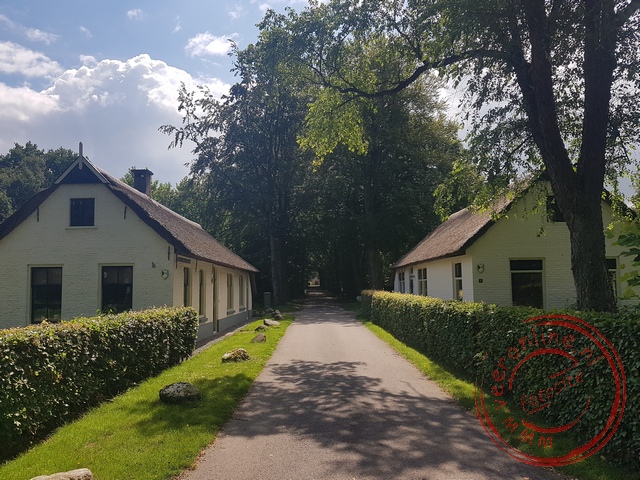
At a campsite, we stop for coffee. We have been cycling for an hour and are about a third of the way along the route. Continuing, we ride between the meadows into Willemsoord. Unlike the previous two colonies, Willemsoord has developed more into a regular village. The colony houses are scattered among other buildings. Through Steenwijk, we ride back to Frederiksoord, completing the 36-kilometre route. We arrive exactly on time for the museum, where we have reserved a time slot for 12:40. This time slot turns out to be precise — right on time, the door opens for a small group of visitors. A video explains the situation in the Netherlands when Van den Bosch decided to found the colonies. The video and its surrounding space are nicely set up. Afterward, the door to the second room automatically opens. Here, the stories of five families from the very beginning are told — families selected for Frederiksoord. The men had to be physically strong to work the land, while the women had to be able to weave and spin. The video also presents dilemmas: what to do with a family if the breadwinner died, or if the woman became chronically ill? The Society of Benevolence stood by people and supported them in difficult times. Only if families failed to do their work properly or committed theft would they be expelled from the colony. The museum visit ends in an exhibition hall with many interactive screens explaining the history of the colonies. In the afternoon, I drive on to a special colony: Veenhuizen.
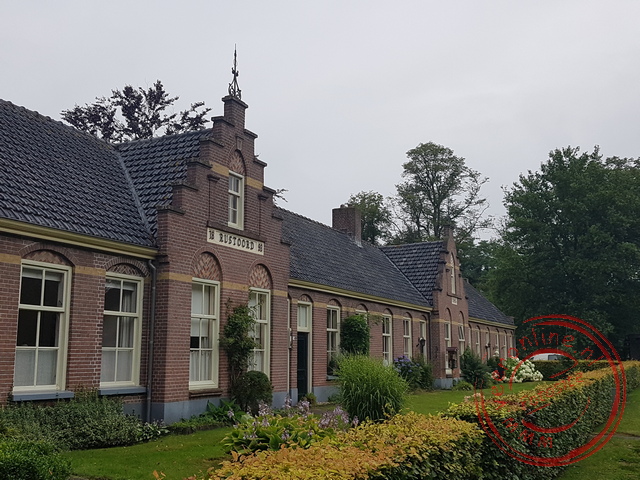
Veenhuizen was a colony where vagrants and paupers were sent and put to work. Their stay here was more compulsory. Over time, this developed into the Veenhuizen penal prison. People who had fallen on hard times could be transported to Veenhuizen. In the mid-20th century, the state took over the prison. Until 2008, Veenhuizen was used to incarcerate prisoners. Upon arrival, I overhear that the next excursion to the “red roofs” is not until 4:30 — more than two hours away. Fortunately, there is exactly one spot left for the 3:00 tour. Due to COVID measures, group sizes — and thus available spots — are limited. This means I have to be on the other side of the museum in just half an hour. With the one-way visitor routing, I’m not sure if I’ll be able to return afterward. I quickly look at the old penal instruments — they did not shy away from torture to force a confession. The following rooms also cover more recent court cases, where visitors can vote “guilty” or “not guilty” using buttons.

I skip some rooms to be on time for the tour. At 3:00, I gather at the exit, where one of the volunteers takes our group of twelve to the adjacent prison building. Until just ten years ago, inmates were still held here. I pass through the five-metre-high fence. Inside, the prison could hold forty inmates. I see the cells, the isolation cells, and a small yard where prisoners could take exercise. Back outside, I’m allowed to re-enter the exhibition through the entrance. This time, I take a bit longer to look at all the objects, ending with the cell blocks from the colonial period. Around the prison, many buildings from the Society of Benevolence still stand. These have been sold and are now inhabited. I walk past the houses, reading the inscriptions Order and Discipline and Knowledge is Power. By late afternoon, I drive back to Dwingeloo, arriving just before six — exactly in time to join friends for dinner at their tent. I stay there for the rest of the evening.
 The Red Roofs prison in Veenhuizen
 One of the houses of the Veenhuizen colony
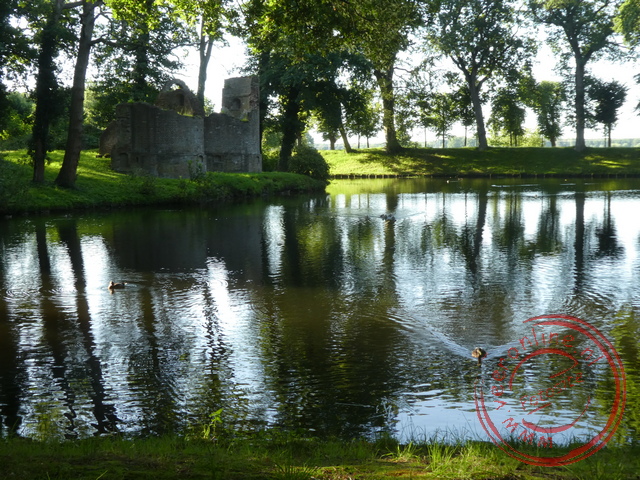 The remnants of the castle in Oldruitenborgh Park
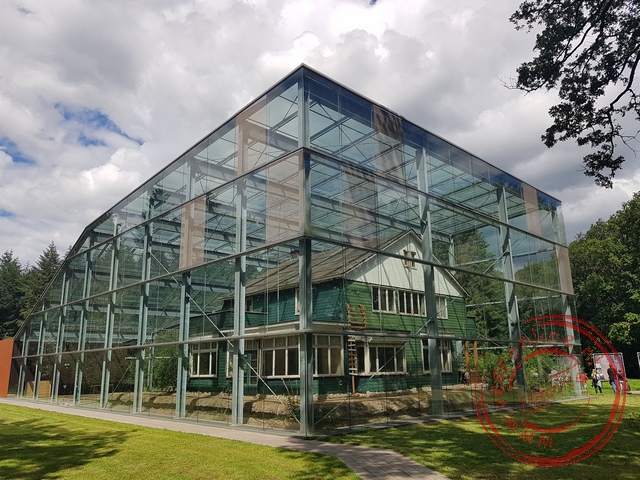 The former commanders house is protected by glass
Travelogue Tourist in My Own Country
Dag 2 | Netherlands > The Zuiderzee Islands
Dag 3 | Netherlands > The Bovenkerk of Kampen
Dag 4 | Netherlands > Camp Westerbork
Dag 5 | Netherlands > The Dolmen of Borger
Dag 6 | Netherlands > Walking in Dwingelderveld
Dag 7 | Netherlands > Colonies of Benevolence
Dag 8 | Netherlands > The Fortress of Bourtange
Dag 9 | Netherlands > Via Oudeschans Back Home