
154 countries
(and areas)
 - Azerbaijan
- Bahrain
- Barbados
- Belgium
- Belize
- Benin
- Bhutan
- Bolivia
- Bonaire
- Bosnia and Herzegovina
- Botswana
- Brazil
- British Virgin Islands
- Brunei
- Bulgaria
- Cambodia
- Canada
- Cape Verde
- Chile
- China
- Costa Rica
- Croatia
- Cuba
- Curacao
- Cyprus
- Czech Republic
- Denmark
- Dominica
- Dominican Republic
- Egypt
- El Salvador
- England
- Estonia
- Eswatini (Swaziland)
- Ethiopia
- Fiji
- Finland
- France
- French Guiana
- Georgia
- Germany
- Gibraltar
- Greece
- Grenada
- Guadeloupe
- Guatemala
- Honduras
- Hong Kong
- Hungary
- Iceland
- India
- Indonesia
- Iran
- Ireland
- Israel
- Italy
- Jamaica
- Japan
- Jordan
- Kazakhstan
- Kenya
- Kosovo
- Kuwait
- Kyrgyzstan
- Laos
- Latvia
- Lebanon
- Lesotho
- Liechtenstein
- Lithuania
- Luxembourg
- Macau
- Madagascar
- Malawi
- Malaysia
- Maldives
- Malta
- Martinique
- Mexico
- Moldova
- Monaco
- Mongolia
- Montenegro
- Morocco
- Mozambique
- Namibia
- Nepal
- Netherlands
- New Zealand
- Nicaragua
- North Macedonia
- Northern Ireland
- Norway
- Oman
- Pakistan
- Palestine
- Peru
- Philippines
- Poland
- Portugal
- Qatar
- Republic of Korea
- Romania
- Russia
- Saint Kitts and Nevis
- Saint Lucia
- Saint Martin
- Saint Vincent and the Grenadines
- San Marino
- São Tomé and Principe
- Saudi Arabia
- Scotland
- Senegal
- Serbia
- Singapore
- Sint Maarten
- Slovakia
- Slovenia
- South Africa
- Spain
- Sri Lanka
- Suriname
- Sweden
- Switzerland
- Tajikistan
- Tanzania
- Thailand
- The Gambia
- Tibet
- Togo
- Transnistria
- Trinidad and Tobago
- Tunisia
- Turkey
- Turkmenistan
- Uganda
- United Arab Emirates
- United States
- Uruguay
- Uzbekistan
- Vatican City
- Vietnam
- Wales
- Zambia
- Zanzibar
- Azerbaijan
- Bahrain
- Barbados
- Belgium
- Belize
- Benin
- Bhutan
- Bolivia
- Bonaire
- Bosnia and Herzegovina
- Botswana
- Brazil
- British Virgin Islands
- Brunei
- Bulgaria
- Cambodia
- Canada
- Cape Verde
- Chile
- China
- Costa Rica
- Croatia
- Cuba
- Curacao
- Cyprus
- Czech Republic
- Denmark
- Dominica
- Dominican Republic
- Egypt
- El Salvador
- England
- Estonia
- Eswatini (Swaziland)
- Ethiopia
- Fiji
- Finland
- France
- French Guiana
- Georgia
- Germany
- Gibraltar
- Greece
- Grenada
- Guadeloupe
- Guatemala
- Honduras
- Hong Kong
- Hungary
- Iceland
- India
- Indonesia
- Iran
- Ireland
- Israel
- Italy
- Jamaica
- Japan
- Jordan
- Kazakhstan
- Kenya
- Kosovo
- Kuwait
- Kyrgyzstan
- Laos
- Latvia
- Lebanon
- Lesotho
- Liechtenstein
- Lithuania
- Luxembourg
- Macau
- Madagascar
- Malawi
- Malaysia
- Maldives
- Malta
- Martinique
- Mexico
- Moldova
- Monaco
- Mongolia
- Montenegro
- Morocco
- Mozambique
- Namibia
- Nepal
- Netherlands
- New Zealand
- Nicaragua
- North Macedonia
- Northern Ireland
- Norway
- Oman
- Pakistan
- Palestine
- Peru
- Philippines
- Poland
- Portugal
- Qatar
- Republic of Korea
- Romania
- Russia
- Saint Kitts and Nevis
- Saint Lucia
- Saint Martin
- Saint Vincent and the Grenadines
- San Marino
- São Tomé and Principe
- Saudi Arabia
- Scotland
- Senegal
- Serbia
- Singapore
- Sint Maarten
- Slovakia
- Slovenia
- South Africa
- Spain
- Sri Lanka
- Suriname
- Sweden
- Switzerland
- Tajikistan
- Tanzania
- Thailand
- The Gambia
- Tibet
- Togo
- Transnistria
- Trinidad and Tobago
- Tunisia
- Turkey
- Turkmenistan
- Uganda
- United Arab Emirates
- United States
- Uruguay
- Uzbekistan
- Vatican City
- Vietnam
- Wales
- Zambia
- Zanzibar


Copyright 2004 - 2026
Veeronline.nl Travel Adventures

Home > Netherlands > Tourist in My Own Country > Travelogue day 8
Travelogue Tourist in My Own Country
July 1826 2020 (9 days)
Netherlands > The Fortress of Bourtange
Dag 8 - Saturday 25 July 2020The last day at the campsite in Dwingeloo has already arrived. I retrieve my car from the parking lot and load my luggage into the car. During breakfast, we finish the leftovers. We managed quite well with the supplies we bought. After breakfast, we do the dishes for the last time, tidy up the cabin a bit, and take out the trash. Around ten o’clock, I leave the campsite. I head toward Beilen, about a twenty-minute drive. I park my car in the town center. Beilen was hit by a large fire in 1820. Nearly all the houses were lost in the fire. Only the St. Stefanus Church survived. Because of this fire, there are no historic buildings in the center of Beilen. The church likely dates from the 15th century, but the exact date is uncertain. In the little street behind the church is bakery Berghuis. This bakery introduced the “Drentse Kontje” in 1975. This pastry with peach whipped cream, dough, and marzipan is a well-known treat. I order a ‘kontje’ along with coffee. My next destination today is Ter Apel. On the way, I pass Emmer-Compascum, a village close to the German border. The mill has the fitting name “Grenszicht” (Border View). Probably from the gallery of this tower mill, you can see into Germany. Just before the border, I turn off. A little before noon, I drive onto the parking lot of the Ter Apel monastery. At first, I cannot find the entrance. I am too early. The monastery only opens its doors at twelve o’clock.

I have a reservation for the first time slot. The land for the monastery was donated to the Order of the Holy Cross in 1464. In the 18th century, the monastery fell into disrepair. The west wing was demolished after a fire. In the 1930s, the monastery was restored. The modern west wing was restored more recently in 2000 under the direction of a Danish architect. As soon as I enter, I stand in the cloister corridor. In the square courtyard grow all kinds of herbs. The garden is perfectly maintained. Through the sacristy, I enter the monastery church. The laypeople’s church is separated by a rood screen. This allowed monks and clergy to pray separately from ordinary people. Above the cloister corridor were rooms where the sick were cared for and books were copied—the so-called “monk’s work.” These rooms lie just under the monastery’s roof structure. The wooden beams give the attic a special appearance. This is completely different in the opposite wing. The west wing was lost to a fire in 1755. Only at the start of this century was it restored with modern elements. The architect has found a good atmosphere fitting the historic monastery. In the basement, there used to be a brewery. Now monastery beer is sold. I take a bottle of “Zware Monnik” with me, a beer with a hefty 11 percent alcohol. Via Ter Haar, I drive to my last destination for today: the fortress Bourtange.

Around two o’clock, I park at the visitor center. Inside, I am greeted enthusiastically. The staff member gives me the key for my overnight stay in the fortress Bourtange. He also gives me a ticket to visit the five museums inside the fortress. Finally, he explains how I can park my car within the fortress. I am allowed to drive over the fortress bridges, through the narrow streets, across the pentagonal square, and park by the church. It feels a bit strange when, a little later, I drive my car over the narrow wooden bridges. The square is busy with tourists. The terraces of the two hospitality establishments fill practically the entire square. I drive through and park in the parking lot. My room is nearby in the former soldiers’ lodgings. I put my luggage in the room. A neat room with a box bed—a regular double bed under a slanted ceiling. The box bed can be closed with curtains. The Terra Mora museum explains why William of Orange ordered Bourtange to be built in his struggle against the Spaniards.

The marshy area east of Groningen formed a natural defense of the city. Whoever controlled the paths—the “Tanges”—through the marsh controlled the area. With a fortress, the supply lines to Groningen, still in Spanish hands, could be cut off. After the Eighty Years’ War, Bourtange withstood attacks during the First Münster War. In 1672, the Prussians tried to attack the fortress from the east. This attack was also repelled. Due to newer military technologies, the fortress fell into disrepair. The surrounding marsh dried up, allowing people to bypass the fortress easily. Bourtange lost its military status in 1851. The buildings were used for housing. Moats were filled, and ramparts dug away. In the 1960s, it was decided to restore the fortress to its original state.

The result is a beautiful fortress that shows how the land was protected here in earlier times. I walk between the fortress buildings. I climb the fortress wall. I see the fortress behind me and the moat in front of me. The Protestant church towers above the fortress. On the fortress wall stands a replica of the fortress mill. In total, five museums are included with my ticket. The other museums show the former captain’s residence, an old synagogue, an exhibition of old weapons and artifacts, and a small cinema. Around half past four, it starts to rain. Under an umbrella, I order a beer on the terrace. In the evening, I return to the same restaurant for dinner. I order a Bourtange beer with my meal—a tasty choice. After dinner, I take another walk along the fortress wall. What a difference from the afternoon. All the tourists have left. A few people still walk through the fortress. They are probably guests staying overnight here.
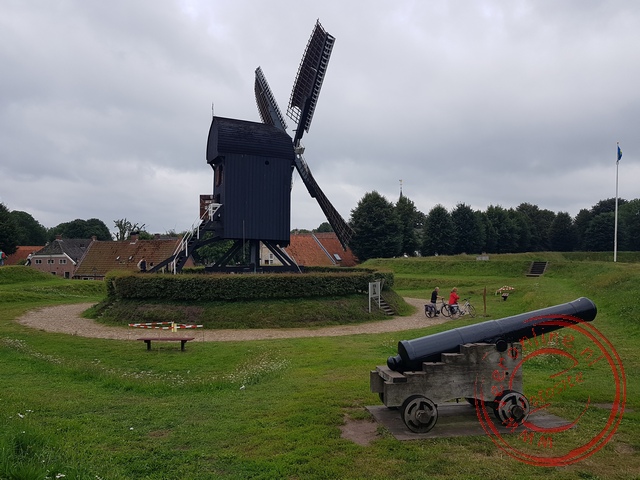 A replica of one of the fortress mills of Bourtange
 The Bovenkerk is the oldest building in Kampen
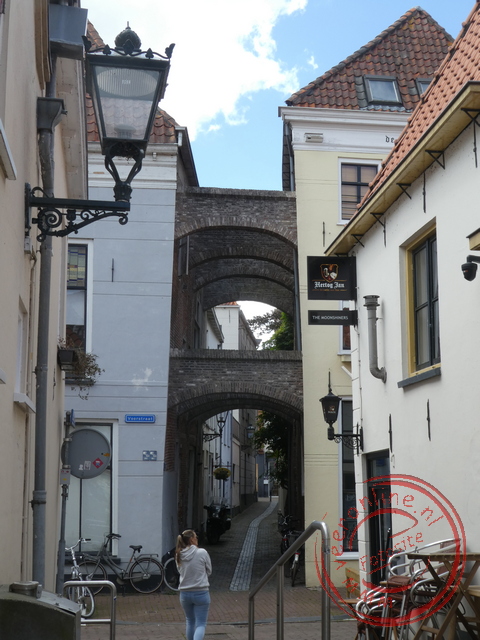 The Koldenhovensteeg in the old center
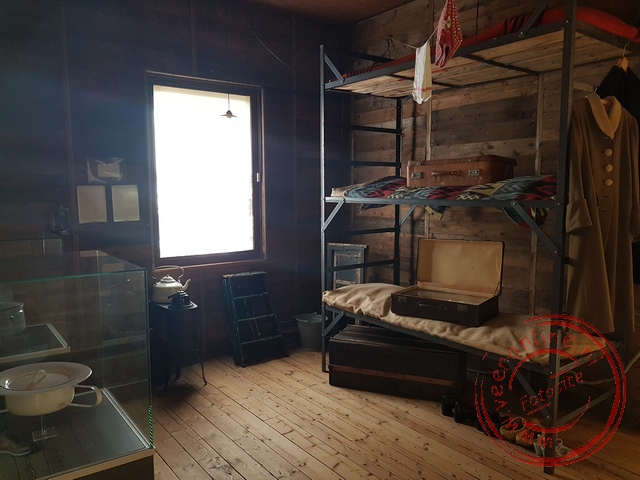 The museum shows how people lived in the barracks
Travelogue Tourist in My Own Country
Dag 2 | Netherlands > The Zuiderzee Islands
Dag 3 | Netherlands > The Bovenkerk of Kampen
Dag 4 | Netherlands > Camp Westerbork
Dag 5 | Netherlands > The Dolmen of Borger
Dag 6 | Netherlands > Walking in Dwingelderveld
Dag 7 | Netherlands > Colonies of Benevolence
Dag 8 | Netherlands > The Fortress of Bourtange
Dag 9 | Netherlands > Via Oudeschans Back Home