
154 countries
(and areas)
 - Belize
- Benin
- Bhutan
- Bolivia
- Bonaire
- Bosnia and Herzegovina
- Botswana
- Brazil
- British Virgin Islands
- Brunei
- Bulgaria
- Cambodia
- Canada
- Cape Verde
- Chile
- China
- Costa Rica
- Croatia
- Cuba
- Curacao
- Cyprus
- Czech Republic
- Denmark
- Dominica
- Dominican Republic
- Egypt
- El Salvador
- England
- Estonia
- Eswatini (Swaziland)
- Ethiopia
- Fiji
- Finland
- France
- French Guiana
- Georgia
- Germany
- Gibraltar
- Greece
- Grenada
- Guadeloupe
- Guatemala
- Honduras
- Hong Kong
- Hungary
- Iceland
- India
- Indonesia
- Iran
- Ireland
- Israel
- Italy
- Jamaica
- Japan
- Jordan
- Kazakhstan
- Kenya
- Kosovo
- Kuwait
- Kyrgyzstan
- Laos
- Latvia
- Lebanon
- Lesotho
- Liechtenstein
- Lithuania
- Luxembourg
- Macau
- Madagascar
- Malawi
- Malaysia
- Maldives
- Malta
- Martinique
- Mexico
- Moldova
- Monaco
- Mongolia
- Montenegro
- Morocco
- Mozambique
- Namibia
- Nepal
- Netherlands
- New Zealand
- Nicaragua
- North Macedonia
- Northern Ireland
- Norway
- Oman
- Pakistan
- Palestine
- Peru
- Philippines
- Poland
- Portugal
- Qatar
- Republic of Korea
- Romania
- Russia
- Saint Kitts and Nevis
- Saint Lucia
- Saint Martin
- Saint Vincent and the Grenadines
- San Marino
- São Tomé and Principe
- Saudi Arabia
- Scotland
- Senegal
- Serbia
- Singapore
- Sint Maarten
- Slovakia
- Slovenia
- South Africa
- Spain
- Sri Lanka
- Suriname
- Sweden
- Switzerland
- Tajikistan
- Tanzania
- Thailand
- The Gambia
- Tibet
- Togo
- Transnistria
- Trinidad and Tobago
- Tunisia
- Turkey
- Turkmenistan
- Uganda
- United Arab Emirates
- United States
- Uruguay
- Uzbekistan
- Vatican City
- Vietnam
- Wales
- Zambia
- Zanzibar
- Belize
- Benin
- Bhutan
- Bolivia
- Bonaire
- Bosnia and Herzegovina
- Botswana
- Brazil
- British Virgin Islands
- Brunei
- Bulgaria
- Cambodia
- Canada
- Cape Verde
- Chile
- China
- Costa Rica
- Croatia
- Cuba
- Curacao
- Cyprus
- Czech Republic
- Denmark
- Dominica
- Dominican Republic
- Egypt
- El Salvador
- England
- Estonia
- Eswatini (Swaziland)
- Ethiopia
- Fiji
- Finland
- France
- French Guiana
- Georgia
- Germany
- Gibraltar
- Greece
- Grenada
- Guadeloupe
- Guatemala
- Honduras
- Hong Kong
- Hungary
- Iceland
- India
- Indonesia
- Iran
- Ireland
- Israel
- Italy
- Jamaica
- Japan
- Jordan
- Kazakhstan
- Kenya
- Kosovo
- Kuwait
- Kyrgyzstan
- Laos
- Latvia
- Lebanon
- Lesotho
- Liechtenstein
- Lithuania
- Luxembourg
- Macau
- Madagascar
- Malawi
- Malaysia
- Maldives
- Malta
- Martinique
- Mexico
- Moldova
- Monaco
- Mongolia
- Montenegro
- Morocco
- Mozambique
- Namibia
- Nepal
- Netherlands
- New Zealand
- Nicaragua
- North Macedonia
- Northern Ireland
- Norway
- Oman
- Pakistan
- Palestine
- Peru
- Philippines
- Poland
- Portugal
- Qatar
- Republic of Korea
- Romania
- Russia
- Saint Kitts and Nevis
- Saint Lucia
- Saint Martin
- Saint Vincent and the Grenadines
- San Marino
- São Tomé and Principe
- Saudi Arabia
- Scotland
- Senegal
- Serbia
- Singapore
- Sint Maarten
- Slovakia
- Slovenia
- South Africa
- Spain
- Sri Lanka
- Suriname
- Sweden
- Switzerland
- Tajikistan
- Tanzania
- Thailand
- The Gambia
- Tibet
- Togo
- Transnistria
- Trinidad and Tobago
- Tunisia
- Turkey
- Turkmenistan
- Uganda
- United Arab Emirates
- United States
- Uruguay
- Uzbekistan
- Vatican City
- Vietnam
- Wales
- Zambia
- Zanzibar


Copyright 2004 - 2026
Veeronline.nl Travel Adventures

Home > Nicaragua > From Costa Rica to Guatemala > Travelogue day 10
Travelogue From Costa Rica to Guatemala
October 12 November 11 2013 (31 days)
Nicaragua > Wandering through old Granada
Dag 10 - Monday, October 21, 2013The muscle soreness isn’t too bad when I wake up. Only my thighs are protesting. I head to the restaurant for breakfast. There isn’t much available, so I have some pieces of baguette with jam, coffee, and fruit. After breakfast, Horacio picks me up again to take me to the ferry. When I arrive at the port of Moyogalpa, the boat hasn’t arrived yet. In the distance, I can just make out the boat approaching. I wait patiently until it docks and I can board. I set off for Granada, an old colonial town located on Lake Nicaragua. Granada was founded after the Spanish invasion in 1524.

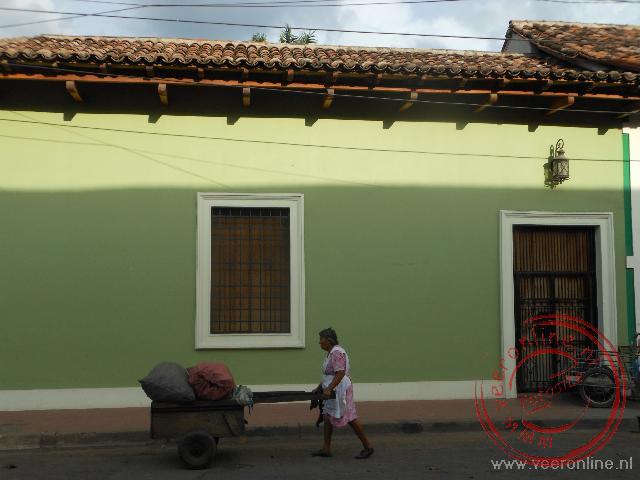
The city was named after the Spanish city of Granada. Its favorable location, 20 kilometers inland, made it an ideal base for the Spaniards. At that time, the city was wealthy, and many colonial houses were built. A later ruler of the city, William Walters, completely destroyed Granada in 1857 as his defeat approached. Fortunately, many buildings were later restored. My hotel is near the center, also built in colonial style. It’s a charming and atmospheric place. From the hotel, I walk into the city center around noon. Opposite the Convento de San Francisco, I find a cozy little eatery for lunch. After lunch, I stroll toward the central square and come across the “Casa de Tres Mundos.” I try to figure out what it is. The manager explains that it’s a cultural center. For ten Córdoba, I can enter. With the ease with which the bill disappears into his pocket and no ticket is issued, I doubt payment is actually required.

I walk through the center, greet the artists, and take a photo of the small radio station, Radio Volcano. In the courtyard, there’s a mosaic made of tiles, which I can best view from the balcony. From above, I can clearly see the face of an old man in the mosaic. Back outside, I walk to the city’s central square. On the south side of the square stands the yellow-colored cathedral. Inside, the building is simple and relatively modern. Based on the exterior, I had expected a more decorated cathedral. Next to the cathedral lies the old bishop’s residence, a beautiful red building with white pillars. I cross the square diagonally. I decline an offer for a horse-and-carriage ride and wander through the narrow streets until I reach the local market—a lively scene selling all sorts of goods around the central market hall. Eventually, I arrive at La Merced. As I take a photo, someone signals to me. Do I want to climb the tower? Of course! Via a narrow spiral staircase, I reach the platform by the bells.
From here, I have a stunning view over the city. Down below, I am explicitly told not to ring the bell. The rope lies enticingly on the ground. I am surprised that the bell is still rung by hand. Every half hour, someone climbs the tower for this noisy task. I don’t wait for this spectacle. I search for a terrace. The streets of Granada are oppressively hot. I find a nice courtyard terrace where mostly men are sitting, each with liter bottles of beer on the table. I order a liter of beer myself for less than a euro. Clearly, this is a local spot. As the final part of my city tour, I walk to the lake—about a kilometer away. The hotel receptionist had already warned me that not all areas around the lake are safe. On the way there, several people also warn me to watch my belongings, so I stay very alert. The boulevard is deserted, and a few homeless people are lingering in the nearby park. On the left, houses are boarded up, and fences are topped with rolls of barbed wire. With these warnings in mind, I feel uneasy. I quickly walk to the next street and return to the center. It’s a shame because it could have been a very nice spot by the water. I return to my hotel. In the evening, after dinner, as I climb the hotel stairs, I feel significant muscle pain in my legs. Hopefully, it will pass quickly, because the next three days are filled with volcano hikes.
 Nicaragua
  A nature hike through the Cerro Apante nature reserve
 The rocky Cerro Negro volcano in Nicaragua
 View from the mountain over the city of Matagalpa
 Muddy shoes during the hike to the top
Travelogue From Costa Rica to Guatemala
Dag 2 | Costa Rica > Searching for the Red Eye Frog
Dag 3 | Costa Rica > Monkeys at Caño Negro
Dag 4 | Costa Rica > From La Fortuna to Monteverde
Dag 5 | Costa Rica > A Quetzal in the treetops
Dag 6 | Costa Rica > Swinging among the treetops
Dag 7 | Costa Rica > Mud volcano of Rincón de la Vieja
Dag 8 | Nicaragua > To Isla de Ometepe
Dag 9 | Nicaragua > Climbing the Concepción volcano
Dag 10 | Nicaragua > Wandering through old Granada
Dag 11 | Nicaragua > Kayaking among the Isletas de Granada
Dag 12 | Nicaragua > The historic city of León
Dag 13 | Nicaragua > Lava on the Telica volcano
Dag 14 | Nicaragua > Sliding down the Cerro Negro volcano
Dag 15 | Nicaragua > Mountain hike through the rainforest
Dag 16 | El Salvador > Via Honduras to El Salvador
Dag 17 | El Salvador > The memory of the civil war
Dag 18 | El Salvador > Escorted to the waterfall
Dag 19 | Honduras > On the way to Copán Ruinas
Dag 20 | Honduras > In the footsteps of the Mayas
Dag 21 | Guatemala > Crossing the border to Rio Dulce
Dag 22 | Guatemala > Capsized with a jet ski
Dag 23 | Belize > The fourth hotel room is fine
Dag 24 | Belize > 'Go Slow' on Caye Caulker
Dag 25 | Belize > Swimming with a sea turtle
Dag 26 | Guatemala > Police escort to Tikal
Dag 27 | Guatemala > The Mayan city of Tikal
Dag 28 | Guatemala > Ruins in the street scene of Antigua
Dag 29 | Guatemala > Ending with the Pacaya volcano
Dag 30 | Guatemala > To the airport
Dag 31 | Guatemala > Back home