
154 countries
(and areas)
 - Belize
- Benin
- Bhutan
- Bolivia
- Bonaire
- Bosnia and Herzegovina
- Botswana
- Brazil
- British Virgin Islands
- Brunei
- Bulgaria
- Cambodia
- Canada
- Cape Verde
- Chile
- China
- Costa Rica
- Croatia
- Cuba
- Curacao
- Cyprus
- Czech Republic
- Denmark
- Dominica
- Dominican Republic
- Egypt
- El Salvador
- England
- Estonia
- Eswatini (Swaziland)
- Ethiopia
- Fiji
- Finland
- France
- French Guiana
- Georgia
- Germany
- Gibraltar
- Greece
- Grenada
- Guadeloupe
- Guatemala
- Honduras
- Hong Kong
- Hungary
- Iceland
- India
- Indonesia
- Iran
- Ireland
- Israel
- Italy
- Jamaica
- Japan
- Jordan
- Kazakhstan
- Kenya
- Kosovo
- Kuwait
- Kyrgyzstan
- Laos
- Latvia
- Lebanon
- Lesotho
- Liechtenstein
- Lithuania
- Luxembourg
- Macau
- Madagascar
- Malawi
- Malaysia
- Maldives
- Malta
- Martinique
- Mexico
- Moldova
- Monaco
- Mongolia
- Montenegro
- Morocco
- Mozambique
- Namibia
- Nepal
- Netherlands
- New Zealand
- Nicaragua
- North Macedonia
- Northern Ireland
- Norway
- Oman
- Pakistan
- Palestine
- Peru
- Philippines
- Poland
- Portugal
- Qatar
- Republic of Korea
- Romania
- Russia
- Saint Kitts and Nevis
- Saint Lucia
- Saint Martin
- Saint Vincent and the Grenadines
- San Marino
- São Tomé and Principe
- Saudi Arabia
- Scotland
- Senegal
- Serbia
- Singapore
- Sint Maarten
- Slovakia
- Slovenia
- South Africa
- Spain
- Sri Lanka
- Suriname
- Sweden
- Switzerland
- Tajikistan
- Tanzania
- Thailand
- The Gambia
- Tibet
- Togo
- Transnistria
- Trinidad and Tobago
- Tunisia
- Turkey
- Turkmenistan
- Uganda
- United Arab Emirates
- United States
- Uruguay
- Uzbekistan
- Vatican City
- Vietnam
- Wales
- Zambia
- Zanzibar
- Belize
- Benin
- Bhutan
- Bolivia
- Bonaire
- Bosnia and Herzegovina
- Botswana
- Brazil
- British Virgin Islands
- Brunei
- Bulgaria
- Cambodia
- Canada
- Cape Verde
- Chile
- China
- Costa Rica
- Croatia
- Cuba
- Curacao
- Cyprus
- Czech Republic
- Denmark
- Dominica
- Dominican Republic
- Egypt
- El Salvador
- England
- Estonia
- Eswatini (Swaziland)
- Ethiopia
- Fiji
- Finland
- France
- French Guiana
- Georgia
- Germany
- Gibraltar
- Greece
- Grenada
- Guadeloupe
- Guatemala
- Honduras
- Hong Kong
- Hungary
- Iceland
- India
- Indonesia
- Iran
- Ireland
- Israel
- Italy
- Jamaica
- Japan
- Jordan
- Kazakhstan
- Kenya
- Kosovo
- Kuwait
- Kyrgyzstan
- Laos
- Latvia
- Lebanon
- Lesotho
- Liechtenstein
- Lithuania
- Luxembourg
- Macau
- Madagascar
- Malawi
- Malaysia
- Maldives
- Malta
- Martinique
- Mexico
- Moldova
- Monaco
- Mongolia
- Montenegro
- Morocco
- Mozambique
- Namibia
- Nepal
- Netherlands
- New Zealand
- Nicaragua
- North Macedonia
- Northern Ireland
- Norway
- Oman
- Pakistan
- Palestine
- Peru
- Philippines
- Poland
- Portugal
- Qatar
- Republic of Korea
- Romania
- Russia
- Saint Kitts and Nevis
- Saint Lucia
- Saint Martin
- Saint Vincent and the Grenadines
- San Marino
- São Tomé and Principe
- Saudi Arabia
- Scotland
- Senegal
- Serbia
- Singapore
- Sint Maarten
- Slovakia
- Slovenia
- South Africa
- Spain
- Sri Lanka
- Suriname
- Sweden
- Switzerland
- Tajikistan
- Tanzania
- Thailand
- The Gambia
- Tibet
- Togo
- Transnistria
- Trinidad and Tobago
- Tunisia
- Turkey
- Turkmenistan
- Uganda
- United Arab Emirates
- United States
- Uruguay
- Uzbekistan
- Vatican City
- Vietnam
- Wales
- Zambia
- Zanzibar


Copyright 2004 - 2026
Veeronline.nl Travel Adventures

Home > Egypt > Travel around Egypt > Travelogue day 6
Travelogue Travel around Egypt
November 2004 (15 days)
Egypt > On a camel to the Oasis
Dag 6 - Friday, November 19, 2004When I wake up in the morning, Paulus is already busy with his luggage. He empties everything from his bag and realizes that his wallet is missing. He is convinced it has been stolen. All the bags are emptied, the bed is searched, and he even looks outside, thinking he may have left it there.
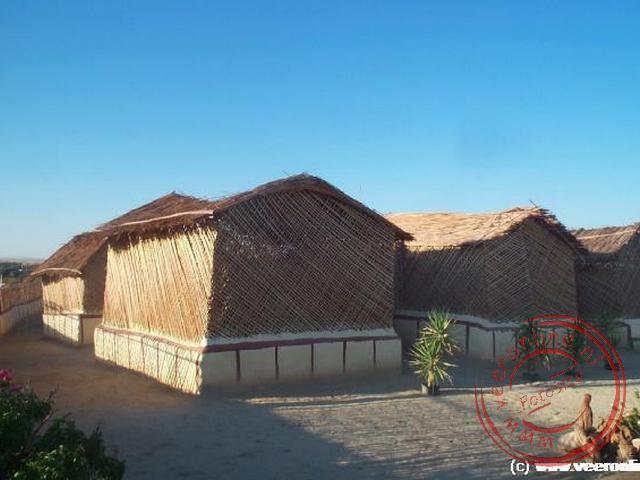
No luck. I cannot believe anyone came into our hut during the night. I had been awake during all the nighttime trips of my fellow travelers to the toilet, and the shouting around the campsite kept me awake as well. But the wallet remains missing. There’s more trouble — the shower doesn’t work! The water has run out. Well, it is the middle of the desert after all. With a tiny trickle of water, I manage to freshen up a bit. When I return, it turns out the wallet has been found — there was still a compartment in the bag. We’re ready for breakfast. At eight o’clock, we walk to the camels behind the campsite. Actually, they are dromedaries, but for Egyptians, they are all “camels.” I am among the first to climb onto a camel. Everyone in Holland had warned me about mounting, but it turns out to be no problem. First, the rear rises, and only then the head. I am already quite high before I even realize it. The camels are true herd animals and simply follow each other. Clearly, Ingeborg’s camel takes the lead immediately.
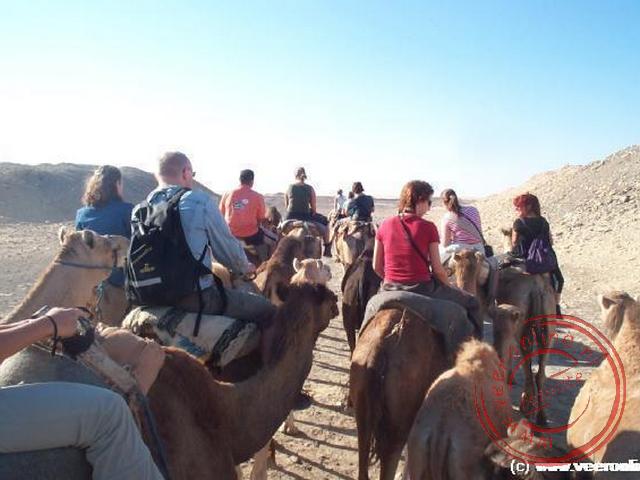
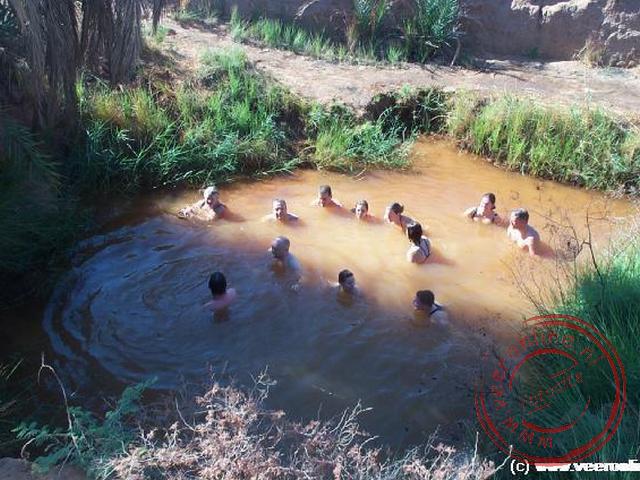
The rest follow. Along the way, we try to take photos of each other, which means passing the camera back and forth. It’s not easy to steer the camels so they first take enough distance for the photo and then return to retrieve the camera. For a while, I end up holding several cameras at once. After an hour and a half of jolting through the desert — surprisingly, riding the dromedary doesn’t make me seasick — we arrive at the oasis. This oasis somewhat matches what we imagined: a small lake surrounded by palm trees. Here, not only does the oasis water bubble up, but a lot of sand rises too. From the edge, you can jump into the oasis from about three meters high. You must land in the sand pit, as the edges are very shallow. The bubbling sand keeps you floating like a bobber. Very funny! Only, the sand ends up everywhere. The way back to the campsite is by jeep safari. This is a bit disappointing. We basically just drive back in two jeeps, covering only a small stretch of sand before returning to asphalt.
At the huts, we gather our luggage again. The main baggage goes back on the roof, and the daypack for the coming night goes in the bus. We drive through the Dakhla Oasis. In the largest town, Mut, we stop for lunch at a restaurant. The owner is very busy and clearly focused on tourists. He sells lemon juice — a one-and-a-half-liter bottle is cheap and deeply frozen, perfect for keeping cool on the afternoon drive. Meanwhile, Camel, our driver, is changing a flat tire on the bus. The tire was very soft, so Camel chooses to replace it entirely, leaving the spare for emergencies. We walk through Mut toward the supermarket, stocking up mainly on toilet paper and chips. On a bench in the park, we wait about an hour until the bus is ready. Around two o’clock, we head toward the Kharga Oasis, about 200 kilometers away. Mohammed warns that we will probably miss the sunset on the sand dunes due to the flat tire and the shortening days. He doubts we would make it, even if we skip the visit to the Temple of Hibis. We choose the temple and enter Kharga around four o’clock. Under police escort, we are led to the temple.

Four officers and our personal bodyguard, Ale, are waiting while Mohammed explains the temple and the inscriptions on the walls. Mohammed knows a lot about the different gods and conveys it in an engaging way, promising more temples and deity worship as our journey continues. Just outside Kharga, we leave the asphalt road and follow a dirt path to the overnight site. The sun has already set well below the horizon. The sand dunes here are said to be spectacular, but nothing is visible now. We do, however, hike to the top of a dune. In the light of the nearly full moon, the stars are beautiful. The Bedouins have set up a campfire. Around the sleeping area, woven reed screens are placed. The sleeping area is entirely surrounded by these screens, with mats laid on the ground. The reeds provide excellent protection against the wind. After dinner, everyone quickly crawls into their sleeping bags — already by nine o’clock. Partly to enjoy the stunning starry sky, but also because we have to get up at four o’clock the next morning.
 Egypt
Egypt  View of Cairo from the Citadel walls with the Sultan Hassan mosque in the foreground
 The valley of the kings with the tombs of the pharaohs
 The Sphinx guards the Giza plateau in front of the Pyramid of Chephren
 The Pyramid of Cheops is the tallest pyramid in Egypt at a height of 138 meters
Travelogue Travel around Egypt
Dag 2 | Egypt > The Sugar Feast in Cairo
Dag 3 | Egypt > Walk through Cairo
Dag 4 | Egypt > Sleeping on the desert sand
Dag 5 | Egypt > The medieval town of El-Qasr
Dag 6 | Egypt > On a camel to the Oasis
Dag 7 | Egypt > Eating with the Nubians in Aswan
Dag 8 | Egypt > High Tea at Hotel Old Cataract
Dag 9 | Egypt > Sailing on the Nile
Dag 10 | Egypt > The temples of Karnak and Luxor
Dag 11 | Egypt > Guest at an Egyptian wedding
Dag 12 | Egypt > On the way to Sharm El-Naga
Dag 13 | Egypt > A day at the beach
Dag 14 | Egypt > The Egyptian Museum
Dag 15 | Egypt > Schiphol