
154 countries
(and areas)
 - Belize
- Benin
- Bhutan
- Bolivia
- Bonaire
- Bosnia and Herzegovina
- Botswana
- Brazil
- British Virgin Islands
- Brunei
- Bulgaria
- Cambodia
- Canada
- Cape Verde
- Chile
- China
- Costa Rica
- Croatia
- Cuba
- Curacao
- Cyprus
- Czech Republic
- Denmark
- Dominica
- Dominican Republic
- Egypt
- El Salvador
- England
- Estonia
- Eswatini (Swaziland)
- Ethiopia
- Fiji
- Finland
- France
- French Guiana
- Georgia
- Germany
- Gibraltar
- Greece
- Grenada
- Guadeloupe
- Guatemala
- Honduras
- Hong Kong
- Hungary
- Iceland
- India
- Indonesia
- Iran
- Ireland
- Israel
- Italy
- Jamaica
- Japan
- Jordan
- Kazakhstan
- Kenya
- Kosovo
- Kuwait
- Kyrgyzstan
- Laos
- Latvia
- Lebanon
- Lesotho
- Liechtenstein
- Lithuania
- Luxembourg
- Macau
- Madagascar
- Malawi
- Malaysia
- Maldives
- Malta
- Martinique
- Mexico
- Moldova
- Monaco
- Mongolia
- Montenegro
- Morocco
- Mozambique
- Namibia
- Nepal
- Netherlands
- New Zealand
- Nicaragua
- North Macedonia
- Northern Ireland
- Norway
- Oman
- Pakistan
- Palestine
- Peru
- Philippines
- Poland
- Portugal
- Qatar
- Republic of Korea
- Romania
- Russia
- Saint Kitts and Nevis
- Saint Lucia
- Saint Martin
- Saint Vincent and the Grenadines
- San Marino
- São Tomé and Principe
- Saudi Arabia
- Scotland
- Senegal
- Serbia
- Singapore
- Sint Maarten
- Slovakia
- Slovenia
- South Africa
- Spain
- Sri Lanka
- Suriname
- Sweden
- Switzerland
- Tajikistan
- Tanzania
- Thailand
- The Gambia
- Tibet
- Togo
- Transnistria
- Trinidad and Tobago
- Tunisia
- Turkey
- Turkmenistan
- Uganda
- United Arab Emirates
- United States
- Uruguay
- Uzbekistan
- Vatican City
- Vietnam
- Wales
- Zambia
- Zanzibar
- Belize
- Benin
- Bhutan
- Bolivia
- Bonaire
- Bosnia and Herzegovina
- Botswana
- Brazil
- British Virgin Islands
- Brunei
- Bulgaria
- Cambodia
- Canada
- Cape Verde
- Chile
- China
- Costa Rica
- Croatia
- Cuba
- Curacao
- Cyprus
- Czech Republic
- Denmark
- Dominica
- Dominican Republic
- Egypt
- El Salvador
- England
- Estonia
- Eswatini (Swaziland)
- Ethiopia
- Fiji
- Finland
- France
- French Guiana
- Georgia
- Germany
- Gibraltar
- Greece
- Grenada
- Guadeloupe
- Guatemala
- Honduras
- Hong Kong
- Hungary
- Iceland
- India
- Indonesia
- Iran
- Ireland
- Israel
- Italy
- Jamaica
- Japan
- Jordan
- Kazakhstan
- Kenya
- Kosovo
- Kuwait
- Kyrgyzstan
- Laos
- Latvia
- Lebanon
- Lesotho
- Liechtenstein
- Lithuania
- Luxembourg
- Macau
- Madagascar
- Malawi
- Malaysia
- Maldives
- Malta
- Martinique
- Mexico
- Moldova
- Monaco
- Mongolia
- Montenegro
- Morocco
- Mozambique
- Namibia
- Nepal
- Netherlands
- New Zealand
- Nicaragua
- North Macedonia
- Northern Ireland
- Norway
- Oman
- Pakistan
- Palestine
- Peru
- Philippines
- Poland
- Portugal
- Qatar
- Republic of Korea
- Romania
- Russia
- Saint Kitts and Nevis
- Saint Lucia
- Saint Martin
- Saint Vincent and the Grenadines
- San Marino
- São Tomé and Principe
- Saudi Arabia
- Scotland
- Senegal
- Serbia
- Singapore
- Sint Maarten
- Slovakia
- Slovenia
- South Africa
- Spain
- Sri Lanka
- Suriname
- Sweden
- Switzerland
- Tajikistan
- Tanzania
- Thailand
- The Gambia
- Tibet
- Togo
- Transnistria
- Trinidad and Tobago
- Tunisia
- Turkey
- Turkmenistan
- Uganda
- United Arab Emirates
- United States
- Uruguay
- Uzbekistan
- Vatican City
- Vietnam
- Wales
- Zambia
- Zanzibar


Copyright 2004 - 2026
Veeronline.nl Travel Adventures

Home > Egypt > Travel around Egypt > Travelogue day 7
Travelogue Travel around Egypt
November 2004 (15 days)
Egypt > Eating with the Nubians in Aswan
Dag 7 - Saturday, November 20, 2004At four o’clock in the morning, Mohammed gently wakes us. It’s still very early, dark, and above all, cold — not exactly appealing for getting out of the sleeping bag. With a flashlight in hand, I pack the luggage and then make my way to the breakfast table. The tea and the warm — though very hard-boiled — egg make things a bit more pleasant. Shortly after five, we leave the camp by bus, heading toward Luxor.

We need to leave so early to arrive in time for the convoy to Aswan. To reach Luxor, we still have about 300 kilometers to cover through the desert, and of course, we need some leeway for flat tires or other delays. At the first checkpoint, we wait for a second bus — the bus from the King Monkey group. With the two buses back-to-back, we drive into the desert again about ten minutes later. Everyone tries to catch some more sleep on the bus in these early hours. Around half past five, the bus stops at the side of the road for the sunrise. The other bus is already out of sight. The sun rises very quickly, and we have to act fast for the ultimate Kodak moment. After that, we continue toward Luxor. Around half past nine, we arrive at our hotel in Luxor. Here, we have an hour to freshen up or swim. The pool looks rather chilly in the shade, so we decide to take a walk through Luxor toward the Nile. Along the way, various offers come up — especially the offers for a horse and carriage ride are overwhelming. We only stay in Luxor for about an hour. Meanwhile, the other travelers have settled on the hotel’s rooftop terrace. They have already ordered food and receive it just before half past ten. They have to eat their sandwiches quickly to be on time for the bus. Our coffee and tea don’t arrive in time. At half past ten, we gather again at the bus for the ride to Aswan.

This trip is in a convoy. Ale, our personal bodyguard, says goodbye in Luxor. Today’s convoy consists of just two buses — ours and the King Monkey bus. So technically, we could have driven straight from the desert. Under police escort, with sirens ahead and behind, we leave Luxor at high speed toward Aswan. Halfway, at the provincial border between Luxor and Aswan, there is a short break, where police escort is handed over to the next district. The second part of the journey to Aswan is possibly even faster. Camel tries to keep up with the convoy, revving the engine to overtake cars. By quarter past two, earlier than planned, we arrive at our hotel in Aswan. It already feels as if we’ve had a full day. We order lunch at the hotel and head to our rooms to shower and shave. When we return, lunch is ready in the restaurant. At half past three, we walk to the Nile quay and board a flat motorboat. We sail around Elephantine Island and dock at Kitchener’s Island. This island once belonged to a British officer, who planted various plants there. Today, it forms a beautiful botanical garden and a peaceful retreat amid the city’s bustle. On the other side of the island, we have tea with a view of the Nile. With the motorboat, we travel upstream along the Nile toward the Nubian village. Meanwhile, the sun sets behind the mountains along the Nile. It is already dark when we arrive at the village.
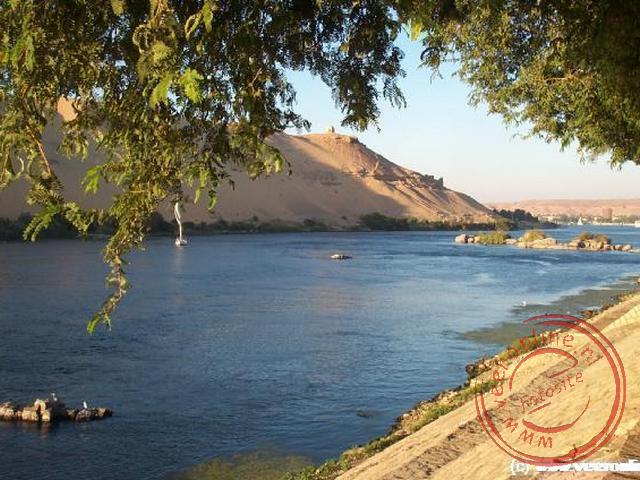
Mohammed gives a tour of the small village, which was established after the construction of the High Dam. Many inhabitants had to relocate due to the lake that formed behind the dam. The valley was mainly home to Nubians. In one of the houses, we have dinner. First, we look around inside to see how the Nubians live. In the covered courtyard, they also show us a container with young crocodiles, which we are allowed to lift and hold for a moment. The food tastes very good. After dinner, we sail back to Aswan, docking around eight o’clock. In the evening, we check the internet near the hotel and discover that a locust plague hit the pyramids in Cairo on Wednesday afternoon — we had just left Cairo Wednesday morning. Online photos show the pyramids swarmed with locusts. Fortunately, we didn’t experience this firsthand. By half past nine, we go to bed after a very long day. Tomorrow, we will need to get up early again.
 Egypt
Egypt  The harbor of Alexandria on the Mediterranean Sea
 The end of Ramadan the Sugar Feast celebrated by Egyptians along the Nile boulevards
 The Abu Abbas Mosque in Alexandria
 Dinner with the Bedouins in the desert
Travelogue Travel around Egypt
Dag 2 | Egypt > The Sugar Feast in Cairo
Dag 3 | Egypt > Walk through Cairo
Dag 4 | Egypt > Sleeping on the desert sand
Dag 5 | Egypt > The medieval town of El-Qasr
Dag 6 | Egypt > On a camel to the Oasis
Dag 7 | Egypt > Eating with the Nubians in Aswan
Dag 8 | Egypt > High Tea at Hotel Old Cataract
Dag 9 | Egypt > Sailing on the Nile
Dag 10 | Egypt > The temples of Karnak and Luxor
Dag 11 | Egypt > Guest at an Egyptian wedding
Dag 12 | Egypt > On the way to Sharm El-Naga
Dag 13 | Egypt > A day at the beach
Dag 14 | Egypt > The Egyptian Museum
Dag 15 | Egypt > Schiphol