
154 countries
(and areas)
 - Azerbaijan
- Bahrain
- Barbados
- Belgium
- Belize
- Benin
- Bhutan
- Bolivia
- Bonaire
- Bosnia and Herzegovina
- Botswana
- Brazil
- British Virgin Islands
- Brunei
- Bulgaria
- Cambodia
- Canada
- Cape Verde
- Chile
- China
- Costa Rica
- Croatia
- Cuba
- Curacao
- Cyprus
- Czech Republic
- Denmark
- Dominica
- Dominican Republic
- Egypt
- El Salvador
- England
- Estonia
- Eswatini (Swaziland)
- Ethiopia
- Fiji
- Finland
- France
- French Guiana
- Georgia
- Germany
- Gibraltar
- Greece
- Grenada
- Guadeloupe
- Guatemala
- Honduras
- Hong Kong
- Hungary
- Iceland
- India
- Indonesia
- Iran
- Ireland
- Israel
- Italy
- Jamaica
- Japan
- Jordan
- Kazakhstan
- Kenya
- Kosovo
- Kuwait
- Kyrgyzstan
- Laos
- Latvia
- Lebanon
- Lesotho
- Liechtenstein
- Lithuania
- Luxembourg
- Macau
- Madagascar
- Malawi
- Malaysia
- Maldives
- Malta
- Martinique
- Mexico
- Moldova
- Monaco
- Mongolia
- Montenegro
- Morocco
- Mozambique
- Namibia
- Nepal
- Netherlands
- New Zealand
- Nicaragua
- North Macedonia
- Northern Ireland
- Norway
- Oman
- Pakistan
- Palestine
- Peru
- Philippines
- Poland
- Portugal
- Qatar
- Republic of Korea
- Romania
- Russia
- Saint Kitts and Nevis
- Saint Lucia
- Saint Martin
- Saint Vincent and the Grenadines
- San Marino
- São Tomé and Principe
- Saudi Arabia
- Scotland
- Senegal
- Serbia
- Singapore
- Sint Maarten
- Slovakia
- Slovenia
- South Africa
- Spain
- Sri Lanka
- Suriname
- Sweden
- Switzerland
- Tajikistan
- Tanzania
- Thailand
- The Gambia
- Tibet
- Togo
- Transnistria
- Trinidad and Tobago
- Tunisia
- Turkey
- Turkmenistan
- Uganda
- United Arab Emirates
- United States
- Uruguay
- Uzbekistan
- Vatican City
- Vietnam
- Wales
- Zambia
- Zanzibar
- Azerbaijan
- Bahrain
- Barbados
- Belgium
- Belize
- Benin
- Bhutan
- Bolivia
- Bonaire
- Bosnia and Herzegovina
- Botswana
- Brazil
- British Virgin Islands
- Brunei
- Bulgaria
- Cambodia
- Canada
- Cape Verde
- Chile
- China
- Costa Rica
- Croatia
- Cuba
- Curacao
- Cyprus
- Czech Republic
- Denmark
- Dominica
- Dominican Republic
- Egypt
- El Salvador
- England
- Estonia
- Eswatini (Swaziland)
- Ethiopia
- Fiji
- Finland
- France
- French Guiana
- Georgia
- Germany
- Gibraltar
- Greece
- Grenada
- Guadeloupe
- Guatemala
- Honduras
- Hong Kong
- Hungary
- Iceland
- India
- Indonesia
- Iran
- Ireland
- Israel
- Italy
- Jamaica
- Japan
- Jordan
- Kazakhstan
- Kenya
- Kosovo
- Kuwait
- Kyrgyzstan
- Laos
- Latvia
- Lebanon
- Lesotho
- Liechtenstein
- Lithuania
- Luxembourg
- Macau
- Madagascar
- Malawi
- Malaysia
- Maldives
- Malta
- Martinique
- Mexico
- Moldova
- Monaco
- Mongolia
- Montenegro
- Morocco
- Mozambique
- Namibia
- Nepal
- Netherlands
- New Zealand
- Nicaragua
- North Macedonia
- Northern Ireland
- Norway
- Oman
- Pakistan
- Palestine
- Peru
- Philippines
- Poland
- Portugal
- Qatar
- Republic of Korea
- Romania
- Russia
- Saint Kitts and Nevis
- Saint Lucia
- Saint Martin
- Saint Vincent and the Grenadines
- San Marino
- São Tomé and Principe
- Saudi Arabia
- Scotland
- Senegal
- Serbia
- Singapore
- Sint Maarten
- Slovakia
- Slovenia
- South Africa
- Spain
- Sri Lanka
- Suriname
- Sweden
- Switzerland
- Tajikistan
- Tanzania
- Thailand
- The Gambia
- Tibet
- Togo
- Transnistria
- Trinidad and Tobago
- Tunisia
- Turkey
- Turkmenistan
- Uganda
- United Arab Emirates
- United States
- Uruguay
- Uzbekistan
- Vatican City
- Vietnam
- Wales
- Zambia
- Zanzibar


Copyright 2004 - 2026
Veeronline.nl Travel Adventures

Home > Egypt > Travel around Egypt > Travelogue day 11
Travelogue Travel around Egypt
November 2004 (15 days)
Egypt > Guest at an Egyptian wedding
Dag 11 - Wednesday, November 24, 2004Up at six o’clock — I’m used to it by now. Today, the Valley of the Kings is on the program. Normally, Mohammed would start this excursion an hour earlier, but since it isn’t that hot at this time of year, we’re allowed to sleep in until six. After breakfast at the hotel, we take the bus to the west bank of the Nile.

Our first stop is the colossal statues of Amenhotep’s mortuary temple. The Colossi of Pharaoh Amenhotep III are the only remains of his temple. The temple was destroyed by an earthquake, and the rubble was later reused for other temples. Next, we continue to the Valley of the Kings. This valley contains the tombs of pharaohs from the period 1500–1000 BC. We’re clearly not the only visitors — it’s extremely crowded. For many day-trippers from Hurghada, this is one of the standard highlights. From the parking lot near the ticket office, we take a small train — the kind you’d find in an amusement park — to the valley. It’s barely 500 meters, and honestly, I’d rather have walked (I’ve been sitting enough already). The tombs are scattered throughout the valley. In general, a tomb consists of a long descending corridor leading to an offering chamber, and from there another passageway to the actual burial chamber of the pharaoh. All the tombs were looted by grave robbers long ago — except for one: the tomb of Pharaoh Tutankhamun, discovered in 1922. Tutankhamun wasn’t a particularly important pharaoh, but the discovery of his intact tomb made him one of the most famous.

His golden death mask is especially well known and now resides in the Egyptian Museum in Cairo. We don’t visit his tomb — most of the treasures are displayed in Cairo, and the tomb itself isn’t particularly remarkable. At the tomb of Thutmose III, located at the far end of the valley, Mohammed gives a detailed explanation about the history, structure, and wall paintings of the tombs. Afterwards, we have time to visit three tombs. On Mohammed’s recommendation, we start with the tomb of Queen Tawosret and Pharaoh Sethnakht. The beautiful colors of the wall paintings are especially striking. After that, we visit the tomb of the great Pharaoh Ramses II, and finally that of Ramses VI (also at Mohammed’s suggestion). The last tomb is so crowded that there’s a long queue outside. On the way back, we skip the little train and walk back to the parking lot.

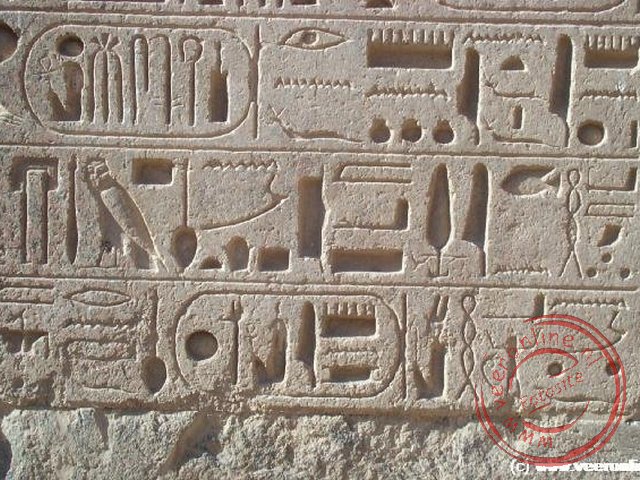
The bus then takes us to the Badr Museum, which is essentially a small demonstration of how pots are made from different types of stone. Afterwards, we’re invited into the shop (called a “gallery” here). The owner proudly shows us around and offers us tea or coffee, no obligation to buy. He also demonstrates the difference between real stone figurines and plastic ones — surprisingly hard to tell apart (except, as we learned over dinner last night, by holding a lighter to them, like we did with Frits’s figurine). We continue to the impressive Temple of Hatshepsut. The temple lies at the foot of a steep limestone cliff. Mohammed explains why Hatshepsut, the only female pharaoh, chose to build her temple in the Valley of the Kings rather than the Valley of the Queens. The temple consists of several terraces, partly carved out of the rock. Inside, I’m constantly approached by guards and attendants asking for money. They point out “Kodak points,” where they’ll let you step over a barrier for a small fee. One attendant shows me a great photo spot — and indeed, it is. But afterward, I’ve fallen out of his favor because I have no money on me. Finally, we visit the Temple of Ramses III. This temple at Medinet Habu was modeled after the Ramesseum, the temple of his father, Ramses II. Unlike the Ramesseum or the Temple of Hatshepsut, Medinet Habu receives far fewer tourists. The wall carvings and hieroglyphs here are remarkably well preserved, and some even retain their original colors. Mohammed shows us the depictions of Ramses III’s final journey and the gods who honored him. He concludes at the columns decorated with images of the gods, quizzing us on their identities. After a week and a half in Egypt, it turns out we’re still not very good at this. We say goodbye to the last temple of our trip and head back to Luxor.
Shortly after two o’clock, we’re back at the hotel, order lunch, and sit on the rooftop terrace, which offers a lovely view of the entire city. It takes quite a while for the food to arrive (and in Esther’s case, it never does — after an hour and a half, it turns out her dish isn’t available). We decide to skip dinner altogether. Around a quarter to seven, we return — this time by bus — to the Karnak temples for the Sound and Light Show. During the show, parts of the complex are illuminated while the history of the site is narrated. The first fifteen minutes are interesting, but it quickly becomes tedious. The narration is hard to understand. From the grandstand near the sacred lake, the show ends with a light display across the entire temple complex — unfortunately, not very impressive. The whole thing lasts about an hour and a half. Back at the hotel, we have a beer in the lounge. Mohammed joins us but hesitates, as he’s been invited to a friend’s wedding party and keeps getting phone calls about it. When he decides to go, he asks Geert and me (the others have already gone to bed) if we’d like to come along. We take a minibus to the outskirts of Luxor. On the main road, we get out and continue on foot through narrow streets. Mohammed jokes that this is to make up for the disappointing Sound and Light Show, adding that we’re the first group that didn’t enjoy it. The sound of the wedding can be heard from far away. The street where the celebration takes place is brightly lit. It turns out to be a bachelor party. A Nubian band is playing at the front, and around 250 men are standing or sitting in the street, while a few women watch from balconies above. We are warmly welcomed — all of Mohammed’s friends greet us, and we’re introduced to the groom. Someone gestures, and a bench is immediately cleared for us. We’re offered whisky, though hardly anyone else is drinking — most have tea. We politely decline the water pipe; too many people have used it already. Guests along the sides shyly try to strike up conversation with us, though it rarely goes beyond “Welcome to Egypt.” Geert is invited to dance by some young men, and soon we’re all on the dance floor. The music and dance style are quite different, but after a bit of adjustment, it’s fun — some Egyptians even start imitating our dance moves. Maybe we’ve started a new trend. At midnight, Mohammed gives a signal, and someone brings our jackets, which were still on the bench. We walk back with a few of Mohammed’s friends to the taxi. Only at the taxi do we finally say goodbye — apparently that’s customary — and then we drive back to the hotel. What an extraordinary experience.
 Egypt
Egypt  The quartz glistens like crystal
 The death mask of Tutankhamun in the Egyptian Museum photo Rene and Jacqueline
 View over the desert
 Erwin and Ale race upwards
Travelogue Travel around Egypt
Dag 2 | Egypt > The Sugar Feast in Cairo
Dag 3 | Egypt > Walk through Cairo
Dag 4 | Egypt > Sleeping on the desert sand
Dag 5 | Egypt > The medieval town of El-Qasr
Dag 6 | Egypt > On a camel to the Oasis
Dag 7 | Egypt > Eating with the Nubians in Aswan
Dag 8 | Egypt > High Tea at Hotel Old Cataract
Dag 9 | Egypt > Sailing on the Nile
Dag 10 | Egypt > The temples of Karnak and Luxor
Dag 11 | Egypt > Guest at an Egyptian wedding
Dag 12 | Egypt > On the way to Sharm El-Naga
Dag 13 | Egypt > A day at the beach
Dag 14 | Egypt > The Egyptian Museum
Dag 15 | Egypt > Schiphol