
154 countries
(and areas)
 - Azerbaijan
- Bahrain
- Barbados
- Belgium
- Belize
- Benin
- Bhutan
- Bolivia
- Bonaire
- Bosnia and Herzegovina
- Botswana
- Brazil
- British Virgin Islands
- Brunei
- Bulgaria
- Cambodia
- Canada
- Cape Verde
- Chile
- China
- Costa Rica
- Croatia
- Cuba
- Curacao
- Cyprus
- Czech Republic
- Denmark
- Dominica
- Dominican Republic
- Egypt
- El Salvador
- England
- Estonia
- Eswatini (Swaziland)
- Ethiopia
- Fiji
- Finland
- France
- French Guiana
- Georgia
- Germany
- Gibraltar
- Greece
- Grenada
- Guadeloupe
- Guatemala
- Honduras
- Hong Kong
- Hungary
- Iceland
- India
- Indonesia
- Iran
- Ireland
- Israel
- Italy
- Jamaica
- Japan
- Jordan
- Kazakhstan
- Kenya
- Kosovo
- Kuwait
- Kyrgyzstan
- Laos
- Latvia
- Lebanon
- Lesotho
- Liechtenstein
- Lithuania
- Luxembourg
- Macau
- Madagascar
- Malawi
- Malaysia
- Maldives
- Malta
- Martinique
- Mexico
- Moldova
- Monaco
- Mongolia
- Montenegro
- Morocco
- Mozambique
- Namibia
- Nepal
- Netherlands
- New Zealand
- Nicaragua
- North Macedonia
- Northern Ireland
- Norway
- Oman
- Pakistan
- Palestine
- Peru
- Philippines
- Poland
- Portugal
- Qatar
- Republic of Korea
- Romania
- Russia
- Saint Kitts and Nevis
- Saint Lucia
- Saint Martin
- Saint Vincent and the Grenadines
- San Marino
- São Tomé and Principe
- Saudi Arabia
- Scotland
- Senegal
- Serbia
- Singapore
- Sint Maarten
- Slovakia
- Slovenia
- South Africa
- Spain
- Sri Lanka
- Suriname
- Sweden
- Switzerland
- Tajikistan
- Tanzania
- Thailand
- The Gambia
- Tibet
- Togo
- Transnistria
- Trinidad and Tobago
- Tunisia
- Turkey
- Turkmenistan
- Uganda
- United Arab Emirates
- United States
- Uruguay
- Uzbekistan
- Vatican City
- Vietnam
- Wales
- Zambia
- Zanzibar
- Azerbaijan
- Bahrain
- Barbados
- Belgium
- Belize
- Benin
- Bhutan
- Bolivia
- Bonaire
- Bosnia and Herzegovina
- Botswana
- Brazil
- British Virgin Islands
- Brunei
- Bulgaria
- Cambodia
- Canada
- Cape Verde
- Chile
- China
- Costa Rica
- Croatia
- Cuba
- Curacao
- Cyprus
- Czech Republic
- Denmark
- Dominica
- Dominican Republic
- Egypt
- El Salvador
- England
- Estonia
- Eswatini (Swaziland)
- Ethiopia
- Fiji
- Finland
- France
- French Guiana
- Georgia
- Germany
- Gibraltar
- Greece
- Grenada
- Guadeloupe
- Guatemala
- Honduras
- Hong Kong
- Hungary
- Iceland
- India
- Indonesia
- Iran
- Ireland
- Israel
- Italy
- Jamaica
- Japan
- Jordan
- Kazakhstan
- Kenya
- Kosovo
- Kuwait
- Kyrgyzstan
- Laos
- Latvia
- Lebanon
- Lesotho
- Liechtenstein
- Lithuania
- Luxembourg
- Macau
- Madagascar
- Malawi
- Malaysia
- Maldives
- Malta
- Martinique
- Mexico
- Moldova
- Monaco
- Mongolia
- Montenegro
- Morocco
- Mozambique
- Namibia
- Nepal
- Netherlands
- New Zealand
- Nicaragua
- North Macedonia
- Northern Ireland
- Norway
- Oman
- Pakistan
- Palestine
- Peru
- Philippines
- Poland
- Portugal
- Qatar
- Republic of Korea
- Romania
- Russia
- Saint Kitts and Nevis
- Saint Lucia
- Saint Martin
- Saint Vincent and the Grenadines
- San Marino
- São Tomé and Principe
- Saudi Arabia
- Scotland
- Senegal
- Serbia
- Singapore
- Sint Maarten
- Slovakia
- Slovenia
- South Africa
- Spain
- Sri Lanka
- Suriname
- Sweden
- Switzerland
- Tajikistan
- Tanzania
- Thailand
- The Gambia
- Tibet
- Togo
- Transnistria
- Trinidad and Tobago
- Tunisia
- Turkey
- Turkmenistan
- Uganda
- United Arab Emirates
- United States
- Uruguay
- Uzbekistan
- Vatican City
- Vietnam
- Wales
- Zambia
- Zanzibar


Copyright 2004 - 2026
Veeronline.nl Travel Adventures
Home > Bulgaria > Hiking in Mountainous Bulgaria > Travelogue day 4
Travelogue Hiking in Mountainous Bulgaria
May 1827 2013 (10 days)
Bulgaria > Local folklore
Dag 4 - Tuesday, May 21, 2013For the third day in a row, I go for a walk around the Yagodina area. I leave the hotel and turn right onto a small path I haven’t walked before. The weather is sunny, and I’ve brought extra water in my backpack since there are fewer refill points along the route today. As I pass the last houses of the village, I follow a gently rising cart track.
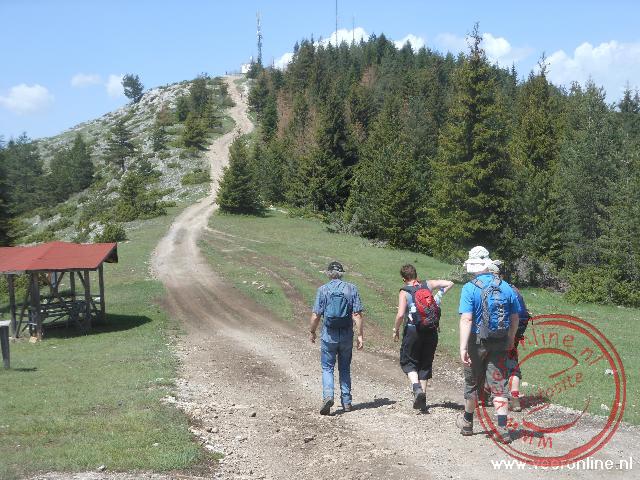
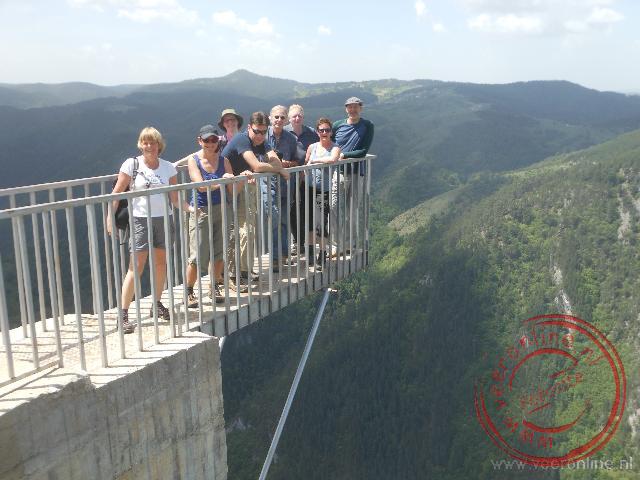
The path curves around the village. I pass a small field where two elderly people are working. Very little land is being used for cultivation here. I’m constantly amazed that the land is no longer being farmed or used for livestock. From the hills, I look down at Yagodina. I’m heading for Saint Ilia Peak, a viewpoint at 1,530 meters. Yagodina lies over three hundred meters below. The final stretch to Saint Ilia Peak is quite a climb. I walk step by step at a slow pace to the top—it’s too warm to go faster. From the summit, I have a stunning view of the surrounding area. To get an even better view of the steep cliff, there’s a viewing platform suspended above the deep gorge—a perfect photo opportunity. While taking pictures, I don’t notice the clouds gathering. Dark clouds are forming in our direction. It seems that only Saint Ilia Peak still enjoys good weather. I quickly walk back down a bit for lunch. Under a tree on the grass, I eat my cheese sandwich. Just as I put my backpack on again, light drizzle begins. I estimate it’s a short shower and decide not to put on my rain gear yet.
I follow the path toward Gyovren, a long descent through green meadows. The colorful flowers make the scenery even more beautiful. In the distance, I see the village of Gyovren. Thick clouds still hang over the mountain behind. I hear thunder in the distance—hopefully, the cloud stays behind the mountain. I continue along the path downhill. It stays dry until the main road, where the bus is already waiting. The driver takes me back to the hotel in Yagodina. Since it’s still early afternoon, I wander through Yagodina’s old streets. I see several houses in poor condition, and among them, some beautiful new homes. The contrast between rich and poor is obvious here as well. An elderly woman is repairing trousers on the street. A couple works the land next to the road. “Tomato und kartoffeln,” the man calls to me. Unfortunately, I can only respond with “Dobar dan” (good day). I wave politely as I walk on. A boy with a horse and cart passes, followed by an old Lada.
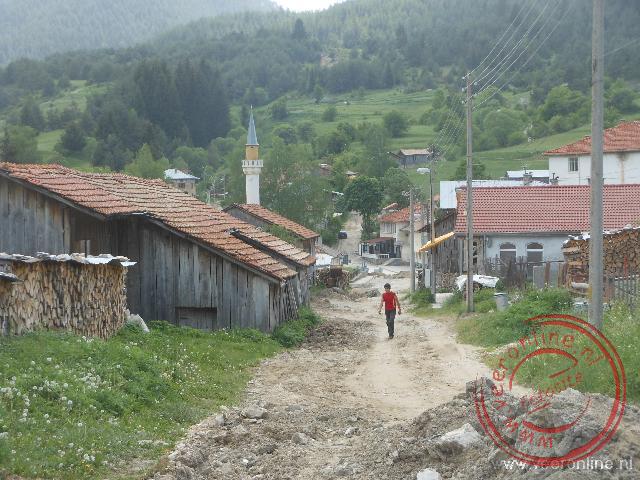
This is real Bulgarian village life. I walk past a few farms; there’s not much activity on the streets. I turn onto a road leading to the higher part of the village. At a field, a man eagerly wants to tell me what he grows. Using my Point-it book, he points to the vegetables. Soon, I get an unintelligible Bulgarian lesson as he names every picture in my book. I try to remember the word “blagodarya” for thank you. Fortunately, “merci” works more or less the same. At the very end of the road, at the highest point, there’s a guesthouse. I ask some workers if I can have a drink. The lady of the house is called over. “Of course,” she gestures. I follow her into the garden and order a beer using gestures. I sit on the terrace with a view of lower Yagodina. A little later, a man arrives with a crate of beer—he was sent out by car to fetch cold beer. When asked if I want chips/potatoes, I say “da.” Soon I’m enjoying my beer with homemade fries—different from what I expected, but a nice location. On my way back to the village center, I ask the owner if I can return via the little staircase.

“Da, da,” she says, shaking her head no. I realize that here, shaking your head no actually means yes, and I go down the stairs. I soon find myself back at Yagodina’s central square and at my hotel. After another excellent four-course meal, a folklore group performs—four ladies in traditional costumes. They sing Bulgarian songs for our group. At first, I’m unsure whether I like it—the singing is pure and even but shrill. The enthusiasm of the older ladies soon makes up for it. After a few songs, they ask for volunteers to dance, and soon everyone is on the dance floor. The rhythm speeds up, and the ladies don’t seem to tire. Though I was initially skeptical about a folklore evening, it turns out to be a very enjoyable night. At the end, we thank them with a tip. When I go to bed, there’s still a group of Bulgarian youth outside. I walk over to them, and immediately they stand up to bring an extra bench. Although no one speaks much English, with gestures, a bit of German, and a big smile, I manage to communicate. I stay in the hotel garden past midnight. The young people also have little hurry to go home.
 Bulgaria
  The village of Yagodina
 The shared meal in the restaurant in Leshten
 The street scene in Yagodina
 The restaurant in Leshten
Travelogue Hiking in Mountainous Bulgaria
Dag 2 | Bulgaria > The Devil's Throat Cave
Dag 3 | Bulgaria > Through the Yagodina Cave
Dag 4 | Bulgaria > Local folklore
Dag 5 | Bulgaria > On the way to Leshten
Dag 6 | Bulgaria > The old village Kovachevitsa
Dag 7 | Bulgaria > The Rila Monastery
Dag 8 | Bulgaria > Exploring Sofia
Dag 9 | Bulgaria > Sofia tour part two
Dag 10 | Bulgaria > 'Good morning, wake-up call'