
154 countries
(and areas)
 - Azerbaijan
- Bahrain
- Barbados
- Belgium
- Belize
- Benin
- Bhutan
- Bolivia
- Bonaire
- Bosnia and Herzegovina
- Botswana
- Brazil
- British Virgin Islands
- Brunei
- Bulgaria
- Cambodia
- Canada
- Cape Verde
- Chile
- China
- Costa Rica
- Croatia
- Cuba
- Curacao
- Cyprus
- Czech Republic
- Denmark
- Dominica
- Dominican Republic
- Egypt
- El Salvador
- England
- Estonia
- Eswatini (Swaziland)
- Ethiopia
- Fiji
- Finland
- France
- French Guiana
- Georgia
- Germany
- Gibraltar
- Greece
- Grenada
- Guadeloupe
- Guatemala
- Honduras
- Hong Kong
- Hungary
- Iceland
- India
- Indonesia
- Iran
- Ireland
- Israel
- Italy
- Jamaica
- Japan
- Jordan
- Kazakhstan
- Kenya
- Kosovo
- Kuwait
- Kyrgyzstan
- Laos
- Latvia
- Lebanon
- Lesotho
- Liechtenstein
- Lithuania
- Luxembourg
- Macau
- Madagascar
- Malawi
- Malaysia
- Maldives
- Malta
- Martinique
- Mexico
- Moldova
- Monaco
- Mongolia
- Montenegro
- Morocco
- Mozambique
- Namibia
- Nepal
- Netherlands
- New Zealand
- Nicaragua
- North Macedonia
- Northern Ireland
- Norway
- Oman
- Pakistan
- Palestine
- Peru
- Philippines
- Poland
- Portugal
- Qatar
- Republic of Korea
- Romania
- Russia
- Saint Kitts and Nevis
- Saint Lucia
- Saint Martin
- Saint Vincent and the Grenadines
- San Marino
- São Tomé and Principe
- Saudi Arabia
- Scotland
- Senegal
- Serbia
- Singapore
- Sint Maarten
- Slovakia
- Slovenia
- South Africa
- Spain
- Sri Lanka
- Suriname
- Sweden
- Switzerland
- Tajikistan
- Tanzania
- Thailand
- The Gambia
- Tibet
- Togo
- Transnistria
- Trinidad and Tobago
- Tunisia
- Turkey
- Turkmenistan
- Uganda
- United Arab Emirates
- United States
- Uruguay
- Uzbekistan
- Vatican City
- Vietnam
- Wales
- Zambia
- Zanzibar
- Azerbaijan
- Bahrain
- Barbados
- Belgium
- Belize
- Benin
- Bhutan
- Bolivia
- Bonaire
- Bosnia and Herzegovina
- Botswana
- Brazil
- British Virgin Islands
- Brunei
- Bulgaria
- Cambodia
- Canada
- Cape Verde
- Chile
- China
- Costa Rica
- Croatia
- Cuba
- Curacao
- Cyprus
- Czech Republic
- Denmark
- Dominica
- Dominican Republic
- Egypt
- El Salvador
- England
- Estonia
- Eswatini (Swaziland)
- Ethiopia
- Fiji
- Finland
- France
- French Guiana
- Georgia
- Germany
- Gibraltar
- Greece
- Grenada
- Guadeloupe
- Guatemala
- Honduras
- Hong Kong
- Hungary
- Iceland
- India
- Indonesia
- Iran
- Ireland
- Israel
- Italy
- Jamaica
- Japan
- Jordan
- Kazakhstan
- Kenya
- Kosovo
- Kuwait
- Kyrgyzstan
- Laos
- Latvia
- Lebanon
- Lesotho
- Liechtenstein
- Lithuania
- Luxembourg
- Macau
- Madagascar
- Malawi
- Malaysia
- Maldives
- Malta
- Martinique
- Mexico
- Moldova
- Monaco
- Mongolia
- Montenegro
- Morocco
- Mozambique
- Namibia
- Nepal
- Netherlands
- New Zealand
- Nicaragua
- North Macedonia
- Northern Ireland
- Norway
- Oman
- Pakistan
- Palestine
- Peru
- Philippines
- Poland
- Portugal
- Qatar
- Republic of Korea
- Romania
- Russia
- Saint Kitts and Nevis
- Saint Lucia
- Saint Martin
- Saint Vincent and the Grenadines
- San Marino
- São Tomé and Principe
- Saudi Arabia
- Scotland
- Senegal
- Serbia
- Singapore
- Sint Maarten
- Slovakia
- Slovenia
- South Africa
- Spain
- Sri Lanka
- Suriname
- Sweden
- Switzerland
- Tajikistan
- Tanzania
- Thailand
- The Gambia
- Tibet
- Togo
- Transnistria
- Trinidad and Tobago
- Tunisia
- Turkey
- Turkmenistan
- Uganda
- United Arab Emirates
- United States
- Uruguay
- Uzbekistan
- Vatican City
- Vietnam
- Wales
- Zambia
- Zanzibar


Copyright 2004 - 2026
Veeronline.nl Travel Adventures
Home > Bulgaria > Hiking in Mountainous Bulgaria > Travelogue day 6
Travelogue Hiking in Mountainous Bulgaria
May 1827 2013 (10 days)
Bulgaria > The old village Kovachevitsa
Dag 6 - Thursday, May 23, 2013
When I wake up, I am amazed by the bedroom. I’ve never slept in a bedroom with a fireplace before. As I get ready for the walk, I notice some people near the small church. I walk over to them. A man gestures for me to come closer. He hands me the large key to the church, and I have to unlock the door myself. He tells me that normally, forty days after the crucifixion of Christ, a song is sung in the church. He sings the hymn for me in the beautifully decorated church. The iconostasis is particularly impressive in combination with the singing. Before I can thank him, he has disappeared. It turns out he is the guide for an English couple. I am left alone with the key. I turn off the lights and lock the door again. I return the key to an older man in the churchyard. Fortunately, I am not late for the bus. I quickly get on board. In about half an hour, the bus takes me to the village of Skrebatno, where today’s hike begins.

As I step off the bus, I see a few elderly people sitting on a bench. I walk over to them. Since I don’t speak Bulgarian, I show them my photos of the Netherlands. The family pictures are particularly popular. It’s nice to be able to connect with the locals this way. I enter a street that goes uphill. I will follow the eco-trail—a hike along the ridge of the Kanina Gorge toward Kovachevitsa. From the top of the ridge, I have a view over the valley. In the distance, I see Leshten. I climb onto a rocky outcrop to get a better view of the valley—a perfect spot for a photo as well. Today’s route winds along rocks and through forests. Unlike previous hikes, I now follow a narrow footpath, which requires walking in a single file. I find that I actually enjoy this more. Slowly, I descend into the valley. On the opposite side, I see Kovachevitsa. I keep a careful eye on the clouds. The weather forecast for today is poor, with a high chance of rain.

I also notice dark clouds clinging to the mountains, but they have not yet crossed the slopes. I realize how difficult it is to predict the weather in such a mountainous area. Taking advantage of the dry weather, I continue walking toward Kovachevitsa. At the bottom of the valley, I cross a bridge. The bridge beams are completely rotten. I carefully walk in the center where a sturdy support beam is located. I doubt this bridge will still be there in a few years. Safely on the other side, I walk uphill into the old village of Kovachevitsa—a characteristic village of Rhodope architecture, with houses made of stone and wood. Unfortunately, several houses have collapsed. I wander through the narrow streets, examining the houses. It is sometimes a miracle that they are still standing—they lean or are supported by poles. At the local café on the main street, I order a cola. From the terrace, I watch daily life unfold. I see locals walking on the street and, in the distance, another group of tourists approaching. I had expected many more tourists here.
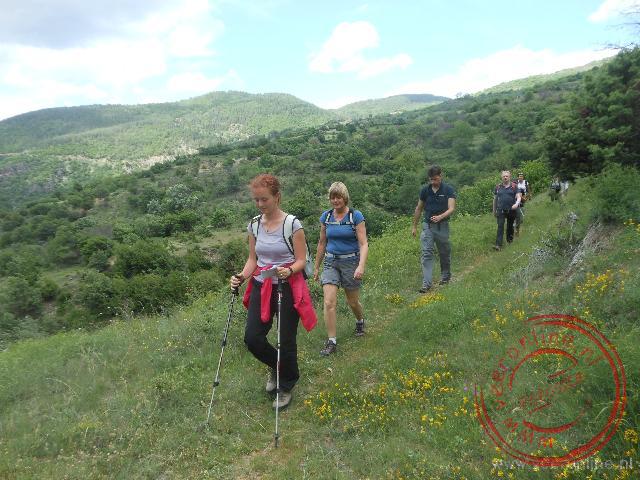
After half an hour, I get back on the bus and ride partway toward Leshten. Midway along the route, I get off for a walk through the valley. A trail takes almost two hours to return to Leshten, passing long fields, streams, and forests. Along the way, I pass a goat herder and a cowherd. It is wonderful to walk through the Bulgarian countryside. Back in Leshten, I settle on the terrace at the restaurant. With a beer in hand, I reflect on five delightful days of hiking. I realize how lucky I’ve been with the weather—every day has been dry. As I consider this from the terrace overlooking the valley, I see rain falling on the mountains across the way. In the evening, I dine at the restaurant—a varied meal with salad, soup, hamburgers, beans, and yogurt with honey for dessert.
 Bulgaria
 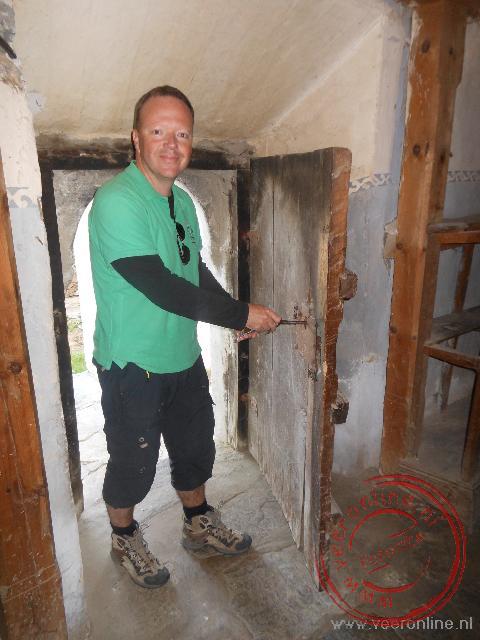 Before I realise it Im alone with the key in the church I decide to lock up
 Anyone who can leave Ivans cave through a small opening is immediately freed from their sins
 The accommodation in Leshten built from wood and stone
 The characteristic building of the old mineral baths
Travelogue Hiking in Mountainous Bulgaria
Dag 2 | Bulgaria > The Devil's Throat Cave
Dag 3 | Bulgaria > Through the Yagodina Cave
Dag 4 | Bulgaria > Local folklore
Dag 5 | Bulgaria > On the way to Leshten
Dag 6 | Bulgaria > The old village Kovachevitsa
Dag 7 | Bulgaria > The Rila Monastery
Dag 8 | Bulgaria > Exploring Sofia
Dag 9 | Bulgaria > Sofia tour part two
Dag 10 | Bulgaria > 'Good morning, wake-up call'