
154 countries
(and areas)
 - Belize
- Benin
- Bhutan
- Bolivia
- Bonaire
- Bosnia and Herzegovina
- Botswana
- Brazil
- British Virgin Islands
- Brunei
- Bulgaria
- Cambodia
- Canada
- Cape Verde
- Chile
- China
- Costa Rica
- Croatia
- Cuba
- Curacao
- Cyprus
- Czech Republic
- Denmark
- Dominica
- Dominican Republic
- Egypt
- El Salvador
- England
- Estonia
- Eswatini (Swaziland)
- Ethiopia
- Fiji
- Finland
- France
- French Guiana
- Georgia
- Germany
- Gibraltar
- Greece
- Grenada
- Guadeloupe
- Guatemala
- Honduras
- Hong Kong
- Hungary
- Iceland
- India
- Indonesia
- Iran
- Ireland
- Israel
- Italy
- Jamaica
- Japan
- Jordan
- Kazakhstan
- Kenya
- Kosovo
- Kuwait
- Kyrgyzstan
- Laos
- Latvia
- Lebanon
- Lesotho
- Liechtenstein
- Lithuania
- Luxembourg
- Macau
- Madagascar
- Malawi
- Malaysia
- Maldives
- Malta
- Martinique
- Mexico
- Moldova
- Monaco
- Mongolia
- Montenegro
- Morocco
- Mozambique
- Namibia
- Nepal
- Netherlands
- New Zealand
- Nicaragua
- North Macedonia
- Northern Ireland
- Norway
- Oman
- Pakistan
- Palestine
- Peru
- Philippines
- Poland
- Portugal
- Qatar
- Republic of Korea
- Romania
- Russia
- Saint Kitts and Nevis
- Saint Lucia
- Saint Martin
- Saint Vincent and the Grenadines
- San Marino
- São Tomé and Principe
- Saudi Arabia
- Scotland
- Senegal
- Serbia
- Singapore
- Sint Maarten
- Slovakia
- Slovenia
- South Africa
- Spain
- Sri Lanka
- Suriname
- Sweden
- Switzerland
- Tajikistan
- Tanzania
- Thailand
- The Gambia
- Tibet
- Togo
- Transnistria
- Trinidad and Tobago
- Tunisia
- Turkey
- Turkmenistan
- Uganda
- United Arab Emirates
- United States
- Uruguay
- Uzbekistan
- Vatican City
- Vietnam
- Wales
- Zambia
- Zanzibar
- Belize
- Benin
- Bhutan
- Bolivia
- Bonaire
- Bosnia and Herzegovina
- Botswana
- Brazil
- British Virgin Islands
- Brunei
- Bulgaria
- Cambodia
- Canada
- Cape Verde
- Chile
- China
- Costa Rica
- Croatia
- Cuba
- Curacao
- Cyprus
- Czech Republic
- Denmark
- Dominica
- Dominican Republic
- Egypt
- El Salvador
- England
- Estonia
- Eswatini (Swaziland)
- Ethiopia
- Fiji
- Finland
- France
- French Guiana
- Georgia
- Germany
- Gibraltar
- Greece
- Grenada
- Guadeloupe
- Guatemala
- Honduras
- Hong Kong
- Hungary
- Iceland
- India
- Indonesia
- Iran
- Ireland
- Israel
- Italy
- Jamaica
- Japan
- Jordan
- Kazakhstan
- Kenya
- Kosovo
- Kuwait
- Kyrgyzstan
- Laos
- Latvia
- Lebanon
- Lesotho
- Liechtenstein
- Lithuania
- Luxembourg
- Macau
- Madagascar
- Malawi
- Malaysia
- Maldives
- Malta
- Martinique
- Mexico
- Moldova
- Monaco
- Mongolia
- Montenegro
- Morocco
- Mozambique
- Namibia
- Nepal
- Netherlands
- New Zealand
- Nicaragua
- North Macedonia
- Northern Ireland
- Norway
- Oman
- Pakistan
- Palestine
- Peru
- Philippines
- Poland
- Portugal
- Qatar
- Republic of Korea
- Romania
- Russia
- Saint Kitts and Nevis
- Saint Lucia
- Saint Martin
- Saint Vincent and the Grenadines
- San Marino
- São Tomé and Principe
- Saudi Arabia
- Scotland
- Senegal
- Serbia
- Singapore
- Sint Maarten
- Slovakia
- Slovenia
- South Africa
- Spain
- Sri Lanka
- Suriname
- Sweden
- Switzerland
- Tajikistan
- Tanzania
- Thailand
- The Gambia
- Tibet
- Togo
- Transnistria
- Trinidad and Tobago
- Tunisia
- Turkey
- Turkmenistan
- Uganda
- United Arab Emirates
- United States
- Uruguay
- Uzbekistan
- Vatican City
- Vietnam
- Wales
- Zambia
- Zanzibar


Copyright 2004 - 2026
Veeronline.nl Travel Adventures

Home > Zambia > Mozambique Malawi and Zambia > Travelogue day 22
Travelogue Mozambique Malawi and Zambia
528 November 2009 (24 days)
Zambia > Swimming in the Devils Pool
Dag 22 - Thursday, November 26, 2009At half past six we drive into Zambezi National Park in an open jeep. This park is the only one in Zambia where rhinos are found. At present there are five rhinos in the park, and they are guarded by rangers against poachers. As soon as we enter the park, we immediately see impalas, zebras, wildebeests, and various birds. The guide tells us he will try to find the rhinos. After some time he says we are heading to the other side of the park. We cross the railway, drive along a main road, and turn right. I wonder if all of this still belongs to the park, but we have not passed any gate. We follow a narrow, winding track — little more than a pair of wheel ruts.

We stop at a ranger vehicle. One of the rangers introduces himself and tells us the rhinos are a little farther away from the road. He invites us to walk to them. In the far distance we spot a rhino. Under the rangers’ protection we walk closer. At about a hundred meters’ distance we take photos. The large animal keeps an eye on us but continues grazing calmly. The rangers are nervous, though, and want to head back quickly. I suspect they are not entirely sure where the other rhinos might be. Back in the jeep, we return to the main part of the park. We have a Coke along the Zambezi, spot some giraffes, and leave the park. Just as we are about to exit, a hippo suddenly charges after the jeep. It bursts out of the bushes on the left, snorting as it chases our vehicle. I am astonished by its speed. The hippo even overtakes our jeep and runs just five meters behind it. In a flash I grab my camera, but it isn’t switched on yet. By the time it’s ready, the hippo has already veered off toward the river. Our guide is just as surprised. “Where did it come from?” he asks. He has never experienced this before in the park.

We have a great story to tell over breakfast on the veranda by the Zambezi. At the end of the morning we take a taxi to Victoria Falls. Andy is our taxi driver, and he drops us at the entrance to the National Park. When I try to pay, Andy refuses to take money yet; he makes an appointment to pick us up again later. We will need two hours for the falls and perhaps another hour for the shops. We agree to meet him at three o’clock at the entrance. I memorize the taxi’s license plate, since there are so many blue taxis around. As soon as we enter the park, we can already hear the sound of the falling water. It is the dry season, so the falls are relatively dry, but still they are beautiful to see. At the first viewpoint, vendors immediately approach with photos of the falls in the rainy season. I don’t need to see them. Another offers a CD of photos. A third starts talking about swimming at Livingstone Island. I had heard of this back in Malawi, in Cape Maclear, from a South African couple who recommended it as a wonderful experience: swimming right on the edge of the falls. I am not convinced this man actually organizes the trip, so I decline. We continue along the viewpoints. The plateau of Victoria Falls is 1.7 kilometers wide. From the Zambian side in the dry season the view is limited. Only on the left side flows the water of the main falls — visible only from Zimbabwe. From a point at the tip I can just see the main falls in the distance, and I realize I would actually like to swim at Livingstone Island. I decide to return to the man who spoke to me earlier, but he is gone. At the park entrance I ask about the possibility. A policeman at the doorway offers to look for the guide. “One moment,” he says. He asks around, searches, but the guide is nowhere to be found.

After a while he decides to accompany us himself. The guide has likely already left with other guests. Tickets can be purchased on the spot. The policeman, whose name is Johnson, explains that he is armed because he patrols near the border. To be sure, I ask if I may take his photo. “Of course,” he says. After ten minutes we are overtaken from behind by the man who had first spoken to me. He had heard that tourists were walking with the policeman to Livingstone Island. His name is Leonard. He takes over from Johnson. Leonard asks if we already have tickets — we don’t. These, it turns out, must be bought only at the entrance. Leonard tries to have someone bring them by phone, but it doesn’t work out. We thank Johnson and say goodbye; I don’t dare to give him a tip as he is a policeman. With Leonard we return to the entrance and buy the tickets. Then we set out again. We walk over the rocks of the dried-out Victoria Falls. Sometimes we have to cross small streams.
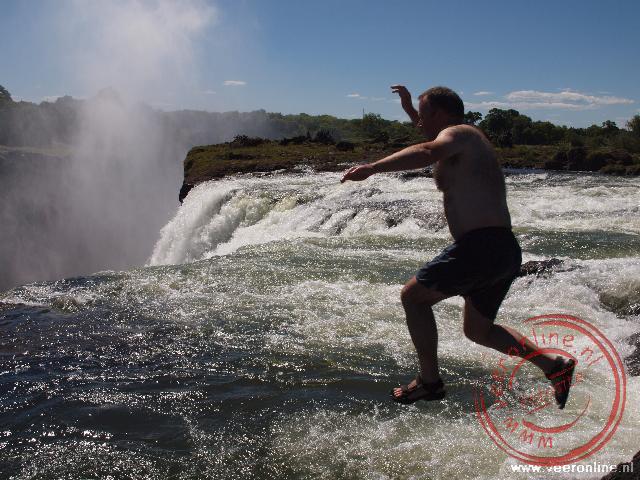
Leonard shows us where to step on the rocks and helps us keep our balance. At the Rainbow Falls we peer over the edge. From this side it is far more impressive. I see a rainbow in the spray and immediately understand the name. After about forty-five minutes we reach Livingstone Island. Someone approaches to check our tickets. Livingstone Island is private property and not freely accessible. From David Livingstone’s memorial stone Leonard explains more. From here we have a splendid view over the Boiling Pot: the Zambezi plunges down over more than one and a half kilometers, then squeezes through a single narrow gorge under the border bridge between Zambia and Zimbabwe. The enormous power of the water gives it its name. On Livingstone Island we change into swimwear. We swim about thirty meters across the river, carefully fighting the current in an arc to reach the other side. For safety, a rope is stretched across in case anyone drifts off. Felix joins us, taking my camera to capture photos of our swim. Just beyond the rocks lies the Devil’s Pool: a deep basin with a high rim right on the edge of the waterfall. Leonard shows us how to jump safely into the water. Jump too far right and you’ll be swept into the falls; too far left and you’ll hit the rocks. Just as I prepare to jump, Felix looks worriedly at my camera — the battery has died, at this exact moment. My spare batteries are in my bag on the island. Together with Felix I swim back along the rope, swap the battery, and return for a second attempt. Just then I spot two of my fellow travelers on the opposite bank. By coincidence, they have crossed into Zimbabwe today to see the falls from that side. We wave and whistle, and they recognize us. I take a running leap and jump into the Devil’s Pool at the indicated spot. I disappear underwater and realize how extraordinary this dive is.

I let the current carry me toward the edge of the pool. Leonard helps me onto the rim. The waters of the Zambezi flow gently past me. I am sitting right on the edge of one of the world’s most remarkable waterfalls. Just one meter behind me, the water drops almost a hundred meters down. The constant roar of the water makes the experience even more overwhelming. Felix takes countless photos from every angle. Suddenly I feel something tickling my legs. Leonard reassures me: just harmless little fish. I think how these fish are about to tumble down the waterfall. Leonard invites me to look over the edge. I lie down on the rim, and he holds me tightly by shoulders and legs. I push my head out over the drop and see the water crashing down nearly a hundred meters beneath me. Beautiful — but I quickly retreat back into the pool. We swim around a bit more, and after half an hour we get out. To leave the pool, I first swim against the current to the far side, then lower myself along the rock wall and climb out. Back on the island a cold beer awaits us. With the beer in hand, I replay the memory of the Devil’s Pool. Before heading back, I visit the toilet on the island. To my surprise it is not just behind a tree, but a proper toilet bowl — with a view of Victoria Falls. The sign “The toilet with the best view” certainly rings true. We walk back across the rocks. It is well past three o’clock. Over forty-five minutes late, we find Alex waiting patiently with the taxi. He has no problem at all with our delay. Back at the Waterfront resort we tell our fellow travelers about our adventure and show them the photos. We end the day with dinner at Ngoma Zanga in Livingstone. This typical African restaurant provides our last meal with the entire group. The waitresses are dressed in colorful African style. Everything about the restaurant is authentically African. At the buffet there is no change; the receipt serves as credit at the bar. Even the currency conversion from dollars to kwacha proves tricky. In the end everything works out, and we have an enjoyable meal. After dinner we thank Bas for guiding the trip and give him a tip. Some fellow travelers even summarize the journey with a humorous little ABC.
 Mozambique
 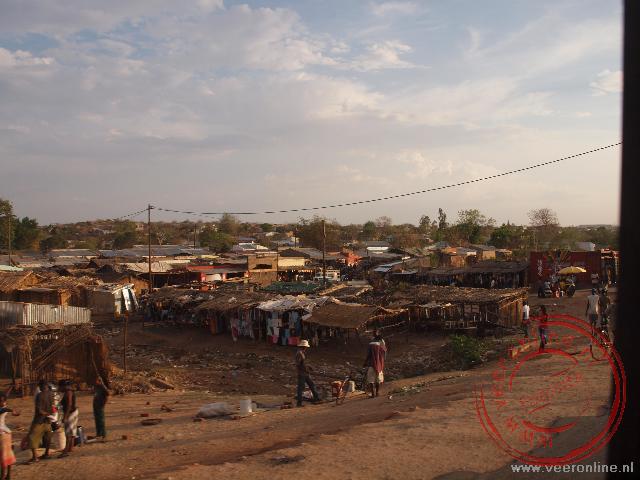 A Mozambican village along the main road
 Traffic struggles to avoid the potholes in the road
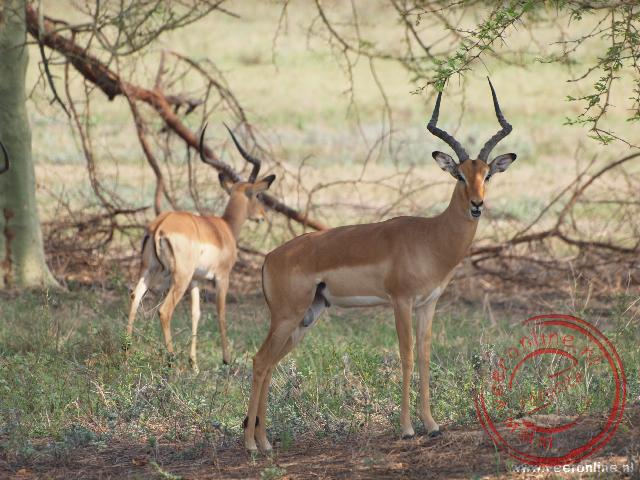 An impala in Gorongosa National Park Mozambique
 Zambia
  A lioness yawning heartily
Travelogue Mozambique Malawi and Zambia
Dag 2 | Mozambique > Wandering through the capital Maputo
Dag 3 | Mozambique > From Maputo to Tofo
Dag 4 | Mozambique > Enjoying the bay of Tofo
Dag 5 | Mozambique > On the way to Vilanculos
Dag 6 | Mozambique > The coral reef of the Bazaruto Archipelago
Dag 7 | Mozambique > From Vilanculos to Gorongosa
Dag 8 | Mozambique > Gorongosa National Park
Dag 9 | Mozambique > On the way to the Zambezi near Tete
Dag 10 | Malawi > Crossing the border into Malawi
Dag 11 | Malawi > Climbing to the top of the Zomba Plateau
Dag 12 | Malawi > Hippos in the Shire River near Liwonde
Dag 13 | Malawi > Face to face with a herd of buffalo
Dag 14 | Malawi > Meeting doctor Jeannette
Dag 15 | Malawi > Feeding sea eagles on Lake Malawi
Dag 16 | Malawi > At the old market of Lilongwe
Dag 17 | Zambia > Crossing the border to Zambia
Dag 18 | Zambia > Face to face with the lions
Dag 19 | Zambia > Attacked by an elephant
Dag 20 | Zambia > Travel day to Luangwa Bridge
Dag 21 | Zambia > From Lusaka to Livingstone
Dag 22 | Zambia > Swimming in the Devils Pool
Dag 23 | Zambia > Flying over the Victoria Falls
Dag 24 | Zambia > Home again