
160 countries
(and areas)
 - Costa Rica
- Croatia
- Cuba
- Curacao
- Cyprus
- Czech Republic
- Denmark
- Dominica
- Dominican Republic
- Egypt
- El Salvador
- England
- Estonia
- Eswatini (Swaziland)
- Ethiopia
- Fiji
- Finland
- France
- French Guiana
- Georgia
- Germany
- Ghana
- Gibraltar
- Greece
- Grenada
- Guadeloupe
- Guatemala
- Guinee
- Guinee-Bissau
- Honduras
- Hong Kong
- Hungary
- Iceland
- India
- Indonesia
- Iran
- Ireland
- Israel
- Italy
- Jamaica
- Japan
- Jordan
- Kazakhstan
- Kenya
- Kosovo
- Kuwait
- Kyrgyzstan
- Laos
- Latvia
- Lebanon
- Lesotho
- Liberia
- Liechtenstein
- Lithuania
- Luxembourg
- Macau
- Madagascar
- Malawi
- Malaysia
- Maldives
- Malta
- Martinique
- Mexico
- Moldova
- Monaco
- Mongolia
- Montenegro
- Morocco
- Mozambique
- Namibia
- Nepal
- Netherlands
- New Zealand
- Nicaragua
- North Macedonia
- Northern Ireland
- Norway
- Oman
- Pakistan
- Palestine
- Peru
- Philippines
- Poland
- Portugal
- Qatar
- Republic of Korea
- Romania
- Russia
- Saint Kitts and Nevis
- Saint Lucia
- Saint Martin
- Saint Vincent and the Grenadines
- San Marino
- São Tomé and Principe
- Saudi Arabia
- Scotland
- Senegal
- Serbia
- Sierra Leone
- Singapore
- Sint Maarten
- Slovakia
- Slovenia
- South Africa
- Spain
- Sri Lanka
- Suriname
- Sweden
- Switzerland
- Tajikistan
- Tanzania
- Thailand
- The Gambia
- Tibet
- Togo
- Transnistria
- Trinidad and Tobago
- Tunisia
- Turkey
- Turkmenistan
- Uganda
- United Arab Emirates
- United States
- Uruguay
- Uzbekistan
- Vatican City
- Vietnam
- Wales
- Zambia
- Zanzibar


Copyright 2004 - 2026
Veeronline.nl Travel Adventures
Home > Ivory Coast > Roundtrip West Africa > Travelogue day 24
Travelogue Roundtrip West Africa
Oct 15 - Nov 9th, 2026 (26 days)
Ivory Coast > The Old Town of Grand-Bassam
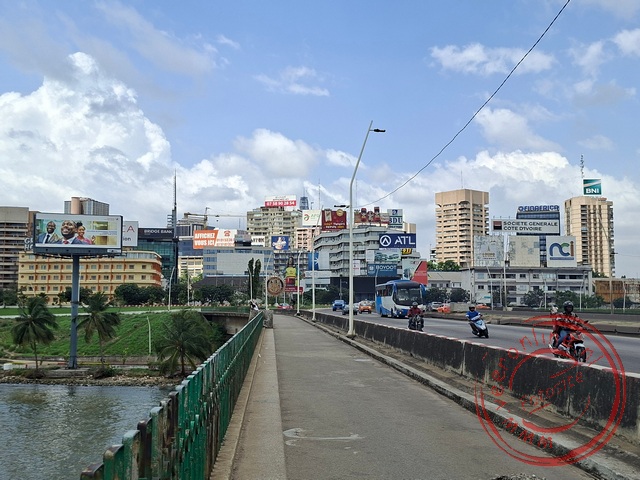
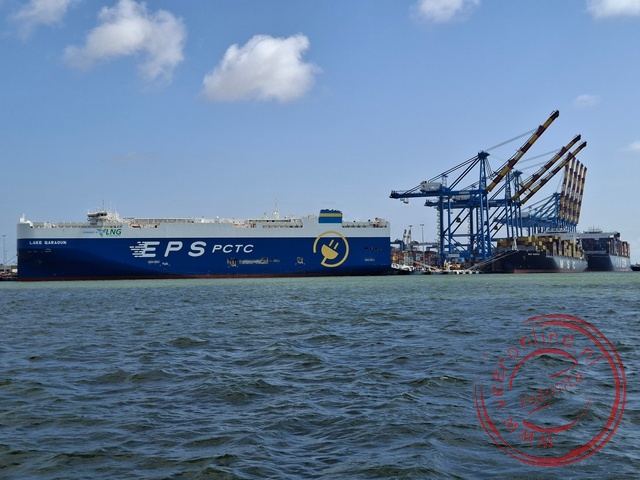
Dag 24 - Saturday 7 November 2026Today is the last day of excursions on our itinerary. At seven o'clock, I make my way to the breakfast buffet on the ground floor. The buffet is perfectly fine, but, like many other things in this hotel, it is just not quite up to scratch. Or, to put it more honestly, it still fully meets the expectations I had beforehand of accommodation in Africa. The good hotels have actually exceeded my expectations. There is, incidentally, one definite plus point worth mentioning: the coffee made from the coffee pods is delicious.In the morning, we drive to Grand-Bassam with our guide Stephan. During the French colonial period, this was the capital of Ivory Coast. Several French colonial buildings have survived in Grand-Bassam. When an outbreak of yellow fever occurred, Europeans were particularly badly affected. Many French residents subsequently left the town, and the administrative centre was relocated.After about an hour's drive, we arrive in the historic centre. Stephan first takes us to the old lighthouse of Grand-Bassam. Not only the French Quarter is on the UNESCO World Heritage List, but the lighthouse is also part of the town's historical heritage.We cross a bridge to reach the island where the French Quarter is located. We pass several colonial buildings. Some have been completely restored, while others are on the verge of collapse. The hospital is still in use, although this building could certainly do with a renovation as well.A festival lasting several days is taking place on the island. Part of the town centre is therefore closed off, and preparations for the celebrations later today are in full swing.We get off the bus and walk a short distance to the palace. This is where the local king lives. His predecessors cooperated with the French during the colonial period. We are allowed to take a quick look inside, but we have to be quick because apparently the king could arrive at any moment. At least, that is what I think I understand. Stephan is also urging us to hurry up. He repeats this so often that it starts to become rather annoying. I suspect we are already running behind schedule.We also visit the Cathédrale du Sacré-Cœur, dating from 1896, on the island, and finish our tour at the National Museum. Stephan normally works as a guide at the museum in Abidjan. As that museum is currently being renovated, he is now working here as a guide. Apart from his constant reminders to hurry up, he does an excellent job.The museum collection itself is not particularly exciting. I find the building, the former residence of the French governor, much more interesting. The bathroom, in particular, is fascinating, as it was quite modern for its time.Before driving back to Abidjan, Stephan takes us to the beach for a quick visit. Large waves crash against the shore. Men with horses are standing in the surf. I assume you can book a horseback ride here. We don't have time for that, and to be honest, we aren't particularly interested either.It takes us about an hour to drive back to Abidjan, the economic capital of Ivory Coast. Around noon, we arrive in the Le Plateau district. This is the business district and the heart of the city. We drive across Independence Square and pass several modern skyscrapers. Here too, it is clear that Ivory Coast is developing economically. New towers are springing up everywhere.I just wonder how long this can continue successfully. The construction and completion of new buildings seem to be going reasonably well, but the subsequent maintenance sometimes leaves a lot to be desired. Several buildings look run-down or have been closed down. One example is La Pyramide, a famous building shaped like a pyramid. It now stands empty, with large padlocks hanging from the doors. Many of the windows are broken, and bushes are growing out of the building. In my opinion, this ruin is beyond saving.We stop at the Grande Mosquée du Plateau. A visit to the mosque is not included in the programme. Perhaps I will try to visit this Islamic place of worship tomorrow after all.On the northern side of Le Plateau stands the Cathédrale Saint-Paul d'Abidjan. It is a striking, modern-looking cathedral made of concrete, steel and glass. The church can accommodate no fewer than 5,000 worshippers. The roof is supported by a large pillar that symbolically represents the Pope.A service is taking place inside at that moment, so we can only take a quick look through the doorway. Nevertheless, I get a good impression of the cathedral's enormous interior.For lunch, we stop at a food court in the shopping mall I also visited yesterday. I order a simple meal at Burger King.In the afternoon, we take a boat trip across the Abidjan lagoon. The city is situated on the Ébrié Lagoon, a large natural inland waterway connected to the open sea by a canal. This has always made the region an attractive location for shipping.From the boat, I have a good view of Abidjan's skyline. It is not without reason that the city is sometimes referred to as the Manhattan of Africa. We continue towards the harbour. I even get the chance to steer the boat for a little while. It isn't particularly exciting, but it does provide some nice photo opportunities.Large container ships are being loaded in the harbour. Tall cranes work continuously to get the containers on board. I estimate that each ship can carry well over two thousand containers.When we return to shore, we collectively decide to skip the visit to Treichville Market. This is not a souvenir market, but a genuine local market. Some of my fellow travellers still want to visit a supermarket, though. I don't wait for them. Instead, I cross the street and start walking back to the hotel.In the evening, we have our final dinner together as a group. The first members of the group will already be flying home tonight. Our last meal takes place at the hotel. I order chicken skewers with French fries. Unfortunately, the chicken is a little overcooked and rather dry.Lee rounds off the evening with a brief summary of our trip. As he lists all the places we have visited, it really brings home just how much we have done and seen during this journey.However, he overlooks one important aspect: his own contribution. It was precisely because he organised everything so carefully and well in advance that the trip went so smoothly and successfully. Every day, he collected everyone's meal choices and paid for the drinks upfront. That involved quite a bit of bookkeeping. And those were just the things we, as fellow travellers, actually saw. No doubt, there was a great deal more going on behind the scenes to make sure everything ran smoothly.I thank Lee with a tip. Then comes the moment when we have to say goodbye to one another. I give my fellow travellers a big hug. I think we have become a close-knit group over the past few weeks.It is not even eight o'clock yet. I order one more beer at the bar. A few of my fellow travellers join me for a pleasant chat.
 Senegal
 Coast Ivory
Travelogue Roundtrip West Africa
Dag 2 | Senegal > Wandering Around Dakar
Dag 3 | Senegal > The Slave Island of Gorée
Dag 4 | Senegal > The Mosque of Touba
Dag 5 | The Gambia > The Stone Circles of Sine Ngayene
Dag 6 | The Gambia > Exploring Banjul
Dag 7 | Senegal > Boat Tour in Ziguinchor
Dag 8 | Guinea-Bissau > The Capital City of Bissau
Dag 9 | Guinea-Bissau > Orango National Park
Dag 10 | Guinea-Bissau > In Search of Saltwater Hippos
Dag 11 | Guinea-Bissau > Meeting the Bijagó People
Dag 12 | Guinea-Bissau > The Mausoleum of Amílcar Cabral
Dag 13 | Senegal > The Shell Island of Fadiouth
Dag 14 | Guinea > Safari Before Departing for Guinea
Dag 15 | Guinea > Exploring Conakry
Dag 16 | Sierra Leone > Crossing the Border into Sierra Leone
Dag 17 | Sierra Leone > Chimpanzees and an Introduction to Freetown
Dag 18 | Liberia > To Bunce Island
Dag 19 | Liberia > The Capital City of Monrovia
Dag 20 | Ghana > City Tour of Accra
Dag 21 | Ghana > The Kakum Canopy Walkways
Dag 22 | Ghana > Wandering Around Accra
Dag 23 | Ivory Coast > Flight to Abidjan
Dag 24 | Ivory Coast > The Old Town of Grand-Bassam
Dag 25 | Ivory Coast > The Last Day in Abidjan