
160 countries
(and areas)
 - Costa Rica
- Croatia
- Cuba
- Curacao
- Cyprus
- Czech Republic
- Denmark
- Dominica
- Dominican Republic
- Egypt
- El Salvador
- England
- Estonia
- Eswatini (Swaziland)
- Ethiopia
- Fiji
- Finland
- France
- French Guiana
- Georgia
- Germany
- Ghana
- Gibraltar
- Greece
- Grenada
- Guadeloupe
- Guatemala
- Guinee
- Guinee-Bissau
- Honduras
- Hong Kong
- Hungary
- Iceland
- India
- Indonesia
- Iran
- Ireland
- Israel
- Italy
- Jamaica
- Japan
- Jordan
- Kazakhstan
- Kenya
- Kosovo
- Kuwait
- Kyrgyzstan
- Laos
- Latvia
- Lebanon
- Lesotho
- Liberia
- Liechtenstein
- Lithuania
- Luxembourg
- Macau
- Madagascar
- Malawi
- Malaysia
- Maldives
- Malta
- Martinique
- Mexico
- Moldova
- Monaco
- Mongolia
- Montenegro
- Morocco
- Mozambique
- Namibia
- Nepal
- Netherlands
- New Zealand
- Nicaragua
- North Macedonia
- Northern Ireland
- Norway
- Oman
- Pakistan
- Palestine
- Peru
- Philippines
- Poland
- Portugal
- Qatar
- Republic of Korea
- Romania
- Russia
- Saint Kitts and Nevis
- Saint Lucia
- Saint Martin
- Saint Vincent and the Grenadines
- San Marino
- São Tomé and Principe
- Saudi Arabia
- Scotland
- Senegal
- Serbia
- Sierra Leone
- Singapore
- Sint Maarten
- Slovakia
- Slovenia
- South Africa
- Spain
- Sri Lanka
- Suriname
- Sweden
- Switzerland
- Tajikistan
- Tanzania
- Thailand
- The Gambia
- Tibet
- Togo
- Transnistria
- Trinidad and Tobago
- Tunisia
- Turkey
- Turkmenistan
- Uganda
- United Arab Emirates
- United States
- Uruguay
- Uzbekistan
- Vatican City
- Vietnam
- Wales
- Zambia
- Zanzibar


Copyright 2004 - 2026
Veeronline.nl Travel Adventures
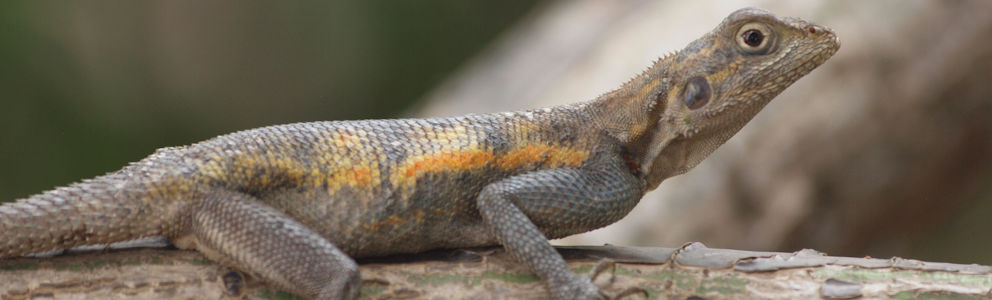
Home > Senegal > Roundtrip West Africa > Travelogue day 3
Travelogue Roundtrip West Africa
Oct 15 - Nov 9th, 2026 (26 days)
Senegal > The Slave Island of Gorée
Dag 3 - Saturday, 17 October 2026At breakfast, I meet up with a few of my fellow travellers again. I order an omelette from the buffet. At eight o’clock, everyone has gathered outside the hotel. We take the bus into Dakar. The bus follows a sightseeing route through the city. We pass the presidential palace and follow the Corniche Est. I recognise the places I walked past yesterday. Dakar is a large city situated on a peninsula, but the city centre is relatively compact.We arrive at the Notre-Dame-des-Victoires Cathedral. I get another opportunity to look inside. Yesterday, I felt a little uncomfortable taking photographs while people were praying, but today the church is empty. As the road to the harbour is quiet, we have some time to take a look at the historic railway station dating from 1805. Behind it lies a new railway network.From the station, we walk to the harbour, where the ferry to Gorée Island departs. This island played an important role in history. The Dutch mainly used it as a stopover on their way to the West Indies. The island's name is derived from the Dutch town of Goedereede. It took me a while to understand which Dutch place name the local guide was trying to pronounce. After the Dutch came the Portuguese, who used the island for the slave trade. Enslaved people were brought from the mainland to the island and prepared for their journey across the ocean to America.
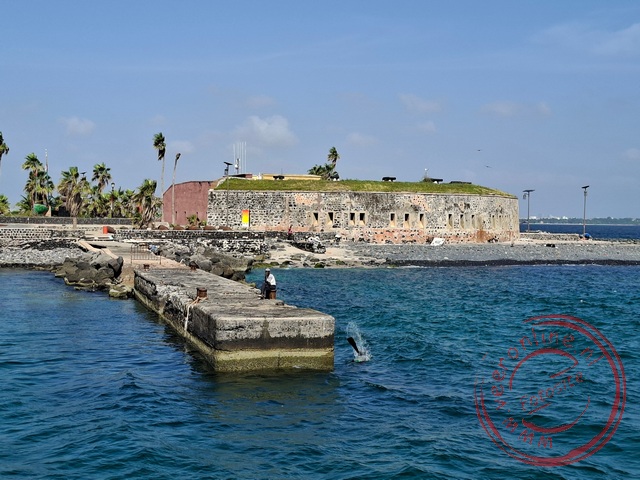
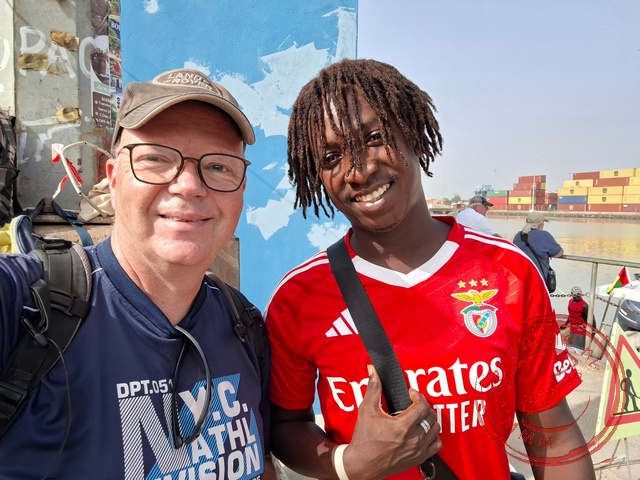
As we approach the island, I can see the colourful colonial houses. At the tip stands a former French fort, which was used to defend the island. The island is entirely car-free and is a UNESCO World Heritage Site. As a result, much of its historic atmosphere has been preserved.I follow Latty, our guide, around the island. Our first stop is the church. I think it is more beautiful than the cathedral in Dakar. At the ‘House of Slaves’, the guide explains how enslaved people were held captive. Those who weighed less than sixty kilograms were forced to eat more to put on weight. They were then taken to the ships through the ‘Door of No Return’ and transported across the ocean. It is quite shocking to see this part of history up close.Today is another hot and humid day. Yesterday, I realised that I hadn't been drinking enough. I try to drink more water today. We wander through the narrow streets. Some of the historic buildings are in a state of disrepair. Hopefully, ways will be found to restore them. Children are playing in the seawater at the little beach.
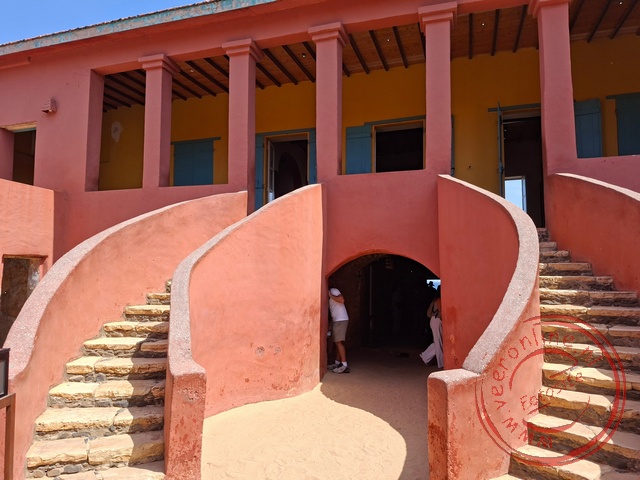
There is a pleasant buzz of activity. The souvenir sellers are out in force today as well. They had already tried to strike up conversations with us on the boat and in the harbour. As we walk past, they ask whether I still remember them. To my surprise, they have all remembered my name. Nevertheless, I have to disappoint them.At the far end of the island, we visit the French fort. Several rather basic exhibitions about Africa, slavery and Islam have been set up inside the circular defensive structure. I find it a little difficult to keep my attention focused. I climb the stairs and take in the fort and its surroundings from the ramparts.At around one o’clock, we arrive at the restaurant where we are having lunch. Earlier this morning, I had already ordered chicken with rice. Giving your order in advance is particularly useful when travelling in a group. It helps avoid long waiting times.After lunch, we head back to the boat. We make it just in time for the two o’clock ferry. The downside is that all the seats on the upper deck are already taken, so I find a place inside. The boat takes twenty-five minutes to return to Dakar.We visit the National Museum. It is a large, modern building with various collections.
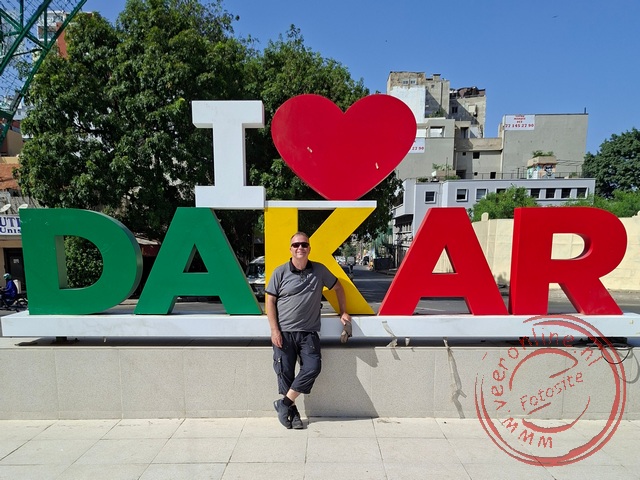
Unfortunately, some of the information is explained only in French. I try translating a few of the texts with my phone, but I don't want to do that at every display. The collection covers a wide range of subjects, from human history and Egyptian hieroglyphs to modern art. At times, it seems as though they are struggling to find enough exhibits to fill the museum.Our final stop is Place de l’Indépendance. Preparations for the Youth Olympic Games are underway everywhere. By the end of the afternoon, we are back at the hotel.In the meantime, I have also received an update about my visa for Guinea. The status of my online application has been showing ‘successfully submitted’ for four weeks now, but I still haven't received my visa. It seems to be some kind of European issue. The other travellers have all received theirs. To avoid any risks, the local agent is going to arrange the visa through the embassy. This will cost me an extra 190 euros. I see no alternative but to accept this Plan B. After all, I want to avoid getting stranded at the border.In the evening, we go out for dinner together at restaurant Biteew, close to Avenue George Pompidou. As it is a bit too far to walk, we are taken there by bus. I choose a fish stew with rice. Back at the hotel, I get my luggage organised. Tomorrow we leave Dakar and head further into Senegal.
 Guinee-Bissau
 Sierra Leone
Travelogue Roundtrip West Africa
Dag 2 | Senegal > Wandering Around Dakar
Dag 3 | Senegal > The Slave Island of Gorée
Dag 4 | Senegal > The Mosque of Touba
Dag 5 | The Gambia > The Stone Circles of Sine Ngayene
Dag 6 | The Gambia > Exploring Banjul
Dag 7 | Senegal > Boat Tour in Ziguinchor
Dag 8 | Guinea-Bissau > The Capital City of Bissau
Dag 9 | Guinea-Bissau > Orango National Park
Dag 10 | Guinea-Bissau > In Search of Saltwater Hippos