
160 countries
(and areas)
 - Costa Rica
- Croatia
- Cuba
- Curacao
- Cyprus
- Czech Republic
- Denmark
- Dominica
- Dominican Republic
- Egypt
- El Salvador
- England
- Estonia
- Eswatini (Swaziland)
- Ethiopia
- Fiji
- Finland
- France
- French Guiana
- Georgia
- Germany
- Ghana
- Gibraltar
- Greece
- Grenada
- Guadeloupe
- Guatemala
- Guinee
- Guinee-Bissau
- Honduras
- Hong Kong
- Hungary
- Iceland
- India
- Indonesia
- Iran
- Ireland
- Israel
- Italy
- Jamaica
- Japan
- Jordan
- Kazakhstan
- Kenya
- Kosovo
- Kuwait
- Kyrgyzstan
- Laos
- Latvia
- Lebanon
- Lesotho
- Liberia
- Liechtenstein
- Lithuania
- Luxembourg
- Macau
- Madagascar
- Malawi
- Malaysia
- Maldives
- Malta
- Martinique
- Mexico
- Moldova
- Monaco
- Mongolia
- Montenegro
- Morocco
- Mozambique
- Namibia
- Nepal
- Netherlands
- New Zealand
- Nicaragua
- North Macedonia
- Northern Ireland
- Norway
- Oman
- Pakistan
- Palestine
- Peru
- Philippines
- Poland
- Portugal
- Qatar
- Republic of Korea
- Romania
- Russia
- Saint Kitts and Nevis
- Saint Lucia
- Saint Martin
- Saint Vincent and the Grenadines
- San Marino
- São Tomé and Principe
- Saudi Arabia
- Scotland
- Senegal
- Serbia
- Sierra Leone
- Singapore
- Sint Maarten
- Slovakia
- Slovenia
- South Africa
- Spain
- Sri Lanka
- Suriname
- Sweden
- Switzerland
- Tajikistan
- Tanzania
- Thailand
- The Gambia
- Tibet
- Togo
- Transnistria
- Trinidad and Tobago
- Tunisia
- Turkey
- Turkmenistan
- Uganda
- United Arab Emirates
- United States
- Uruguay
- Uzbekistan
- Vatican City
- Vietnam
- Wales
- Zambia
- Zanzibar


Copyright 2004 - 2026
Veeronline.nl Travel Adventures
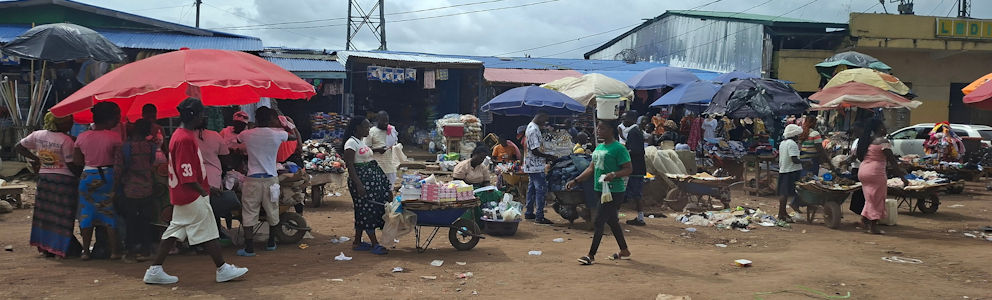
Home > Liberia > Roundtrip West Africa > Travelogue day 18
Travelogue Roundtrip West Africa
Oct 15 - Nov 9th, 2026 (26 days)
Liberia > To Bunce Island
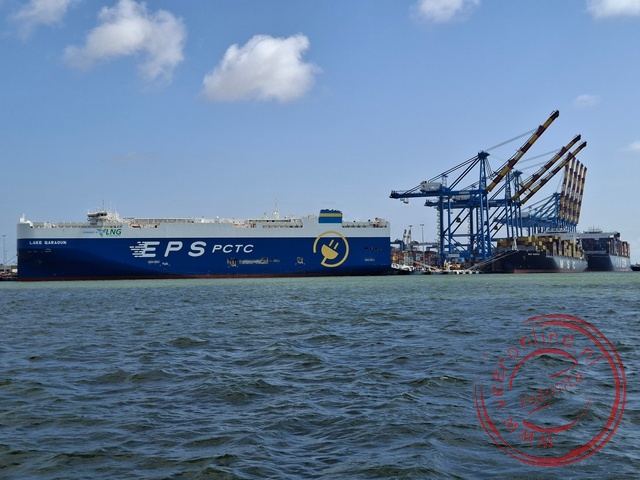
Dag 18 - Sunday 1 November 2026After breakfast, I pack my luggage again. Everything is loaded onto the bus, and we drive a short distance to the harbour. I estimate that the journey takes no more than five minutes. Here, we transfer to a boat heading for Bunce Island. The bus stays behind with our luggage, and the driver remains with it throughout the entire excursion.As we head out towards the open sea, I enjoy a beautiful view of Freetown. I can see the houses built against the mountainous landscape. We also pass several large cargo and container ships. One of them is anchored just off the coast, supplying electricity to Freetown. Without this Turkish ship, the capital would be left without electricity.Bunce Island is a small island at the mouth of the Sierra Leone River. The British used it as a slave-trading post. During the seventeenth century, Africans were brought to this island before making the crossing to the plantations in America.After more than an hour on the water, we arrive at the uninhabited island. From the boat, I can already see the remains of the British fort. From the beach, I follow our guide, Alex, towards the ruins.Alex explains that the enslaved people were brought to this island and usually stayed here for just three days. He shows us where the men were housed and where the women and children stayed. In several places, the ruins have been overgrown by the roots of trees and bushes. This gives the historic site an additional dimension.The Royal African Company was known in America for supplying strong men to work on the plantations. At the fort, the enslaved people were branded with the letters R.A.C. to identify where they came from.The island is an impressive place to visit. After about an hour, we make our way back to the landing stage.We then take the boat to the neighbouring island of Tasso. Here we meet Peter, a retired Brit who, together with the local community, has set up the Tasso Ecotourism project. A school has been established with local teachers, and simple accommodation has been built for tourists. Unfortunately, the traditional houses are being eaten away by termites on the outside. They have also opened a restaurant here, which is run by local residents of Tasso. They have prepared lunch for us. I choose chicken with rice, beans and salad.Meanwhile, Peter tells us about the project. It is actually pure coincidence that we meet him today. He visits the village four times a year and is only here for four days on this occasion. He is flying back to England tonight.After lunch, Peter introduces us to a young tribal chief. He has taken over the role from his grandfather. The young man, who looks no more than twenty-five years old, seems a little uncomfortable in our presence.Peter then takes us to a small museum. Several masks are on display, and the history of Tasso and Bunce Island is explained.When we sail back to Freetown, I finally realise just how hot and humid it is. Fortunately, the breeze during the crossing provides some welcome relief.At around two o'clock, we arrive back at the harbour in Freetown. The ferry to the airport is just about to depart. The ferry crew quickly unloads the luggage from the bus. I grab my backpack while trying to keep a close eye on my travel bag. That way, I can at least be sure that my bag makes it onto the ferry.With a little rearranging, there is enough room for everyone to have a seat on board.Sierra Leone's new airport is located on the other side of the river delta. By road, the airport can only be reached by taking a four- to five-hour detour. The ferry, on the other hand, takes just forty-five minutes to cover the approximately fifteen-kilometre distance as the crow flies.The boat docks close to the airport. The crew unloads all the luggage. I feel a little uncomfortable when I lose sight of my travel bag. Nevertheless, everyone assures me that everything will be fine and that the luggage will be unloaded at the airport.We are also taken to the airport by bus. I enter the terminal building with my suitcase. My boarding pass and passport are checked here. Before I can join the check-in queue, my passport, boarding pass and visa for Liberia are checked once again.The queue is long, and check-in is a slow process. Several travellers exceed the maximum baggage allowance of 23 kilos and have to repack their suitcases. I estimate that I spend about an hour waiting in line.Meanwhile, I complete the health declaration for Sierra Leone. Lee helps me with this because the form will not open on my phone.At check-in, I am asked about my visa for Liberia once again. After checking in, I make my way towards immigration. First, my health declaration is checked, followed further along by my yellow fever vaccination certificate. Simply showing my yellow vaccination booklet is sufficient.Next, my boarding pass is checked again together with my passport. At the following checkpoint, they check whether my visa for Sierra Leone is still valid. When I finally reach the immigration officer, he stamps my passport with an exit stamp without asking too many questions.At a kiosk in the departure hall, I spend the rest of my local currency. I buy something to drink and a small snack. After that, there is just a little more waiting.I strike up a conversation with a young man from Sierra Leone called Antonio. His mother is from here and his father is Italian. He now lives in Toronto. He is particularly interested in why I am visiting Sierra Leone and what I think of the country. He is surprised when I tell him that Sierra Leone has made a better impression on me than Guinea.When we board the plane, my boarding pass is checked yet again. My hand luggage is also inspected, and I am searched once more. By now, I have the feeling that every possible check has already been carried out several times.It is quite nice, though, to be addressed in Dutch on the plane. The Brussels Airlines flight continues to Brussels after a stopover in Monrovia.After about an hour, we land in Liberia. The procedure is relatively quick, although there are quite a few checks here as well. I am beginning to get used to it by now.The health declaration is particularly troublesome. Apparently, this requirement was introduced recently because of the Ebola outbreak in Congo. Everyone has to complete the form online using their mobile phone. As a result, the Wi-Fi is rather slow.Outside the airport terminal, two shuttle buses from the Farmington Hotel are waiting. The hotel is located close to the airport. Within a few minutes, we arrive at the hotel.I walk into the enormous lobby. The room keys are already waiting for us. All that remains is to have my passport scanned. I am assigned room 240, a spacious room on the first floor.
 Senegal
 Coast Ivory
Travelogue Roundtrip West Africa
Dag 2 | Senegal > Wandering Around Dakar
Dag 3 | Senegal > The Slave Island of Gorée
Dag 4 | Senegal > The Mosque of Touba
Dag 5 | The Gambia > The Stone Circles of Sine Ngayene
Dag 6 | The Gambia > Exploring Banjul
Dag 7 | Senegal > Boat Tour in Ziguinchor
Dag 8 | Guinea-Bissau > The Capital City of Bissau
Dag 9 | Guinea-Bissau > Orango National Park
Dag 10 | Guinea-Bissau > In Search of Saltwater Hippos
Dag 11 | Guinea-Bissau > Meeting the Bijagó People
Dag 12 | Guinea-Bissau > The Mausoleum of Amílcar Cabral
Dag 13 | Senegal > The Shell Island of Fadiouth
Dag 14 | Guinea > Safari Before Departing for Guinea
Dag 15 | Guinea > Exploring Conakry
Dag 16 | Sierra Leone > Crossing the Border into Sierra Leone
Dag 17 | Sierra Leone > Chimpanzees and an Introduction to Freetown
Dag 18 | Liberia > To Bunce Island
Dag 19 | Liberia > The Capital City of Monrovia
Dag 20 | Ghana > City Tour of Accra
Dag 21 | Ghana > The Kakum Canopy Walkways
Dag 22 | Ghana > Wandering Around Accra
Dag 23 | Ivory Coast > Flight to Abidjan
Dag 24 | Ivory Coast > The Old Town of Grand-Bassam
Dag 25 | Ivory Coast > The Last Day in Abidjan