
154 countries
(and areas)
 - Belize
- Benin
- Bhutan
- Bolivia
- Bonaire
- Bosnia and Herzegovina
- Botswana
- Brazil
- British Virgin Islands
- Brunei
- Bulgaria
- Cambodia
- Canada
- Cape Verde
- Chile
- China
- Costa Rica
- Croatia
- Cuba
- Curacao
- Cyprus
- Czech Republic
- Denmark
- Dominica
- Dominican Republic
- Egypt
- El Salvador
- England
- Estonia
- Eswatini (Swaziland)
- Ethiopia
- Fiji
- Finland
- France
- French Guiana
- Georgia
- Germany
- Gibraltar
- Greece
- Grenada
- Guadeloupe
- Guatemala
- Honduras
- Hong Kong
- Hungary
- Iceland
- India
- Indonesia
- Iran
- Ireland
- Israel
- Italy
- Jamaica
- Japan
- Jordan
- Kazakhstan
- Kenya
- Kosovo
- Kuwait
- Kyrgyzstan
- Laos
- Latvia
- Lebanon
- Lesotho
- Liechtenstein
- Lithuania
- Luxembourg
- Macau
- Madagascar
- Malawi
- Malaysia
- Maldives
- Malta
- Martinique
- Mexico
- Moldova
- Monaco
- Mongolia
- Montenegro
- Morocco
- Mozambique
- Namibia
- Nepal
- Netherlands
- New Zealand
- Nicaragua
- North Macedonia
- Northern Ireland
- Norway
- Oman
- Pakistan
- Palestine
- Peru
- Philippines
- Poland
- Portugal
- Qatar
- Republic of Korea
- Romania
- Russia
- Saint Kitts and Nevis
- Saint Lucia
- Saint Martin
- Saint Vincent and the Grenadines
- San Marino
- São Tomé and Principe
- Saudi Arabia
- Scotland
- Senegal
- Serbia
- Singapore
- Sint Maarten
- Slovakia
- Slovenia
- South Africa
- Spain
- Sri Lanka
- Suriname
- Sweden
- Switzerland
- Tajikistan
- Tanzania
- Thailand
- The Gambia
- Tibet
- Togo
- Transnistria
- Trinidad and Tobago
- Tunisia
- Turkey
- Turkmenistan
- Uganda
- United Arab Emirates
- United States
- Uruguay
- Uzbekistan
- Vatican City
- Vietnam
- Wales
- Zambia
- Zanzibar
- Belize
- Benin
- Bhutan
- Bolivia
- Bonaire
- Bosnia and Herzegovina
- Botswana
- Brazil
- British Virgin Islands
- Brunei
- Bulgaria
- Cambodia
- Canada
- Cape Verde
- Chile
- China
- Costa Rica
- Croatia
- Cuba
- Curacao
- Cyprus
- Czech Republic
- Denmark
- Dominica
- Dominican Republic
- Egypt
- El Salvador
- England
- Estonia
- Eswatini (Swaziland)
- Ethiopia
- Fiji
- Finland
- France
- French Guiana
- Georgia
- Germany
- Gibraltar
- Greece
- Grenada
- Guadeloupe
- Guatemala
- Honduras
- Hong Kong
- Hungary
- Iceland
- India
- Indonesia
- Iran
- Ireland
- Israel
- Italy
- Jamaica
- Japan
- Jordan
- Kazakhstan
- Kenya
- Kosovo
- Kuwait
- Kyrgyzstan
- Laos
- Latvia
- Lebanon
- Lesotho
- Liechtenstein
- Lithuania
- Luxembourg
- Macau
- Madagascar
- Malawi
- Malaysia
- Maldives
- Malta
- Martinique
- Mexico
- Moldova
- Monaco
- Mongolia
- Montenegro
- Morocco
- Mozambique
- Namibia
- Nepal
- Netherlands
- New Zealand
- Nicaragua
- North Macedonia
- Northern Ireland
- Norway
- Oman
- Pakistan
- Palestine
- Peru
- Philippines
- Poland
- Portugal
- Qatar
- Republic of Korea
- Romania
- Russia
- Saint Kitts and Nevis
- Saint Lucia
- Saint Martin
- Saint Vincent and the Grenadines
- San Marino
- São Tomé and Principe
- Saudi Arabia
- Scotland
- Senegal
- Serbia
- Singapore
- Sint Maarten
- Slovakia
- Slovenia
- South Africa
- Spain
- Sri Lanka
- Suriname
- Sweden
- Switzerland
- Tajikistan
- Tanzania
- Thailand
- The Gambia
- Tibet
- Togo
- Transnistria
- Trinidad and Tobago
- Tunisia
- Turkey
- Turkmenistan
- Uganda
- United Arab Emirates
- United States
- Uruguay
- Uzbekistan
- Vatican City
- Vietnam
- Wales
- Zambia
- Zanzibar


Copyright 2004 - 2026
Veeronline.nl Travel Adventures

Home > Mexico > Tour of Mexico > Travelogue day 2
Travelogue Tour of Mexico
February 11 March 1 2025 (19 days)
Mexico > The Maya City of Chichén Itzá
Dag 2 - Wednesday 12 February 2025During the night, when I check the time, I still have to calculate back to Dutch time. When it is eleven o’clock in the Netherlands, it is five in the morning here. I turn over for a bit, although I don’t really get much more sleep. At seven o’clock breakfast is ready. Most fellow travelers are already there. I guess everyone went to bed early and therefore woke up early too. I order scrambled eggs and have some coffee. At eight o’clock, we leave Cancun and drive eastwards. This part of the Yucatán Peninsula is flat. I don’t see any mountains or hills anywhere. I use the time to chat with fellow travelers. When we enter Valladolid, the clock has gone back one hour. Here, the time difference with the Netherlands is seven hours. It’s strange that only the far tip of Yucatán uses a different time zone. Valladolid is a typical Mexican town with a characteristic grid street plan, introduced by the Spaniards. At the Parque Principal stands the Templo de San Servacio. Inside, the church looks simple. Perhaps the most impressive features are the old church doors, five meters high. Valladolid also has the San Bernardino church, but that one is further away. Although we only have half an hour here, I walk in the direction where I expect the church to be, hoping signs will point me the right way. While walking the streets, I realize I should have prepared this visit better. I could have looked up the church’s location beforehand and downloaded a map of the town on my phone. I walk a few more blocks and reach the edge of the center. I look left and right but see nothing resembling a church or signs pointing to one. I give up and return to the central square.

From Valladolid, it is a forty-kilometer drive to the ancient Maya city of Chichén Itzá. At the bus parking lot, dozens of buses are parked. There’s no room left for our bus. We get out and walk to the entrance. The driver parks elsewhere. The number of tourists at the entrance creates a chaotic scene. I try to ignore it. At the entrance, I meet Julius, the guide for Chichén Itzá. As soon as I enter the complex, I see the El Castillo pyramid—the most famous Maya temple of Chichén Itzá. Julius shows how the structure looked when it was discovered in 1841, after being overgrown by jungle for five hundred years. He continues that the El Castillo pyramid was built in the 9th century by the Maya. El Castillo served as a temple for the god Kukulcán. It is a stepped pyramid with staircases on four sides and a temple on the top platform. The four staircases have 91 steps each. Together with the platform, that makes 365 steps—one for each day of the year.

The pyramid is 24 meters high, and the temple on top adds another 6 meters. Julius explains that Chichén Itzá was a relatively new city in Maya culture. They literally built the pyramids over older buildings. Around the complex, a four-meter-high wall was built and filled in. It’s remarkable how they could make such a structure so perfectly. On March 21 and September 21, the sun hits the temple so that it looks like the shadow of a serpent climbs the temple. This was once the signal to sow in spring and harvest in autumn. I also visit the Temple of a Thousand Pillars, the Temple of the Warriors, and the Ball Court, where games were held. From depictions, it appears the loser had to pay with their life. A strong wind blows around the temples. Occasionally, sand is whipped up, and I have to protect my camera and eyes. People using umbrellas for sun protection struggle with the wind—a funny sight. After the impressive visit to Chichén Itzá, it’s time for lunch. It’s quite late, and I’m hungry. At a local restaurant, a buffet of typical Mexican dishes is ready. The owner proudly explains how she prepared every dish.

The meat has been cooked for sixteen hours in a fire pit. I try a small bite of every dish. Everything tastes delicious. In the afternoon, we drive to Mérida, a journey of over two and a half hours. Just before dark, we arrive at the hotel in the city. The Spaniards quickly realized this location was a good place to live. They expelled the Maya inhabitants and rebuilt the city according to the characteristic Spanish grid street plan. Wealthy traders came to the city and built luxurious homes. The streets in the center are well-organized: the roads running north-south are evenly numbered, the east-west streets are odd-numbered. Around the central Plaza Principal de Mérida stand historic colonial buildings. The Catedral de San Ildefonso is built from the remains of Maya houses. In a little bar, I order a beer with some fellow travelers. Later, we go to the bar opposite the hotel where there is live music. Since we ate a lot and very well this afternoon, we decide to skip dinner.
 Mexico
 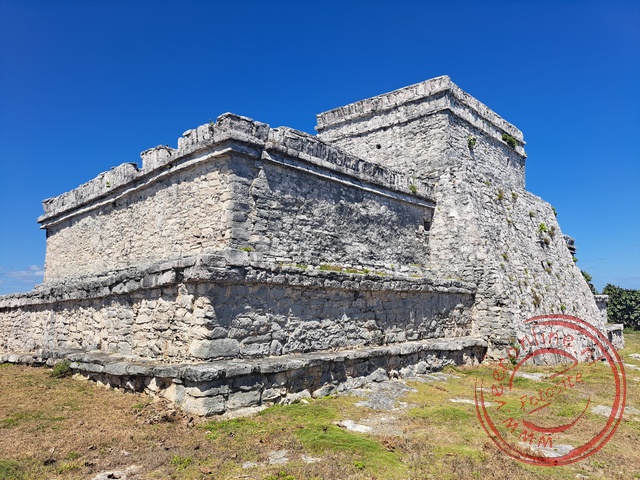 The defensive tower of the Maya in Tulum
 The nature park Biosfera Ría Celestún
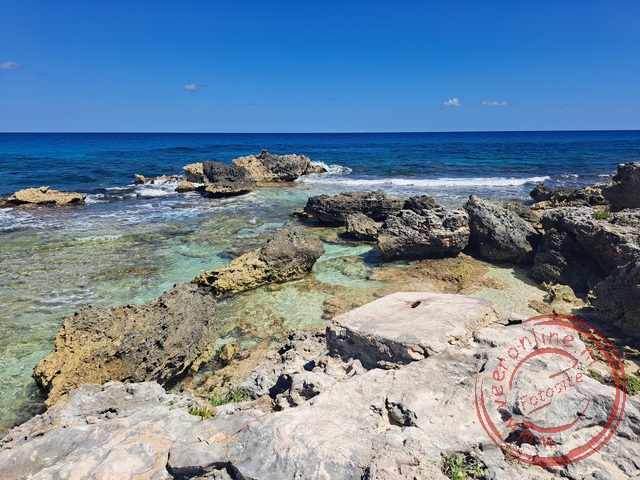 The eastern coast is made up of rocks
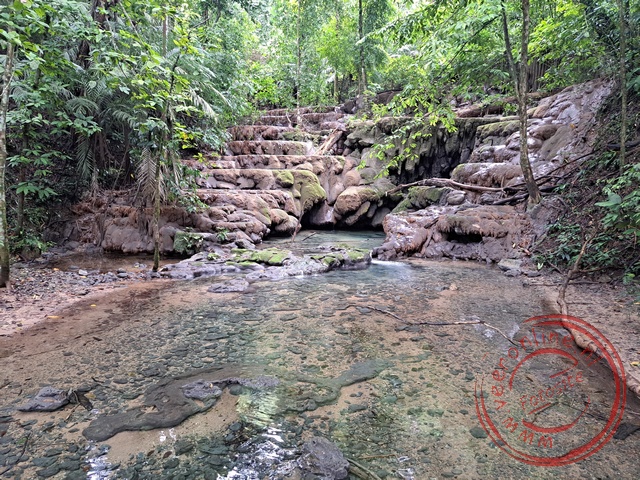 Clear water flows from the rocks in Palenque
Travelogue Tour of Mexico
Dag 2 | Mexico > The Maya City of Chichén Itzá
Dag 3 | Mexico > Reserva de la Biosfera Ría Celestún
Dag 4 | Mexico > The Ancient Maya Ruins of Uxmal
Dag 5 | Mexico > Wandering Through Campeche
Dag 6 | Mexico > Ziplining Over the Miguel Colorado Cenote
Dag 7 | Mexico > The Cañon del Sumidero Canyon
Dag 8 | Mexico > A Walking Tour Through San Cristóbal
Dag 9 | Mexico > The Traditional Maya Mountain Villages
Dag 10 | Mexico > Swimming in the Agua Azul Waterfall
Dag 11 | Mexico > The Maya City of Palenque
Dag 12 | Mexico > Travel Day to Chetumal
Dag 13 | Mexico > The Lake of Bacalar
Dag 14 | Mexico > The Beach of Mahahual
Dag 15 | Mexico > Via Tulum to Playa del Carmen
Dag 16 | Mexico > To Isla Mujeres
Dag 17 | Mexico > Snorkeling Around Isla Mujeres
Dag 18 | Mexico > The Last Hours on Isla Mujeres
Dag 19 | Mexico > By Train Back Home