
154 countries
(and areas)
 - Belize
- Benin
- Bhutan
- Bolivia
- Bonaire
- Bosnia and Herzegovina
- Botswana
- Brazil
- British Virgin Islands
- Brunei
- Bulgaria
- Cambodia
- Canada
- Cape Verde
- Chile
- China
- Costa Rica
- Croatia
- Cuba
- Curacao
- Cyprus
- Czech Republic
- Denmark
- Dominica
- Dominican Republic
- Egypt
- El Salvador
- England
- Estonia
- Eswatini (Swaziland)
- Ethiopia
- Fiji
- Finland
- France
- French Guiana
- Georgia
- Germany
- Gibraltar
- Greece
- Grenada
- Guadeloupe
- Guatemala
- Honduras
- Hong Kong
- Hungary
- Iceland
- India
- Indonesia
- Iran
- Ireland
- Israel
- Italy
- Jamaica
- Japan
- Jordan
- Kazakhstan
- Kenya
- Kosovo
- Kuwait
- Kyrgyzstan
- Laos
- Latvia
- Lebanon
- Lesotho
- Liechtenstein
- Lithuania
- Luxembourg
- Macau
- Madagascar
- Malawi
- Malaysia
- Maldives
- Malta
- Martinique
- Mexico
- Moldova
- Monaco
- Mongolia
- Montenegro
- Morocco
- Mozambique
- Namibia
- Nepal
- Netherlands
- New Zealand
- Nicaragua
- North Macedonia
- Northern Ireland
- Norway
- Oman
- Pakistan
- Palestine
- Peru
- Philippines
- Poland
- Portugal
- Qatar
- Republic of Korea
- Romania
- Russia
- Saint Kitts and Nevis
- Saint Lucia
- Saint Martin
- Saint Vincent and the Grenadines
- San Marino
- São Tomé and Principe
- Saudi Arabia
- Scotland
- Senegal
- Serbia
- Singapore
- Sint Maarten
- Slovakia
- Slovenia
- South Africa
- Spain
- Sri Lanka
- Suriname
- Sweden
- Switzerland
- Tajikistan
- Tanzania
- Thailand
- The Gambia
- Tibet
- Togo
- Transnistria
- Trinidad and Tobago
- Tunisia
- Turkey
- Turkmenistan
- Uganda
- United Arab Emirates
- United States
- Uruguay
- Uzbekistan
- Vatican City
- Vietnam
- Wales
- Zambia
- Zanzibar
- Belize
- Benin
- Bhutan
- Bolivia
- Bonaire
- Bosnia and Herzegovina
- Botswana
- Brazil
- British Virgin Islands
- Brunei
- Bulgaria
- Cambodia
- Canada
- Cape Verde
- Chile
- China
- Costa Rica
- Croatia
- Cuba
- Curacao
- Cyprus
- Czech Republic
- Denmark
- Dominica
- Dominican Republic
- Egypt
- El Salvador
- England
- Estonia
- Eswatini (Swaziland)
- Ethiopia
- Fiji
- Finland
- France
- French Guiana
- Georgia
- Germany
- Gibraltar
- Greece
- Grenada
- Guadeloupe
- Guatemala
- Honduras
- Hong Kong
- Hungary
- Iceland
- India
- Indonesia
- Iran
- Ireland
- Israel
- Italy
- Jamaica
- Japan
- Jordan
- Kazakhstan
- Kenya
- Kosovo
- Kuwait
- Kyrgyzstan
- Laos
- Latvia
- Lebanon
- Lesotho
- Liechtenstein
- Lithuania
- Luxembourg
- Macau
- Madagascar
- Malawi
- Malaysia
- Maldives
- Malta
- Martinique
- Mexico
- Moldova
- Monaco
- Mongolia
- Montenegro
- Morocco
- Mozambique
- Namibia
- Nepal
- Netherlands
- New Zealand
- Nicaragua
- North Macedonia
- Northern Ireland
- Norway
- Oman
- Pakistan
- Palestine
- Peru
- Philippines
- Poland
- Portugal
- Qatar
- Republic of Korea
- Romania
- Russia
- Saint Kitts and Nevis
- Saint Lucia
- Saint Martin
- Saint Vincent and the Grenadines
- San Marino
- São Tomé and Principe
- Saudi Arabia
- Scotland
- Senegal
- Serbia
- Singapore
- Sint Maarten
- Slovakia
- Slovenia
- South Africa
- Spain
- Sri Lanka
- Suriname
- Sweden
- Switzerland
- Tajikistan
- Tanzania
- Thailand
- The Gambia
- Tibet
- Togo
- Transnistria
- Trinidad and Tobago
- Tunisia
- Turkey
- Turkmenistan
- Uganda
- United Arab Emirates
- United States
- Uruguay
- Uzbekistan
- Vatican City
- Vietnam
- Wales
- Zambia
- Zanzibar


Copyright 2004 - 2026
Veeronline.nl Travel Adventures

Home > Mexico > Tour of Mexico > Travelogue day 9
Travelogue Tour of Mexico
February 11 March 1 2025 (19 days)
Mexico > The Traditional Maya Mountain Villages
Dag 9 - Wednesday 19 February 2025Around half past eight, we leave the hotel on foot to go to the bus. The bus is parked in the same spot where we got off two days ago. This morning we will visit two Maya mountain villages. In these towns, great value is placed on traditions, and only people from the community are allowed to settle here. The villages lie in the valley around San Cristobal. After about half an hour’s drive, we arrive in the town of Zinacantán. When we enter, Zinacantán is larger than I expected. About 4,000 people live here. On the square, people sell fruit from the trunk of a car. On the opposite side are the usual small shops. We get out at the church. The church stands on a little hill and towers above the town. Before the Spanish conquest, Zinacantán already had close ties with the Aztecs. During the Spanish rule, religions other than Catholicism were not allowed. Yet the Maya managed to continue their own beliefs. The church offers a combination of the Maya faith and Catholicism. Around the altar in the church, there are blinking Christmas lights. The various colors blink nervously around the holy statues. Behind the church hang LED strings that we would normally buy at the Action store. Some families are praying in the church, sitting on the floor. Out of respect for the Maya faith, no photos may be taken in the church. The Maya believe that a piece of their soul is lost when photos are taken. Opposite the church, we visit a house and shop. At an altar in the house, it is explained that many religious festivals are celebrated in Zinacantán. The residents choose a group of Martomoetiks from among themselves, who are responsible for organizing church ceremonies. This follows a strict hierarchy. The Martomoetik is responsible for buying everything needed for such a festival.
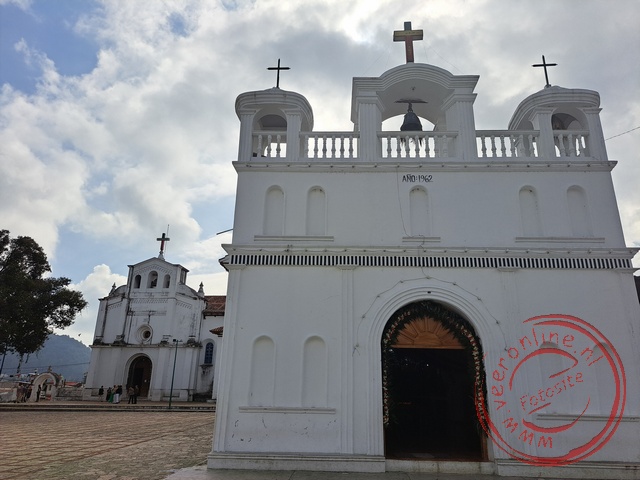
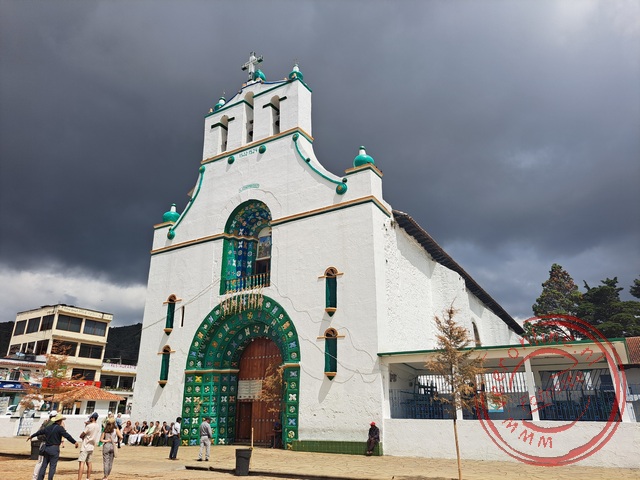
For example, he arranges the decoration of the statues in the church and timely replacement of flowers. Being a Martomoetik is an honorary position but costs a lot of money. Behind the house is a shop where women manually weave colorful cloths. It is a labor-intensive process. I am not interested in buying anything here and walk around the streets. When I buy a cola in a shop, the seller reacts enthusiastically when he hears I am from Holland. A flood of Spanish words follows. I barely recognize that he is telling me his name. In Spanish, I tell him my name. The group finishes shopping and returns to the bus. The second village we visit, San Juan Chamula, is even more traditional than Zinacantán. From the parking lot at the edge of the center, we walk to the church.

The church of San Juan Chamula still follows the Maya rituals. On the floor of the church lie green pine needles. On the left and right are various altars for the Maya gods. Due to work being done, the altars on the left side have been moved somewhat toward the center. Families sit on the ground in front of an altar. They have pushed the needles aside and placed candles on the floor with candle wax. Long rows of connected candles burn. The combination of burning candles and pine needles seems extremely flammable to me, but nobody seems to care here. Around the altars are hundreds of small bowls with burning candles. The church is filled with candle smoke. The ceiling is completely blackened. On the one hand, it is very special to be allowed to see the Maya church and rituals, but on the other hand, it also feels strange to walk among the praying people. I will have to store the image of the church and its customs well in my memory because photos are not appropriate (and not allowed) here either.
After the impressive visit to San Juan Chamula, we drive back to San Cristobal de Las Casas. When we enter the city, dark clouds hang above it. We get off at the edge of the center, as far as the bus is allowed to go. We walk into the market hall. Here small shops are packed close together. Because it is somewhat outside the center, the stalls are not aimed at tourists. On the other side are small restaurants. Each portal has its own little kitchen with four tables. We order food and drinks at Cocina no 4. While waiting for our food, school lets out. A large group of children in school uniforms passes by. Hopefully, they get home on time, because a heavy shower breaks out. Everyone seeks shelter. Luckily, we sit under a canopy. The lunch tastes good but is not very special. After lunch, we stay seated for a while. It is still raining heavily. After about an hour, it becomes drier. On the way to the hotel, we see water streaming through the streets in large amounts. You have to be careful not to get splashed by passing cars. We come to an intersection that is completely underwater. To cross without getting wet, I climb via a running board of a parked car to the middle of the street. Shops have placed shields to prevent splashing water from flowing into the store. Around four o’clock, I arrive back at the hotel. I decide that I have enjoyed the city enough and retreat to the hotel room for a while. Probably several fellow travelers feel the same. We decide to just eat at the hotel in the evening. Much easier that way.
 Mexico
  The Temple of the Eagles and Jaguars in Chichén Itzá
 The Maya church of San Juan Chamula is covered with pine needles inside
 On the final evening, we thank Suzy for her travel guidance
 By boat through the mangrove forest
Travelogue Tour of Mexico
Dag 2 | Mexico > The Maya City of Chichén Itzá
Dag 3 | Mexico > Reserva de la Biosfera Ría Celestún
Dag 4 | Mexico > The Ancient Maya Ruins of Uxmal
Dag 5 | Mexico > Wandering Through Campeche
Dag 6 | Mexico > Ziplining Over the Miguel Colorado Cenote
Dag 7 | Mexico > The Cañon del Sumidero Canyon
Dag 8 | Mexico > A Walking Tour Through San Cristóbal
Dag 9 | Mexico > The Traditional Maya Mountain Villages
Dag 10 | Mexico > Swimming in the Agua Azul Waterfall
Dag 11 | Mexico > The Maya City of Palenque
Dag 12 | Mexico > Travel Day to Chetumal
Dag 13 | Mexico > The Lake of Bacalar
Dag 14 | Mexico > The Beach of Mahahual
Dag 15 | Mexico > Via Tulum to Playa del Carmen
Dag 16 | Mexico > To Isla Mujeres
Dag 17 | Mexico > Snorkeling Around Isla Mujeres
Dag 18 | Mexico > The Last Hours on Isla Mujeres
Dag 19 | Mexico > By Train Back Home