
154 countries
(and areas)
 - Belize
- Benin
- Bhutan
- Bolivia
- Bonaire
- Bosnia and Herzegovina
- Botswana
- Brazil
- British Virgin Islands
- Brunei
- Bulgaria
- Cambodia
- Canada
- Cape Verde
- Chile
- China
- Costa Rica
- Croatia
- Cuba
- Curacao
- Cyprus
- Czech Republic
- Denmark
- Dominica
- Dominican Republic
- Egypt
- El Salvador
- England
- Estonia
- Eswatini (Swaziland)
- Ethiopia
- Fiji
- Finland
- France
- French Guiana
- Georgia
- Germany
- Gibraltar
- Greece
- Grenada
- Guadeloupe
- Guatemala
- Honduras
- Hong Kong
- Hungary
- Iceland
- India
- Indonesia
- Iran
- Ireland
- Israel
- Italy
- Jamaica
- Japan
- Jordan
- Kazakhstan
- Kenya
- Kosovo
- Kuwait
- Kyrgyzstan
- Laos
- Latvia
- Lebanon
- Lesotho
- Liechtenstein
- Lithuania
- Luxembourg
- Macau
- Madagascar
- Malawi
- Malaysia
- Maldives
- Malta
- Martinique
- Mexico
- Moldova
- Monaco
- Mongolia
- Montenegro
- Morocco
- Mozambique
- Namibia
- Nepal
- Netherlands
- New Zealand
- Nicaragua
- North Macedonia
- Northern Ireland
- Norway
- Oman
- Pakistan
- Palestine
- Peru
- Philippines
- Poland
- Portugal
- Qatar
- Republic of Korea
- Romania
- Russia
- Saint Kitts and Nevis
- Saint Lucia
- Saint Martin
- Saint Vincent and the Grenadines
- San Marino
- São Tomé and Principe
- Saudi Arabia
- Scotland
- Senegal
- Serbia
- Singapore
- Sint Maarten
- Slovakia
- Slovenia
- South Africa
- Spain
- Sri Lanka
- Suriname
- Sweden
- Switzerland
- Tajikistan
- Tanzania
- Thailand
- The Gambia
- Tibet
- Togo
- Transnistria
- Trinidad and Tobago
- Tunisia
- Turkey
- Turkmenistan
- Uganda
- United Arab Emirates
- United States
- Uruguay
- Uzbekistan
- Vatican City
- Vietnam
- Wales
- Zambia
- Zanzibar
- Belize
- Benin
- Bhutan
- Bolivia
- Bonaire
- Bosnia and Herzegovina
- Botswana
- Brazil
- British Virgin Islands
- Brunei
- Bulgaria
- Cambodia
- Canada
- Cape Verde
- Chile
- China
- Costa Rica
- Croatia
- Cuba
- Curacao
- Cyprus
- Czech Republic
- Denmark
- Dominica
- Dominican Republic
- Egypt
- El Salvador
- England
- Estonia
- Eswatini (Swaziland)
- Ethiopia
- Fiji
- Finland
- France
- French Guiana
- Georgia
- Germany
- Gibraltar
- Greece
- Grenada
- Guadeloupe
- Guatemala
- Honduras
- Hong Kong
- Hungary
- Iceland
- India
- Indonesia
- Iran
- Ireland
- Israel
- Italy
- Jamaica
- Japan
- Jordan
- Kazakhstan
- Kenya
- Kosovo
- Kuwait
- Kyrgyzstan
- Laos
- Latvia
- Lebanon
- Lesotho
- Liechtenstein
- Lithuania
- Luxembourg
- Macau
- Madagascar
- Malawi
- Malaysia
- Maldives
- Malta
- Martinique
- Mexico
- Moldova
- Monaco
- Mongolia
- Montenegro
- Morocco
- Mozambique
- Namibia
- Nepal
- Netherlands
- New Zealand
- Nicaragua
- North Macedonia
- Northern Ireland
- Norway
- Oman
- Pakistan
- Palestine
- Peru
- Philippines
- Poland
- Portugal
- Qatar
- Republic of Korea
- Romania
- Russia
- Saint Kitts and Nevis
- Saint Lucia
- Saint Martin
- Saint Vincent and the Grenadines
- San Marino
- São Tomé and Principe
- Saudi Arabia
- Scotland
- Senegal
- Serbia
- Singapore
- Sint Maarten
- Slovakia
- Slovenia
- South Africa
- Spain
- Sri Lanka
- Suriname
- Sweden
- Switzerland
- Tajikistan
- Tanzania
- Thailand
- The Gambia
- Tibet
- Togo
- Transnistria
- Trinidad and Tobago
- Tunisia
- Turkey
- Turkmenistan
- Uganda
- United Arab Emirates
- United States
- Uruguay
- Uzbekistan
- Vatican City
- Vietnam
- Wales
- Zambia
- Zanzibar


Copyright 2004 - 2026
Veeronline.nl Travel Adventures
Home > Senegal > Exploring Gambia and Senegal > Travelogue day 5
Travelogue Exploring Gambia and Senegal
August 25 September 1 2022 (8 days)
Senegal > Safari in Niokolo-Koba N.P.
Dag 5 - Monday 29 August 2022I slept a bit restlessly under my mosquito net last night. Around half past six I wake up. I hear nature awakening. Birds have the loudest voices. The electricity doesn’t seem to be working. In the dark, I washed myself under the cold shower stream. At the door of my hut, I am greeted by a Green vervet monkey. It gets startled by me and runs away. At seven o’clock, I see everyone at breakfast. Baguette, jam, and honey. We also get a small glass of Wonjo, a traditional local sweet drink made from the hibiscus plant. After breakfast, we drive for about half an hour to Niokolo-Koba National Park. This nature park is the largest park in Senegal near the river of the same name. The nature reserve covers nearly one million hectares. At the entrance, an old military truck is waiting. In the back is a bench where eight people can sit on either side. We enter the park with the truck. The guide takes a seat on the truck’s cabin to spot animals. The route through the park goes over unpaved roads.

We regularly shake quite a bit. The guide occasionally has to duck to avoid low-hanging branches. Due to the rainy season, the vegetation is tall and the trees are full of leaves. An ideal place for animals to hide. For us, a disadvantage because it makes spotting wildlife harder. Also, because of the enormous size of the park, it is difficult to see wild animals anyway. First, we come across a troop of baboons. The animals move from tree to tree. It’s amusing to see the young monkeys running after the troop. Further on, a group of guinea fowl crosses the road. The old truck makes a lot of noise. Most birds choose a safe place before we arrive. A pair of Southern Ground Hornbills stay put, maybe they’re too curious. Because of the vegetation, the truck often hits tree branches.
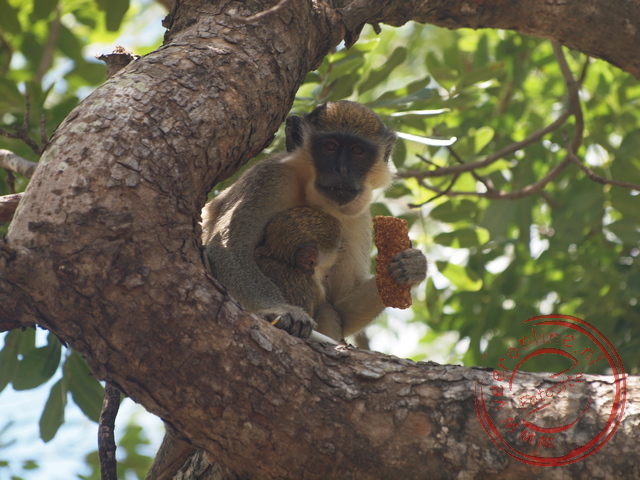
The branches whip through the open cargo bed. I dodge the branches. A few times I’m too late and get a little tap on my face. The truck bounces along. Everyone holds on tight to avoid injury. As we get closer to the river, we see more deer and antelope. Still, it’s not very busy with wildlife. In the middle of the park lies the Simenti Hotel. Round huts on the edge of the Gambia River. A fantastic place to stay. However, the hotel went bankrupt before the corona period. The complex now looks desolate and derelict. From the terrace, we overlook the river. Birds fly over, but hippos or crocodiles do not appear. Back at the truck, a vervet monkey has ransacked an abandoned bag. In the tree, the monkey tears open the packaging of its loot and eats it.

Under a shelter, we have lunch. Several monkeys watch curiously. One monkey has a baby on her belly, another is heavily pregnant. They enjoy the banana pieces thrown to them by the crew. While we eat lunch of chicken, potatoes, and bread, suddenly a group of warthogs passes by. They root in the ground looking for food. Funny that we see more wildlife around the lunch spot than during the safari. The driver looks worriedly at the diesel tank. He consults with the guide. Is there enough diesel to drive back? To be safe, he goes to get extra diesel at the manager’s house. From the lunch spot, we drive back to the exit. This takes about an hour and a half. Along the way, we see a few birds, monkeys, and antelope. Just after three o’clock, we arrive back at the parking lot.

Here we switch back into our own bus. This feels much more comfortable. Although we may not have spotted a lot of wildlife, the safari was a fun experience. In half an hour, we drive back to the camp. Just as we arrive, it starts to drizzle. We’ve been lucky with the weather today. In the restaurant, I order a beer. Here I sit dry. With a sidelong glance, I look at the Gambia River. Might a crocodile or hippo appear? In the evening, a superb meal is served. As is usually the case, platters of food are set on the table. No menu, but one meal for everyone. Only for the vegetarian travelers is there a separate extra dish.
 Senegal
 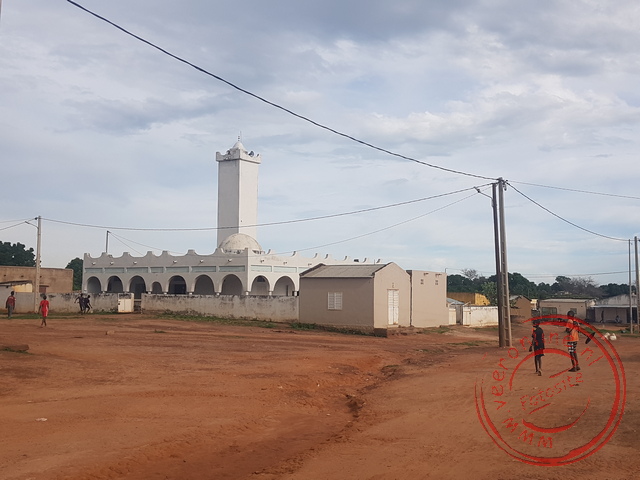 One of the mosques in Tambacounda
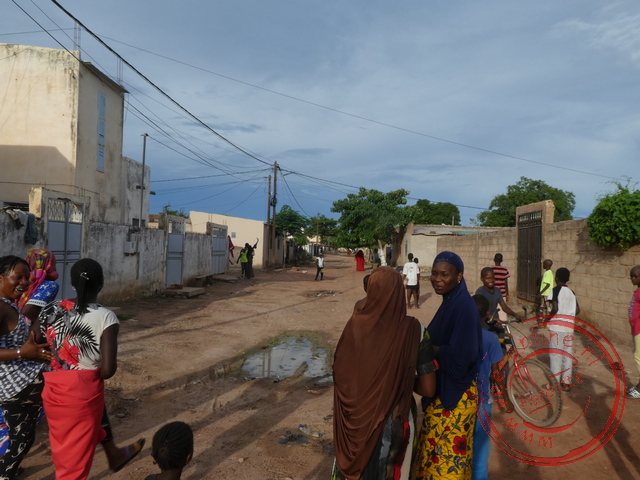 The Kankurang masquerade is a ceremony preparing for circumcision
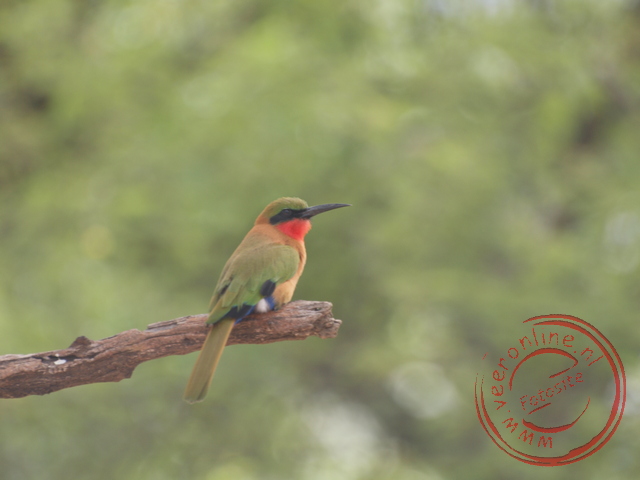 A bee eater on a branch
 The Kankurang ceremony makes boys men
Travelogue Exploring Gambia and Senegal
Dag 2 | Gambia > The Capital Banjul
Dag 3 | Senegal > The Masked Kankurang
Dag 4 | Senegal > Boat Trip on the Gambia River
Dag 5 | Senegal > Safari in Niokolo-Koba N.P.
Dag 6 | Gambia > The Jang Jang Burreh Camp
Dag 7 | Gambia > The Stone Circles of Wassu
Dag 8 | Gambia > The Brikama Craft Market