
154 countries
(and areas)
 - Belize
- Benin
- Bhutan
- Bolivia
- Bonaire
- Bosnia and Herzegovina
- Botswana
- Brazil
- British Virgin Islands
- Brunei
- Bulgaria
- Cambodia
- Canada
- Cape Verde
- Chile
- China
- Costa Rica
- Croatia
- Cuba
- Curacao
- Cyprus
- Czech Republic
- Denmark
- Dominica
- Dominican Republic
- Egypt
- El Salvador
- England
- Estonia
- Eswatini (Swaziland)
- Ethiopia
- Fiji
- Finland
- France
- French Guiana
- Georgia
- Germany
- Gibraltar
- Greece
- Grenada
- Guadeloupe
- Guatemala
- Honduras
- Hong Kong
- Hungary
- Iceland
- India
- Indonesia
- Iran
- Ireland
- Israel
- Italy
- Jamaica
- Japan
- Jordan
- Kazakhstan
- Kenya
- Kosovo
- Kuwait
- Kyrgyzstan
- Laos
- Latvia
- Lebanon
- Lesotho
- Liechtenstein
- Lithuania
- Luxembourg
- Macau
- Madagascar
- Malawi
- Malaysia
- Maldives
- Malta
- Martinique
- Mexico
- Moldova
- Monaco
- Mongolia
- Montenegro
- Morocco
- Mozambique
- Namibia
- Nepal
- Netherlands
- New Zealand
- Nicaragua
- North Macedonia
- Northern Ireland
- Norway
- Oman
- Pakistan
- Palestine
- Peru
- Philippines
- Poland
- Portugal
- Qatar
- Republic of Korea
- Romania
- Russia
- Saint Kitts and Nevis
- Saint Lucia
- Saint Martin
- Saint Vincent and the Grenadines
- San Marino
- São Tomé and Principe
- Saudi Arabia
- Scotland
- Senegal
- Serbia
- Singapore
- Sint Maarten
- Slovakia
- Slovenia
- South Africa
- Spain
- Sri Lanka
- Suriname
- Sweden
- Switzerland
- Tajikistan
- Tanzania
- Thailand
- The Gambia
- Tibet
- Togo
- Transnistria
- Trinidad and Tobago
- Tunisia
- Turkey
- Turkmenistan
- Uganda
- United Arab Emirates
- United States
- Uruguay
- Uzbekistan
- Vatican City
- Vietnam
- Wales
- Zambia
- Zanzibar
- Belize
- Benin
- Bhutan
- Bolivia
- Bonaire
- Bosnia and Herzegovina
- Botswana
- Brazil
- British Virgin Islands
- Brunei
- Bulgaria
- Cambodia
- Canada
- Cape Verde
- Chile
- China
- Costa Rica
- Croatia
- Cuba
- Curacao
- Cyprus
- Czech Republic
- Denmark
- Dominica
- Dominican Republic
- Egypt
- El Salvador
- England
- Estonia
- Eswatini (Swaziland)
- Ethiopia
- Fiji
- Finland
- France
- French Guiana
- Georgia
- Germany
- Gibraltar
- Greece
- Grenada
- Guadeloupe
- Guatemala
- Honduras
- Hong Kong
- Hungary
- Iceland
- India
- Indonesia
- Iran
- Ireland
- Israel
- Italy
- Jamaica
- Japan
- Jordan
- Kazakhstan
- Kenya
- Kosovo
- Kuwait
- Kyrgyzstan
- Laos
- Latvia
- Lebanon
- Lesotho
- Liechtenstein
- Lithuania
- Luxembourg
- Macau
- Madagascar
- Malawi
- Malaysia
- Maldives
- Malta
- Martinique
- Mexico
- Moldova
- Monaco
- Mongolia
- Montenegro
- Morocco
- Mozambique
- Namibia
- Nepal
- Netherlands
- New Zealand
- Nicaragua
- North Macedonia
- Northern Ireland
- Norway
- Oman
- Pakistan
- Palestine
- Peru
- Philippines
- Poland
- Portugal
- Qatar
- Republic of Korea
- Romania
- Russia
- Saint Kitts and Nevis
- Saint Lucia
- Saint Martin
- Saint Vincent and the Grenadines
- San Marino
- São Tomé and Principe
- Saudi Arabia
- Scotland
- Senegal
- Serbia
- Singapore
- Sint Maarten
- Slovakia
- Slovenia
- South Africa
- Spain
- Sri Lanka
- Suriname
- Sweden
- Switzerland
- Tajikistan
- Tanzania
- Thailand
- The Gambia
- Tibet
- Togo
- Transnistria
- Trinidad and Tobago
- Tunisia
- Turkey
- Turkmenistan
- Uganda
- United Arab Emirates
- United States
- Uruguay
- Uzbekistan
- Vatican City
- Vietnam
- Wales
- Zambia
- Zanzibar


Copyright 2004 - 2026
Veeronline.nl Travel Adventures
Home > Senegal > Exploring Gambia and Senegal > Travelogue day 4
Travelogue Exploring Gambia and Senegal
August 25 September 1 2022 (8 days)
Senegal > Boat Trip on the Gambia River
Dag 4 - Sunday 28 August 2022I wake up to the sound of the alarm. Until now, I was always awake before the alarm went off. I slept well last night. I take a shower and pack my luggage again. On the breakfast table are baguette, jam, butter, and cheese. There are also muffins and croissants. A good start to the day. In Tambacounda, we make a stop at the old station. In the past, the train ran here to Mali. The colonial-era building is heavily dilapidated. An old rusty wagon still stands on the tracks. Memories of the past. What a beautiful location this would be to turn into a museum. Next to the station is the former governor’s building. The building dates from the same time and is in the same dilapidated condition. I walk through the door inside. Dirt is piled up and the windows are boarded up. I hesitate whether to go up the stairs. Would the stairs be sturdy enough? I hear sounds. Probably people are staying behind the drawn curtains. I decide not to go further. By bus, we drive from Tambacounda to the Wassadou Camp near Wassadougou. Along the way, we pass a market. This is the Sunday market where everyone from the region comes, Kebba explains. Many colorful rugs are sold at the market

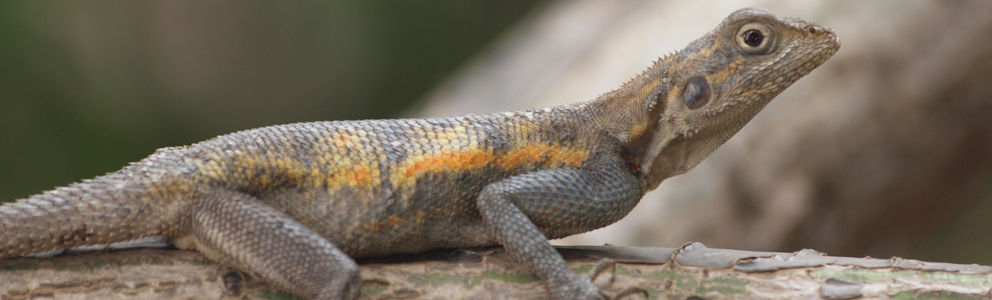
. There are also stalls full of slippers, T-shirts, and food again. A travel companion wants a shirt of the Senegalese soccer team. The sizes run small. The largest size fits him just. When we drive away, new buyers arrive in minibuses. One minibus is even older than the other. Just before eleven o’clock, the bus enters the Wassadou Camp. ‘Uncle’ carefully drives over the unpaved access road. The camp consists of small round white huts with thatched roofs. The camp is right on the Gambia River. From the camp, we take a boat trip on the river. The small boat fits a maximum of six people. We go in groups one after the other. I go with the first group. Carefully, I step into the shaky little boat. The skipper sails up the river. There is a strong current. We sail along the bank upstream. In the trees, we see some birds. A kingfisher flies up. Further on, a bee-eater is sitting on the branches. The water level is high. This makes crocodiles and hippos harder to see. They stay underwater. We do see some lizards on tree trunks and birds of prey in the treetops. After about an hour, we are back at the dock. The next group is already waiting. At two o’clock, when everyone has sailed, lunch is ready. While sharing our experiences during the meal, it appears that every group saw about the same on the water. From the table, we look out over the river.

What a beautiful natural environment. In the afternoon, Kebba takes us on a walk through the surroundings. Because of the rainy season, the vegetation is too high to walk along the bank. We follow the access path. Kebba is clearly enthusiastic. He strikes the ground with his machete and sings traditional songs. We follow him into nature to the rhythm of the music. Whether we will see animals because of the singing, I doubt. Along the way, he shows some special plants and nuts. At a Camel Thorn tree, he cuts into the tree with his machete. Then he peels off the bark. He shows that the bark of the tree forms multiple layers. The Kankurang, the masked ritual dancers I saw yesterday during the ceremony in Tambacounda, dress themselves with the bark of this tree. In the evening, we eat under the shelter of the restaurant. Various insects are attracted to the light. Especially grasshoppers jump around the table. At the riverbank, we see or hear no animals. With a flashlight, we try to spot the eyes of crocodiles or hippos in the dark water. To no avail.
 Senegal
  Crocodiles are not visible due to the high river water
 A boat trip on the Gambia river
 Various birds sit among the trees
 A colorful kingfisher among the branches
Travelogue Exploring Gambia and Senegal
Dag 2 | Gambia > The Capital Banjul
Dag 3 | Senegal > The Masked Kankurang
Dag 4 | Senegal > Boat Trip on the Gambia River
Dag 5 | Senegal > Safari in Niokolo-Koba N.P.
Dag 6 | Gambia > The Jang Jang Burreh Camp
Dag 7 | Gambia > The Stone Circles of Wassu
Dag 8 | Gambia > The Brikama Craft Market