
154 countries
(and areas)
 - Belize
- Benin
- Bhutan
- Bolivia
- Bonaire
- Bosnia and Herzegovina
- Botswana
- Brazil
- British Virgin Islands
- Brunei
- Bulgaria
- Cambodia
- Canada
- Cape Verde
- Chile
- China
- Costa Rica
- Croatia
- Cuba
- Curacao
- Cyprus
- Czech Republic
- Denmark
- Dominica
- Dominican Republic
- Egypt
- El Salvador
- England
- Estonia
- Eswatini (Swaziland)
- Ethiopia
- Fiji
- Finland
- France
- French Guiana
- Georgia
- Germany
- Gibraltar
- Greece
- Grenada
- Guadeloupe
- Guatemala
- Honduras
- Hong Kong
- Hungary
- Iceland
- India
- Indonesia
- Iran
- Ireland
- Israel
- Italy
- Jamaica
- Japan
- Jordan
- Kazakhstan
- Kenya
- Kosovo
- Kuwait
- Kyrgyzstan
- Laos
- Latvia
- Lebanon
- Lesotho
- Liechtenstein
- Lithuania
- Luxembourg
- Macau
- Madagascar
- Malawi
- Malaysia
- Maldives
- Malta
- Martinique
- Mexico
- Moldova
- Monaco
- Mongolia
- Montenegro
- Morocco
- Mozambique
- Namibia
- Nepal
- Netherlands
- New Zealand
- Nicaragua
- North Macedonia
- Northern Ireland
- Norway
- Oman
- Pakistan
- Palestine
- Peru
- Philippines
- Poland
- Portugal
- Qatar
- Republic of Korea
- Romania
- Russia
- Saint Kitts and Nevis
- Saint Lucia
- Saint Martin
- Saint Vincent and the Grenadines
- San Marino
- São Tomé and Principe
- Saudi Arabia
- Scotland
- Senegal
- Serbia
- Singapore
- Sint Maarten
- Slovakia
- Slovenia
- South Africa
- Spain
- Sri Lanka
- Suriname
- Sweden
- Switzerland
- Tajikistan
- Tanzania
- Thailand
- The Gambia
- Tibet
- Togo
- Transnistria
- Trinidad and Tobago
- Tunisia
- Turkey
- Turkmenistan
- Uganda
- United Arab Emirates
- United States
- Uruguay
- Uzbekistan
- Vatican City
- Vietnam
- Wales
- Zambia
- Zanzibar
- Belize
- Benin
- Bhutan
- Bolivia
- Bonaire
- Bosnia and Herzegovina
- Botswana
- Brazil
- British Virgin Islands
- Brunei
- Bulgaria
- Cambodia
- Canada
- Cape Verde
- Chile
- China
- Costa Rica
- Croatia
- Cuba
- Curacao
- Cyprus
- Czech Republic
- Denmark
- Dominica
- Dominican Republic
- Egypt
- El Salvador
- England
- Estonia
- Eswatini (Swaziland)
- Ethiopia
- Fiji
- Finland
- France
- French Guiana
- Georgia
- Germany
- Gibraltar
- Greece
- Grenada
- Guadeloupe
- Guatemala
- Honduras
- Hong Kong
- Hungary
- Iceland
- India
- Indonesia
- Iran
- Ireland
- Israel
- Italy
- Jamaica
- Japan
- Jordan
- Kazakhstan
- Kenya
- Kosovo
- Kuwait
- Kyrgyzstan
- Laos
- Latvia
- Lebanon
- Lesotho
- Liechtenstein
- Lithuania
- Luxembourg
- Macau
- Madagascar
- Malawi
- Malaysia
- Maldives
- Malta
- Martinique
- Mexico
- Moldova
- Monaco
- Mongolia
- Montenegro
- Morocco
- Mozambique
- Namibia
- Nepal
- Netherlands
- New Zealand
- Nicaragua
- North Macedonia
- Northern Ireland
- Norway
- Oman
- Pakistan
- Palestine
- Peru
- Philippines
- Poland
- Portugal
- Qatar
- Republic of Korea
- Romania
- Russia
- Saint Kitts and Nevis
- Saint Lucia
- Saint Martin
- Saint Vincent and the Grenadines
- San Marino
- São Tomé and Principe
- Saudi Arabia
- Scotland
- Senegal
- Serbia
- Singapore
- Sint Maarten
- Slovakia
- Slovenia
- South Africa
- Spain
- Sri Lanka
- Suriname
- Sweden
- Switzerland
- Tajikistan
- Tanzania
- Thailand
- The Gambia
- Tibet
- Togo
- Transnistria
- Trinidad and Tobago
- Tunisia
- Turkey
- Turkmenistan
- Uganda
- United Arab Emirates
- United States
- Uruguay
- Uzbekistan
- Vatican City
- Vietnam
- Wales
- Zambia
- Zanzibar


Copyright 2004 - 2026
Veeronline.nl Travel Adventures

Home > Spain > Roundtrip Andalusia > Travelogue day 8
Travelogue Roundtrip Andalusia
March 14 - 25, 2026 (12 days)
Spain > The Mezquita of Córdoba
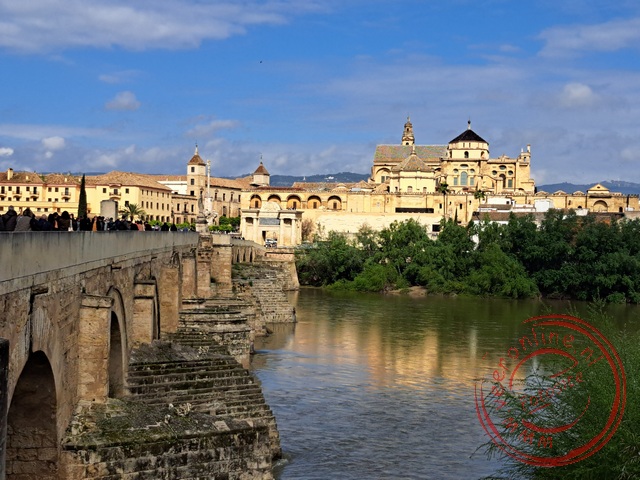
Dag 8 - Saturday, March 21, 2026I walk from the seventh floor to breakfast on the second floor. Everywhere, people with suitcases are waiting for the elevators. After breakfast, I decide to take my luggage to the lift early. To my surprise, the elevator arrives immediately, so I end up downstairs fifteen minutes early. Most likely, the other tour groups have already left. At the bus, I meet the new driver, Mamola. The bus is still the same blue one with the TUI logo. We leave Seville and drive toward Córdoba, a journey of about two hours. Just before Córdoba, we stop for a restroom break and coffee. By late morning, we arrive in Córdoba. We get off near the river, where the view of the Roman bridge and the Mezquita Cathedral is stunning. Sunlight breaks through the clouds and shines onto the mosque-cathedral. The bridge is busy with people. I follow the flow of the crowd into the historic center of Córdoba, paying extra attention to my valuables, as it’s easy to lose something in such a crowd. At one o’clock, we have a guided tour in English through the cathedral and the Jewish quarter. Until then, we are free to explore Córdoba on our own. I wander through the narrow streets of the Jewish quarter.
Here too, the Jewish population was expelled or forced to convert to Catholicism in 1492. In one of the streets, we find the old synagogue from 1315. It is one of only three remaining historic synagogues in Spain—the other two are in Toledo. The prayer room is small and rectangular, with high walls completely covered in beautiful Mudéjar-style stucco. Fortunately, we manage to find our way back through the maze-like streets of the Jewish quarter. Near the cathedral, I order a sandwich. I choose “Rabo de Toro,” a local dish made from bull or ox tail. It tastes surprisingly good. At the church, I meet Antonio, our guide for the tour. He explains in English that Córdoba was once the capital of Andalusia, when the region covered almost all of present-day Portugal and Spain. In the 7th century, the Moors arrived in the area.

They built the largest mosque of its time in Córdoba, which was expanded several times and could hold up to 40,000 worshippers. In the 13th century, the Muslims were expelled and Córdoba returned to Christian rule. The mosque was converted into a Catholic church, and a cathedral was built in the middle of it—a process that took more than 200 years. When I enter the Mezquita, I am impressed by the countless red-and-white arches made from different types of stone. Antonio explains that the columns date back to Roman times and were reused. The space is immense. On the other side lies the mihrab, the former Islamic prayer niche. Finally, we visit the cathedral altar and choir in the center of the complex. It is both a magnificent and surreal combination—something I have never seen before. After the visit, Antonio leads us through the streets of the Jewish quarter. We pass lively terraces and narrow alleyways and eventually return to the synagogue.

At the church, we say goodbye to the guide. We still have some free time to explore. At a terrace, we have lunch. I choose Flamenquín, a kind of rolled cordon bleu filled with Rabo de Toro—a typical local dish. It tastes good but is also quite unusual, especially the combination of slow-cooked meat filling with the fried outer layer. A local beer goes well with it. At five o’clock, we return to the bus. We drive about two hours to the hotel in Baeza. The bus cannot enter the historic center, so we walk to the hotel in a few minutes. Our luggage is brought by a small van. The hotel is centrally located, but the rooms are small. I can’t fit my travel bag properly, so I move the bed against the wall to create space. I can hardly imagine this is or ever was a four-star hotel. It is already past seven, so we decide to quickly go out for dinner in town. Along the square there are several restaurants. I choose Flamenquín again, but this time with a cheese filling. I think I prefer this version—especially with a local beer.
 Spain
Spain 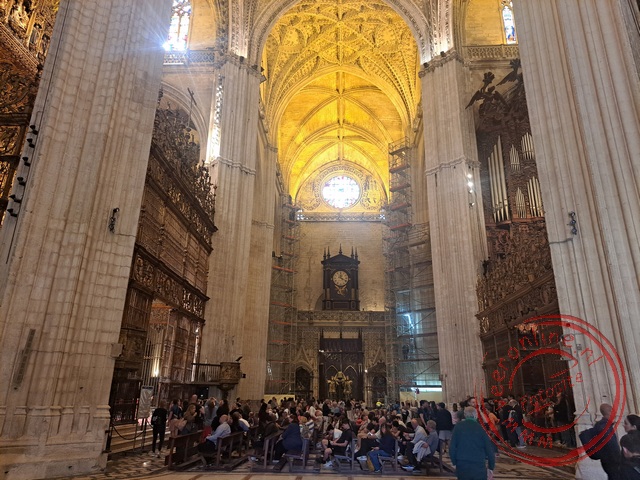 Inside the cathedral of Seville
 The IglesiaConvento San Gregorio on Plaza San Gregorio
 The beautiful reflections in the Moorish Alhambra palace
 The cathedral of beda is unfortunately closed
Travelogue Roundtrip Andalusia
Dag 2 | Spain > Historic bridge of Ronda
Dag 3 | Spain > The old city of Cádiz
Dag 4 | Gibraltar > The microstate of Gibraltar
Dag 5 | Spain > Arcos de la Frontera
Dag 6 | Spain > The Cathedral of Seville
Dag 7 | Spain > Cycling tour through Seville
Dag 8 | Spain > The Mezquita of Córdoba
Dag 9 | Spain > Baeza and Úbeda
Dag 10 | Spain > The Alhambra of Granada
Dag 11 | Spain > Cave dwellings of Granada
Dag 12 | Spain > A day in Málaga