
154 countries
(and areas)
 - Belize
- Benin
- Bhutan
- Bolivia
- Bonaire
- Bosnia and Herzegovina
- Botswana
- Brazil
- British Virgin Islands
- Brunei
- Bulgaria
- Cambodia
- Canada
- Cape Verde
- Chile
- China
- Costa Rica
- Croatia
- Cuba
- Curacao
- Cyprus
- Czech Republic
- Denmark
- Dominica
- Dominican Republic
- Egypt
- El Salvador
- England
- Estonia
- Eswatini (Swaziland)
- Ethiopia
- Fiji
- Finland
- France
- French Guiana
- Georgia
- Germany
- Gibraltar
- Greece
- Grenada
- Guadeloupe
- Guatemala
- Honduras
- Hong Kong
- Hungary
- Iceland
- India
- Indonesia
- Iran
- Ireland
- Israel
- Italy
- Jamaica
- Japan
- Jordan
- Kazakhstan
- Kenya
- Kosovo
- Kuwait
- Kyrgyzstan
- Laos
- Latvia
- Lebanon
- Lesotho
- Liechtenstein
- Lithuania
- Luxembourg
- Macau
- Madagascar
- Malawi
- Malaysia
- Maldives
- Malta
- Martinique
- Mexico
- Moldova
- Monaco
- Mongolia
- Montenegro
- Morocco
- Mozambique
- Namibia
- Nepal
- Netherlands
- New Zealand
- Nicaragua
- North Macedonia
- Northern Ireland
- Norway
- Oman
- Pakistan
- Palestine
- Peru
- Philippines
- Poland
- Portugal
- Qatar
- Republic of Korea
- Romania
- Russia
- Saint Kitts and Nevis
- Saint Lucia
- Saint Martin
- Saint Vincent and the Grenadines
- San Marino
- São Tomé and Principe
- Saudi Arabia
- Scotland
- Senegal
- Serbia
- Singapore
- Sint Maarten
- Slovakia
- Slovenia
- South Africa
- Spain
- Sri Lanka
- Suriname
- Sweden
- Switzerland
- Tajikistan
- Tanzania
- Thailand
- The Gambia
- Tibet
- Togo
- Transnistria
- Trinidad and Tobago
- Tunisia
- Turkey
- Turkmenistan
- Uganda
- United Arab Emirates
- United States
- Uruguay
- Uzbekistan
- Vatican City
- Vietnam
- Wales
- Zambia
- Zanzibar
- Belize
- Benin
- Bhutan
- Bolivia
- Bonaire
- Bosnia and Herzegovina
- Botswana
- Brazil
- British Virgin Islands
- Brunei
- Bulgaria
- Cambodia
- Canada
- Cape Verde
- Chile
- China
- Costa Rica
- Croatia
- Cuba
- Curacao
- Cyprus
- Czech Republic
- Denmark
- Dominica
- Dominican Republic
- Egypt
- El Salvador
- England
- Estonia
- Eswatini (Swaziland)
- Ethiopia
- Fiji
- Finland
- France
- French Guiana
- Georgia
- Germany
- Gibraltar
- Greece
- Grenada
- Guadeloupe
- Guatemala
- Honduras
- Hong Kong
- Hungary
- Iceland
- India
- Indonesia
- Iran
- Ireland
- Israel
- Italy
- Jamaica
- Japan
- Jordan
- Kazakhstan
- Kenya
- Kosovo
- Kuwait
- Kyrgyzstan
- Laos
- Latvia
- Lebanon
- Lesotho
- Liechtenstein
- Lithuania
- Luxembourg
- Macau
- Madagascar
- Malawi
- Malaysia
- Maldives
- Malta
- Martinique
- Mexico
- Moldova
- Monaco
- Mongolia
- Montenegro
- Morocco
- Mozambique
- Namibia
- Nepal
- Netherlands
- New Zealand
- Nicaragua
- North Macedonia
- Northern Ireland
- Norway
- Oman
- Pakistan
- Palestine
- Peru
- Philippines
- Poland
- Portugal
- Qatar
- Republic of Korea
- Romania
- Russia
- Saint Kitts and Nevis
- Saint Lucia
- Saint Martin
- Saint Vincent and the Grenadines
- San Marino
- São Tomé and Principe
- Saudi Arabia
- Scotland
- Senegal
- Serbia
- Singapore
- Sint Maarten
- Slovakia
- Slovenia
- South Africa
- Spain
- Sri Lanka
- Suriname
- Sweden
- Switzerland
- Tajikistan
- Tanzania
- Thailand
- The Gambia
- Tibet
- Togo
- Transnistria
- Trinidad and Tobago
- Tunisia
- Turkey
- Turkmenistan
- Uganda
- United Arab Emirates
- United States
- Uruguay
- Uzbekistan
- Vatican City
- Vietnam
- Wales
- Zambia
- Zanzibar


Copyright 2004 - 2026
Veeronline.nl Travel Adventures

Home > Spain > Roundtrip Andalusia > Travelogue day 7
Travelogue Roundtrip Andalusia
March 14 - 25, 2026 (12 days)
Spain > Cycling tour through Seville
Dag 7 - Friday, March 20, 2026When I open the curtains, I see from the seventh floor of the hotel that it is raining outside. What a shame, because today I am going on a cycling tour through Seville. The forecasts suggest it may improve somewhat during the day. After breakfast, I go to the metro with a fellow traveller. We take Line 1 to the city centre of Seville and get off at San Sebastián station. From there, it is a little over ten minutes’ walk to Baja bike tours. We are a bit early and the shop is not yet open, so we get coffee at a café opposite. Many locals also come here for coffee. There turn out to be more participants in the cycling tour than I expected, so the group is split in two. We are placed with Philippe, a Belgian who has been living in Seville for seven years. It is still lightly raining, so I fasten my rain jacket properly. Philippe warns us that traditional residents of Seville are not fond of cyclists. We should keep this in mind and follow traffic rules carefully. We will ride a route around the city centre itself, as the centre is a pedestrian zone where cycling is not allowed. The first stop is the luxurious Hotel Alfonso XIII, where King Willem-Alexander and Queen Máxima once met.
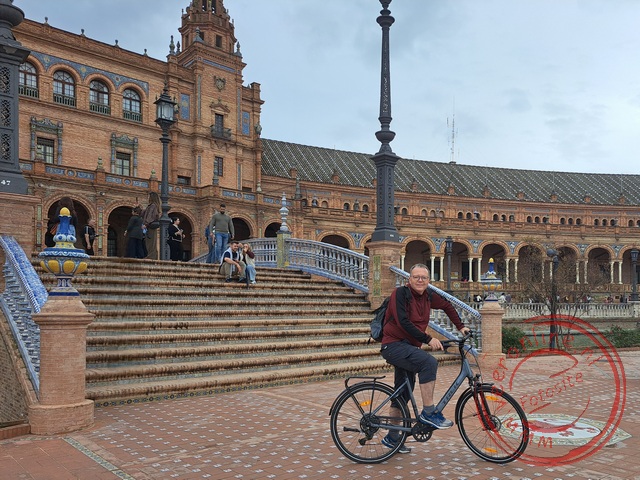
Via the Torre del Oro (Golden Tower), we reach the Alfonso XIII canal, a branch of the Guadalquivir River. The bullring, Plaza de Toros, is still used for bullfighting. On the opposite riverbank, we see the 180-metre Torre Sevilla. We cross the river and enter the Triana district, a lively neighbourhood on the west side of the river. At the Mercado de Triana, we stop for coffee. By the time we continue cycling, it has stopped raining and the sun begins to break through the clouds. I take off my rain jacket. We head towards the cathedral. It is busy on the streets, and the bike lane is often occupied by pedestrians. The markings on the ground are not very clear, so we proceed carefully to the cathedral. With the bikes in hand, we walk around the Archivo General de Indias and along the Alcázar palace. Finally, we cycle into María Luisa Park, where the 1929 Expo was held. We arrive at Plaza de España, where we take a short break at this historic site. After more than three hours, we return to the starting point. We thank Philippe for the enjoyable tour through Seville. Walking, we head towards the Macarena district. Through the narrow, winding streets of the former Jewish quarter, we return to the Church of El Salvador. From there, we still recognise the route to the Setas de Sevilla, the “Mushrooms of Seville” square.

In a side street, we find a free table on a terrace and order drinks and various tapas dishes—a good choice. After a late lunch, we continue walking towards the Hercules Columns at Alameda de Hércules square. These columns were placed here in 1574, with statues of Hercules and Caesar added later. Eventually, we reach the northern city gate, where a section of the old city wall is still preserved. Across the street stands the Parliament of Andalusia. We walk down to the Guadalquivir River and follow the riverbank back towards the city centre. Rowers are training on the river for competitions. After a few kilometres, we cross the bridge into the Triana district, passing the market hall where we had coffee this morning. Through the lively streets, we arrive at Plaza de Cuba, where there is also a metro station on Line 1. It is four o’clock in the afternoon. We decide to return to the hotel and pick up a sandwich from a department store for the evening. With two takeaway sandwiches and a can of cola, I head back to my hotel room. A relaxing evening after two wonderful days in Seville.
 Spain
Spain 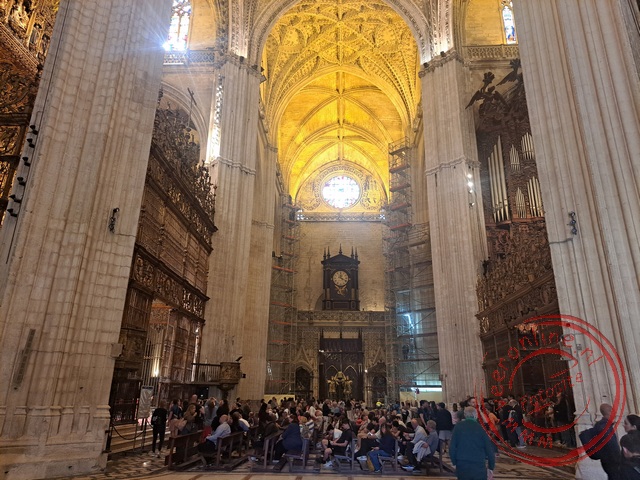 Inside the cathedral of Seville
 The IglesiaConvento San Gregorio on Plaza San Gregorio
 The beautiful reflections in the Moorish Alhambra palace
 The cathedral of beda is unfortunately closed
Travelogue Roundtrip Andalusia
Dag 2 | Spain > Historic bridge of Ronda
Dag 3 | Spain > The old city of Cádiz
Dag 4 | Gibraltar > The microstate of Gibraltar
Dag 5 | Spain > Arcos de la Frontera
Dag 6 | Spain > The Cathedral of Seville
Dag 7 | Spain > Cycling tour through Seville
Dag 8 | Spain > The Mezquita of Córdoba
Dag 9 | Spain > Baeza and Úbeda
Dag 10 | Spain > The Alhambra of Granada
Dag 11 | Spain > Cave dwellings of Granada
Dag 12 | Spain > A day in Málaga