
154 countries
(and areas)
 - Belize
- Benin
- Bhutan
- Bolivia
- Bonaire
- Bosnia and Herzegovina
- Botswana
- Brazil
- British Virgin Islands
- Brunei
- Bulgaria
- Cambodia
- Canada
- Cape Verde
- Chile
- China
- Costa Rica
- Croatia
- Cuba
- Curacao
- Cyprus
- Czech Republic
- Denmark
- Dominica
- Dominican Republic
- Egypt
- El Salvador
- England
- Estonia
- Eswatini (Swaziland)
- Ethiopia
- Fiji
- Finland
- France
- French Guiana
- Georgia
- Germany
- Gibraltar
- Greece
- Grenada
- Guadeloupe
- Guatemala
- Honduras
- Hong Kong
- Hungary
- Iceland
- India
- Indonesia
- Iran
- Ireland
- Israel
- Italy
- Jamaica
- Japan
- Jordan
- Kazakhstan
- Kenya
- Kosovo
- Kuwait
- Kyrgyzstan
- Laos
- Latvia
- Lebanon
- Lesotho
- Liechtenstein
- Lithuania
- Luxembourg
- Macau
- Madagascar
- Malawi
- Malaysia
- Maldives
- Malta
- Martinique
- Mexico
- Moldova
- Monaco
- Mongolia
- Montenegro
- Morocco
- Mozambique
- Namibia
- Nepal
- Netherlands
- New Zealand
- Nicaragua
- North Macedonia
- Northern Ireland
- Norway
- Oman
- Pakistan
- Palestine
- Peru
- Philippines
- Poland
- Portugal
- Qatar
- Republic of Korea
- Romania
- Russia
- Saint Kitts and Nevis
- Saint Lucia
- Saint Martin
- Saint Vincent and the Grenadines
- San Marino
- São Tomé and Principe
- Saudi Arabia
- Scotland
- Senegal
- Serbia
- Singapore
- Sint Maarten
- Slovakia
- Slovenia
- South Africa
- Spain
- Sri Lanka
- Suriname
- Sweden
- Switzerland
- Tajikistan
- Tanzania
- Thailand
- The Gambia
- Tibet
- Togo
- Transnistria
- Trinidad and Tobago
- Tunisia
- Turkey
- Turkmenistan
- Uganda
- United Arab Emirates
- United States
- Uruguay
- Uzbekistan
- Vatican City
- Vietnam
- Wales
- Zambia
- Zanzibar
- Belize
- Benin
- Bhutan
- Bolivia
- Bonaire
- Bosnia and Herzegovina
- Botswana
- Brazil
- British Virgin Islands
- Brunei
- Bulgaria
- Cambodia
- Canada
- Cape Verde
- Chile
- China
- Costa Rica
- Croatia
- Cuba
- Curacao
- Cyprus
- Czech Republic
- Denmark
- Dominica
- Dominican Republic
- Egypt
- El Salvador
- England
- Estonia
- Eswatini (Swaziland)
- Ethiopia
- Fiji
- Finland
- France
- French Guiana
- Georgia
- Germany
- Gibraltar
- Greece
- Grenada
- Guadeloupe
- Guatemala
- Honduras
- Hong Kong
- Hungary
- Iceland
- India
- Indonesia
- Iran
- Ireland
- Israel
- Italy
- Jamaica
- Japan
- Jordan
- Kazakhstan
- Kenya
- Kosovo
- Kuwait
- Kyrgyzstan
- Laos
- Latvia
- Lebanon
- Lesotho
- Liechtenstein
- Lithuania
- Luxembourg
- Macau
- Madagascar
- Malawi
- Malaysia
- Maldives
- Malta
- Martinique
- Mexico
- Moldova
- Monaco
- Mongolia
- Montenegro
- Morocco
- Mozambique
- Namibia
- Nepal
- Netherlands
- New Zealand
- Nicaragua
- North Macedonia
- Northern Ireland
- Norway
- Oman
- Pakistan
- Palestine
- Peru
- Philippines
- Poland
- Portugal
- Qatar
- Republic of Korea
- Romania
- Russia
- Saint Kitts and Nevis
- Saint Lucia
- Saint Martin
- Saint Vincent and the Grenadines
- San Marino
- São Tomé and Principe
- Saudi Arabia
- Scotland
- Senegal
- Serbia
- Singapore
- Sint Maarten
- Slovakia
- Slovenia
- South Africa
- Spain
- Sri Lanka
- Suriname
- Sweden
- Switzerland
- Tajikistan
- Tanzania
- Thailand
- The Gambia
- Tibet
- Togo
- Transnistria
- Trinidad and Tobago
- Tunisia
- Turkey
- Turkmenistan
- Uganda
- United Arab Emirates
- United States
- Uruguay
- Uzbekistan
- Vatican City
- Vietnam
- Wales
- Zambia
- Zanzibar


Copyright 2004 - 2026
Veeronline.nl Travel Adventures

Home > Spain > Roundtrip Andalusia > Travelogue day 2
Travelogue Roundtrip Andalusia
March 14 - 25, 2026 (12 days)
Spain > Historic bridge of Ronda
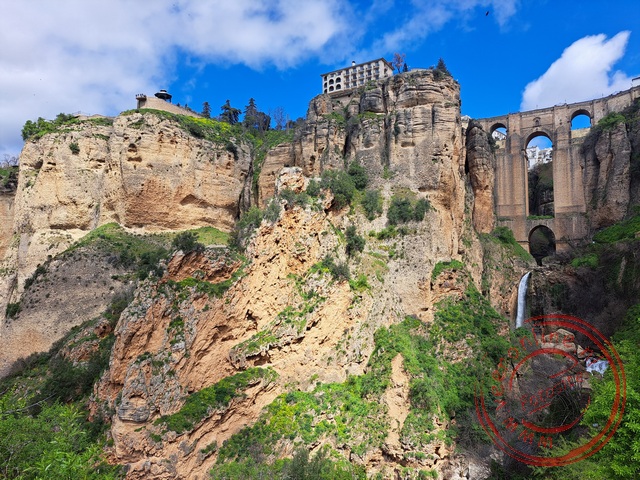
Dag 2 - Sunday, March 15, 2026I wake up startled by the alarm. I’ve slept for more than nine hours. At the breakfast buffet, I meet my fellow travellers again. Fortunately, the group is not very large, and I have been able to remember all the names. Just before nine o’clock, I check out and bring my luggage to the bus. Miguel, the driver, places my suitcase in the luggage compartment. Today we drive to Ronda, a journey of about an hour and a half. Due to its location on a steep rock, Ronda has been an important settlement since ancient times, as it was difficult to conquer. From the bus station, it is about a fifteen-minute walk to the old centre of Ronda and the famous Puente Nuevo. Before entering the city, we stop for coffee. From the terrace, I have a beautiful view over the El Tajo gorge, which cuts through Ronda. However, it is too chilly today to sit outside, so we go inside instead. With a fellow traveller, I have selected several sights we want to visit in Ronda. First, we cross the bridge. The historic bridge connects the old town of Ronda with the surrounding area. It is 90 metres high and was completed in 1751. At the time, it was the highest bridge in the world. On the Ronda rock, we turn left and wander through narrow, charming streets with mostly white houses. Many buildings now contain shops and restaurants aimed at tourists.
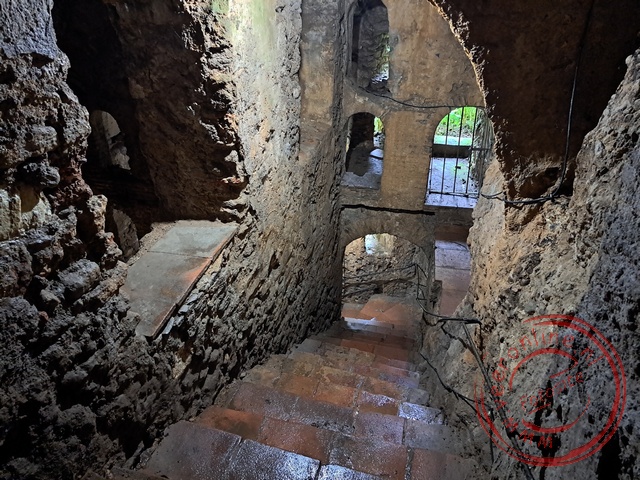
We arrive at the Casa del Rey Moro, where there is a water mine. Through this shaft, water was once drawn from the river. We can descend to the river via a staircase carved into the rock. Carefully, we make our way down the wet stone steps. It is quite special to walk here. Sixty metres below, we reach the Guadalevín River at the bottom of the El Tajo gorge. The downside is that we have to climb back up the same way. Just outside the historic centre, we find the Arab Baths. These date back to the 13th century. The structure is well preserved, including the domed roof. In one of the rooms, a video shows what the bathhouse must have looked like in the past. Besides the bathing areas, there were also massage and relaxation rooms. On the other side of the gorge, we climb back up through a small park. I can see where we were earlier at the water shaft. Unfortunately, the park entrance appears to be closed, so we have to descend again and take a neighbouring street up instead. Why the gate is closed remains unclear. We pass the Puente Nuevo again. Through idyllic streets, we walk towards the church. We meet some fellow travellers on a terrace who tell us that the church will remain closed until two o’clock, as it is Sunday. We join them for lunch.
I order a bowl of soup and a cola. Since we also want to visit a viewpoint, we decide to do that after lunch first. On the other side of the centre, we descend via a zigzag path to the Arco de Cristo. From here, we have a view of both the massive cliffs of Ronda and the historic bridge. We are lucky—the sun has come out and is shining on the town. We must climb back up the same route again. We have already done quite a bit of elevation today. We walk back to the Iglesia de Santa María la Mayor. Construction of this church took no less than 200 years. We can visit the church, including a tour of the roof—at least that is what I think I understand at the ticket counter. The interior is beautiful. Inside stands the statue of the Virgin Mary, “Nuestra Señora de la Paz,” which attracts many pilgrims. At the back of the church, strong young men are practising carrying the procession platform, which will be used in the streets in a few weeks. We cannot find the access to the roof. We do find a staircase leading to a balcony above the entrance—could this be it? When we ask the cashier, it turns out the climb starts at the back of the church. We go back inside, but at first we cannot find the entrance.
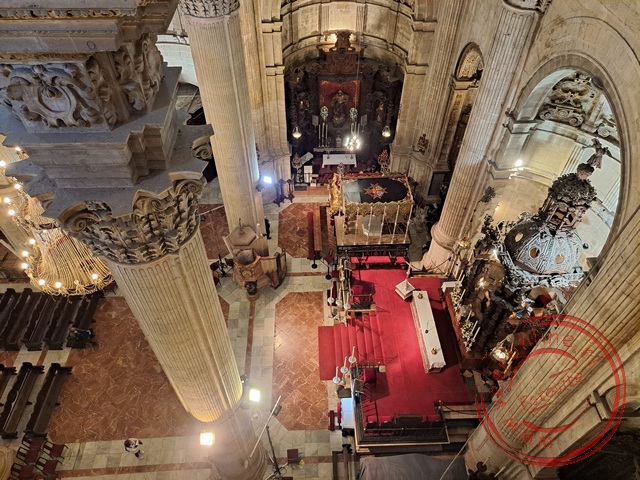
After asking again, a door is opened for us. Through a stone spiral staircase, we reach the roof of the church. From here, we have views of Ronda in all directions. There is also a small door marked “open” in four languages. It leads to a tiny balcony high inside the church, where we can look down at the altar and the interior from above. Stunning. We have had a wonderful tour of Ronda. We return to the bullring, which is the meeting point. Exactly at three o’clock, everyone is back. Together, we walk to the bus. From Ronda, it is about a two-hour drive to Jerez de la Frontera. The name of the city refers to the former border between the Spanish and Moorish kingdoms. We arrive at the hotel, where we will stay for the next three nights—very welcome. I still have some time before meeting my fellow travellers for dinner, so I go to the gym. In a relatively small room there are exercise machines and weights. I warm up and do a few exercises. Around eight o’clock, we go out to look for a restaurant. According to Google, there should be four restaurants in a side street, but only one is open. The others are either closed or seem to have been shut for a long time. The open restaurant turns out to be a Mexican place. We order several dishes, and everything tastes surprisingly good, especially with a Mexican Corona beer.
 Spain
Spain 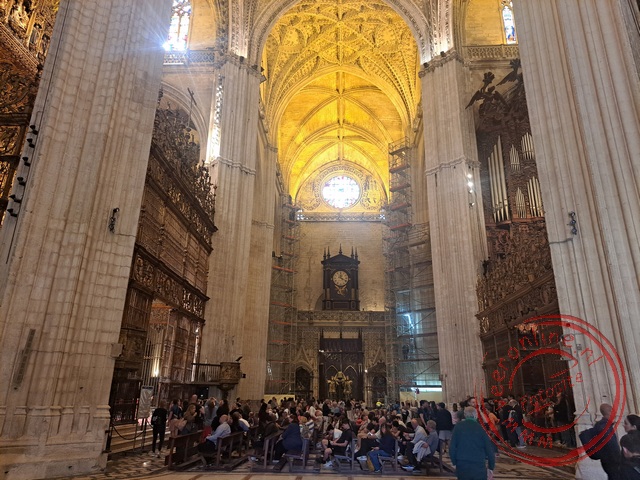 Inside the cathedral of Seville
 The IglesiaConvento San Gregorio on Plaza San Gregorio
 The beautiful reflections in the Moorish Alhambra palace
 The cathedral of beda is unfortunately closed
Travelogue Roundtrip Andalusia
Dag 2 | Spain > Historic bridge of Ronda
Dag 3 | Spain > The old city of Cádiz
Dag 4 | Gibraltar > The microstate of Gibraltar
Dag 5 | Spain > Arcos de la Frontera
Dag 6 | Spain > The Cathedral of Seville
Dag 7 | Spain > Cycling tour through Seville
Dag 8 | Spain > The Mezquita of Córdoba
Dag 9 | Spain > Baeza and Úbeda
Dag 10 | Spain > The Alhambra of Granada
Dag 11 | Spain > Cave dwellings of Granada
Dag 12 | Spain > A day in Málaga