
154 countries
(and areas)
 - Belize
- Benin
- Bhutan
- Bolivia
- Bonaire
- Bosnia and Herzegovina
- Botswana
- Brazil
- British Virgin Islands
- Brunei
- Bulgaria
- Cambodia
- Canada
- Cape Verde
- Chile
- China
- Costa Rica
- Croatia
- Cuba
- Curacao
- Cyprus
- Czech Republic
- Denmark
- Dominica
- Dominican Republic
- Egypt
- El Salvador
- England
- Estonia
- Eswatini (Swaziland)
- Ethiopia
- Fiji
- Finland
- France
- French Guiana
- Georgia
- Germany
- Gibraltar
- Greece
- Grenada
- Guadeloupe
- Guatemala
- Honduras
- Hong Kong
- Hungary
- Iceland
- India
- Indonesia
- Iran
- Ireland
- Israel
- Italy
- Jamaica
- Japan
- Jordan
- Kazakhstan
- Kenya
- Kosovo
- Kuwait
- Kyrgyzstan
- Laos
- Latvia
- Lebanon
- Lesotho
- Liechtenstein
- Lithuania
- Luxembourg
- Macau
- Madagascar
- Malawi
- Malaysia
- Maldives
- Malta
- Martinique
- Mexico
- Moldova
- Monaco
- Mongolia
- Montenegro
- Morocco
- Mozambique
- Namibia
- Nepal
- Netherlands
- New Zealand
- Nicaragua
- North Macedonia
- Northern Ireland
- Norway
- Oman
- Pakistan
- Palestine
- Peru
- Philippines
- Poland
- Portugal
- Qatar
- Republic of Korea
- Romania
- Russia
- Saint Kitts and Nevis
- Saint Lucia
- Saint Martin
- Saint Vincent and the Grenadines
- San Marino
- São Tomé and Principe
- Saudi Arabia
- Scotland
- Senegal
- Serbia
- Singapore
- Sint Maarten
- Slovakia
- Slovenia
- South Africa
- Spain
- Sri Lanka
- Suriname
- Sweden
- Switzerland
- Tajikistan
- Tanzania
- Thailand
- The Gambia
- Tibet
- Togo
- Transnistria
- Trinidad and Tobago
- Tunisia
- Turkey
- Turkmenistan
- Uganda
- United Arab Emirates
- United States
- Uruguay
- Uzbekistan
- Vatican City
- Vietnam
- Wales
- Zambia
- Zanzibar
- Belize
- Benin
- Bhutan
- Bolivia
- Bonaire
- Bosnia and Herzegovina
- Botswana
- Brazil
- British Virgin Islands
- Brunei
- Bulgaria
- Cambodia
- Canada
- Cape Verde
- Chile
- China
- Costa Rica
- Croatia
- Cuba
- Curacao
- Cyprus
- Czech Republic
- Denmark
- Dominica
- Dominican Republic
- Egypt
- El Salvador
- England
- Estonia
- Eswatini (Swaziland)
- Ethiopia
- Fiji
- Finland
- France
- French Guiana
- Georgia
- Germany
- Gibraltar
- Greece
- Grenada
- Guadeloupe
- Guatemala
- Honduras
- Hong Kong
- Hungary
- Iceland
- India
- Indonesia
- Iran
- Ireland
- Israel
- Italy
- Jamaica
- Japan
- Jordan
- Kazakhstan
- Kenya
- Kosovo
- Kuwait
- Kyrgyzstan
- Laos
- Latvia
- Lebanon
- Lesotho
- Liechtenstein
- Lithuania
- Luxembourg
- Macau
- Madagascar
- Malawi
- Malaysia
- Maldives
- Malta
- Martinique
- Mexico
- Moldova
- Monaco
- Mongolia
- Montenegro
- Morocco
- Mozambique
- Namibia
- Nepal
- Netherlands
- New Zealand
- Nicaragua
- North Macedonia
- Northern Ireland
- Norway
- Oman
- Pakistan
- Palestine
- Peru
- Philippines
- Poland
- Portugal
- Qatar
- Republic of Korea
- Romania
- Russia
- Saint Kitts and Nevis
- Saint Lucia
- Saint Martin
- Saint Vincent and the Grenadines
- San Marino
- São Tomé and Principe
- Saudi Arabia
- Scotland
- Senegal
- Serbia
- Singapore
- Sint Maarten
- Slovakia
- Slovenia
- South Africa
- Spain
- Sri Lanka
- Suriname
- Sweden
- Switzerland
- Tajikistan
- Tanzania
- Thailand
- The Gambia
- Tibet
- Togo
- Transnistria
- Trinidad and Tobago
- Tunisia
- Turkey
- Turkmenistan
- Uganda
- United Arab Emirates
- United States
- Uruguay
- Uzbekistan
- Vatican City
- Vietnam
- Wales
- Zambia
- Zanzibar


Copyright 2004 - 2026
Veeronline.nl Travel Adventures
Home > South Africa > South Africa Swaziland Lesotho > Travelogue day 17
Travelogue South Africa Swaziland Lesotho
16 November 9 December 2007 (24 days)
South Africa > The Robberg at Plettenberg Bay
Dag 17 - Sunday, December 2, 2007The sun shines into our room early in the morning. We have breakfast on our terrace with a view of the ocean. A strong wind is blowing now, and whitecaps are forming on the water. This makes the search for a lingering whale rather difficult. At a quarter to nine, we leave with a small group for Plettenberg Bay to go on a whale-watching trip by boat. It’s about a forty-five-minute drive.

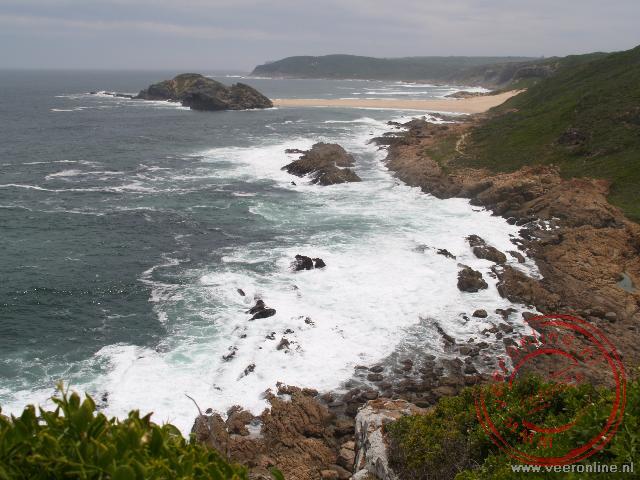
When we arrive, we find out the wind is too strong for the trip—actually, much too strong. The previous group this morning suffered from the heavy waves, and worse still, they didn’t see anything. We had thought we wouldn’t have to pay if we didn’t see any whales, but that turns out to have been one of Gerhardt’s jokes. Since the owner advises us not to go, we decide to skip the trip. Part of the group goes into the town of Plettenberg Bay, while we go for a hike. We get dropped off at the Robberg Peninsula, a nature reserve near Plettenberg Bay known for its beautiful scenery, rock formations, and many seals. The full circular trail takes about four hours. Gerhardt once walked it in two hours and twenty minutes, so according to him, we should manage that too. He suggests we walk back along the beach afterward to the parking area by the large hotel. We expect to arrive there by two o’clock but agree to meet at three, just to be safe. The trail climbs over the rocks right from the start, offering beautiful views of the bay and Plettenberg.

We scan the water for whales but spot none. After about forty-five minutes, we see movement in the sea—dozens of seals. As we get closer, hundreds are basking on the rocks, and many more are swimming and playing in the water. The smell is intense. We estimate around a thousand seals in total. After about two hours of climbing, scrambling, and descending, we reach the tip of Robberg. The hike is taking longer than expected, but we’ll deal with that later. The path then leads down along the rocky shore. Near an old fisherman’s hut, we stop for lunch, sharing our food as best we can. Then the trail goes steeply uphill again, sometimes forcing us to climb on hands and feet. A few times we lose sight of the route markers, only to find them high above us. Despite the effort, the trail is stunning. At a quarter to three, we arrive back at the parking lot, exhausted. It’s been over four hours. We’re running late and can’t reach Gerhardt by phone, so we hurry toward the beach. Following his advice, we take the first road to the right, supposedly leading to the beach—but it runs behind fenced houses with no access. When the pavement turns to sand, we grow suspicious. Eventually, we reach a gate marked “private property.
” Seeing it open on the other side, we decide to walk through. The next road ends too, but finally, we find a wooden footbridge leading through the dunes—after about a hundred meters, it opens onto the beach. Finally! It’s now 3:15, and we still have a long walk along the shore. The others are surely waiting. We take off our shoes and pick up the pace. At 3:50, we reach the bus. Gerhardt is relieved to see us; he had been worried someone might have fallen. In the evening, we plan a group barbecue. Everyone buys some meat at the Spar, but we can’t get any wine—Spar isn’t allowed to sell alcohol on Sundays. On the way back to Tsitsikamma, it starts to rain heavily. Gerhardt worries whether he can light the barbecue in the rain. We manage to buy a bottle of wine at the campsite shop. If needed, we can cook indoors. With a bit of oil, the barbecue finally catches fire, and under the awning, we stay dry. It’s a bit improvised, but the food tastes great.
 Lesotho
  The sun sets in Lesotho
 The water jug balanced on the head
 Everyone wants to appear in the photos at the school near Malealea
 South Africa
  On the way back we are caught in a heavy rain and thunderstorm
Travelogue South Africa Swaziland Lesotho
Dag 2 | South Africa > On the way to Graskop
Dag 3 | South Africa > Fog on the Panorama Route
Dag 4 | South Africa > Kruger Park
Dag 5 | South Africa > Game drive through Kruger Park
Dag 6 | Eswatini (Swaziland) > On the way to Swaziland
Dag 7 | Eswatini (Swaziland) > Walk through Shewula
Dag 8 | Eswatini (Swaziland) > Severe weather during the night
Dag 9 | South Africa > Hippos in St Lucia Wetlands
Dag 10 | South Africa > On the way to the Drakensberg
Dag 11 | South Africa > Thunderstorm in the mountains
Dag 12 | Lesotho > Bus breakdown…
Dag 13 | Lesotho > Rock paintings of the Bushman
Dag 14 | Lesotho > Hiking to the waterfall
Dag 15 | South Africa > Through the Karoo to Graaff-Reinet
Dag 16 | South Africa > The coast near Port Elizabeth
Dag 17 | South Africa > The Robberg at Plettenberg Bay
Dag 18 | South Africa > The wet Garden Route
Dag 19 | South Africa > The township of Knysna
Dag 20 | South Africa > Overweight during Sinterklaas
Dag 21 | South Africa > Towards Cape Town
Dag 22 | South Africa > Cape of Good Hope
Dag 23 | South Africa > Cape Town from Table Mountain
Dag 24 | South Africa > Back home …