
154 countries
(and areas)
 - Belize
- Benin
- Bhutan
- Bolivia
- Bonaire
- Bosnia and Herzegovina
- Botswana
- Brazil
- British Virgin Islands
- Brunei
- Bulgaria
- Cambodia
- Canada
- Cape Verde
- Chile
- China
- Costa Rica
- Croatia
- Cuba
- Curacao
- Cyprus
- Czech Republic
- Denmark
- Dominica
- Dominican Republic
- Egypt
- El Salvador
- England
- Estonia
- Eswatini (Swaziland)
- Ethiopia
- Fiji
- Finland
- France
- French Guiana
- Georgia
- Germany
- Gibraltar
- Greece
- Grenada
- Guadeloupe
- Guatemala
- Honduras
- Hong Kong
- Hungary
- Iceland
- India
- Indonesia
- Iran
- Ireland
- Israel
- Italy
- Jamaica
- Japan
- Jordan
- Kazakhstan
- Kenya
- Kosovo
- Kuwait
- Kyrgyzstan
- Laos
- Latvia
- Lebanon
- Lesotho
- Liechtenstein
- Lithuania
- Luxembourg
- Macau
- Madagascar
- Malawi
- Malaysia
- Maldives
- Malta
- Martinique
- Mexico
- Moldova
- Monaco
- Mongolia
- Montenegro
- Morocco
- Mozambique
- Namibia
- Nepal
- Netherlands
- New Zealand
- Nicaragua
- North Macedonia
- Northern Ireland
- Norway
- Oman
- Pakistan
- Palestine
- Peru
- Philippines
- Poland
- Portugal
- Qatar
- Republic of Korea
- Romania
- Russia
- Saint Kitts and Nevis
- Saint Lucia
- Saint Martin
- Saint Vincent and the Grenadines
- San Marino
- São Tomé and Principe
- Saudi Arabia
- Scotland
- Senegal
- Serbia
- Singapore
- Sint Maarten
- Slovakia
- Slovenia
- South Africa
- Spain
- Sri Lanka
- Suriname
- Sweden
- Switzerland
- Tajikistan
- Tanzania
- Thailand
- The Gambia
- Tibet
- Togo
- Transnistria
- Trinidad and Tobago
- Tunisia
- Turkey
- Turkmenistan
- Uganda
- United Arab Emirates
- United States
- Uruguay
- Uzbekistan
- Vatican City
- Vietnam
- Wales
- Zambia
- Zanzibar
- Belize
- Benin
- Bhutan
- Bolivia
- Bonaire
- Bosnia and Herzegovina
- Botswana
- Brazil
- British Virgin Islands
- Brunei
- Bulgaria
- Cambodia
- Canada
- Cape Verde
- Chile
- China
- Costa Rica
- Croatia
- Cuba
- Curacao
- Cyprus
- Czech Republic
- Denmark
- Dominica
- Dominican Republic
- Egypt
- El Salvador
- England
- Estonia
- Eswatini (Swaziland)
- Ethiopia
- Fiji
- Finland
- France
- French Guiana
- Georgia
- Germany
- Gibraltar
- Greece
- Grenada
- Guadeloupe
- Guatemala
- Honduras
- Hong Kong
- Hungary
- Iceland
- India
- Indonesia
- Iran
- Ireland
- Israel
- Italy
- Jamaica
- Japan
- Jordan
- Kazakhstan
- Kenya
- Kosovo
- Kuwait
- Kyrgyzstan
- Laos
- Latvia
- Lebanon
- Lesotho
- Liechtenstein
- Lithuania
- Luxembourg
- Macau
- Madagascar
- Malawi
- Malaysia
- Maldives
- Malta
- Martinique
- Mexico
- Moldova
- Monaco
- Mongolia
- Montenegro
- Morocco
- Mozambique
- Namibia
- Nepal
- Netherlands
- New Zealand
- Nicaragua
- North Macedonia
- Northern Ireland
- Norway
- Oman
- Pakistan
- Palestine
- Peru
- Philippines
- Poland
- Portugal
- Qatar
- Republic of Korea
- Romania
- Russia
- Saint Kitts and Nevis
- Saint Lucia
- Saint Martin
- Saint Vincent and the Grenadines
- San Marino
- São Tomé and Principe
- Saudi Arabia
- Scotland
- Senegal
- Serbia
- Singapore
- Sint Maarten
- Slovakia
- Slovenia
- South Africa
- Spain
- Sri Lanka
- Suriname
- Sweden
- Switzerland
- Tajikistan
- Tanzania
- Thailand
- The Gambia
- Tibet
- Togo
- Transnistria
- Trinidad and Tobago
- Tunisia
- Turkey
- Turkmenistan
- Uganda
- United Arab Emirates
- United States
- Uruguay
- Uzbekistan
- Vatican City
- Vietnam
- Wales
- Zambia
- Zanzibar


Copyright 2004 - 2026
Veeronline.nl Travel Adventures

Home > Lebanon > Surprising Lebanon > Travelogue day 4
Travelogue Surprising Lebanon
May 1725 2023 (9 days)
Lebanon > Sidon and Tyre
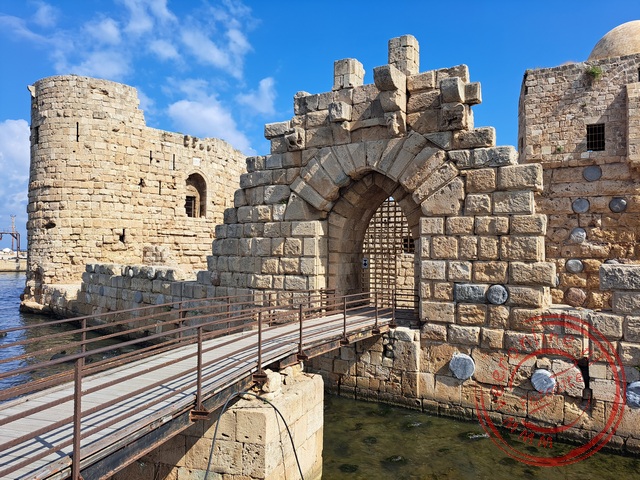
Dag 4 - Saturday, 20 May 2023I meet Rami and driver Allah again at half past eight in front of the hotel. Since we already visited Baalbek yesterday, today we are traveling to Sidon and Tyre—two historic cities in southern Lebanon. We leave Beirut by the same route as two days ago, passing the airport and the Pepsi Cola factory. This time, we do not turn towards the mountains but drive along the coast to Sidon. During the Middle Ages, the Crusaders tried to conquer the Holy Land, and they came to Sidon as well. They built a fort in the sea off the coast to defend the conquered land and repel attacks from the sea. Nowadays, a stone bridge leads to the fort. The light sandstone stands out beautifully against the bright blue sky. The castle has two towers; one of them housed a mosque for a long time, but it has since been lost. A stone staircase takes me up to the tower above the former mosque. From there, I look out over the sea and the buildings of Sidon. This is also where the Sidon souq begins—a maze of narrow streets full of shops and stalls. Walking through the souq with a group of twenty people feels a bit distant, so I decide to wander around on my own. Immediately, I notice I have more contact with the vendors. A man ironing a blazer stops his work to greet me. A boy collecting trash warns me I’m about to enter a dead-end street. The souq is like a labyrinth. Everyone is friendly. A boy of barely ten takes bread out of a fire-heated oven using a wooden board.
I watch his work and decide to buy a roll from him. In the small square in the middle of the souq, I order a drink. At eleven o’clock, I return to the bus where everyone is gradually gathering. From Sidon, it’s about a 45-minute drive to Tyre, further south. Tyre is also an important historic port city. Even before the common era, the Phoenicians built their city on the rocks about 800 meters off the coast. Alexander the Great failed to capture the city after a seven-month siege in 333 BCE. He had the buildings on the mainland demolished and used the rubble to build a causeway to the island, enabling him to conquer the city. Later, the Romans expanded Alexander’s Dam and built Roman temples. The original island of Tyre became a peninsula. On the mainland, they built the largest Roman hippodrome, grandstands, and the triumphal arch of Emperor Hadrian. Behind the arch once ran a Roman road toward the former island, lined with pillars. Just outside the gate lie hundreds of graves—marble sarcophagi and tombs richly decorated. We had already seen some of the finest examples in the National Museum in Beirut. Alongside the hippodrome, part of the original grandstands still stands.

From the platform, you can grasp its size. By bus, we drive to the tip of the peninsula. The area in between is now fully built-up. At the site of ancient Tyre lie the remains of a Roman temple. Some pillars still stand at the water’s edge. Since we are by the sea, it makes sense to have lunch there. At a seaside restaurant, everyone is served fish, accompanied by mezze and salad. We end the afternoon in Maghdouché, where the tower of Our Lady of Mantara stands. The tower was built on the spot where the Virgin Mary waited for Jesus, who preached in Sidon. I climb the 28-meter-high tower. At the top stands an over eight-meter-tall statue of Mary holding a child. From the summit, I have a panoramic view of Sidon, the Mediterranean Sea, and citrus orchards in the valley. Below me, I can also see the Greek Catholic cathedral. Pilgrims come here to pray. The church is modernly designed. In the cave where Mary is said to have waited, a small chapel has been set up. Since people pray here, we are allowed to take a look in small groups. In the late afternoon, we drive back to Beirut. We arrive in time for a drink. In the evening, we walk to the boulevard. By the harbor is the Waterfront, an area with upscale hospitality.
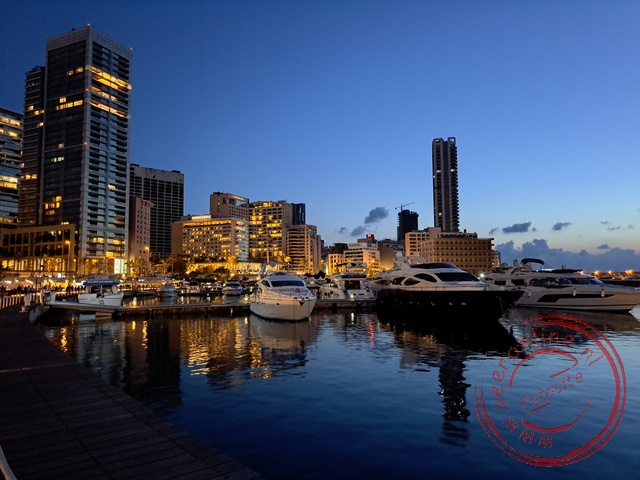
We sit down at Babel Bay, a restaurant known for its good fish dishes. The salmon tartare tastes delicious but is quite expensive—a combination I don’t like. I hadn’t planned on this and have to borrow some dollars from fellow travelers when paying the bill. One travel companion recommended visiting the rooftop bar Iris, which offers sea views. The peninsula where the bar is located was almost completely destroyed in the harbor explosion. Nowadays, trendy clubs and lounge bars are there. Outside the Iris bar, many Ferraris and Lamborghinis are parked, and a line has formed at the entrance. A security guard explains that you can buy a table inside. That’s a bit too much for us, so we decide not to go in. We walk back to the hotel. In my room, I check the menu of the Iris bar: a bottle of wine costs between $100 and $300, cocktails around $30. A simple Almaza beer is $6. I’m glad I didn’t go inside.
 Lebanon
  The walls and ceilings are covered with carved wood
 The citadel of Tripoli
 The impressive Mohammed AlIman Mosque at Martyrs Square
 The colorful letters of Beirut
Travelogue Surprising Lebanon
Dag 2 | Lebanon > The Beiteddine Palace
Dag 3 | Lebanon > The Baalbek archaeological site
Dag 4 | Lebanon > Sidon and Tyre
Dag 5 | Lebanon > Wandering through Beirut
Dag 6 | Lebanon > The Lebanese Cedar Trees
Dag 7 | Lebanon > The Jeita Grottoes
Dag 8 | Lebanon > The last day in Byblos
Dag 9 | Lebanon > Waiting for the luggage