
154 countries
(and areas)
 - Belize
- Benin
- Bhutan
- Bolivia
- Bonaire
- Bosnia and Herzegovina
- Botswana
- Brazil
- British Virgin Islands
- Brunei
- Bulgaria
- Cambodia
- Canada
- Cape Verde
- Chile
- China
- Costa Rica
- Croatia
- Cuba
- Curacao
- Cyprus
- Czech Republic
- Denmark
- Dominica
- Dominican Republic
- Egypt
- El Salvador
- England
- Estonia
- Eswatini (Swaziland)
- Ethiopia
- Fiji
- Finland
- France
- French Guiana
- Georgia
- Germany
- Gibraltar
- Greece
- Grenada
- Guadeloupe
- Guatemala
- Honduras
- Hong Kong
- Hungary
- Iceland
- India
- Indonesia
- Iran
- Ireland
- Israel
- Italy
- Jamaica
- Japan
- Jordan
- Kazakhstan
- Kenya
- Kosovo
- Kuwait
- Kyrgyzstan
- Laos
- Latvia
- Lebanon
- Lesotho
- Liechtenstein
- Lithuania
- Luxembourg
- Macau
- Madagascar
- Malawi
- Malaysia
- Maldives
- Malta
- Martinique
- Mexico
- Moldova
- Monaco
- Mongolia
- Montenegro
- Morocco
- Mozambique
- Namibia
- Nepal
- Netherlands
- New Zealand
- Nicaragua
- North Macedonia
- Northern Ireland
- Norway
- Oman
- Pakistan
- Palestine
- Peru
- Philippines
- Poland
- Portugal
- Qatar
- Republic of Korea
- Romania
- Russia
- Saint Kitts and Nevis
- Saint Lucia
- Saint Martin
- Saint Vincent and the Grenadines
- San Marino
- São Tomé and Principe
- Saudi Arabia
- Scotland
- Senegal
- Serbia
- Singapore
- Sint Maarten
- Slovakia
- Slovenia
- South Africa
- Spain
- Sri Lanka
- Suriname
- Sweden
- Switzerland
- Tajikistan
- Tanzania
- Thailand
- The Gambia
- Tibet
- Togo
- Transnistria
- Trinidad and Tobago
- Tunisia
- Turkey
- Turkmenistan
- Uganda
- United Arab Emirates
- United States
- Uruguay
- Uzbekistan
- Vatican City
- Vietnam
- Wales
- Zambia
- Zanzibar
- Belize
- Benin
- Bhutan
- Bolivia
- Bonaire
- Bosnia and Herzegovina
- Botswana
- Brazil
- British Virgin Islands
- Brunei
- Bulgaria
- Cambodia
- Canada
- Cape Verde
- Chile
- China
- Costa Rica
- Croatia
- Cuba
- Curacao
- Cyprus
- Czech Republic
- Denmark
- Dominica
- Dominican Republic
- Egypt
- El Salvador
- England
- Estonia
- Eswatini (Swaziland)
- Ethiopia
- Fiji
- Finland
- France
- French Guiana
- Georgia
- Germany
- Gibraltar
- Greece
- Grenada
- Guadeloupe
- Guatemala
- Honduras
- Hong Kong
- Hungary
- Iceland
- India
- Indonesia
- Iran
- Ireland
- Israel
- Italy
- Jamaica
- Japan
- Jordan
- Kazakhstan
- Kenya
- Kosovo
- Kuwait
- Kyrgyzstan
- Laos
- Latvia
- Lebanon
- Lesotho
- Liechtenstein
- Lithuania
- Luxembourg
- Macau
- Madagascar
- Malawi
- Malaysia
- Maldives
- Malta
- Martinique
- Mexico
- Moldova
- Monaco
- Mongolia
- Montenegro
- Morocco
- Mozambique
- Namibia
- Nepal
- Netherlands
- New Zealand
- Nicaragua
- North Macedonia
- Northern Ireland
- Norway
- Oman
- Pakistan
- Palestine
- Peru
- Philippines
- Poland
- Portugal
- Qatar
- Republic of Korea
- Romania
- Russia
- Saint Kitts and Nevis
- Saint Lucia
- Saint Martin
- Saint Vincent and the Grenadines
- San Marino
- São Tomé and Principe
- Saudi Arabia
- Scotland
- Senegal
- Serbia
- Singapore
- Sint Maarten
- Slovakia
- Slovenia
- South Africa
- Spain
- Sri Lanka
- Suriname
- Sweden
- Switzerland
- Tajikistan
- Tanzania
- Thailand
- The Gambia
- Tibet
- Togo
- Transnistria
- Trinidad and Tobago
- Tunisia
- Turkey
- Turkmenistan
- Uganda
- United Arab Emirates
- United States
- Uruguay
- Uzbekistan
- Vatican City
- Vietnam
- Wales
- Zambia
- Zanzibar


Copyright 2004 - 2026
Veeronline.nl Travel Adventures

Home > Lebanon > Surprising Lebanon > Travelogue day 5
Travelogue Surprising Lebanon
May 1725 2023 (9 days)
Lebanon > Wandering through Beirut
Dag 5 - Sunday, 21 May 2023While shaving, the lights flicker. It doesn’t take long before the power goes out. Strangely enough, one small light in the bathroom stays on—maybe it has a built-in battery? In Lebanon, the power goes out several times a day, but usually only for a short while before the electricity is restored or a generator kicks in. After a brief interruption, I have power again. Today we have a free day to explore Beirut. Last Thursday, during our city tour, we already visited some of the main sights. Although we walked through the National Museum rather quickly, I don’t feel the need to spend more time there. My plan is to walk westward from the hotel in the Hamra district to the Corniche boulevard along the coast, and then follow the boulevard all the way to the harbor. I’ve arranged to leave at 9:30 with some travel companions—anyone who wants to join is welcome. At 8:15 the alarm wakes me up. Almost simultaneously, there’s a knock at the door. Housekeeping—can they clean the room already? Not yet. Around 8:45, I head to breakfast, hurrying a bit to be ready in time for the walk. At 9:30, a group of eight of us sets off toward Rue Hamra. The shopping street is quiet, with many shops closed on Sunday. We follow it for about two kilometers until we reach the coast. At the Corniche boulevard, I spot the Luna Park amusement park to the left, but since the rides seem closed, we skip it and turn right instead.

Ahead is the Central Military Club, a private club with a private beach, accessible only to those with an annual membership. A fence topped with barbed wire blocks the way. Past the club, near the lighthouse, is a small harbor. As we walk toward it, a young man gestures that this is a military area. It’s unclear whether we’re not allowed to enter at all or simply not allowed to take photos. A man sitting at a nearby terrace explains in English that there’s a military post here, but if we walk around the building, it’s accessible—and there’s also a seaside café worth visiting. We take his advice and sit under parasols, watching waves crash against the rocks. The sea breeze makes it a perfect spot for coffee. After this short break, we continue along the boulevard. Several fishermen stand ankle-deep in the water, while others fish from the promenade. Some curious passers-by ask where we’re from. A Syrian man tells us his wife and children live in Germany, but it’s difficult for him to settle there. A few children approach us, begging for money. At the harbor, large yachts are moored—each worth several million dollars. The gap between rich and poor in Lebanon is striking.
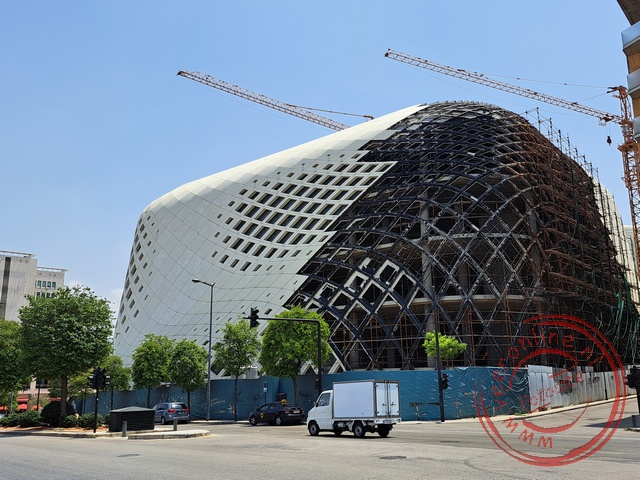
At one of the restaurants along the waterfront, I order a cola. From here, it’s only a short walk to Martyrs’ Square. We pass the Aishti Shopping Center, a luxury mall with no straight angles, designed by David Adjaye. It’s still under repair from the 2020 explosion. We enter the new souq, built in French style after the old city center—damaged during the civil war—was demolished in the 1990s. Today it’s filled mainly with expensive fashion brands, lacking the charm of traditional Arab souqs. This district is what gave Beirut its nickname, “The Paris of the East.” Martyrs’ Square itself is just a large open plaza, but it has played an important role in history, often serving as the starting point for protests and uprisings. At its center stands a monument commemorating those who rose up against the Ottoman regime. At the nearby Mohammad Al-Amin Mosque, we visit the grave of Rafik Hariri, who served multiple terms as Lebanon’s prime minister between 1992 and 2004. He was killed in a 2005 car bombing. Hariri had commissioned the mosque’s construction but did not live to see its opening.

Next to the mosque are the remains of “The Egg,” an unfinished cinema building. Construction began in 1965 but was halted by the outbreak of the civil war ten years later. The round concrete shell still stands abandoned. We continue our walk to Gouraud Street in the Gemmayzeh district, where a street market is in full swing. It’s lively and crowded, stretching for about a kilometer. Finding a lunch spot is tricky—most tables are taken—but at the far end, after turning off the main market street, we find an Italian place. A pizza and a beer for nine dollars—perfect. Even though we’ve already walked quite a bit, we decide to return to the hotel on foot rather than take a taxi. From the market, we head back toward Martyrs’ Square. The navigation app suggests a route past the parliament building, but when we get there, the road is blocked. The detour leads along a busy road, so we cut through a small park where children are playing soccer.

They stop, immediately asking us for money. When we continue without giving any, one of them throws a stick after us—probably just mischief, but it feels unpleasant. We reach Rue Hamra without further trouble. I exchange some euros for dollars at a currency exchange—I don’t want to run short. At 4:00, the hotel comes into view. My phone says I’ve walked 18 kilometers today. I’ve earned a beer on a terrace. In the evening, I join a small group for dinner near the hotel. I’ve walked enough for one day. The place is like a tapas restaurant; from the mezze and tapas menu, we each order two dishes. It’s a bit of a puzzle to fit all the plates on the table, but the food is excellent. The Lebanese cuisine is truly delicious.

 Lebanon
 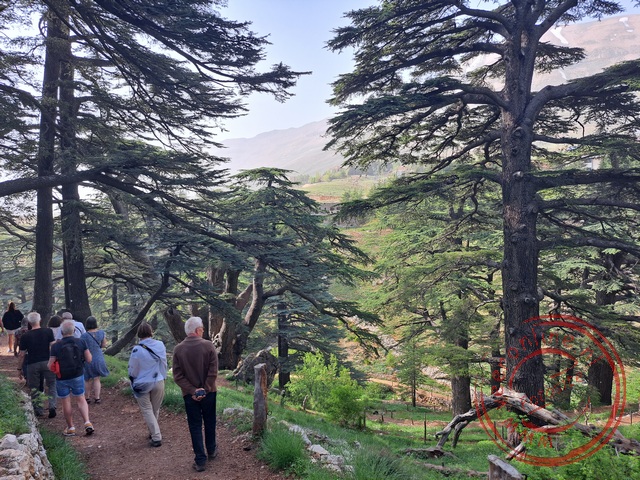 The cedar trees can live up to a thousand years old
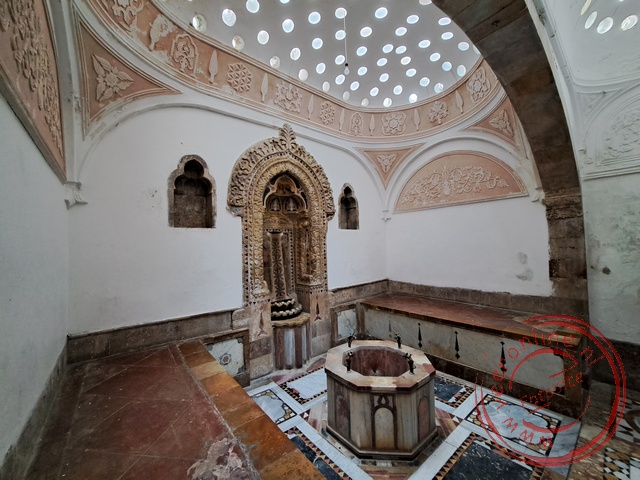 The beautiful bathhouse of the Emir
 The coverings protect against the strong sun
 The luxury Grey hotel is still closed after the huge port explosion in 2020
Travelogue Surprising Lebanon
Dag 2 | Lebanon > The Beiteddine Palace
Dag 3 | Lebanon > The Baalbek archaeological site
Dag 4 | Lebanon > Sidon and Tyre
Dag 5 | Lebanon > Wandering through Beirut
Dag 6 | Lebanon > The Lebanese Cedar Trees
Dag 7 | Lebanon > The Jeita Grottoes
Dag 8 | Lebanon > The last day in Byblos
Dag 9 | Lebanon > Waiting for the luggage