
154 countries
(and areas)
 - Belize
- Benin
- Bhutan
- Bolivia
- Bonaire
- Bosnia and Herzegovina
- Botswana
- Brazil
- British Virgin Islands
- Brunei
- Bulgaria
- Cambodia
- Canada
- Cape Verde
- Chile
- China
- Costa Rica
- Croatia
- Cuba
- Curacao
- Cyprus
- Czech Republic
- Denmark
- Dominica
- Dominican Republic
- Egypt
- El Salvador
- England
- Estonia
- Eswatini (Swaziland)
- Ethiopia
- Fiji
- Finland
- France
- French Guiana
- Georgia
- Germany
- Gibraltar
- Greece
- Grenada
- Guadeloupe
- Guatemala
- Honduras
- Hong Kong
- Hungary
- Iceland
- India
- Indonesia
- Iran
- Ireland
- Israel
- Italy
- Jamaica
- Japan
- Jordan
- Kazakhstan
- Kenya
- Kosovo
- Kuwait
- Kyrgyzstan
- Laos
- Latvia
- Lebanon
- Lesotho
- Liechtenstein
- Lithuania
- Luxembourg
- Macau
- Madagascar
- Malawi
- Malaysia
- Maldives
- Malta
- Martinique
- Mexico
- Moldova
- Monaco
- Mongolia
- Montenegro
- Morocco
- Mozambique
- Namibia
- Nepal
- Netherlands
- New Zealand
- Nicaragua
- North Macedonia
- Northern Ireland
- Norway
- Oman
- Pakistan
- Palestine
- Peru
- Philippines
- Poland
- Portugal
- Qatar
- Republic of Korea
- Romania
- Russia
- Saint Kitts and Nevis
- Saint Lucia
- Saint Martin
- Saint Vincent and the Grenadines
- San Marino
- São Tomé and Principe
- Saudi Arabia
- Scotland
- Senegal
- Serbia
- Singapore
- Sint Maarten
- Slovakia
- Slovenia
- South Africa
- Spain
- Sri Lanka
- Suriname
- Sweden
- Switzerland
- Tajikistan
- Tanzania
- Thailand
- The Gambia
- Tibet
- Togo
- Transnistria
- Trinidad and Tobago
- Tunisia
- Turkey
- Turkmenistan
- Uganda
- United Arab Emirates
- United States
- Uruguay
- Uzbekistan
- Vatican City
- Vietnam
- Wales
- Zambia
- Zanzibar
- Belize
- Benin
- Bhutan
- Bolivia
- Bonaire
- Bosnia and Herzegovina
- Botswana
- Brazil
- British Virgin Islands
- Brunei
- Bulgaria
- Cambodia
- Canada
- Cape Verde
- Chile
- China
- Costa Rica
- Croatia
- Cuba
- Curacao
- Cyprus
- Czech Republic
- Denmark
- Dominica
- Dominican Republic
- Egypt
- El Salvador
- England
- Estonia
- Eswatini (Swaziland)
- Ethiopia
- Fiji
- Finland
- France
- French Guiana
- Georgia
- Germany
- Gibraltar
- Greece
- Grenada
- Guadeloupe
- Guatemala
- Honduras
- Hong Kong
- Hungary
- Iceland
- India
- Indonesia
- Iran
- Ireland
- Israel
- Italy
- Jamaica
- Japan
- Jordan
- Kazakhstan
- Kenya
- Kosovo
- Kuwait
- Kyrgyzstan
- Laos
- Latvia
- Lebanon
- Lesotho
- Liechtenstein
- Lithuania
- Luxembourg
- Macau
- Madagascar
- Malawi
- Malaysia
- Maldives
- Malta
- Martinique
- Mexico
- Moldova
- Monaco
- Mongolia
- Montenegro
- Morocco
- Mozambique
- Namibia
- Nepal
- Netherlands
- New Zealand
- Nicaragua
- North Macedonia
- Northern Ireland
- Norway
- Oman
- Pakistan
- Palestine
- Peru
- Philippines
- Poland
- Portugal
- Qatar
- Republic of Korea
- Romania
- Russia
- Saint Kitts and Nevis
- Saint Lucia
- Saint Martin
- Saint Vincent and the Grenadines
- San Marino
- São Tomé and Principe
- Saudi Arabia
- Scotland
- Senegal
- Serbia
- Singapore
- Sint Maarten
- Slovakia
- Slovenia
- South Africa
- Spain
- Sri Lanka
- Suriname
- Sweden
- Switzerland
- Tajikistan
- Tanzania
- Thailand
- The Gambia
- Tibet
- Togo
- Transnistria
- Trinidad and Tobago
- Tunisia
- Turkey
- Turkmenistan
- Uganda
- United Arab Emirates
- United States
- Uruguay
- Uzbekistan
- Vatican City
- Vietnam
- Wales
- Zambia
- Zanzibar


Copyright 2004 - 2026
Veeronline.nl Travel Adventures

Home > Lebanon > Surprising Lebanon > Travelogue day 3
Travelogue Surprising Lebanon
May 1725 2023 (9 days)
Lebanon > The Baalbek archaeological site
Dag 3 - Friday, 19 May 2023I realize during the night that I didn’t set my alarm clock properly. I was half an hour off. Quickly, I adjust it and turn over again. At half past seven, I see my fellow travelers again at breakfast. Rami has switched the program for today and tomorrow. Today we are going to Baalbek; tomorrow we’ll visit Sidon and Tyre. It is Friday today, the Islamic day of rest, and many shops in the Sidon souq are closed. On Saturday, it is livelier. This means we will not leave Beirut towards the south but head eastward instead. The road quickly climbs uphill. In the distance, we see the Qurnat as Sawda’ mountain, the highest mountain in Lebanon. On the top of this 3,088-meter-high mountain, some snow remains. Baalbek lies in the Bekaa Valley, near the border with Syria. This is the main route between Beirut and Damascus, Rami explains. Because Damascus airport is closed due to the Syrian civil war, many Syrians travel via Beirut. The border with Syria is very close. Rami suggests we take a quick look there. Shortly after, I step out at the border post but can only see the Lebanese side. The mountain range forms the border. The Syrian customs are on the other side of the mountain range. We continue to Anjar, where there are ancient ruins from the Byzantine era. The Grand Palace was probably built in 637. The façade with the arches has been reconstructed.

The Anjar complex consisted of two main roads running east-west and north-south. Shops were located along the roads—three hundred in total. I walk past the remains of the mosque and some smaller palaces. At the back of the complex lie the bathhouses. An old mosaic floor is still visible. From Anjar, it is another fifty kilometers to Baalbek. Along the way, Rami talks about the railway line. It was damaged during the civil war in 1975 and never repaired. We stop at an abandoned, rusty locomotive. “There are still people on the railway’s payroll,” says Rami. An indirect form of corruption. This is how government money is funneled through. Upon entering Baalbek, we stop by the largest carved stone in the world. This enormous rock block was once intended for the temple of Jupiter in Baalbek. It is unclear why the stone was never used. It’s unimaginable that people back then could move a colossus weighing over 1,000 tons.

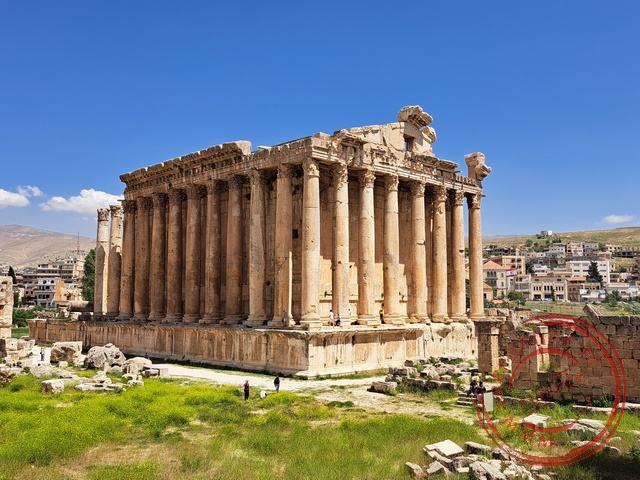
At the Baalbek complex, it is clear that most stones did reach their destination. The Romans built this temple complex around the turn of the millennium. The city was originally built by the Phoenicians. The Romans built the temple dedicated to Jupiter on the ruins around the start of the common era. They also built temples for Bacchus and Venus. During the Byzantine period, the complex was embellished. Via the stairs, I arrive at the entrance of the Temple of Jupiter. From here, the immense size of the complex is visible. Baalbek is one of the largest archaeological sites from the Roman period. I walk on in awe of how people were able to realize such a complex two thousand years ago. I reach the highest plateau, where 56 columns once stood to form the Temple of Jupiter.

Six pillars have been reconstructed. The thirty-meter-high columns show the scale of the former temple. Next to the Temple of Jupiter is the Temple of Bacchus, dedicated to wine. This temple has withstood the test of time well. The historic building is still reasonably intact. Its grandeur, height, and size are impressive. Full of beautiful impressions, I head to the restaurant for lunch. Various mezze appetizers and plates with rice and meat are served. Delicious. It’s already past three o’clock when we leave Baalbek. Along the road, there are large tent camps. Syrian refugees are being sheltered in the Bekaa Valley by the United Nations. The size of these camps shows the severity of the situation in Syria.
For now, the refugees have no prospect of returning to their country. We stop at Ksara. The Bekaa Valley is the region for Lebanese wine. At the winery ‘Caves de Ksara,’ we stop for an explanation about the wine. Chris takes us into the wine cellars. He explains that the caves were discovered by chance. The tunnel system probably dates back to Roman times. In total, there are more than two kilometers of tunnels. Underground, there is a constant cool temperature—ideal for aging and storing wine. Chris leads us past the oak barrels. A barrel can only be used a few times for making wine, he continues.

The older barrels are kept here as decoration. After the cellar tour, it’s time to taste the wine. We sample rosé, white wine, red wine, and dessert wine in succession. Just a small sip in the glass—strangely, all served in the same glass. The wine tastes fine, though I prefer the red wine. At the end of the afternoon, we return to the hotel in Beirut. We have to descend sharply from the mountains. The driver maneuvers the bus through the Friday afternoon traffic jam. Around half past six, I am ‘home’ again. In the evening, I go to eat with some fellow travelers at restaurant Barbar. Tripadvisor has positive reviews. It is a typical local Lebanese restaurant, complete with plastic plates and cutlery. A Lebanese woman at the table next to us helps us with ordering. She especially recommends Lebanese mezze dishes. We share a platter with a kilo of meat. Whether it really is a kilo, I doubt, but it tastes delicious. We end the evening with a beer in the restaurant from the first evening. When the loud music starts, I call it a night and go back to my hotel room.
 Lebanon
 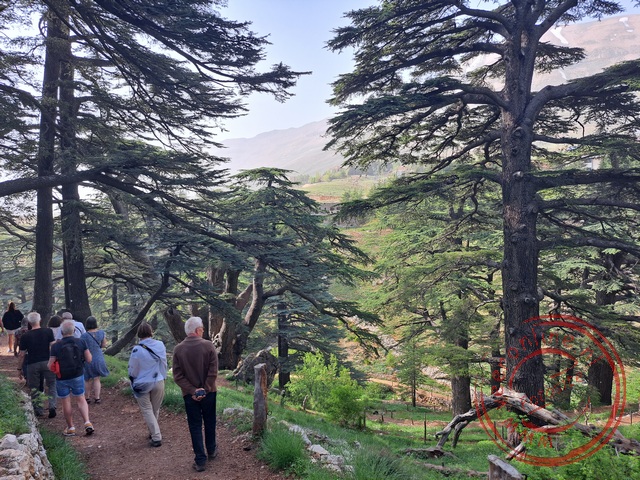 The cedar trees can live up to a thousand years old
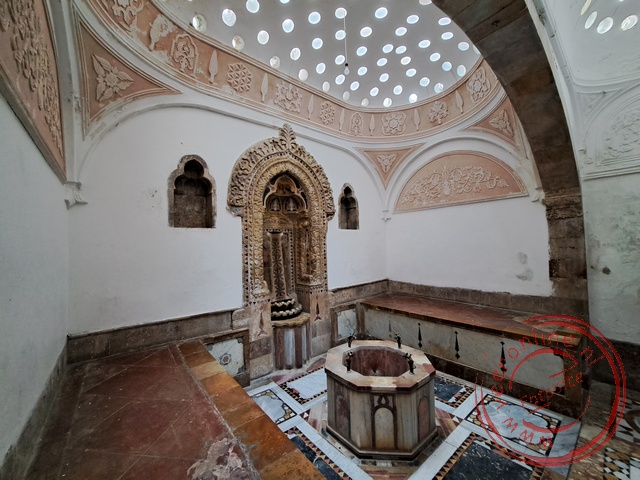 The beautiful bathhouse of the Emir
 The coverings protect against the strong sun
 The luxury Grey hotel is still closed after the huge port explosion in 2020
Travelogue Surprising Lebanon
Dag 2 | Lebanon > The Beiteddine Palace
Dag 3 | Lebanon > The Baalbek archaeological site
Dag 4 | Lebanon > Sidon and Tyre
Dag 5 | Lebanon > Wandering through Beirut
Dag 6 | Lebanon > The Lebanese Cedar Trees
Dag 7 | Lebanon > The Jeita Grottoes
Dag 8 | Lebanon > The last day in Byblos
Dag 9 | Lebanon > Waiting for the luggage