
154 countries
(and areas)
 - Belize
- Benin
- Bhutan
- Bolivia
- Bonaire
- Bosnia and Herzegovina
- Botswana
- Brazil
- British Virgin Islands
- Brunei
- Bulgaria
- Cambodia
- Canada
- Cape Verde
- Chile
- China
- Costa Rica
- Croatia
- Cuba
- Curacao
- Cyprus
- Czech Republic
- Denmark
- Dominica
- Dominican Republic
- Egypt
- El Salvador
- England
- Estonia
- Eswatini (Swaziland)
- Ethiopia
- Fiji
- Finland
- France
- French Guiana
- Georgia
- Germany
- Gibraltar
- Greece
- Grenada
- Guadeloupe
- Guatemala
- Honduras
- Hong Kong
- Hungary
- Iceland
- India
- Indonesia
- Iran
- Ireland
- Israel
- Italy
- Jamaica
- Japan
- Jordan
- Kazakhstan
- Kenya
- Kosovo
- Kuwait
- Kyrgyzstan
- Laos
- Latvia
- Lebanon
- Lesotho
- Liechtenstein
- Lithuania
- Luxembourg
- Macau
- Madagascar
- Malawi
- Malaysia
- Maldives
- Malta
- Martinique
- Mexico
- Moldova
- Monaco
- Mongolia
- Montenegro
- Morocco
- Mozambique
- Namibia
- Nepal
- Netherlands
- New Zealand
- Nicaragua
- North Macedonia
- Northern Ireland
- Norway
- Oman
- Pakistan
- Palestine
- Peru
- Philippines
- Poland
- Portugal
- Qatar
- Republic of Korea
- Romania
- Russia
- Saint Kitts and Nevis
- Saint Lucia
- Saint Martin
- Saint Vincent and the Grenadines
- San Marino
- São Tomé and Principe
- Saudi Arabia
- Scotland
- Senegal
- Serbia
- Singapore
- Sint Maarten
- Slovakia
- Slovenia
- South Africa
- Spain
- Sri Lanka
- Suriname
- Sweden
- Switzerland
- Tajikistan
- Tanzania
- Thailand
- The Gambia
- Tibet
- Togo
- Transnistria
- Trinidad and Tobago
- Tunisia
- Turkey
- Turkmenistan
- Uganda
- United Arab Emirates
- United States
- Uruguay
- Uzbekistan
- Vatican City
- Vietnam
- Wales
- Zambia
- Zanzibar
- Belize
- Benin
- Bhutan
- Bolivia
- Bonaire
- Bosnia and Herzegovina
- Botswana
- Brazil
- British Virgin Islands
- Brunei
- Bulgaria
- Cambodia
- Canada
- Cape Verde
- Chile
- China
- Costa Rica
- Croatia
- Cuba
- Curacao
- Cyprus
- Czech Republic
- Denmark
- Dominica
- Dominican Republic
- Egypt
- El Salvador
- England
- Estonia
- Eswatini (Swaziland)
- Ethiopia
- Fiji
- Finland
- France
- French Guiana
- Georgia
- Germany
- Gibraltar
- Greece
- Grenada
- Guadeloupe
- Guatemala
- Honduras
- Hong Kong
- Hungary
- Iceland
- India
- Indonesia
- Iran
- Ireland
- Israel
- Italy
- Jamaica
- Japan
- Jordan
- Kazakhstan
- Kenya
- Kosovo
- Kuwait
- Kyrgyzstan
- Laos
- Latvia
- Lebanon
- Lesotho
- Liechtenstein
- Lithuania
- Luxembourg
- Macau
- Madagascar
- Malawi
- Malaysia
- Maldives
- Malta
- Martinique
- Mexico
- Moldova
- Monaco
- Mongolia
- Montenegro
- Morocco
- Mozambique
- Namibia
- Nepal
- Netherlands
- New Zealand
- Nicaragua
- North Macedonia
- Northern Ireland
- Norway
- Oman
- Pakistan
- Palestine
- Peru
- Philippines
- Poland
- Portugal
- Qatar
- Republic of Korea
- Romania
- Russia
- Saint Kitts and Nevis
- Saint Lucia
- Saint Martin
- Saint Vincent and the Grenadines
- San Marino
- São Tomé and Principe
- Saudi Arabia
- Scotland
- Senegal
- Serbia
- Singapore
- Sint Maarten
- Slovakia
- Slovenia
- South Africa
- Spain
- Sri Lanka
- Suriname
- Sweden
- Switzerland
- Tajikistan
- Tanzania
- Thailand
- The Gambia
- Tibet
- Togo
- Transnistria
- Trinidad and Tobago
- Tunisia
- Turkey
- Turkmenistan
- Uganda
- United Arab Emirates
- United States
- Uruguay
- Uzbekistan
- Vatican City
- Vietnam
- Wales
- Zambia
- Zanzibar


Copyright 2004 - 2026
Veeronline.nl Travel Adventures

Home > Macau > From Singapore to Hong Kong > Travelogue day 13
Travelogue From Singapore to Hong Kong
Januari 5-19, 2026 (15 days)
Macau > Visit to Macau
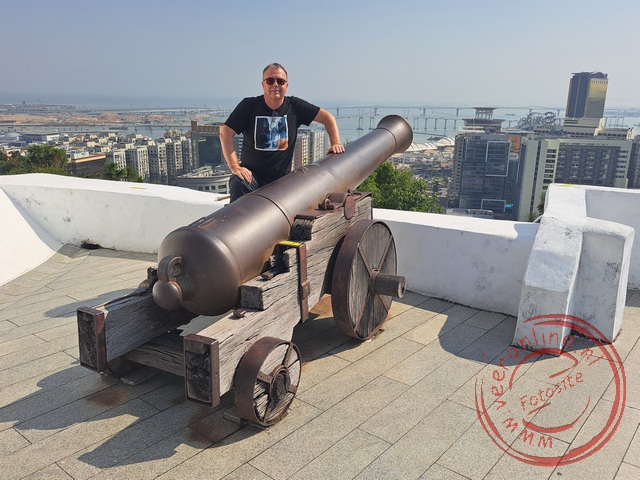
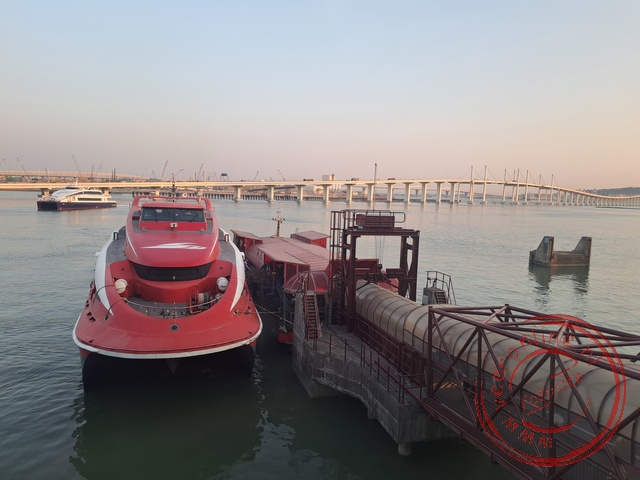
Dag 13 - Saturday 17 January 2026When we arrive at the breakfast buffet on the ground floor, it takes some getting used to. It is certainly not the buffet from the cruise ship. The selection of bread toppings is rather limited, at least for Western tourists. Rice, noodles, and chicken, however, are available in abundance. Still, I manage to put together a good breakfast. After breakfast we walk to the Tsim Sha Tsui metro station. We travel two stops to Central, where we were yesterday as well. This morning we change to another line to reach Sheung Wan station. From the metro station we can walk under cover to the ferry terminal for the boat to Macau. It takes a little while to find out exactly where the tickets are sold. At first we stand in the wrong line. The ten o’clock ferry is already sold out for standard seats, so we buy two tickets for the next departure at half past ten. On the way to the departure hall we have to pass through Hong Kong customs. This is fairly easy using the automated gates. In the departure hall everyone reports to a counter for the ten o’clock boat, but an announcement is made that this ferry is delayed. When I ask where I should check in for the half past ten ferry, I am waved toward the counter. To my surprise, I receive two seats on the ten o’clock boat instead. “This one leaves earlier,” the employee cheerfully explains when I hesitate. With about a twenty-minute delay we board the jet boat. Macau lies around sixty kilometers from Hong Kong, and with the fast ferry the crossing takes just under an hour. While the boat leaves the harbor, I read through the travel guide about Macau. Around half past eleven we arrive at the pier in Macau. At Chinese immigration there is quite a line, and every passport is carefully examined. Eventually we are allowed to enter the country. Immediately we are approached by taxi drivers and tour operators, but we politely decline them all. We decide to explore Macau on foot. As the crow flies, the city center is only about three kilometers away. Macau also has several elevated walkways separating pedestrians from traffic. We walk toward the cable car at Guia Hill. The cable car takes us to the top of this rocky hill in the middle of the city. In the past the hill was used to defend Macau. Tunnels inside the hill stored ammunition. Macau suffered heavily during the Dutch attack of 1622, though the Portuguese barely managed to repel the Dutch forces.

After that attack, the fortifications on this hill were strengthened. On the southern side stand the historic lighthouse and a chapel. From here we have a beautiful view over Macau’s old city and the modern casino districts. This is the highest point in Macau. We descend on foot again and wander through the streets. We pass the striking blue-green St. Michael the Archangel Church. Around the church lies a large cemetery with remarkable gravestones and monuments. A little farther on we arrive at the Ruins of St. Paul’s. St. Paul’s Cathedral was built between 1582 and 1602 by Jesuits and was once one of the largest Catholic churches in Asia.
The building was destroyed by fire during a typhoon in 1835. Only the church’s façade remained standing. Today this façade is the symbol of Macau. Behind it we explore the remains of the church and walk through the former crypt. The steps in front of the church are crowded — extremely crowded. People are everywhere. Especially when we try to continue toward Largo do Senado, the narrow streets become so packed that the flow of people almost comes to a standstill. We turn off into quieter streets instead. Largo do Senado is a triangular square paved with black-and-white stones, just like in Portugal. The colonial buildings still date from the Portuguese period. On the northern side of the square stands St. Dominic’s Church, the oldest church in the city.

Just behind the square is the cathedral, but a wedding is taking place there, so it cannot be visited. Through narrow streets we make our way back toward the Fortaleza do Monte. The road climbs steeply uphill. It is easy to understand why a fortress was built on top of the hill to defend Macau. Here too, information boards refer to the Dutch attack of 1622. We walk around the fort and enjoy views in every direction across Macau. From the fort we descend toward the casino district. Macau is famous for gambling. Officially, Macau is the only place in China where gambling is permitted. Throughout the rest of China it is forbidden. Huge buildings in extravagant shapes house the casino resorts. On impulse we walk into one of the casinos. Inside it is crowded. Hundreds of people stand beneath a dome, though it is not immediately clear why. A young woman explains that at four o’clock a show takes place in which the “fortune tree” rises up.
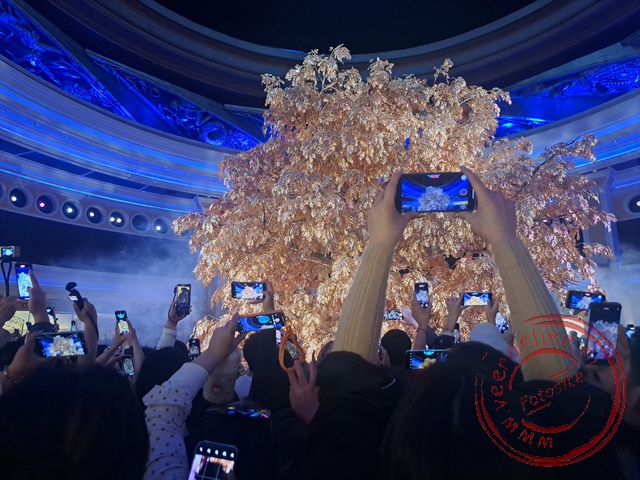
This is due to happen within minutes, so we decide to wait. It is amusing to watch hundreds of people filming the spectacle with their phones. Across from the casino we spot a terrace café, something rather rare in Macau. We order a local Macau beer. At the end of the afternoon we stroll back toward the ferry terminal in the sunshine, arriving shortly after five o’clock. The next ferry departs at six. We pass through Chinese customs and, after waiting a short while, board the ferry. Soon after leaving Macau darkness falls. In the dark we can see the lights along the shoreline and from passing ships. Around seven o’clock we arrive back in Hong Kong. The immigration line is long and we have to wait about fifteen minutes. Afterwards we take the metro back to the district near our hotel. We spot a pleasant restaurant, similar to the one from yesterday. They also serve beer here. We choose two dishes and order a beer with them. A perfect ending to the day.
 Singapore
  The flowershaped museum
 The Sri Mariamman Hindu temple
 Philippines
 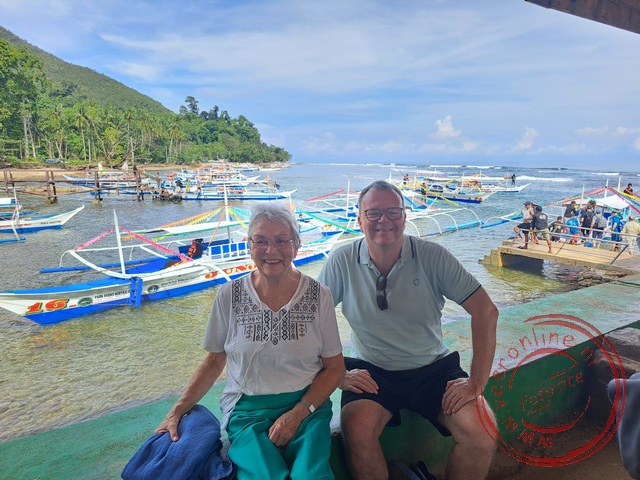 Arrival at the harbor of Sabang on Palawan
 Hong Kong
 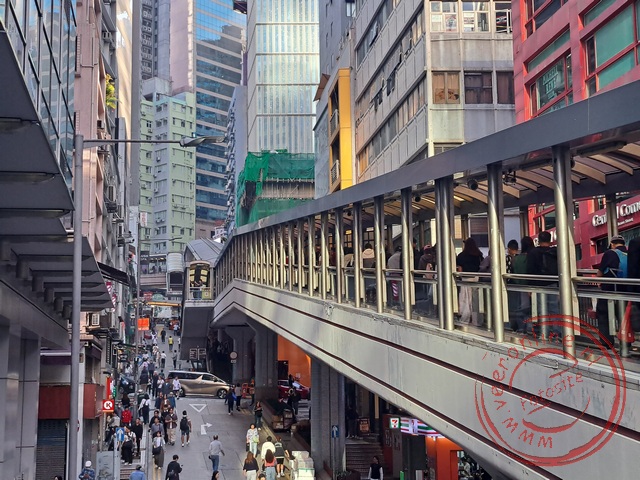 Pedestrians are separated from traffic by elevated walkways
Travelogue From Singapore to Hong Kong
Dag 2 | Singapore > A Day at the Airport
Dag 3 | Singapore > Still in Singapore
Dag 4 | Singapore > Chinatown and Little India
Dag 5 | Singapore > The Cloud Forest of Singapore
Dag 6 | Brunei > A day at sea
Dag 7 | Brunei > The small state of Brunei
Dag 8 | Philippines > Enjoying life on board
Dag 9 | Philippines > The underground river of Palawan
Dag 10 | Hong Kong > Two days on the South China Sea - 1
Dag 11 | Hong Kong > Two days on the South China Sea - 2
Dag 12 | Hong Kong > Victoria Peak of Hong Kong
Dag 13 | Macau > Visit to Macau
Dag 14 | Hong Kong > By cable car to the Buddha
Dag 15 | Hong Kong > Snow in Istanbul