
154 countries
(and areas)
 - Belize
- Benin
- Bhutan
- Bolivia
- Bonaire
- Bosnia and Herzegovina
- Botswana
- Brazil
- British Virgin Islands
- Brunei
- Bulgaria
- Cambodia
- Canada
- Cape Verde
- Chile
- China
- Costa Rica
- Croatia
- Cuba
- Curacao
- Cyprus
- Czech Republic
- Denmark
- Dominica
- Dominican Republic
- Egypt
- El Salvador
- England
- Estonia
- Eswatini (Swaziland)
- Ethiopia
- Fiji
- Finland
- France
- French Guiana
- Georgia
- Germany
- Gibraltar
- Greece
- Grenada
- Guadeloupe
- Guatemala
- Honduras
- Hong Kong
- Hungary
- Iceland
- India
- Indonesia
- Iran
- Ireland
- Israel
- Italy
- Jamaica
- Japan
- Jordan
- Kazakhstan
- Kenya
- Kosovo
- Kuwait
- Kyrgyzstan
- Laos
- Latvia
- Lebanon
- Lesotho
- Liechtenstein
- Lithuania
- Luxembourg
- Macau
- Madagascar
- Malawi
- Malaysia
- Maldives
- Malta
- Martinique
- Mexico
- Moldova
- Monaco
- Mongolia
- Montenegro
- Morocco
- Mozambique
- Namibia
- Nepal
- Netherlands
- New Zealand
- Nicaragua
- North Macedonia
- Northern Ireland
- Norway
- Oman
- Pakistan
- Palestine
- Peru
- Philippines
- Poland
- Portugal
- Qatar
- Republic of Korea
- Romania
- Russia
- Saint Kitts and Nevis
- Saint Lucia
- Saint Martin
- Saint Vincent and the Grenadines
- San Marino
- São Tomé and Principe
- Saudi Arabia
- Scotland
- Senegal
- Serbia
- Singapore
- Sint Maarten
- Slovakia
- Slovenia
- South Africa
- Spain
- Sri Lanka
- Suriname
- Sweden
- Switzerland
- Tajikistan
- Tanzania
- Thailand
- The Gambia
- Tibet
- Togo
- Transnistria
- Trinidad and Tobago
- Tunisia
- Turkey
- Turkmenistan
- Uganda
- United Arab Emirates
- United States
- Uruguay
- Uzbekistan
- Vatican City
- Vietnam
- Wales
- Zambia
- Zanzibar
- Belize
- Benin
- Bhutan
- Bolivia
- Bonaire
- Bosnia and Herzegovina
- Botswana
- Brazil
- British Virgin Islands
- Brunei
- Bulgaria
- Cambodia
- Canada
- Cape Verde
- Chile
- China
- Costa Rica
- Croatia
- Cuba
- Curacao
- Cyprus
- Czech Republic
- Denmark
- Dominica
- Dominican Republic
- Egypt
- El Salvador
- England
- Estonia
- Eswatini (Swaziland)
- Ethiopia
- Fiji
- Finland
- France
- French Guiana
- Georgia
- Germany
- Gibraltar
- Greece
- Grenada
- Guadeloupe
- Guatemala
- Honduras
- Hong Kong
- Hungary
- Iceland
- India
- Indonesia
- Iran
- Ireland
- Israel
- Italy
- Jamaica
- Japan
- Jordan
- Kazakhstan
- Kenya
- Kosovo
- Kuwait
- Kyrgyzstan
- Laos
- Latvia
- Lebanon
- Lesotho
- Liechtenstein
- Lithuania
- Luxembourg
- Macau
- Madagascar
- Malawi
- Malaysia
- Maldives
- Malta
- Martinique
- Mexico
- Moldova
- Monaco
- Mongolia
- Montenegro
- Morocco
- Mozambique
- Namibia
- Nepal
- Netherlands
- New Zealand
- Nicaragua
- North Macedonia
- Northern Ireland
- Norway
- Oman
- Pakistan
- Palestine
- Peru
- Philippines
- Poland
- Portugal
- Qatar
- Republic of Korea
- Romania
- Russia
- Saint Kitts and Nevis
- Saint Lucia
- Saint Martin
- Saint Vincent and the Grenadines
- San Marino
- São Tomé and Principe
- Saudi Arabia
- Scotland
- Senegal
- Serbia
- Singapore
- Sint Maarten
- Slovakia
- Slovenia
- South Africa
- Spain
- Sri Lanka
- Suriname
- Sweden
- Switzerland
- Tajikistan
- Tanzania
- Thailand
- The Gambia
- Tibet
- Togo
- Transnistria
- Trinidad and Tobago
- Tunisia
- Turkey
- Turkmenistan
- Uganda
- United Arab Emirates
- United States
- Uruguay
- Uzbekistan
- Vatican City
- Vietnam
- Wales
- Zambia
- Zanzibar


Copyright 2004 - 2026
Veeronline.nl Travel Adventures
Home > Peru > Travel around Xhile - Bolivia - Peru > Travelogue day 24
Travelogue Travel around Xhile - Bolivia - Peru
June 2004 (28 days)
Peru > Rain at the Wiñaywayna campsite
Dag 24 - Thursday, July 1, 2004This morning we can sleep in a bit. Lucio wakes us at six o’clock with tea and coffee brought to the tent. We quickly pack our things and head out for breakfast. Today we’ll be crossing two passes, but they’re not as high as yesterday’s. Along the way, we’ll also visit some Inca ruins. Just after seven, we set out for our third day on the trail.

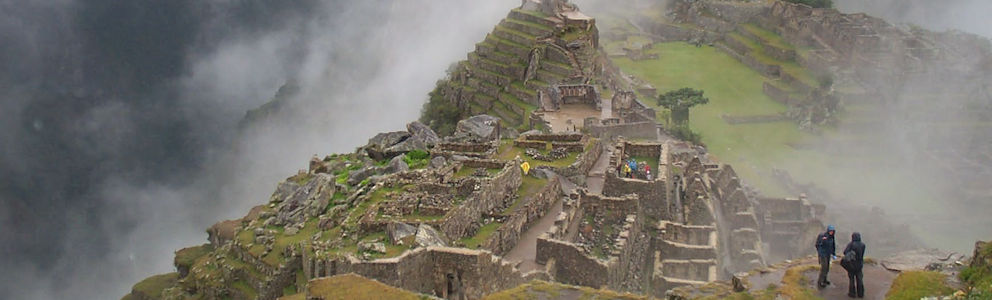
After about an hour of climbing, we reach Runkuraqay, an ancient Inca complex. Runkuraqay was used by the Incas as a checkpoint and overnight resting place along the trail. After visiting the site, we continue climbing toward the first mountain pass of the day at 3,900 meters. Just before reaching the top, it starts to hail lightly (and this is supposed to be the dry season!). Fortunately, it clears up quickly once we’re over the pass. We begin our descent toward the ancient Inca town of Sayacmarca. Lucio gives us an explanation about the site. The visit is impressive — a beautiful preview of what awaits us at Machu Picchu. Across the valley, we can already see the lunch tent waiting for us. During lunch — again excellent — it rains heavily for a while, but by the time we continue our trek, it’s dry again. The second pass of the day ascends more gradually and is less steep. Here the Inca Trail consists of regular paths rather than the notorious stone steps. Along the way, the trail passes through several short tunnels carved into the rock. From the top of the second pass, we have a magnificent view of the Inca settlement of Phuyupatamarca, and far below in the valley lie the terraces of Wiñay Wayna.

From Phuyupatamarca, a long descent begins toward our third campsite near Wiñay Wayna. The descent consists almost entirely of steep stone steps, making it tough and demanding. Our walking sticks prove very useful here. At the junction leading either to the campsite or to the terraces, we choose to continue on to visit the terraces of Wiñay Wayna. The trail is clearly less traveled here and is covered in moss. From the terraces, it’s just a short descent to our third campsite. Around five o’clock we arrive at the tents and immediately dive into tea, coffee, and popcorn. During dinner, it starts raining again — this time heavily. The dining tent begins to leak badly. After the meal, we invite all the porters inside to thank them for their efforts. Lucio translates for us as we hand each of them a personal tip. The porters thank us warmly and even hug us. Outside, the rain continues, and we begin to wonder how our tents will hold up. Unfortunately, not very well. The tent leaks in several places, and water runs under the air mattress. Even my sleeping bag is no longer completely dry. Relying on Dutch water-management skills, I use my towel to divert the water flow. I put my clothes for the fourth day into a plastic bag and place my backpack on top of my trekking poles to keep it dry overnight. I stuff my fleece blanket into the dry end of my damp sleeping bag. Just as we’re ready to go to sleep, my tentmate’s air mattress turns out to be punctured — the final straw. It’s going to be a tough night. Fortunately, we’re allowed to get up at four o’clock...
 Bolivia
 Chile
Chile 
 Peru
Peru 

Travelogue Travel around Xhile - Bolivia - Peru
Dag 2 | Chile > Flying over the Peruvian desert
Dag 3 | Chile > Up to 4,600 meters and back
Dag 4 | Chile > By night bus through Chile
Dag 5 | Chile > San Pedro de Atacama
Dag 6 | Bolivia > Crossing the border into Bolivia
Dag 7 | Bolivia > The salt flat of Uyuni
Dag 8 | Bolivia > Walking along the salt
Dag 9 | Bolivia > By bus to Potosí
Dag 10 | Bolivia > Respect for the miners
Dag 11 | Bolivia > Sucre, the official capital
Dag 12 | Bolivia > The Chataquila walk
Dag 13 | Bolivia > The Sunday market of Tarabuco
Dag 14 | Bolivia > Flying to La Paz
Dag 15 | Bolivia > Like Tintin in Tiahuanaco
Dag 16 | Bolivia > To the top of the Takesi trail
Dag 17 | Bolivia > Walking through Takesi
Dag 18 | Bolivia > View of Lake Titicaca
Dag 19 | Bolivia > Blessing of the cars
Dag 20 | Bolivia > The Uros reed islands
Dag 21 | Peru > From Puno to Cusco
Dag 22 | Peru > Start of the Inca Trail
Dag 23 | Peru > Snow on the Dead Women Pass
Dag 24 | Peru > Rain at the Wiñaywayna campsite
Dag 25 | Peru > Machu Picchu in the mist
Dag 26 | Peru > Historic Cusco
Dag 27 | Peru > Back to Lima
Dag 28 | Peru > Back home