
154 countries
(and areas)
 - Belize
- Benin
- Bhutan
- Bolivia
- Bonaire
- Bosnia and Herzegovina
- Botswana
- Brazil
- British Virgin Islands
- Brunei
- Bulgaria
- Cambodia
- Canada
- Cape Verde
- Chile
- China
- Costa Rica
- Croatia
- Cuba
- Curacao
- Cyprus
- Czech Republic
- Denmark
- Dominica
- Dominican Republic
- Egypt
- El Salvador
- England
- Estonia
- Eswatini (Swaziland)
- Ethiopia
- Fiji
- Finland
- France
- French Guiana
- Georgia
- Germany
- Gibraltar
- Greece
- Grenada
- Guadeloupe
- Guatemala
- Honduras
- Hong Kong
- Hungary
- Iceland
- India
- Indonesia
- Iran
- Ireland
- Israel
- Italy
- Jamaica
- Japan
- Jordan
- Kazakhstan
- Kenya
- Kosovo
- Kuwait
- Kyrgyzstan
- Laos
- Latvia
- Lebanon
- Lesotho
- Liechtenstein
- Lithuania
- Luxembourg
- Macau
- Madagascar
- Malawi
- Malaysia
- Maldives
- Malta
- Martinique
- Mexico
- Moldova
- Monaco
- Mongolia
- Montenegro
- Morocco
- Mozambique
- Namibia
- Nepal
- Netherlands
- New Zealand
- Nicaragua
- North Macedonia
- Northern Ireland
- Norway
- Oman
- Pakistan
- Palestine
- Peru
- Philippines
- Poland
- Portugal
- Qatar
- Republic of Korea
- Romania
- Russia
- Saint Kitts and Nevis
- Saint Lucia
- Saint Martin
- Saint Vincent and the Grenadines
- San Marino
- São Tomé and Principe
- Saudi Arabia
- Scotland
- Senegal
- Serbia
- Singapore
- Sint Maarten
- Slovakia
- Slovenia
- South Africa
- Spain
- Sri Lanka
- Suriname
- Sweden
- Switzerland
- Tajikistan
- Tanzania
- Thailand
- The Gambia
- Tibet
- Togo
- Transnistria
- Trinidad and Tobago
- Tunisia
- Turkey
- Turkmenistan
- Uganda
- United Arab Emirates
- United States
- Uruguay
- Uzbekistan
- Vatican City
- Vietnam
- Wales
- Zambia
- Zanzibar
- Belize
- Benin
- Bhutan
- Bolivia
- Bonaire
- Bosnia and Herzegovina
- Botswana
- Brazil
- British Virgin Islands
- Brunei
- Bulgaria
- Cambodia
- Canada
- Cape Verde
- Chile
- China
- Costa Rica
- Croatia
- Cuba
- Curacao
- Cyprus
- Czech Republic
- Denmark
- Dominica
- Dominican Republic
- Egypt
- El Salvador
- England
- Estonia
- Eswatini (Swaziland)
- Ethiopia
- Fiji
- Finland
- France
- French Guiana
- Georgia
- Germany
- Gibraltar
- Greece
- Grenada
- Guadeloupe
- Guatemala
- Honduras
- Hong Kong
- Hungary
- Iceland
- India
- Indonesia
- Iran
- Ireland
- Israel
- Italy
- Jamaica
- Japan
- Jordan
- Kazakhstan
- Kenya
- Kosovo
- Kuwait
- Kyrgyzstan
- Laos
- Latvia
- Lebanon
- Lesotho
- Liechtenstein
- Lithuania
- Luxembourg
- Macau
- Madagascar
- Malawi
- Malaysia
- Maldives
- Malta
- Martinique
- Mexico
- Moldova
- Monaco
- Mongolia
- Montenegro
- Morocco
- Mozambique
- Namibia
- Nepal
- Netherlands
- New Zealand
- Nicaragua
- North Macedonia
- Northern Ireland
- Norway
- Oman
- Pakistan
- Palestine
- Peru
- Philippines
- Poland
- Portugal
- Qatar
- Republic of Korea
- Romania
- Russia
- Saint Kitts and Nevis
- Saint Lucia
- Saint Martin
- Saint Vincent and the Grenadines
- San Marino
- São Tomé and Principe
- Saudi Arabia
- Scotland
- Senegal
- Serbia
- Singapore
- Sint Maarten
- Slovakia
- Slovenia
- South Africa
- Spain
- Sri Lanka
- Suriname
- Sweden
- Switzerland
- Tajikistan
- Tanzania
- Thailand
- The Gambia
- Tibet
- Togo
- Transnistria
- Trinidad and Tobago
- Tunisia
- Turkey
- Turkmenistan
- Uganda
- United Arab Emirates
- United States
- Uruguay
- Uzbekistan
- Vatican City
- Vietnam
- Wales
- Zambia
- Zanzibar


Copyright 2004 - 2026
Veeronline.nl Travel Adventures

Home > Bolivia > Travel around Xhile - Bolivia - Peru > Travelogue day 10
Travelogue Travel around Xhile - Bolivia - Peru
June 2004 (28 days)
Bolivia > Respect for the miners
Dag 10 - Thursday, June 17, 2004At 8:30, the seven of us are picked up for a trip to the silver mines near Potosí. Our Bolivian guide for the day has the amusing name Wilbert. In the early 1970s, it was common in Bolivia to give children Western names. In the minibus, we drive through Potosí to a changing area. Here we are given overalls, boots, a helmet, and a lamp. Next, we go to a small supermarket to buy dynamite (!) and drinks for the miners. At the local market—where we walk around completely decked out in our miner outfits, but nobody bats an eye—we buy coca leaves for the miners.

Once everything is purchased, we drive to the factory where silver, zinc, and tin are separated from the ore. The factory is very primitive. The stones are ground with a large mortar, and chemicals are used to separate silver and zinc. Tin is extracted in a large sluice. When we arrive, the workers immediately stop their work, take off their hats, and eagerly await the coca leaves. We then drive the minibus to the entrance of the silver mine. The tunnel is still passable, though some passages are low, making the helmet useful. At the entrance of the small museum, there is a recess where the whole group can stand and clear the tracks for carts carrying ore to the outside. Because the tracks slope downward, the carts rush down at high speed. Braking is not an option. The miners, who guide the carts, ride on the back. They coordinate when carts can go out and when they need to be pulled back up.
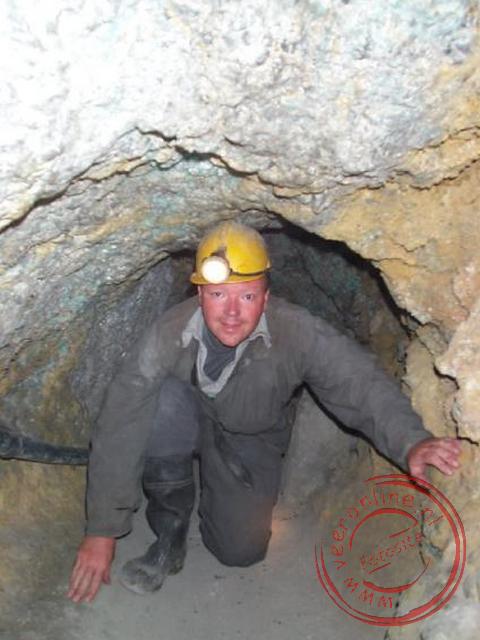
Tourists can also walk along the tracks in between. The museum shows how silver is mined, the materials used, and the history of the mines. As we follow the tracks deeper into the mines, the passages get lower, oxygen levels drop noticeably, and the temperature rises. Along the way, we hand sodas to the miners, who are very grateful. Through a narrow passage, we literally crawl to the second level, using hands and feet or sliding on our backsides. From there, we can reach the third level via a passage and a rickety wooden ladder. Here, the ore is scooped into a bag and hauled up to the first level—a primitive and heavy task. From this passage, we climb even deeper. Two wooden ladders lead to the fourth level. The shaft here belongs to Alberto, who works for himself. He has his own mine at this level and uses a hammer and chisel to make a 30-centimeter hole in the wall, a task that takes three to five hours.

He then places dynamite in the hole to blast the rock. All the loosened rock is carried out in a bag strapped to his stomach. Alberto does not use the mine’s lift, which belongs to the cooperative; he would have to pay extra. On average, he spends three days chiseling and two days hauling the rock. Alberto is 29 years old and has worked in the silver mine since he was 12. We give him the dynamite sticks and a soda. Rik chats with him and learns that he also plays music; Alberto agrees to perform that evening at the restaurant where we will eat. We climb back to the first level. The harsh conditions in which the miners work leave a deep impression on all of us. Outside, Pedro gives a demonstration of the power of a dynamite explosion. With a tremendous bang, the stick detonates. Around 3:30, we are changed and back at the hotel. I wash the dust off in the shower. In the afternoon, we stroll through the city, order a sandwich at a café on the plaza, and climb to the theater roof to enjoy the view over the city and plaza. In the evening, we eat at a restaurant with live Peruvian music, played by students. Around ten o’clock, Alberto, the miner we met earlier, and Pedro, one of this afternoon’s guides, perform a few songs for the group. Afterwards, we return to the hotel and go to bed.
 Bolivia

 Peru
Peru 

Travelogue Travel around Xhile - Bolivia - Peru
Dag 2 | Chile > Flying over the Peruvian desert
Dag 3 | Chile > Up to 4,600 meters and back
Dag 4 | Chile > By night bus through Chile
Dag 5 | Chile > San Pedro de Atacama
Dag 6 | Bolivia > Crossing the border into Bolivia
Dag 7 | Bolivia > The salt flat of Uyuni
Dag 8 | Bolivia > Walking along the salt
Dag 9 | Bolivia > By bus to Potosí
Dag 10 | Bolivia > Respect for the miners
Dag 11 | Bolivia > Sucre, the official capital
Dag 12 | Bolivia > The Chataquila walk
Dag 13 | Bolivia > The Sunday market of Tarabuco
Dag 14 | Bolivia > Flying to La Paz
Dag 15 | Bolivia > Like Tintin in Tiahuanaco
Dag 16 | Bolivia > To the top of the Takesi trail
Dag 17 | Bolivia > Walking through Takesi
Dag 18 | Bolivia > View of Lake Titicaca
Dag 19 | Bolivia > Blessing of the cars
Dag 20 | Bolivia > The Uros reed islands
Dag 21 | Peru > From Puno to Cusco
Dag 22 | Peru > Start of the Inca Trail
Dag 23 | Peru > Snow on the Dead Women Pass
Dag 24 | Peru > Rain at the Wiñaywayna campsite
Dag 25 | Peru > Machu Picchu in the mist
Dag 26 | Peru > Historic Cusco
Dag 27 | Peru > Back to Lima
Dag 28 | Peru > Back home