
154 countries
(and areas)
 - Belize
- Benin
- Bhutan
- Bolivia
- Bonaire
- Bosnia and Herzegovina
- Botswana
- Brazil
- British Virgin Islands
- Brunei
- Bulgaria
- Cambodia
- Canada
- Cape Verde
- Chile
- China
- Costa Rica
- Croatia
- Cuba
- Curacao
- Cyprus
- Czech Republic
- Denmark
- Dominica
- Dominican Republic
- Egypt
- El Salvador
- England
- Estonia
- Eswatini (Swaziland)
- Ethiopia
- Fiji
- Finland
- France
- French Guiana
- Georgia
- Germany
- Gibraltar
- Greece
- Grenada
- Guadeloupe
- Guatemala
- Honduras
- Hong Kong
- Hungary
- Iceland
- India
- Indonesia
- Iran
- Ireland
- Israel
- Italy
- Jamaica
- Japan
- Jordan
- Kazakhstan
- Kenya
- Kosovo
- Kuwait
- Kyrgyzstan
- Laos
- Latvia
- Lebanon
- Lesotho
- Liechtenstein
- Lithuania
- Luxembourg
- Macau
- Madagascar
- Malawi
- Malaysia
- Maldives
- Malta
- Martinique
- Mexico
- Moldova
- Monaco
- Mongolia
- Montenegro
- Morocco
- Mozambique
- Namibia
- Nepal
- Netherlands
- New Zealand
- Nicaragua
- North Macedonia
- Northern Ireland
- Norway
- Oman
- Pakistan
- Palestine
- Peru
- Philippines
- Poland
- Portugal
- Qatar
- Republic of Korea
- Romania
- Russia
- Saint Kitts and Nevis
- Saint Lucia
- Saint Martin
- Saint Vincent and the Grenadines
- San Marino
- São Tomé and Principe
- Saudi Arabia
- Scotland
- Senegal
- Serbia
- Singapore
- Sint Maarten
- Slovakia
- Slovenia
- South Africa
- Spain
- Sri Lanka
- Suriname
- Sweden
- Switzerland
- Tajikistan
- Tanzania
- Thailand
- The Gambia
- Tibet
- Togo
- Transnistria
- Trinidad and Tobago
- Tunisia
- Turkey
- Turkmenistan
- Uganda
- United Arab Emirates
- United States
- Uruguay
- Uzbekistan
- Vatican City
- Vietnam
- Wales
- Zambia
- Zanzibar
- Belize
- Benin
- Bhutan
- Bolivia
- Bonaire
- Bosnia and Herzegovina
- Botswana
- Brazil
- British Virgin Islands
- Brunei
- Bulgaria
- Cambodia
- Canada
- Cape Verde
- Chile
- China
- Costa Rica
- Croatia
- Cuba
- Curacao
- Cyprus
- Czech Republic
- Denmark
- Dominica
- Dominican Republic
- Egypt
- El Salvador
- England
- Estonia
- Eswatini (Swaziland)
- Ethiopia
- Fiji
- Finland
- France
- French Guiana
- Georgia
- Germany
- Gibraltar
- Greece
- Grenada
- Guadeloupe
- Guatemala
- Honduras
- Hong Kong
- Hungary
- Iceland
- India
- Indonesia
- Iran
- Ireland
- Israel
- Italy
- Jamaica
- Japan
- Jordan
- Kazakhstan
- Kenya
- Kosovo
- Kuwait
- Kyrgyzstan
- Laos
- Latvia
- Lebanon
- Lesotho
- Liechtenstein
- Lithuania
- Luxembourg
- Macau
- Madagascar
- Malawi
- Malaysia
- Maldives
- Malta
- Martinique
- Mexico
- Moldova
- Monaco
- Mongolia
- Montenegro
- Morocco
- Mozambique
- Namibia
- Nepal
- Netherlands
- New Zealand
- Nicaragua
- North Macedonia
- Northern Ireland
- Norway
- Oman
- Pakistan
- Palestine
- Peru
- Philippines
- Poland
- Portugal
- Qatar
- Republic of Korea
- Romania
- Russia
- Saint Kitts and Nevis
- Saint Lucia
- Saint Martin
- Saint Vincent and the Grenadines
- San Marino
- São Tomé and Principe
- Saudi Arabia
- Scotland
- Senegal
- Serbia
- Singapore
- Sint Maarten
- Slovakia
- Slovenia
- South Africa
- Spain
- Sri Lanka
- Suriname
- Sweden
- Switzerland
- Tajikistan
- Tanzania
- Thailand
- The Gambia
- Tibet
- Togo
- Transnistria
- Trinidad and Tobago
- Tunisia
- Turkey
- Turkmenistan
- Uganda
- United Arab Emirates
- United States
- Uruguay
- Uzbekistan
- Vatican City
- Vietnam
- Wales
- Zambia
- Zanzibar


Copyright 2004 - 2026
Veeronline.nl Travel Adventures

Home > Bolivia > Travel around Xhile - Bolivia - Peru > Travelogue day 15
Travelogue Travel around Xhile - Bolivia - Peru
June 2004 (28 days)
Bolivia > Like Tintin in Tiahuanaco
Dag 15 - Tuesday, June 22, 2004Slept wonderfully last night, even without a room key. For the excellent breakfast buffet, we leave the room slightly ajar. At half past eight, the bus departs for Tiahuanaco, home to the ancient ruins of the Tiwanaku culture. Between 500 and 1200 AD, they were far ahead of their time.

Even today, it remains a mystery what tools they used to create these structures. On the way to Tiahuanaco, we leave La Paz via the El Alto plateau. In total, more than two million people live in La Paz and El Alto—about 25% of Bolivia’s population. The city continues to expand, mostly on the plateau, since La Paz is densely built into the mountain basin. After an hour and a half, we arrive in Tiahuanaco. In the museum, our guide Eduardo explains the statues and inscriptions. The perfection and symmetry of the figures are very impressive. After the museum, we visit the ancient temple complex of the Tiwanaku. The temple was constructed so that at sunrise during the spring and autumn, the sun aligns perfectly with the corners of the temple. Unfortunately, the Spaniards largely destroyed the temple, searching for gold in the statues and using the stones for their homes. The remaining structures are sometimes overgrown with grass and sand. In the partially underground temple just before the Sun Temple, about a hundred stone-carved heads are displayed. The main entrance to the Sun Temple is not accessible; we enter through the side entrance into a temple covering roughly half a hectare. In the center stands the Ponce monolith, recognizable from the Tintin comic and the Sun Temple. We also see the statue of El Fraile and the impressive Sun Gate—Tintin comes vividly to life.
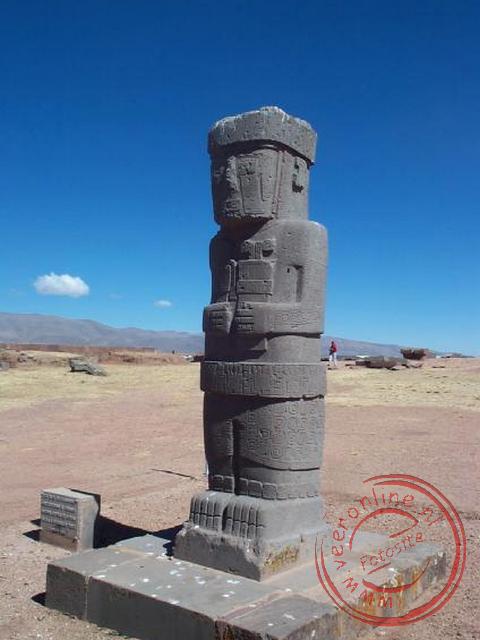
Around one o’clock, we drive back to La Paz, stopping twice for photos along the way. The first stop offers a stunning view of the snow-capped peaks of the Andes, including Mount Illimani. The second stop is along the busy toll road at the edge of La Paz, providing a beautiful view over the city. After returning to the hotel, we head into La Paz. First, I buy a fleece blanket at the market in preparation for the cold nights in the tents on the Takesi Trail. Then we eat at a small restaurant, which turns out to be vegetarian once we receive the menu. The waiter takes our order, goes to the kitchen, and then leaves the restaurant. A little later, he returns with four potatoes for our fries, leaves again, comes back with two bottles of cola, and on the third trip returns with bread for the sandwiches. Once all items are delivered, our food is served. At the Witches’ Market, we stroll past the souvenir shops and visit the coca museum. In the evening, we have dinner with the group at the luxurious El Presidente Hotel on the sixteenth floor, with a stunning view over the city. Back in the room, I start packing the bag for the Takesi Trail. I separate items for the mule, the daypack, and the remainder that stays at the hotel—a real puzzle.
 Bolivia
 Chile
Chile 
 Peru
Peru 

Travelogue Travel around Xhile - Bolivia - Peru
Dag 2 | Chile > Flying over the Peruvian desert
Dag 3 | Chile > Up to 4,600 meters and back
Dag 4 | Chile > By night bus through Chile
Dag 5 | Chile > San Pedro de Atacama
Dag 6 | Bolivia > Crossing the border into Bolivia
Dag 7 | Bolivia > The salt flat of Uyuni
Dag 8 | Bolivia > Walking along the salt
Dag 9 | Bolivia > By bus to Potosí
Dag 10 | Bolivia > Respect for the miners
Dag 11 | Bolivia > Sucre, the official capital
Dag 12 | Bolivia > The Chataquila walk
Dag 13 | Bolivia > The Sunday market of Tarabuco
Dag 14 | Bolivia > Flying to La Paz
Dag 15 | Bolivia > Like Tintin in Tiahuanaco
Dag 16 | Bolivia > To the top of the Takesi trail
Dag 17 | Bolivia > Walking through Takesi
Dag 18 | Bolivia > View of Lake Titicaca
Dag 19 | Bolivia > Blessing of the cars
Dag 20 | Bolivia > The Uros reed islands
Dag 21 | Peru > From Puno to Cusco
Dag 22 | Peru > Start of the Inca Trail
Dag 23 | Peru > Snow on the Dead Women Pass
Dag 24 | Peru > Rain at the Wiñaywayna campsite
Dag 25 | Peru > Machu Picchu in the mist
Dag 26 | Peru > Historic Cusco
Dag 27 | Peru > Back to Lima
Dag 28 | Peru > Back home