
154 countries
(and areas)
 - Belize
- Benin
- Bhutan
- Bolivia
- Bonaire
- Bosnia and Herzegovina
- Botswana
- Brazil
- British Virgin Islands
- Brunei
- Bulgaria
- Cambodia
- Canada
- Cape Verde
- Chile
- China
- Costa Rica
- Croatia
- Cuba
- Curacao
- Cyprus
- Czech Republic
- Denmark
- Dominica
- Dominican Republic
- Egypt
- El Salvador
- England
- Estonia
- Eswatini (Swaziland)
- Ethiopia
- Fiji
- Finland
- France
- French Guiana
- Georgia
- Germany
- Gibraltar
- Greece
- Grenada
- Guadeloupe
- Guatemala
- Honduras
- Hong Kong
- Hungary
- Iceland
- India
- Indonesia
- Iran
- Ireland
- Israel
- Italy
- Jamaica
- Japan
- Jordan
- Kazakhstan
- Kenya
- Kosovo
- Kuwait
- Kyrgyzstan
- Laos
- Latvia
- Lebanon
- Lesotho
- Liechtenstein
- Lithuania
- Luxembourg
- Macau
- Madagascar
- Malawi
- Malaysia
- Maldives
- Malta
- Martinique
- Mexico
- Moldova
- Monaco
- Mongolia
- Montenegro
- Morocco
- Mozambique
- Namibia
- Nepal
- Netherlands
- New Zealand
- Nicaragua
- North Macedonia
- Northern Ireland
- Norway
- Oman
- Pakistan
- Palestine
- Peru
- Philippines
- Poland
- Portugal
- Qatar
- Republic of Korea
- Romania
- Russia
- Saint Kitts and Nevis
- Saint Lucia
- Saint Martin
- Saint Vincent and the Grenadines
- San Marino
- São Tomé and Principe
- Saudi Arabia
- Scotland
- Senegal
- Serbia
- Singapore
- Sint Maarten
- Slovakia
- Slovenia
- South Africa
- Spain
- Sri Lanka
- Suriname
- Sweden
- Switzerland
- Tajikistan
- Tanzania
- Thailand
- The Gambia
- Tibet
- Togo
- Transnistria
- Trinidad and Tobago
- Tunisia
- Turkey
- Turkmenistan
- Uganda
- United Arab Emirates
- United States
- Uruguay
- Uzbekistan
- Vatican City
- Vietnam
- Wales
- Zambia
- Zanzibar
- Belize
- Benin
- Bhutan
- Bolivia
- Bonaire
- Bosnia and Herzegovina
- Botswana
- Brazil
- British Virgin Islands
- Brunei
- Bulgaria
- Cambodia
- Canada
- Cape Verde
- Chile
- China
- Costa Rica
- Croatia
- Cuba
- Curacao
- Cyprus
- Czech Republic
- Denmark
- Dominica
- Dominican Republic
- Egypt
- El Salvador
- England
- Estonia
- Eswatini (Swaziland)
- Ethiopia
- Fiji
- Finland
- France
- French Guiana
- Georgia
- Germany
- Gibraltar
- Greece
- Grenada
- Guadeloupe
- Guatemala
- Honduras
- Hong Kong
- Hungary
- Iceland
- India
- Indonesia
- Iran
- Ireland
- Israel
- Italy
- Jamaica
- Japan
- Jordan
- Kazakhstan
- Kenya
- Kosovo
- Kuwait
- Kyrgyzstan
- Laos
- Latvia
- Lebanon
- Lesotho
- Liechtenstein
- Lithuania
- Luxembourg
- Macau
- Madagascar
- Malawi
- Malaysia
- Maldives
- Malta
- Martinique
- Mexico
- Moldova
- Monaco
- Mongolia
- Montenegro
- Morocco
- Mozambique
- Namibia
- Nepal
- Netherlands
- New Zealand
- Nicaragua
- North Macedonia
- Northern Ireland
- Norway
- Oman
- Pakistan
- Palestine
- Peru
- Philippines
- Poland
- Portugal
- Qatar
- Republic of Korea
- Romania
- Russia
- Saint Kitts and Nevis
- Saint Lucia
- Saint Martin
- Saint Vincent and the Grenadines
- San Marino
- São Tomé and Principe
- Saudi Arabia
- Scotland
- Senegal
- Serbia
- Singapore
- Sint Maarten
- Slovakia
- Slovenia
- South Africa
- Spain
- Sri Lanka
- Suriname
- Sweden
- Switzerland
- Tajikistan
- Tanzania
- Thailand
- The Gambia
- Tibet
- Togo
- Transnistria
- Trinidad and Tobago
- Tunisia
- Turkey
- Turkmenistan
- Uganda
- United Arab Emirates
- United States
- Uruguay
- Uzbekistan
- Vatican City
- Vietnam
- Wales
- Zambia
- Zanzibar


Copyright 2004 - 2026
Veeronline.nl Travel Adventures
Home > Estonia > Baltic States > Travelogue day 9
Travelogue Baltic States
July 24 August 7 2010 (15 days)
Estonia > The Middle Ages in Tallinn
Dag 9 - Sunday, August 1, 2010We leave Kuressaare. On the way back to the ferry, we first stop at the old Fortress Church of Kaarma. The sun is shining, and although it’s still early, it’s already pleasantly warm. The church of Kaarma is especially famous for the inscription next to its entrance. The text, dating from 1407, is the oldest known writing in the Estonian language. A little further on, we visit a large crater lake. Around 4,000 years ago, several meteorites struck here. The largest crater measures 110 meters across and is 20 meters deep. Still on the island of Saaremaa, we visit the old wooden windmills. Modeled after Dutch mills, they have become the symbol of Saaremaa. However, unlike the Dutch ones, these windmills are not painted. They are also open to visitors, and I climb up the narrow staircases to the fourth and top level. The mill was recently fully restored and looks almost brand new inside.

Finally, we make a short stop at the old church of Karja. A service is in progress, so we cannot visit the interior. We continue to the ferry, and at half past eleven the bus drives aboard. The sun shines brightly as I take a seat on the foredeck. In just under half an hour, the ferry crosses back to the mainland. From there, we drive straight on to Tallinn. Our driver, Jouzaf, still has to return to Lithuania with the bus tonight. The landscape along the way is mostly green, with meadows and forests. Occasionally, a small wooden house stands by the roadside. As we get closer to the capital, the buildings and traffic gradually increase. Just before three o’clock, Jouzaf parks the bus in front of the hotel. The hotel is located by the harbor, directly opposite the terminal for the ferries to Helsinki on the other side of the Baltic Sea—only 75 kilometers away.

We quickly say goodbye to him and wave as he departs toward Lithuania. Today is Sunday. Since most museums are closed on Mondays and Tuesdays, we decide to spend the afternoon walking to the park on the northern side of the city center. In the park stands Kadriorg Palace. Peter the Great himself laid the first stone of this elegant palace in 1736. He did not live to see the final result. The palace was designed in Italian Baroque style, with lavish decorations and enormous ceiling paintings. In the garden, a private party is taking place, but the museum guard allows us to step inside briefly to take a photo. From the palace, it’s about three kilometers to the old town. The weather is pleasant, so we decide to walk. Just before reaching the old center, we find a terrace and order a beer. Tallinn’s old town is car-free. The streets are lively, and I immediately feel as if I’ve stepped back into the Middle Ages. The narrow alleys twist and turn in every direction. At the restaurant Olde Hanse, a table has just become free on the terrace. This popular restaurant is entirely themed in medieval style—beer is served in mugs and food in bowls. The atmosphere fits perfectly with the character of the old Hanseatic city. After dinner, we wander through the city. Dusk slowly falls. From the viewpoints near the Cathedral, there is a beautiful view of Tallinn by night. In the background, a large cruise ship is just arriving, creating a picture-perfect scene. Nearby, we find an informal outdoor lounge area with sofas and table service. We settle into one of the sofas. It all feels a bit unorganized, but who cares? To use the restroom, I’m directed down a hallway—there’s a living room on the left and the toilet on the right. It’s fine by me. Even now that the sun has set, it’s still pleasantly warm outside. Around midnight, we walk back to the hotel, a half-hour stroll through the quiet city.
 Russia
  A statue on the roof of the Hermitage
 Latvia
  The stained glass of the Dom Church in Riga
 Estonia
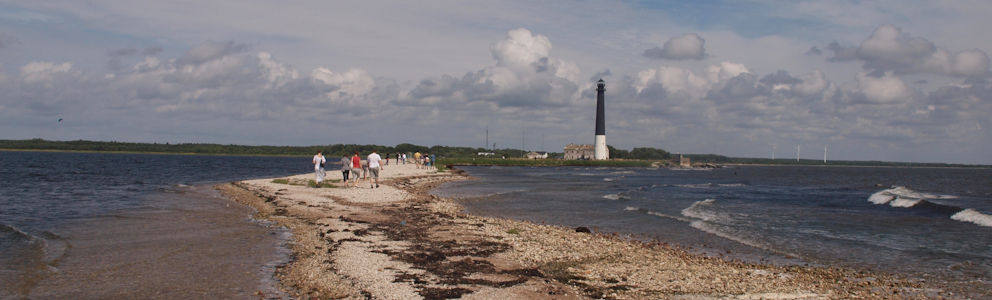
  The small Jamaja Church in Ohessaare on the Sorve peninsula
 The sign points the way to the somewhat hidden Dominican Katarina Monastery
Travelogue Baltic States
Dag 2 | Lithuania > Wandering among the churches
Dag 3 | Lithuania > At the Water Castle of Trakai
Dag 4 | Lithuania > By bike over the Curonian Spit
Dag 5 | Latvia > Crosses, crosses and more crosses
Dag 6 | Latvia > Riga, the beating heart of the Baltics
Dag 7 | Estonia > The sturdy fortress church of Pölde
Dag 8 | Estonia > The bunkers of Sõrve
Dag 9 | Estonia > The Middle Ages in Tallinn
Dag 10 | Estonia > Searching for Kodak points in Tallinn
Dag 11 | Estonia > In the catacombs under old Tallinn
Dag 12 | Russia > Crossing the Russian border
Dag 13 | Russia > Hermitage and the Swan Lake
Dag 14 | Russia > Wandering through Saint Petersburg
Dag 15 | Russia > Visit to the Catherine Palace