
154 countries
(and areas)
 - Azerbaijan
- Bahrain
- Barbados
- Belgium
- Belize
- Benin
- Bhutan
- Bolivia
- Bonaire
- Bosnia and Herzegovina
- Botswana
- Brazil
- British Virgin Islands
- Brunei
- Bulgaria
- Cambodia
- Canada
- Cape Verde
- Chile
- China
- Costa Rica
- Croatia
- Cuba
- Curacao
- Cyprus
- Czech Republic
- Denmark
- Dominica
- Dominican Republic
- Egypt
- El Salvador
- England
- Estonia
- Eswatini (Swaziland)
- Ethiopia
- Fiji
- Finland
- France
- French Guiana
- Georgia
- Germany
- Gibraltar
- Greece
- Grenada
- Guadeloupe
- Guatemala
- Honduras
- Hong Kong
- Hungary
- Iceland
- India
- Indonesia
- Iran
- Ireland
- Israel
- Italy
- Jamaica
- Japan
- Jordan
- Kazakhstan
- Kenya
- Kosovo
- Kuwait
- Kyrgyzstan
- Laos
- Latvia
- Lebanon
- Lesotho
- Liechtenstein
- Lithuania
- Luxembourg
- Macau
- Madagascar
- Malawi
- Malaysia
- Maldives
- Malta
- Martinique
- Mexico
- Moldova
- Monaco
- Mongolia
- Montenegro
- Morocco
- Mozambique
- Namibia
- Nepal
- Netherlands
- New Zealand
- Nicaragua
- North Macedonia
- Northern Ireland
- Norway
- Oman
- Pakistan
- Palestine
- Peru
- Philippines
- Poland
- Portugal
- Qatar
- Republic of Korea
- Romania
- Russia
- Saint Kitts and Nevis
- Saint Lucia
- Saint Martin
- Saint Vincent and the Grenadines
- San Marino
- São Tomé and Principe
- Saudi Arabia
- Scotland
- Senegal
- Serbia
- Singapore
- Sint Maarten
- Slovakia
- Slovenia
- South Africa
- Spain
- Sri Lanka
- Suriname
- Sweden
- Switzerland
- Tajikistan
- Tanzania
- Thailand
- The Gambia
- Tibet
- Togo
- Transnistria
- Trinidad and Tobago
- Tunisia
- Turkey
- Turkmenistan
- Uganda
- United Arab Emirates
- United States
- Uruguay
- Uzbekistan
- Vatican City
- Vietnam
- Wales
- Zambia
- Zanzibar
- Azerbaijan
- Bahrain
- Barbados
- Belgium
- Belize
- Benin
- Bhutan
- Bolivia
- Bonaire
- Bosnia and Herzegovina
- Botswana
- Brazil
- British Virgin Islands
- Brunei
- Bulgaria
- Cambodia
- Canada
- Cape Verde
- Chile
- China
- Costa Rica
- Croatia
- Cuba
- Curacao
- Cyprus
- Czech Republic
- Denmark
- Dominica
- Dominican Republic
- Egypt
- El Salvador
- England
- Estonia
- Eswatini (Swaziland)
- Ethiopia
- Fiji
- Finland
- France
- French Guiana
- Georgia
- Germany
- Gibraltar
- Greece
- Grenada
- Guadeloupe
- Guatemala
- Honduras
- Hong Kong
- Hungary
- Iceland
- India
- Indonesia
- Iran
- Ireland
- Israel
- Italy
- Jamaica
- Japan
- Jordan
- Kazakhstan
- Kenya
- Kosovo
- Kuwait
- Kyrgyzstan
- Laos
- Latvia
- Lebanon
- Lesotho
- Liechtenstein
- Lithuania
- Luxembourg
- Macau
- Madagascar
- Malawi
- Malaysia
- Maldives
- Malta
- Martinique
- Mexico
- Moldova
- Monaco
- Mongolia
- Montenegro
- Morocco
- Mozambique
- Namibia
- Nepal
- Netherlands
- New Zealand
- Nicaragua
- North Macedonia
- Northern Ireland
- Norway
- Oman
- Pakistan
- Palestine
- Peru
- Philippines
- Poland
- Portugal
- Qatar
- Republic of Korea
- Romania
- Russia
- Saint Kitts and Nevis
- Saint Lucia
- Saint Martin
- Saint Vincent and the Grenadines
- San Marino
- São Tomé and Principe
- Saudi Arabia
- Scotland
- Senegal
- Serbia
- Singapore
- Sint Maarten
- Slovakia
- Slovenia
- South Africa
- Spain
- Sri Lanka
- Suriname
- Sweden
- Switzerland
- Tajikistan
- Tanzania
- Thailand
- The Gambia
- Tibet
- Togo
- Transnistria
- Trinidad and Tobago
- Tunisia
- Turkey
- Turkmenistan
- Uganda
- United Arab Emirates
- United States
- Uruguay
- Uzbekistan
- Vatican City
- Vietnam
- Wales
- Zambia
- Zanzibar


Copyright 2004 - 2026
Veeronline.nl Travel Adventures

Home > Poland > Along the Polish Cities > Travelogue day 10
Travelogue Along the Polish Cities
November 212 2017 (11 days)
Poland > Independence Day in Poland
Dag 10 - Saturday, November 11, 2017As we drive out of the city of Krakow, the streets are quiet. Today is November 11th, Independence Day in Poland. On this day, Poland celebrates becoming independent in 1918 after Russian domination. Many buildings are decorated with Polish flags, and the people walking in the streets carry something red and white with them. Even on the toll road toward Katowice it is much quieter than it was two days ago. All the better, as the drive flows smoothly toward Wroclaw, today’s destination.On the motorway, a car starts flashing its lights at us frantically. The driver gestures that we should stop. We don’t trust it and keep driving. A little later, the same thing happens with another car. More flashing, more hand signals to pull over. It doesn’t seem like the police, but also not like robbers. Still, we don’t trust it. We accelerate a little and drive on. Eventually the signaling stops. Strange. We will never know whether it was plainclothes police, someone with good advice, or someone who was after our belongings.

After another hour’s drive, we arrive in the city of Wroclaw without further problems. At exactly one o’clock we park the car in front of the Ibis Hotel on the edge of the center. The receptionist tells us that the room is already ready, but we can’t check in until two o’clock. If we want to go in earlier, we need to pay extra. The logic escapes us—the room is already prepared, isn’t it? When we ask what the hotel intends to do with the room during the remaining hour, we are finally allowed in without extra charge.A little later, we walk to Wroclaw’s old town. Just like all the other cities we’ve visited, Wroclaw also has a central Rynek square. Here too, the pastel-colored houses have been restored to their original style after the wartime destruction. It’s drizzling, and many people are heading home after the morning’s Happy Independence Parade. Children carry red and white balloons, fathers carry Polish flags. By the time we reach the square the rain has stopped, and even the sun peeks through now and then.
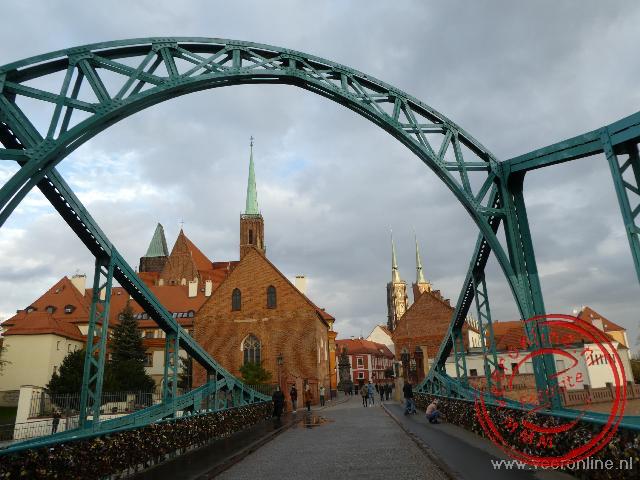
We see the Gothic Town Hall with its astronomical clock. In the corner of the square we enter the adjoining Salt Square. The old exchange building is especially beautiful. Some of the other restored buildings, however, look a little too plainly redone—decorations are painted directly onto the façades.In the opposite corner of the Rynek stands St. Elizabeth’s Church. The church tower used to be more than forty meters higher, but it was struck by fire in 1975. A year later the church was hit by another fire, which destroyed much of the interior. Today the church is fully restored, with a fine Baroque interior. Just behind the church lies the Butchers’ Alley, a narrow street that still looks like the days when medieval butchers slaughtered their animals here. Nowadays the old houses mostly contain galleries.Crossing the Oder River via the Baroque university building, we reach the island where the city of Wroclaw was originally founded. Here now stands the impressive Cathedral of St. John the Baptist. Back in the center, we end our walking tour with a drink in a little café—a lovely conclusion to a beautiful journey through Poland.When we step outside again it is raining. With our hoods up, we walk toward the Rynek. The rain and wind make it unpleasant. In the shopping street we quickly look for a restaurant. Across from the theater we duck into an eatery, not even bothering to check the menu posted at the door. Anything will do now. While we enjoy a perfectly fine meal inside, we see outside a large police presence with flashing lights. The waitress explains that it’s related to Independence Day. Nationalists are holding a March of the Patriots, demanding “Poland for the Poles.”As we walk back to our hotel, we count at least twenty police cars with flashing lights, armed officers, and riot squads posted at street corners. The atmosphere is tense and unpleasant. We hurry back to the hotel.
 Poland
  The bridge to Malbork Castle
 The monument to workers who died in the uprising
 The Long Market Square is the central square of Gdansk
 The postwar fully restored merchant houses of Wroclaw
Travelogue Along the Polish Cities
Dag 2 | Poland > The baroque churches of Poznan
Dag 3 | Poland > Via Torun to Gdansk
Dag 4 | Poland > In the footsteps of Lech Walesa
Dag 5 | Poland > The Medieval Malbork Castle
Dag 6 | Poland > Wandering through old Warsaw
Dag 7 | Poland > The salt mines of Wieliczka
Dag 8 | Poland > Impressive Auschwitz
Dag 9 | Poland > The old town of Krakow
Dag 10 | Poland > Independence Day in Poland
Dag 11 | Poland > Back home