
154 countries
(and areas)
 - Belize
- Benin
- Bhutan
- Bolivia
- Bonaire
- Bosnia and Herzegovina
- Botswana
- Brazil
- British Virgin Islands
- Brunei
- Bulgaria
- Cambodia
- Canada
- Cape Verde
- Chile
- China
- Costa Rica
- Croatia
- Cuba
- Curacao
- Cyprus
- Czech Republic
- Denmark
- Dominica
- Dominican Republic
- Egypt
- El Salvador
- England
- Estonia
- Eswatini (Swaziland)
- Ethiopia
- Fiji
- Finland
- France
- French Guiana
- Georgia
- Germany
- Gibraltar
- Greece
- Grenada
- Guadeloupe
- Guatemala
- Honduras
- Hong Kong
- Hungary
- Iceland
- India
- Indonesia
- Iran
- Ireland
- Israel
- Italy
- Jamaica
- Japan
- Jordan
- Kazakhstan
- Kenya
- Kosovo
- Kuwait
- Kyrgyzstan
- Laos
- Latvia
- Lebanon
- Lesotho
- Liechtenstein
- Lithuania
- Luxembourg
- Macau
- Madagascar
- Malawi
- Malaysia
- Maldives
- Malta
- Martinique
- Mexico
- Moldova
- Monaco
- Mongolia
- Montenegro
- Morocco
- Mozambique
- Namibia
- Nepal
- Netherlands
- New Zealand
- Nicaragua
- North Macedonia
- Northern Ireland
- Norway
- Oman
- Pakistan
- Palestine
- Peru
- Philippines
- Poland
- Portugal
- Qatar
- Republic of Korea
- Romania
- Russia
- Saint Kitts and Nevis
- Saint Lucia
- Saint Martin
- Saint Vincent and the Grenadines
- San Marino
- São Tomé and Principe
- Saudi Arabia
- Scotland
- Senegal
- Serbia
- Singapore
- Sint Maarten
- Slovakia
- Slovenia
- South Africa
- Spain
- Sri Lanka
- Suriname
- Sweden
- Switzerland
- Tajikistan
- Tanzania
- Thailand
- The Gambia
- Tibet
- Togo
- Transnistria
- Trinidad and Tobago
- Tunisia
- Turkey
- Turkmenistan
- Uganda
- United Arab Emirates
- United States
- Uruguay
- Uzbekistan
- Vatican City
- Vietnam
- Wales
- Zambia
- Zanzibar
- Belize
- Benin
- Bhutan
- Bolivia
- Bonaire
- Bosnia and Herzegovina
- Botswana
- Brazil
- British Virgin Islands
- Brunei
- Bulgaria
- Cambodia
- Canada
- Cape Verde
- Chile
- China
- Costa Rica
- Croatia
- Cuba
- Curacao
- Cyprus
- Czech Republic
- Denmark
- Dominica
- Dominican Republic
- Egypt
- El Salvador
- England
- Estonia
- Eswatini (Swaziland)
- Ethiopia
- Fiji
- Finland
- France
- French Guiana
- Georgia
- Germany
- Gibraltar
- Greece
- Grenada
- Guadeloupe
- Guatemala
- Honduras
- Hong Kong
- Hungary
- Iceland
- India
- Indonesia
- Iran
- Ireland
- Israel
- Italy
- Jamaica
- Japan
- Jordan
- Kazakhstan
- Kenya
- Kosovo
- Kuwait
- Kyrgyzstan
- Laos
- Latvia
- Lebanon
- Lesotho
- Liechtenstein
- Lithuania
- Luxembourg
- Macau
- Madagascar
- Malawi
- Malaysia
- Maldives
- Malta
- Martinique
- Mexico
- Moldova
- Monaco
- Mongolia
- Montenegro
- Morocco
- Mozambique
- Namibia
- Nepal
- Netherlands
- New Zealand
- Nicaragua
- North Macedonia
- Northern Ireland
- Norway
- Oman
- Pakistan
- Palestine
- Peru
- Philippines
- Poland
- Portugal
- Qatar
- Republic of Korea
- Romania
- Russia
- Saint Kitts and Nevis
- Saint Lucia
- Saint Martin
- Saint Vincent and the Grenadines
- San Marino
- São Tomé and Principe
- Saudi Arabia
- Scotland
- Senegal
- Serbia
- Singapore
- Sint Maarten
- Slovakia
- Slovenia
- South Africa
- Spain
- Sri Lanka
- Suriname
- Sweden
- Switzerland
- Tajikistan
- Tanzania
- Thailand
- The Gambia
- Tibet
- Togo
- Transnistria
- Trinidad and Tobago
- Tunisia
- Turkey
- Turkmenistan
- Uganda
- United Arab Emirates
- United States
- Uruguay
- Uzbekistan
- Vatican City
- Vietnam
- Wales
- Zambia
- Zanzibar


Copyright 2004 - 2026
Veeronline.nl Travel Adventures

Home > Ethiopia > Tour through Mythical Ethiopia > Travelogue day 4
Travelogue Tour through Mythical Ethiopia
September 19 October 6 2012 (18 days)
Ethiopia > The Nile Falls and Lake Tana
Dag 4 - Saturday, September 22, 2012It’s Saturday, which means Bahir Dar is busy. The livestock market is held on Saturdays. On the outskirts of the city, traders and buyers gather to do business. As I travel by bus toward the Blue Nile Falls, I see many people walking to the market with their livestock—a classic African scene along the road. In about an hour, I reach the parking lot at the falls. The plan to walk to the waterfall via the west side and return via the east side isn’t possible because the required boat isn’t running due to high water.

So I walk back and forth via the west route. Today, Teddy accompanies me as a guide. He speaks good English and shares a lot of information along the way. At the ticket area for the waterfall, we are given an additional guide. He has a difficult name, but because he’s wearing a T-shirt that says “Korea,” I call him Korea. He laughs at this. Unfortunately, his English is much weaker, so he leaves most of the guiding to Teddy and mainly helps slower walkers over the difficult sections. As I start the path to the falls, a procession of people comes toward me, heading to the local market. Men, women, children, and livestock walk up the narrow, rocky path. From the edge, I look down. It’s a beautiful sight to see the colorful procession. I pass the Portuguese Bridge over the Blue Nile, an old bridge built to colonial design. From here, the path gently rises. Numerous vendors, including many children, try to sell their goods, each one more skilled than the next.

“Maybe later when you come back?” I disappoint them by declining. Rounding a bend, the Blue Nile Falls come into view. In three adjacent streams, the Nile drops about fifty meters—a magnificent sight! The falls used to be much more impressive, with water falling over a width of 400 meters. However, the construction of a hydroelectric power station has reduced the water flow. On the other side of the falls is a suspension bridge, part of the eastern route. I cross the long bridge to the other side. Immediately, vendors approach from all directions. Since the eastern route is impassable due to high water, few tourists are here. Fortunately, Teddy keeps them at a distance. I return via the bridge and walk the western route back to the bus. I then head to the Saturday market—a colorful collection of livestock. I walk among the cows and goats. Everyone looks at me with curiosity; clearly, few tourists come here. I occasionally try to chat about the cows, mostly using hand gestures, and take a few photos.

By bus, I return to Bahir Dar for lunch by Lake Tana. After lunch, I board a boat. In about an hour, I reach Zege Peninsula. Lake Tana is the largest lake in Ethiopia. The water is calm, reflecting the sun. From the bow, I see a lone pelican flying over the lake and fishermen in their papyrus boats. Many islands lie in Lake Tana, with churches and monasteries built on them. These ancient Ethiopian Orthodox churches are well preserved and richly decorated with paintings. I step off the boat onto Zege Peninsula and follow guide Teddy up the island. Again, an extra guide is available—completely unnecessary, but it creates work. The path winds up through the forest. Soon, the first stalls appear along the route; I pass at least forty on my way to the church. Everyone tries to sell me something. What a hassle! I am relieved when I finally reach the church. The church building itself, despite its historical value, is a bit underwhelming—a round building with a corrugated roof. Teddy explains that the roof protects the paintings. Reed mats around the church keep birds out.

I remove my shoes and go inside, where I see beautiful frescoes on the clay walls. Teddy explains that the walls must be reinforced regularly, which makes them thicker and has helped preserve the church. He provides information on the various biblical frescoes. Next, I visit the small museum, which is little more than a display case. A monk opens two shutters to show crowns of former rulers and special church crosses. A new museum is being built to display more items. The plan had been to visit another church on the island, but high water prevents docking there, and it is getting late. I sail back, arriving at the harbor around six o’clock. The sun is low on the horizon. In the evening, I plan to take a taxi to the city, but the receptionist suggests a tuk-tuk. Perfect. Soon, I ride in the tuk-tuk to Bahir Dar and am dropped off in the center. I arrange a pick-up time. I want to be picked up at nine, but the tuk-tuk driver’s watch is six hours behind; they use local Ethiopian time. I then decide on three o’clock instead. I stroll through Bahir Dar’s main street, greeting people along the way. I spot a few reliable-looking restaurants and see the one Teddy recommended earlier. At the corner near the roundabout, however, I find a much nicer first-floor restaurant. On the outdoor terrace, I order lamb tibs and injera.
 Ethiopia
  Vultures feast on a cow hit by a vehicle
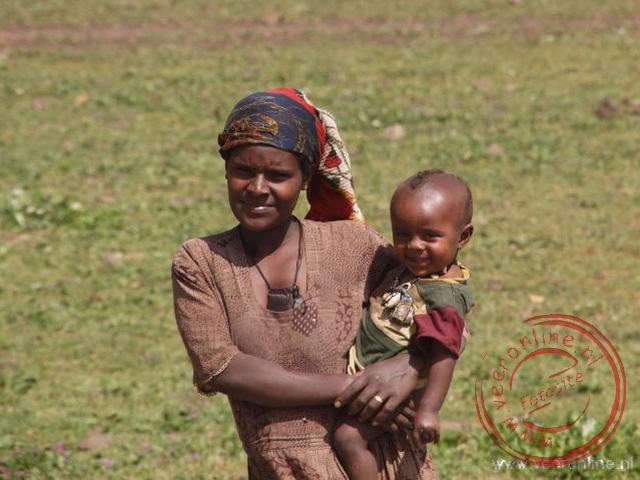 A woman looks up briefly during her work in the fields
 The old Portuguese bridge in Bahir Dar
 The interior of the Bet Medhane Alem rock church
Travelogue Tour through Mythical Ethiopia
Dag 2 | Ethiopia > City tour through Addis Ababa
Dag 3 | Ethiopia > Traveling through green Ethiopia
Dag 4 | Ethiopia > The Nile Falls and Lake Tana
Dag 5 | Ethiopia > The palaces of Gondar
Dag 6 | Ethiopia > Hiking in the Semien Mountains
Dag 7 | Ethiopia > Visit to Grace Village orphanage
Dag 8 | Ethiopia > The stelae of Axum
Dag 9 | Ethiopia > 'Happy Meskel!”
Dag 10 | Ethiopia > The rock churches of Lalibela
Dag 11 | Ethiopia > Flight back to Addis Ababa
Dag 12 | Ethiopia > Heavy rainfall near Aragash
Dag 13 | Ethiopia > Delivering a gift in Arba Minch
Dag 14 | Ethiopia > Visiting the Dorze tribe
Dag 15 | Ethiopia > On the way to Lake Langano
Dag 16 | Ethiopia > Langano Vacation Club Resort
Dag 17 | Ethiopia > Back to Addis, back home
Dag 18 | Ethiopia > Farewell to Ethiopia