
154 countries
(and areas)
 - Belize
- Benin
- Bhutan
- Bolivia
- Bonaire
- Bosnia and Herzegovina
- Botswana
- Brazil
- British Virgin Islands
- Brunei
- Bulgaria
- Cambodia
- Canada
- Cape Verde
- Chile
- China
- Costa Rica
- Croatia
- Cuba
- Curacao
- Cyprus
- Czech Republic
- Denmark
- Dominica
- Dominican Republic
- Egypt
- El Salvador
- England
- Estonia
- Eswatini (Swaziland)
- Ethiopia
- Fiji
- Finland
- France
- French Guiana
- Georgia
- Germany
- Gibraltar
- Greece
- Grenada
- Guadeloupe
- Guatemala
- Honduras
- Hong Kong
- Hungary
- Iceland
- India
- Indonesia
- Iran
- Ireland
- Israel
- Italy
- Jamaica
- Japan
- Jordan
- Kazakhstan
- Kenya
- Kosovo
- Kuwait
- Kyrgyzstan
- Laos
- Latvia
- Lebanon
- Lesotho
- Liechtenstein
- Lithuania
- Luxembourg
- Macau
- Madagascar
- Malawi
- Malaysia
- Maldives
- Malta
- Martinique
- Mexico
- Moldova
- Monaco
- Mongolia
- Montenegro
- Morocco
- Mozambique
- Namibia
- Nepal
- Netherlands
- New Zealand
- Nicaragua
- North Macedonia
- Northern Ireland
- Norway
- Oman
- Pakistan
- Palestine
- Peru
- Philippines
- Poland
- Portugal
- Qatar
- Republic of Korea
- Romania
- Russia
- Saint Kitts and Nevis
- Saint Lucia
- Saint Martin
- Saint Vincent and the Grenadines
- San Marino
- São Tomé and Principe
- Saudi Arabia
- Scotland
- Senegal
- Serbia
- Singapore
- Sint Maarten
- Slovakia
- Slovenia
- South Africa
- Spain
- Sri Lanka
- Suriname
- Sweden
- Switzerland
- Tajikistan
- Tanzania
- Thailand
- The Gambia
- Tibet
- Togo
- Transnistria
- Trinidad and Tobago
- Tunisia
- Turkey
- Turkmenistan
- Uganda
- United Arab Emirates
- United States
- Uruguay
- Uzbekistan
- Vatican City
- Vietnam
- Wales
- Zambia
- Zanzibar
- Belize
- Benin
- Bhutan
- Bolivia
- Bonaire
- Bosnia and Herzegovina
- Botswana
- Brazil
- British Virgin Islands
- Brunei
- Bulgaria
- Cambodia
- Canada
- Cape Verde
- Chile
- China
- Costa Rica
- Croatia
- Cuba
- Curacao
- Cyprus
- Czech Republic
- Denmark
- Dominica
- Dominican Republic
- Egypt
- El Salvador
- England
- Estonia
- Eswatini (Swaziland)
- Ethiopia
- Fiji
- Finland
- France
- French Guiana
- Georgia
- Germany
- Gibraltar
- Greece
- Grenada
- Guadeloupe
- Guatemala
- Honduras
- Hong Kong
- Hungary
- Iceland
- India
- Indonesia
- Iran
- Ireland
- Israel
- Italy
- Jamaica
- Japan
- Jordan
- Kazakhstan
- Kenya
- Kosovo
- Kuwait
- Kyrgyzstan
- Laos
- Latvia
- Lebanon
- Lesotho
- Liechtenstein
- Lithuania
- Luxembourg
- Macau
- Madagascar
- Malawi
- Malaysia
- Maldives
- Malta
- Martinique
- Mexico
- Moldova
- Monaco
- Mongolia
- Montenegro
- Morocco
- Mozambique
- Namibia
- Nepal
- Netherlands
- New Zealand
- Nicaragua
- North Macedonia
- Northern Ireland
- Norway
- Oman
- Pakistan
- Palestine
- Peru
- Philippines
- Poland
- Portugal
- Qatar
- Republic of Korea
- Romania
- Russia
- Saint Kitts and Nevis
- Saint Lucia
- Saint Martin
- Saint Vincent and the Grenadines
- San Marino
- São Tomé and Principe
- Saudi Arabia
- Scotland
- Senegal
- Serbia
- Singapore
- Sint Maarten
- Slovakia
- Slovenia
- South Africa
- Spain
- Sri Lanka
- Suriname
- Sweden
- Switzerland
- Tajikistan
- Tanzania
- Thailand
- The Gambia
- Tibet
- Togo
- Transnistria
- Trinidad and Tobago
- Tunisia
- Turkey
- Turkmenistan
- Uganda
- United Arab Emirates
- United States
- Uruguay
- Uzbekistan
- Vatican City
- Vietnam
- Wales
- Zambia
- Zanzibar


Copyright 2004 - 2026
Veeronline.nl Travel Adventures

Home > Belgium > Historic Brussels > Travelogue day 3
Travelogue Historic Brussels
July 25 2020 (4 days)
Belgium > The European Quarter
Dag 3 - Saturday 4 July 2020On Saturday morning, we start with a visit to the European Quarter in Brussels. The weather seems a bit cloudy. We probably won’t stay dry today. Via the Stock Exchange and Grasstraat, we slowly walk uphill toward the Central Station. On this Saturday morning, the streets are still quiet. We pass the station and head toward the Parc de Bruxelles. Through the trees, we can see the Royal Palace. The city park is symmetrically designed, with two fountains in the center. On the other side of the park, we arrive at the American embassy. We turn right. Several embassies are lined up here. It starts to drizzle lightly. Hopefully, the rain won’t get worse. Behind Luxembourg Station lies the European Parliament. The Paul-Henri Spaak building houses the European government. The flags of the 28 member states wave in the wind. The palace borders Leopold Park. On weekdays, parliament members are likely to relax here. Today, it’s quiet. We arrive a bit earlier than our official reservation at the House of European History, but we are allowed inside. The museum has just opened. At the entrance, we are greeted by at least ten staff members and security guards. There’s someone at almost every corner to direct us where to go. You can download an audio tour on your phone.

We follow the route through the museum. The exhibition begins with Europe more than 200 years ago, when it was still made up of large empires. Only at the end of the 19th century did the desire for self-determination and the fragmentation of powers emerge. The rise of the First and Second World Wars is addressed. In the end, the exhibition emphasizes that a central Europe can ensure European unity through the four European freedoms: free movement of people, goods, services, and capital. The pursuit of nationalism is seen as a risk for Europe, as it has led to wars in the past. It is a somewhat one-sided perspective on the European issue, but the theme is presented neatly and thoroughly. After two hours, we are back outside. We continue our walk through the city toward the nearby Parc du Cinquantenaire. This park was created in 1880 to celebrate Belgium’s 50th anniversary. On the east side of the park, an enormous Triumphal Arch was built in its honor. The park contains various statues. Brussels’ largest mosque is also located here, housed in a pavilion from the 1897 World’s Fair. Behind the Triumphal Arch, we descend toward the ‘Merode’ metro station. We take the metro to the ‘Arts-Loi’ stop, where we transfer toward ‘Leopold II’. At the ‘Louise’ stop, we get off. We are now at the upper end of the Sablon district, near the Palace of Justice.

This is where our walking route ended yesterday. Today, we follow a described route through the Sablon district. Just before ‘The Hotel’, we turn left across a parking lot. At the end, we can enter a park next to the Edmund Palace. We would never have found this ourselves. Fortunately, the park next to the palace has been preserved from urban redevelopment. There were once plans for high-rise towers. The other side of the Edmund Palace borders the park where Christophe showed us the statue of William of Orange yesterday. Today, the park is open. In one of the lower streets, we walk into a restaurant. The owner enthusiastically shows us various types of pita bread. A great choice for lunch. Only when we sit down do we realize that this restaurant, with its neoclassical interior, is recommended in our travel guide—if there is space, at least, as the description says. Through the antiques district, we wander toward the square by the Church of Our Blessed Lady of the Sablon. Here, chocolate specialty shops and bakeries dominate the streetscape. Around half past two, we return to the Grand Place. We have a reservation for the Brussels City Museum here. This is for a reason—while you could probably enter other museums without a reservation, this one requires confirmation. With an audio tour on our phones, we enter the museum. The building itself is unique. The Bread House was once the Guild Hall of the bakers. In the 19th century, the building was rebuilt to its original state, making it a showpiece on the Grand Place. Inside hang beautiful paintings and tapestries from the 16th century. One painting depicts the French bombardment of the Grand Place. Several scale models show what the city must have looked like in the past, with only a few churches serving as recognizable landmarks.

Via a beautiful wooden staircase with stained-glass windows, we reach the upper floors. Here, there is an exhibition about Manneken Pis. The original statue is on display here; the one in the city is a replica. The statue has been stolen several times. The museum ticket also includes a combination ticket for the Manneken Pis Wardrobe Museum. As our last visit of the day, we walk to this museum on the street of the famous statue. There is some confusion at the museum because we have a reservation for the Brussels City Museum but not officially for this one. We also hadn’t realized beforehand that the museums were in different locations. Another staff member is called in, there is some hesitation, but in the end, we are allowed to enter. In the small space, about a hundred images of Manneken Pis are displayed in outfits from different countries and professions. There is a special committee that decides on the clothing of the Brussels statue. Around 170 days a year, the statue is dressed in special attire. The rest of the year, the statue is “naked.” It’s amusing to see how different costumes cover the same statue. At the Halles Saint-Géry, next to our hotel, we order a drink. We conclude that over the past few days, we have seen practically all the sights of Brussels. In the evening, we decide to eat in the hotel bar. Conveniently, it’s raining outside.
 Belgium
 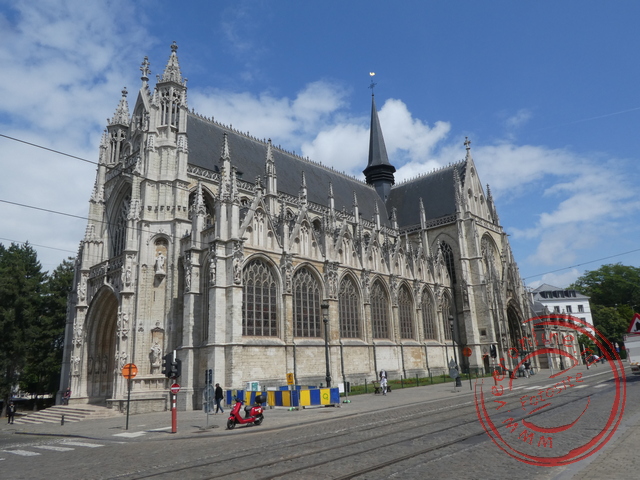 The Church of Our Lady of Sablon
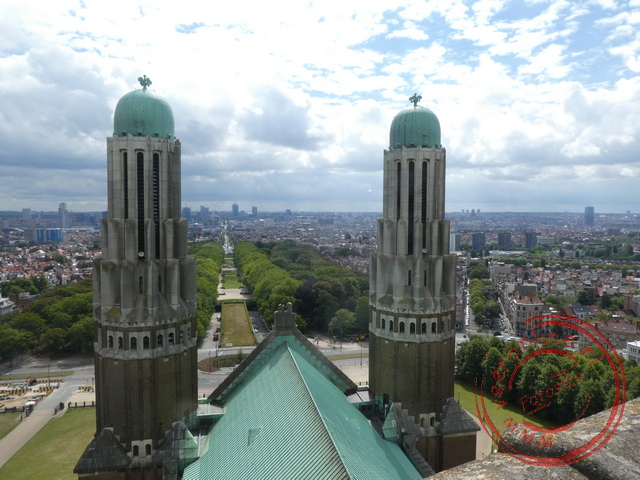 View of Brussels from the Koekelberg cathedral
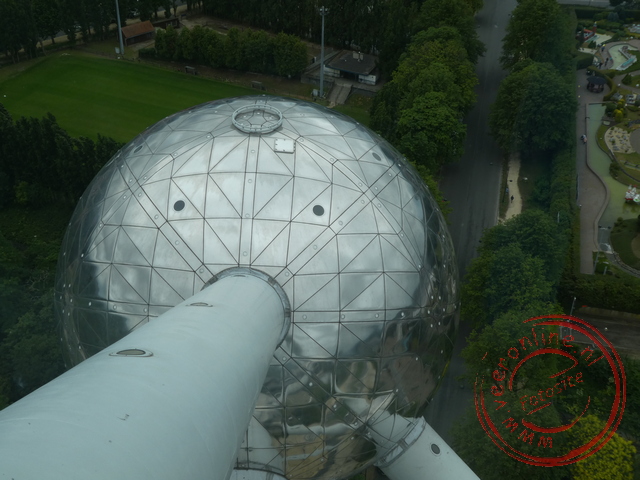 The Atomium was built in 1958 for the World Expo
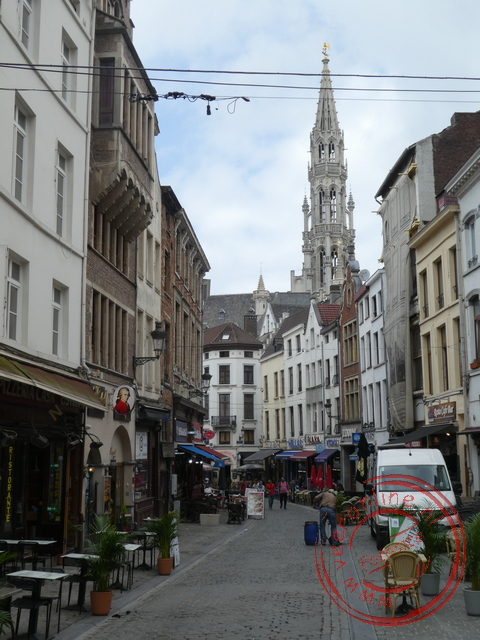 The Cheese Market with a view of the town hall tower
Travelogue Historic Brussels
Dag 2 | Belgium > Guided Tour of Brussels
Dag 3 | Belgium > The European Quarter
Dag 4 | Belgium > Inside the Atomium