
154 countries
(and areas)
 - Belize
- Benin
- Bhutan
- Bolivia
- Bonaire
- Bosnia and Herzegovina
- Botswana
- Brazil
- British Virgin Islands
- Brunei
- Bulgaria
- Cambodia
- Canada
- Cape Verde
- Chile
- China
- Costa Rica
- Croatia
- Cuba
- Curacao
- Cyprus
- Czech Republic
- Denmark
- Dominica
- Dominican Republic
- Egypt
- El Salvador
- England
- Estonia
- Eswatini (Swaziland)
- Ethiopia
- Fiji
- Finland
- France
- French Guiana
- Georgia
- Germany
- Gibraltar
- Greece
- Grenada
- Guadeloupe
- Guatemala
- Honduras
- Hong Kong
- Hungary
- Iceland
- India
- Indonesia
- Iran
- Ireland
- Israel
- Italy
- Jamaica
- Japan
- Jordan
- Kazakhstan
- Kenya
- Kosovo
- Kuwait
- Kyrgyzstan
- Laos
- Latvia
- Lebanon
- Lesotho
- Liechtenstein
- Lithuania
- Luxembourg
- Macau
- Madagascar
- Malawi
- Malaysia
- Maldives
- Malta
- Martinique
- Mexico
- Moldova
- Monaco
- Mongolia
- Montenegro
- Morocco
- Mozambique
- Namibia
- Nepal
- Netherlands
- New Zealand
- Nicaragua
- North Macedonia
- Northern Ireland
- Norway
- Oman
- Pakistan
- Palestine
- Peru
- Philippines
- Poland
- Portugal
- Qatar
- Republic of Korea
- Romania
- Russia
- Saint Kitts and Nevis
- Saint Lucia
- Saint Martin
- Saint Vincent and the Grenadines
- San Marino
- São Tomé and Principe
- Saudi Arabia
- Scotland
- Senegal
- Serbia
- Singapore
- Sint Maarten
- Slovakia
- Slovenia
- South Africa
- Spain
- Sri Lanka
- Suriname
- Sweden
- Switzerland
- Tajikistan
- Tanzania
- Thailand
- The Gambia
- Tibet
- Togo
- Transnistria
- Trinidad and Tobago
- Tunisia
- Turkey
- Turkmenistan
- Uganda
- United Arab Emirates
- United States
- Uruguay
- Uzbekistan
- Vatican City
- Vietnam
- Wales
- Zambia
- Zanzibar
- Belize
- Benin
- Bhutan
- Bolivia
- Bonaire
- Bosnia and Herzegovina
- Botswana
- Brazil
- British Virgin Islands
- Brunei
- Bulgaria
- Cambodia
- Canada
- Cape Verde
- Chile
- China
- Costa Rica
- Croatia
- Cuba
- Curacao
- Cyprus
- Czech Republic
- Denmark
- Dominica
- Dominican Republic
- Egypt
- El Salvador
- England
- Estonia
- Eswatini (Swaziland)
- Ethiopia
- Fiji
- Finland
- France
- French Guiana
- Georgia
- Germany
- Gibraltar
- Greece
- Grenada
- Guadeloupe
- Guatemala
- Honduras
- Hong Kong
- Hungary
- Iceland
- India
- Indonesia
- Iran
- Ireland
- Israel
- Italy
- Jamaica
- Japan
- Jordan
- Kazakhstan
- Kenya
- Kosovo
- Kuwait
- Kyrgyzstan
- Laos
- Latvia
- Lebanon
- Lesotho
- Liechtenstein
- Lithuania
- Luxembourg
- Macau
- Madagascar
- Malawi
- Malaysia
- Maldives
- Malta
- Martinique
- Mexico
- Moldova
- Monaco
- Mongolia
- Montenegro
- Morocco
- Mozambique
- Namibia
- Nepal
- Netherlands
- New Zealand
- Nicaragua
- North Macedonia
- Northern Ireland
- Norway
- Oman
- Pakistan
- Palestine
- Peru
- Philippines
- Poland
- Portugal
- Qatar
- Republic of Korea
- Romania
- Russia
- Saint Kitts and Nevis
- Saint Lucia
- Saint Martin
- Saint Vincent and the Grenadines
- San Marino
- São Tomé and Principe
- Saudi Arabia
- Scotland
- Senegal
- Serbia
- Singapore
- Sint Maarten
- Slovakia
- Slovenia
- South Africa
- Spain
- Sri Lanka
- Suriname
- Sweden
- Switzerland
- Tajikistan
- Tanzania
- Thailand
- The Gambia
- Tibet
- Togo
- Transnistria
- Trinidad and Tobago
- Tunisia
- Turkey
- Turkmenistan
- Uganda
- United Arab Emirates
- United States
- Uruguay
- Uzbekistan
- Vatican City
- Vietnam
- Wales
- Zambia
- Zanzibar


Copyright 2004 - 2026
Veeronline.nl Travel Adventures

Home > Belgium > Historic Brussels > Travelogue day 2
Travelogue Historic Brussels
July 25 2020 (4 days)
Belgium > Guided Tour of Brussels
Dag 2 - Friday 3 July 2020This morning, we take the stairs to reach the breakfast area, as we are on the first floor. Last night, the bartender assured us that we could use the door to the stairwell. It looked like an emergency exit, and he explained that otherwise, we could only go upstairs by elevator. For safety, he apologized. We descend through the dimly lit stairwell. When we open the door at the bottom, to our surprise, we are outside on the street. Not very convenient. We go inside for breakfast. On the bar, a simple buffet is laid out. Judging by the room list, only four other rooms are occupied—the hotel is one-third full. This morning, we have a historical city tour with a guide through the center. Beforehand, we stroll through the comic strip district. Various Belgian comic characters are depicted on the façades of several buildings. Fortunately, we have a map with the exact locations, because sometimes we only notice the images when we are practically right in front of them. Following this route, we arrive at the Grand Place. We receive a text from Christophe, our guide. He is running a bit late because he still has to pick up booklets for children. In the meantime, we admire the detailed decorations of the Guild Houses on the square. When Christophe arrives, he seems confused. He thought there would be children in the group. Normally, the tour has multiple participants, but today we have a private tour—much easier. Christophe tells us about the Gothic Town Hall. In 1402, this prestigious building was constructed following the example of the Belfry in Bruges. Thirty years later, the wing to the right of the tower was added. If you look closely, the different architectural styles are clearly visible. After completion, the various Guild Houses appeared around the square. The Bread House, of the bakers’ guild, opposite the Town Hall, is the most impressive. Originally, many houses were built of wood, Christophe continues. During the French attacks in 1695, the square was heavily bombarded and burned. Most houses were lost to the fire. When rebuilding, the houses were constructed in stone.

Christophe leads us on a city walk following the paths of former rivers. Brussels originated around an island in the Senne River. Today, the Saint-Géry Halls are located here. The remnants of a previous church destroyed by fire form the foundation of the market halls. The Senne River is now covered and rerouted; the water is no longer visible in the city center. On a street corner stands “Het Zinneke,” the statue of a urinating dog. In the past, stray dogs were thrown into the Senne River at this location. The statue serves as a reminder. Via the Place Sainte-Catherine, we reach the fish market, the Vismet. This used to be the harbor. Now the square around Saint Catherine’s Church is occupied by lively terraces. In a side street off Beenhouwersstraat stands the statue of Jeanneke Pis—a creation of local restaurateurs to attract tourists to this district. Today, we are the only visitors, but normally, Christophe says, it is so crowded you can barely move. Through the St. Hubert Galleries, we arrive at a remnant of the southern city wall. Here begins the Sablon district. Narrow streets lead uphill. As Brussels became a more important trading city, wealthier people moved to the higher districts. In the center of the neighborhood stands the Sablon Church. So much money was spent on decorations, Christophe jokes, that there wasn’t enough left for a tower.
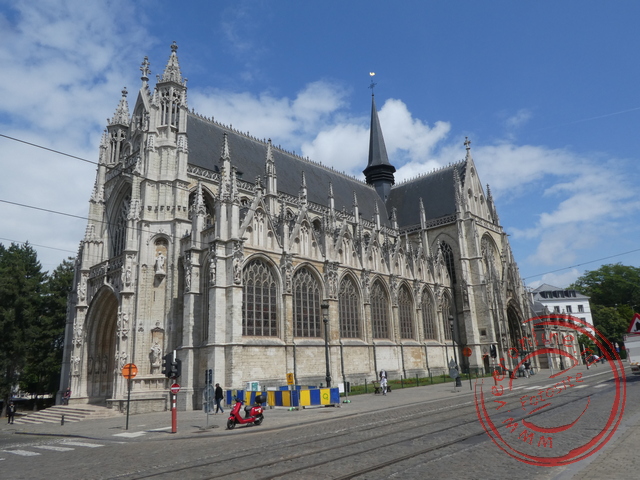
The Gothic church looks somewhat bare without a spire. Opposite the church is a park. Especially for us, Christophe points out the statue of William of Orange. In the center of the park stands a monument to William’s fellow fighters Horne and Egmond. They were executed in 1568 by order of the Duke of Alba on the Grand Place. Together with the Beeldenstorm, this led to the Dutch Revolt and the Eighty Years’ War. After two and a half hours, the tour ends at the Palace of Justice. This palace is built atop a hill overlooking the city, providing a wide view. We can see the Koekelberg Cathedral on another hill, the Atomium, and, of course, the Town Hall tower. Here, we bid farewell to Christophe and thank him for his detailed and enthusiastic explanation. We descend via the public elevator to the Marollen district and wander through the streets. At a terrace, we order a sandwich and something to drink. After lunch, we continue to the Mont des Arts. A broad staircase leads to the Royal Palace, which also offers views of the city.
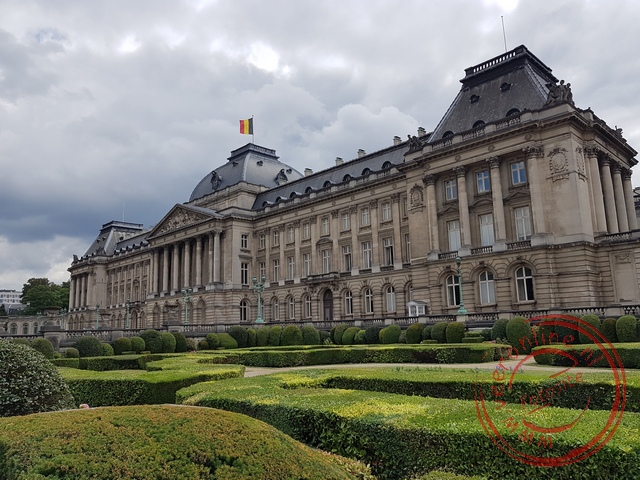
Brussels is built on many hills. King Albert’s working palace is enormous. It is hard to imagine that such a large building is necessary for the royal functions. The palace is normally not open to the public, but for a few days a year, it is accessible to Belgians. Due to COVID measures, it is currently closed. Next to the palace lies the Museum of Coudenberg. The impressive Coudenberg Palace burned down in 1731 and could not be saved. The remaining structures were demolished, making room for the current square in front of the Royal Palace. The foundations of the Coudenberg Palace are still visible under the square. The former Isabelle Street, which led to the Cathedral of St. Michael and St. Gudula, has disappeared beneath the square. At the moment, no guided tours are available inside the museum. Therefore, we are given an audio tour on our phones, which provides a good understanding of the palace’s history, size, and the devastating fire. Back in the center, we settle at a terrace for a beer—a perfect moment to let all our impressions sink in. In the evening, we dine at Place Sainte-Catherine. At one of the cozy terraces, we enjoy a typical Belgian dish: Waterzooi.
 Belgium
  The Church of Our Lady of Sablon
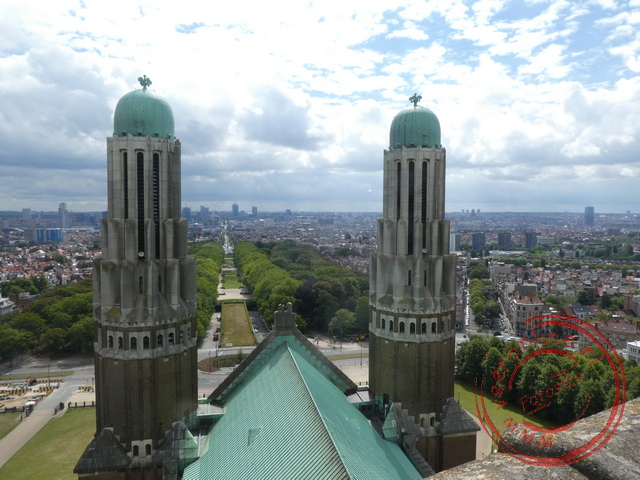 View of Brussels from the Koekelberg cathedral
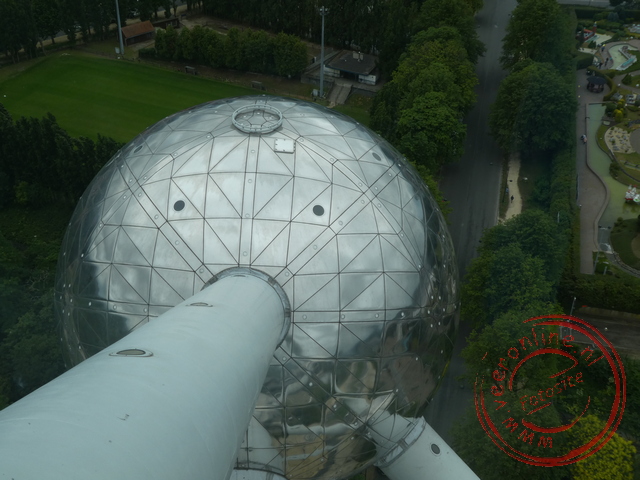 The Atomium was built in 1958 for the World Expo
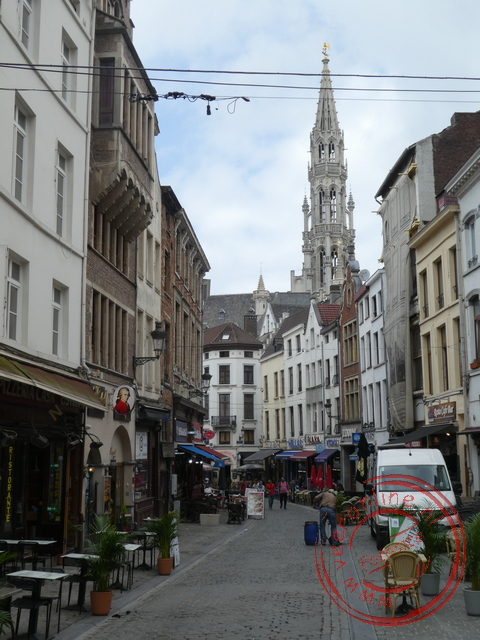 The Cheese Market with a view of the town hall tower
Travelogue Historic Brussels
Dag 2 | Belgium > Guided Tour of Brussels
Dag 3 | Belgium > The European Quarter
Dag 4 | Belgium > Inside the Atomium